


Docker Experts in Vienna
matched in minutes by precise AIHire experts who containerize applications, create reliable image and deployment workflows, and connect Docker with Kubernetes, CI/CD pipelines, and cloud infrastructure. FRATCH finds vetted, available freelancers whose skills match your project quickly and precisely.

Meet FRATCH Experts in Vienna, who have recently used Docker
Alexander P.

Last position:
Owner & Lecturer at Artellico / Own Company for AI Governance and Data Products
- Consulting and interim management at the intersection of IT operations and regulation
- Impact analysis and implementation planning for NISG 2026 and EU AI Act, including risk management and reporting and evidence processes
- Training for governing bodies and employees on regulatory obligations
- Teaching assignments in Data & Information Management and Human-Machine Interaction at Hochschule Burgenland, since 2023
- Supervision of master’s theses and participation in the examination board
- Expert presentations in business and educational institutions
- Design and development of data and AI products, platforms and pipelines
- Privacy-first architectures and Zero-Knowledge Encryption, cloud-native on EU infrastructure
- Connection to bank account systems via SEPA direct debit mandates and message formats according to ISO 20022 (pain.008, camt.053)
- MLOps and AIOps in ongoing operations
- Own applications under own brand: shared code base, separate delivery for each target device
- AI-assisted software development (vibe-coding), complete agentic pipelines, code generation, implementation, automated testing, CI/CD and release cycles
- Publications on EU AI Act, NIS2, DORA, CRA and CER as an integrated governance system
- Publications on data sovereignty, cloud economics and industrial image processing
- AI Governance / Compliance: Data Quality, Responsible AI, EU AI Act Readiness, Risk Classification, AI Ethics
Matthias K.

Last position:
Requirements Engineer & Business Analyst at Media Company
Analysis of existing work, information and decision-making processes.
Identification and prioritization of suitable use cases for AI agents.
Elicitation of functional and non-functional requirements.
Design of collaboration between users and AI agents, including control and escalation mechanisms.
Support for the implementation of the AI agents and adapted keyboard hardware.
Business target vision for the AI-first transformation.
Structured and prioritized requirements for implementation.
Defined roles, interactions and control points between people and AI agents.
Preparation for the gradual automation of productive work processes.
Techstack: AI agents, LLMs, agent orchestration, RAG, APIs, automation, hardware
John A.

Last position:
Software Developer and DevOps Engineer at Bundesrechenzentrum (BRZ)
Refactoring and improving core APIs; implementing client change requests. Setting up metrics, traces, and logs monitoring infrastructure to support operations. Designing GitOps deployment and infrastructure as code. Applications and systems configuration in ArgoCD and Openshift. Confluence documentation of design, approach, and solution. Tech Stack: Java 8 & 21, Spring framework, JSP, JavaScript, Bash scripts, SQL, Grafana Stack, OpenTelemetry, Docker, DB2, Maven, Kubernetes Kompose.
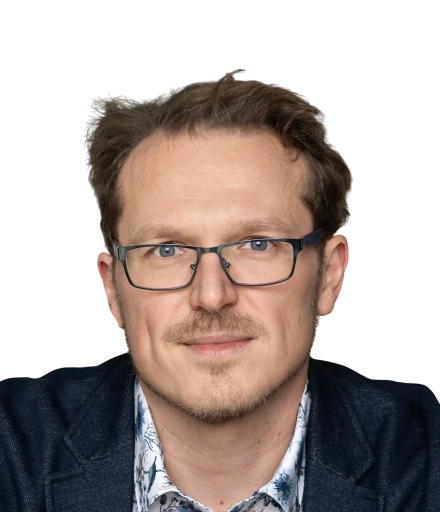
Manuel P.
Last position:
AI Engineer at Misumi Europe GmbH & Motius GmbH
- Designed and built a next-generation NLP platform to accelerate sales-driven customer service through intelligent request analysis and routing, reducing average customer query response time by 30%.
- Architected a hybrid NLP system combining Large Language Models (LLMs) with traditional NLP pipelines for robust, explainable results.
- Developed request classification and routing mechanisms to accelerate customer support teams in handling customer queries faster and more accurately.
- Optimized LLM based data extraction and classification with context engineering.
- Integrated the platform into customer service processes, reducing response times and enhancing workforce efficiency.
Roman M.

Last position:
Software Engineer at FSM Rechtsanwälte
- Develop AWS-based components connecting Python backend services to React/TypeScript frontends.
- Improve database queries and application workflows for document processing and screening.
- Evaluate LLM retrieval and document-review workflows as part of the product stack.
Stefania D.
Last position:
Data Engineer at Storebox
Tech: AWS (Glue, Lambda, Redshift), Airflow, PostgreSQL, Python, PySpark, Metabase, Power BI
Delivered: Analytics-Ready Data Models • Legacy SQL to Cloud ETL Migration • Dynamic Pricing Engine
- Owned and evolved the company data warehouse end-to-end — from ingestion to transformation to analytics-ready dimensional data models on AWS Redshift.
- Collaborated with Analysts, Data Scientists, and business stakeholders to deliver scalable dimensional data models that enable self-serve analytics and streamline dashboarding in Metabase and Power BI.
- Architected end-to-end ETL/ELT pipelines on AWS (Glue, Lambda, Redshift) using Python and PySpark, orchestrated with Apache Airflow (MWAA) for reliability and observability.
- Defined and enforced data quality standards and governance practices across pipelines and the core data layer.
- Led migration of legacy SQL infrastructure into scalable AWS Glue pipelines with distributed PySpark processing, eliminating bottlenecks and reducing downtime.
- Developed a dynamic pricing engine applying automated promotional discounts based on occupancy rates, competitor pricing, and location performance tiers.
- Designed schema mappings to ingest MongoDB data into structured relational systems (Redshift/PostgreSQL).
Marcel S.

Last position:
Senior AI Engineer - Python at Insurance Company
Project Tech Stack: Python, AWS, Azure, FastAPI, openai, pandas, unittest/pymock
Achievements:
- Engineered automated data extraction pipelines to transform complex Excel datasets into structured formats via LLM-driven workflows.
- Architected a generative slide-deck engine that translates natural language prompts into formatted presentation assets.
- Integrated advanced LLM capabilities with the OpenAI Response API, implementing sophisticated tool-calling and structured output logic.
- Developed and containerized scalable backend microservice using FastAPI, Docker, and OpenShift to host and serve agentic skills.
Marc-Anthony T.

Last position:
Software Developer at Dawnguard.AI
- Foundational member of the backend TypeScript team, responsible for translating the initial product concept into a fully functional platform.
- Architected the core resource discovery engine for Azure and AWS, successfully enabling the frontend to visualize complex cloud environments and empowering the AI to evaluate architectural patterns.
- Engineered and scaled distributed APIs and dynamic CosmosDB schemas, ensuring the database and backend architecture could seamlessly adapt to rapidly evolving product requirements.
- Accelerated cross-functional testing by developing custom data-generation tools, allowing the AI and frontend teams to simulate and test against large-scale, artificial cloud architectures.
- Drove end-to-end feature delivery by partnering closely with AI, frontend, and business stakeholders to align technical implementation with the strategic vision of the Dawnguard platform.
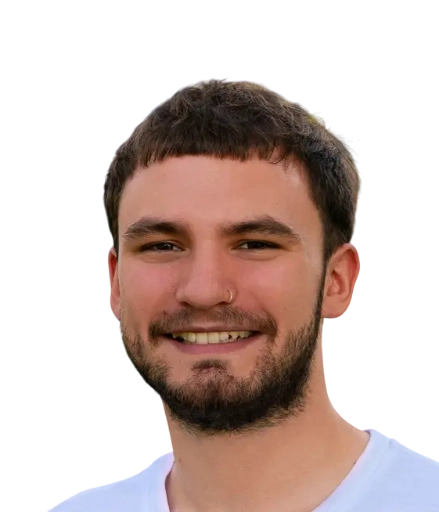
Alexander L.
Last position:
Guest lecturer in Artificial Intelligence (Master’s Level) at FH des BFI Wien
- Teaching & presenting
- Communication
- Effectively communicate complex technical topics to non-technical audiences through lectures
- Guided non-technical students from zero knowledge to confidently understanding and applying algorithms to achieve business outcomes
Michail M.

Last position:
OpenShift Specialist, Developer at Insurance
Project goal: Introduce OpenShift as the run-time platform and migrate all applications to OpenShift.
My contribution: Make sure logging and monitoring for the applications were in place. Set up and put into operation the OpenShift components for logging and monitoring (Elasticsearch, Prometheus, and Grafana). Develop and implement the security concept for OpenShift. Work with developers to define and carry out the application changes needed for the OpenShift migration. Integrate monitoring into the applications.
Technical environment: Java, WebSphere Liberty, OpenShift components, Elasticsearch (ELK stack), Prometheus, Grafana.
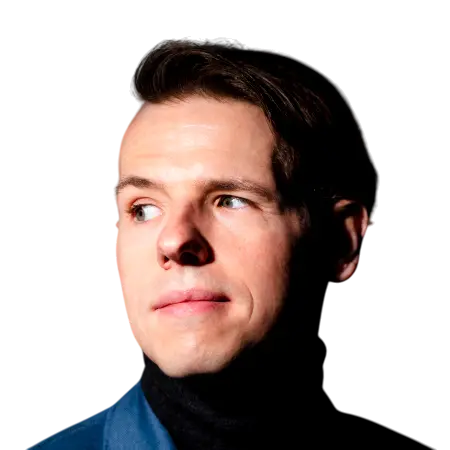
Daniel A.
Last position:
Solution Architect and Fullstack Developer at IoT Sensor Data Processing and Evaluation
- Develop a concept for the analysis of sensor data.
- Assess implementation options, products, and pricing in Azure.
- Present and advocate the solution concept to the client.
- Implement an ETL pipeline for processing sensor data.
- Integrate BI solutions with the data repository.
- Provide documentation and support for end users.
Fabio G.
Last position:
IT Architect, Requirements Analyst and Consultant at CANCOM
- Supports CANCOM customers in migrating legacy on-prem systems to Microsoft Fabric and Microsoft Foundry
- Takes over and stabilizes existing solutions after a short handover
- Business analysis and requirements engineering for migration to a new cloud environment
- Optimization of machine learning models for feature extraction and customer profiling
- Ensures data protection and compliance
- Leads the migration of on-prem systems to Microsoft Fabric
- Designs new AI platforms for clients
- Tests the integration of chatbots for document intelligence with Microsoft Foundry, including requirements analysis, implementation, validation, and client communication
Alexander V.

Last position:
Senior Cloud & Kubernetes Architect at A.S.E. | Business Solutions for Construction
- Architected and deployed a highly available, multi-tenant Kubernetes platform on Google Kubernetes Engine (GKE) for business-critical microservices.
- Designed and implemented a comprehensive Infrastructure-as-Code strategy using Terraform for managing GKE clusters, networking (VPCs, Subnets), and IAM policies.
- Engineered optimized storage solutions for stateful workloads (MongoDB) using GKE PersistentVolumes, enhancing performance and data resiliency.
- Established a full-stack observability framework using Google Cloud Monitoring, Logging, Prometheus, and Grafana.
Burak E.

Last position:
Senior Software Engineer at Nürnberger Versicherung
Further development of an insurance product quotation system
- Implementation and maintenance of pricing logic for property and casualty products (accident, property liability, business contents) based on Java and FaktorIPS
- Implementation of actuarial tariff revisions into product-specific calculation models
- Development and refactoring of backend components and web UI components
- Creation and maintenance of test tables and automated premium tests for quality assurance
- Code reviews and active involvement in quality assurance in the development process
- Production support and bug fixing in live operations
Jürgen E.
Last position:
Chief Executive Officer at Riddle&Code GmbH
- Pivoted the company into data-driven and AI-powered energy optimization solutions for microgrids, energy communities, and grid operators.
Discover over 15,000 top freelancers


Statistics of experts using Docker
Aggregated from the professional profiles of matched freelancers.

Experience
19 years (Austria: 17 years)

Position duration
2.3 years (Austria: 2.8 years)

Positions per freelancer
9 (Austria: 10)

Top business areas
Information Technology, Product Development, Business Intelligence

Top industries
Information Technology, Banking and Finance, Professional Services

Certification focus areas
Information Technology, Project Management, Product Development

Bachelor's degree or higher
84% (Austria: 81%)

Master's degree or higher
60% (Austria: 55%)

Doctorate
12% (Austria: 10%)

Certifications per freelancer
3

Most common languages
German, English, French

Speak two or more languages
100%
Based on our profile pool as of 9 Oct 2026.
Daily rate distribution
The chart shows how the daily rates of experts in this technology in Vienna are distributed, based on recent contracts on our platform. Each bar covers a rate range — its height shows the share of experts charging within that range.
Discover detailed Docker rate benchmarks:
Explore rate insightsAverage rates of experts in Vienna using Docker
Rates are based on recent contracts and do not include FRATCH margin.

The average daily rate is the mean of all daily rates from recent contracts of comparable freelancers on our platform.
The median daily rate is the middle value of all daily rates — half of comparable freelancers charge less, half charge more. Unlike the average, it is barely affected by outliers.
Calculated based on our freelancers’ daily rates as of 9 Oct 2026. Actual rates may vary depending on seniority level, experience, skill specialization, project complexity, and engagement length.
Docker experts industry focus
See which industries our matched freelancers work in most often — every figure is calculated live from the freelancers on FRATCH.
- Information Technology (89%)
- Banking and Finance (46%)
- Professional Services (43%)
- Transportation (39%)
- Government and Administration (39%)
- Education (36%)
- Telecommunication (29%)
- Healthcare (25%)
Please note that freelancers can work across multiple industries, so percentages overlap.
About the technology
What Docker does
Docker packages an application with its code, libraries, configuration, and runtime requirements into portable containers. These isolated units run consistently across local machines, test environments, servers, and cloud infrastructure. Companies use Docker to simplify delivery, reduce environment differences, and support repeatable releases.
Where it is used
Docker supports modern software delivery across product teams, agencies, and technology departments. Typical work includes:
- Containerizing web applications, APIs, and background services
- Building local development environments that mirror production
- Creating images for automated testing and deployment
- Running microservices with shared networks and storage
- Packaging workloads for cloud or Kubernetes environments
Ecosystem and tooling
The Docker ecosystem includes Docker Engine, Docker Desktop, Docker Hub, image registries, Compose, and Dockerfile-based build workflows. Strong specialists also work with Linux, networking, volumes, secrets, image scanning, and container lifecycle management. They connect Docker to GitHub Actions, GitLab CI, Jenkins, cloud services, and Kubernetes when projects require broader orchestration.
When companies need help
Freelance expertise is useful when a team is moving from manual server setup to reproducible environments, splitting a monolith into services, or preparing an application for continuous delivery. It also helps when images are slow, large, insecure, or difficult to operate. In Vienna, specialists may work remotely or collaborate on-site with product, infrastructure, and software teams; clear English is common, with German useful in some organizations.
What strong specialists deliver
A capable professional starts with the application’s runtime, dependencies, traffic patterns, and operational needs. They produce maintainable Dockerfiles, efficient multi-stage builds, clear Compose configurations, secure image practices, and documentation that teams can use without constant support. They also understand when a container is appropriate and when a simpler deployment model is better.
How quality is assessed
Review image size, build speed, reproducibility, startup behavior, and vulnerability handling rather than accepting a container that merely runs. Ask how the specialist manages secrets, persistent data, networking, logs, resource limits, and image updates. A practical review should include a working delivery pipeline, a rollback approach, and evidence that the setup behaves consistently from development through production.

Frequently asked questions
Quick answers to the questions that come up most around Docker.

Docker is used to package applications and their dependencies into containers that run consistently across environments. Companies use it for local development, automated testing, continuous delivery, microservices, and portable deployment to servers or cloud infrastructure.
Docker containers share the host operating system kernel, while virtual machines include a complete guest operating system. Containers usually start faster and use fewer resources, but virtual machines can provide stronger isolation when separate operating system environments are required.
Docker creates and runs containers, while Docker Compose defines multi-container applications for local development or smaller deployments. Kubernetes orchestrates containers across a cluster and adds scheduling, scaling, service discovery, and recovery capabilities.
A strong Docker specialist usually understands Linux, networking, registries, Git, CI/CD, and cloud infrastructure. Depending on the project, experience with Kubernetes, Terraform, observability, security scanning, and a programming language is also valuable.
The right Docker experience depends on the project’s operational complexity, not a fixed number of years. A simple application may need containerization and Compose, while a production platform may require secure image supply chains, orchestration, scaling, monitoring, and incident support.
Yes. Docker work is well suited to remote collaboration because Dockerfiles, Compose files, pipelines, and infrastructure changes can be reviewed in shared repositories. Teams in Vienna should agree on delivery practices, documentation, working hours, and whether German or English is preferred.
Ask the Docker specialist to explain image design, dependency management, secrets, networking, persistent storage, and deployment risks in the context of your application. Review a practical portfolio, repository examples, or a technical discussion that shows how they make containers secure, reproducible, and maintainable.
Common Docker mistakes include using oversized images, running processes with excessive privileges, storing secrets in images, ignoring image updates, and treating containers as permanent storage. Weak projects may also lack health checks, resource limits, logging, or a clear path from local development to production.
The average hourly rate of freelancers in Vienna, Austria who have used Docker in their recent projects is 100 €, which corresponds to a daily rate of about 801 € based on an 8-hour working day.
Of the freelancers in Vienna, Austria who have used Docker in their recent projects, 84% hold at least a Bachelor's degree, 60% hold at least a Master's degree, and 12% hold a doctorate.
On average, freelancers in Vienna, Austria who have used Docker in their recent projects have 19 years of professional experience, with a single engagement typically lasting around 2.3 years.
The most common languages among freelancers in Vienna, Austria who have used Docker in their recent projects are German (100%), English (100%), and French (21%).
The most common industries among freelancers in Vienna, Austria who have used Docker in their recent projects are Information Technology (89%), Banking and Finance (46%), and Professional Services (43%).
The most common business areas among freelancers in Vienna, Austria who have used Docker in their recent projects are Information Technology (100%), Product Development (86%), and Business Intelligence (54%).
Main locations of FRATCH Experts, who have recently used Docker
Our freelancers and interim experts are at home across the DACH region — available on-site in the major business hubs or fully remote. Choose a location to discover matched specialists, local market insights and up-to-date availability.
 Vienna
  Graz
Graz  Graz
Graz Countries:
Request a free demo
Get in touch with the FRATCH team and we will get back to you within 4 hours.
Would you rather directly get in touch?
We always have the time for a call or email!

Philipp Thomaschewski
FRATCH CEO

