


Casting Experts in Germany
matched in minutes with vetted, available specialistsHire experts who design cast components, prepare mold and tooling concepts, validate filling and solidification, and improve foundry production with simulation and quality methods. FRATCH matches you quickly and precisely with vetted, available freelancers for your casting project.

Meet FRATCH Experts in Germany, who have recently used Casting
Jakob H.
Last position:
Chief Transformation Officer at Engagement with an internationally active technology group
- Transformation and global scaling (listed in the MDAX)
- Stabilization and professionalization of the ongoing value creation program
- Consistent challenging of the workstreams regarding content, target achievement, and progress, as well as realization of the defined value drivers
- Identification and removal of implementation blockers to ensure execution speed
- Reporting to the Executive Board and Supervisory Board
Karin A.

Last position:
AI Benchmark Engineer | Native language specialist German at Lilt
- Task Engineering: Evaluating Coding Agents.
- Asset Creation: Building realistic task environments using datasets and files in German. Crucially, these assets must remain in the target language to genuinely measure multilingual handling.
- Prompting & Translation: finding failure points where AI does not work, in German.
- Implementation & Verification: Supporting the development of robust solutions (reference implementations) and write highly reliable, deterministic verifier scripts (using rubric-based judging only when strictly necessary).
- Calibration & Execution: Analyze execution logs and calibrate task difficulty (Easy to Very Hard) using standard Terminal-Bench run configurations against various model tiers (Haiku, Opus).
- Quality Assurance: Participation in a rigorous, 4-layer human quality control process (creation, human review, calibration review, and audit) alongside automated LLM-based checks to ensure fairness, grammatical accuracy, and benchmark integrity.
- Linguistic Review: Reviewing AI benchmark tasks across Hindi, Arabic, Japanese, Chinese, Czech and Turkish.
Christian B.

Last position:
External Commercial Advisor / Project Manager at Global automotive supplier for press and stamped parts
Automotive | Manufacturing | Commercial Excellence
- Analyzed sales strategy, product/market positioning, customer portfolio, acquisition approach, sales funnel, opportunity quality, and conversion.
- Developed a prioritized sales roadmap with quick wins and structural measures for target customers, pipeline, roles, routines, and management reviews.
Emmanuel O.
Last position:
Head of Procurement at Richter Chemie-Technik GmbH (Business Unit of IDEX Corporation)
- Responsible for the strategic and operational development of the procurement organization at Richter Chemie-Technik GmbH within the international IDEX Corporation, with a focus on procurement transformation, international sourcing strategies, cost reduction and the stabilization of global supplier and supply chain structures.
- Responsible for international sourcing strategies across direct and indirect commodities
- Management of strategic cost reduction, supplier development and procurement transformation initiatives
- Responsibility for commodities such as castings, PFA, ceramics, stainless steel and aluminum
- Conducting international price, contract and supplier negotiations
- Impact / Success:
- Identification of significant savings potential within strategic commodity structures
- Analysis of international market and supplier structures with identified potential of Ø 38 %
- Development of data- and performance-oriented procurement structures
- Promotion to the position of Head of Procurement after successfully completing the interim and transformation mandate
Carsten W.

Last position:
Supply Chain Consultant at Nextbike GmbH
- Analysis of the production and logistics relocation to Poland, development of an action plan, logistics process analysis
Jens M.
Last position:
Automation project manager at Capgemini Engineering @ ACC Battery Factory
PSA, Peugeot Citroën, France (10/2023 – 05/2024)
- Launch Manager for electrode production rolling lines
- Setup, modernization, and commissioning of cleanroom production equipment
- Management of a team of 15 Chinese technicians
- Recovery of a three-month delay and on-schedule delivery
Dan H.
Last position:
Owner / Business Consultant at Unternehmensberatung Dan Hartung
- Strategic consulting and support for certifications according to ISO 9001, ISO 14001, VDA 6.3, IATF 16949, TISAX, and AZAV.
- Optimization of business processes to improve efficiency, legal compliance, and audit readiness.
- Delivery of professional training, including forklift training, safety briefings, and ADR 1.3.
Roland H.
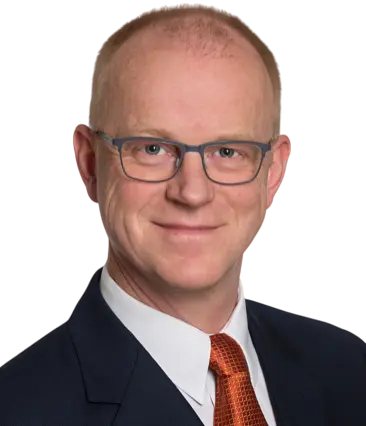
Last position:
CEO at SOEX Group (& I:CO)
- Got a misguided restructuring back on track
- Successfully created positive momentum by motivating, inspiring, and encouraging employees to stay committed during this difficult phase
- Developed a solid strategy concept and created a 5-year roadmap from it
- End-to-end, AI-supported digitalization of collection logistics processes, which led to optimized operations and a significant increase in efficiency
- Designed a complex technical concept for automated, AI-supported textile sorting on an industrial scale
- Implemented efficient structures and established clear communication channels, which helped improve team coordination and clearly define responsibilities
- Strategic development and successful implementation of a dynamic sales structure, which, through proactive leadership and targeted talent development, led to higher sales momentum and employee motivation
- Created tailored concepts for international retailers, fashion brands, producers, and wholesalers (pre-/post-consumer textiles) as a key part of the new strategic direction
- Initiated and maintained partnerships between industry and research to advance the shared goal of “Circularity in Textile” with recognized expertise
- Targeted reduction of the investment backlog through modernization and optimization of machinery and plant technology, which led to a significant increase in operational productivity
Volker S.
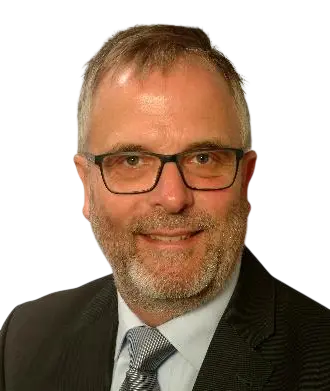
Last position:
Operations Manager ATT Area at Klingelnberg AG
Bridging the vacancy of operations manager ATT area
Process optimization
Reduction of lead times
Reorganization of the ATT area
Increase in OTIF from 73% to 92%
Greater flexibility in employee deployment through internal equipment training
Integration of a new cooperation partner
Implementation of an MDE system
Gundolf S.
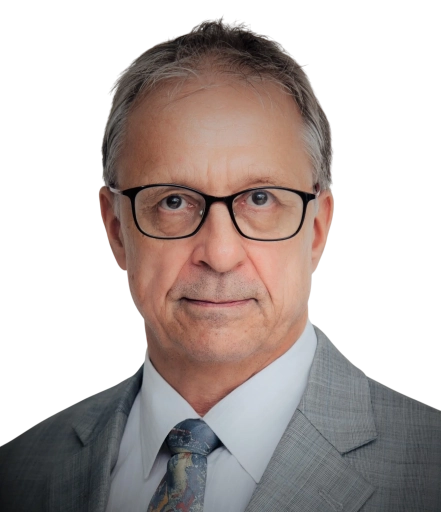
Last position:
Project Manager at Self-employed – Freelancer
- Project Manager steel works crane and material handling at ArcelorMittal in Eisenhüttenstadt for their decarburization project, December 2024 to March 2025
- Project Manager Cranes and Logistics for the new converter at Aurubis Hamburg via Hays AG, May to October 2024
- Specification for placing the orders and coordination of interfaces
- Erection of a powder production plant for an Indian customer in Bengaluru, 2024
- Leading the erection and assembly team of the customer Indo MIM
- Responsible for Health, Safety and Environment
- Technical and commercial project management at Belimed Life Science AG in Sulgen, Switzerland, with SAP, 2022
- Revamp of a slab rolling mill for copper for Siam Poongsan including engineering, construction and site and quality management, own order directly from the end customer, 2021 to 2023
- Site and quality management for a powder production plant (gas atomization system) in Penang, Malaysia, Oryx Advanced Materials, 2022
- Interim Head of Services at ALD Vacuum Technologies, Hanau/Bangkok, installation, service and construction management, 2019 to 2024
- Interim Head of Service Cold Rolling Mills and continuous casting at Danieli Thailand/Vietnam, 2016 to 2018
- Interim Manager Quality Assurance at SMS Concast for four months in 2018
Michael I.
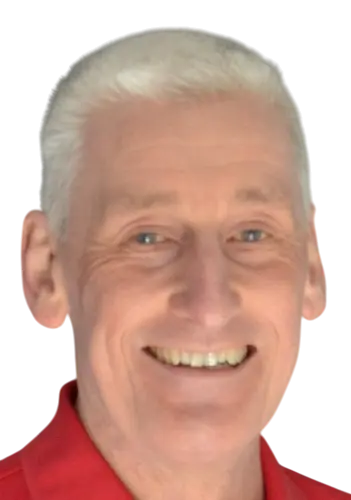
Last position:
CFO at innopreneurs
Martin M.
Last position:
Requirements Engineer at MCM Modern Engineering UG HB
- Analysis of the current process
- Development of the target processes
- Support for the implementation of improvements in an SAP-enabled program
- Simplification of customer contact initiation
- Streamlining internal processes through automated real-time verification of claim relevance
- Creation of use cases
Ronald J.
Last position:
HSE Manager at Ralf Hirsch GmbH
- Site inspections and briefings during the Hitachi converter rebuild
- Preparing and reviewing risk assessments and RAMS
- Processing work permits
- Conducting training for slingers
Björn B.
Last position:
Chief Financial Officer (CFO) at Heimbach Group
- Overall management of Heimbach GmbH with an annual turnover of €160 million and approx. 1,300 employees alongside the CEO
- Responsible for finance, controlling, purchasing, IT and human resources including personnel development
- Managed and further developed the commercial organization and ensured integrated corporate planning and management
- Actively supported strategic and operational decision-making processes
- Increased EBITDA margin from 8% to 11% during challenging conditions through improved financial transparency, performance and cost programs, and optimization of purchasing, organizational and IT structures
- Led preparation and successful execution of due diligence and sale of the company to a strategic investor (EBITDA multiple approx. 10x)
Alexander N.
Last position:
Strategic Buyer at Fresenius Medical Care Deutschland GmbH
- Global search for electronic components that were basically no longer available due to the chip crisis or allocation.
- Tools: MS Office and ORDAT B.08.60.491
Discover over 15,000 top freelancers


Statistics of experts using Casting
Aggregated from the professional profiles of matched freelancers.

Experience
32 years

Position duration
4 years

Positions per freelancer
15

Top business areas
Project Management, Quality Assurance, Production

Top industries
Manufacturing, Automotive, Professional Services

Certification focus areas
Quality Assurance, Operations, Human Resources

Bachelor's degree or higher
72%

Master's degree or higher
33%

Certifications per freelancer
3

Most common languages
German, English, French

Speak two or more languages
95%
Based on our profile pool as of 9 Oct 2026.
Daily rate distribution
The chart shows how the daily rates of experts in this technology in Germany are distributed, based on recent contracts on our platform. Each bar covers a rate range — its height shows the share of experts charging within that range.
Average rates of experts in Germany using Casting
Rates are based on recent contracts and do not include FRATCH margin.

The average daily rate is the mean of all daily rates from recent contracts of comparable freelancers on our platform.
The median daily rate is the middle value of all daily rates — half of comparable freelancers charge less, half charge more. Unlike the average, it is barely affected by outliers.
Calculated based on our freelancers’ daily rates as of 9 Oct 2026. Actual rates may vary depending on seniority level, experience, skill specialization, project complexity, and engagement length.
Casting experts industry focus
See which industries our matched freelancers work in most often — every figure is calculated live from the freelancers on FRATCH.
- Manufacturing (95%)
- Automotive (74%)
- Professional Services (47%)
- Aerospace and Defense (28%)
- Construction (28%)
- Metals and Mining (28%)
- Energy (23%)
- Chemical (21%)
Please note that freelancers can work across multiple industries, so percentages overlap.
About the technology
What Casting Covers
Casting forms metal parts by filling a mold with liquid material and allowing it to solidify. The method supports complex shapes, internal cavities and production volumes that may be difficult or costly to achieve through machining alone. Projects can involve aluminum, steel, iron, bronze or specialist alloys, with process choices shaped by geometry, tolerance, surface finish and batch size.
Process Variants
The right method depends on the part and its production conditions. Sand casting offers flexible tooling, while investment casting supports intricate forms and fine detail. Die casting suits repeatable non-ferrous production, and centrifugal or continuous casting serves specific geometries and material flows.
- Sand, investment and lost-wax casting
- Gravity, pressure and low-pressure die casting
- Centrifugal and continuous casting
- Permanent mold and shell processes
Engineering Toolchain
Casting specialists work across CAD, mold design and manufacturing engineering. They use filling and solidification simulation to identify porosity, shrinkage, air entrapment, hot spots and distortion before tooling is released. Common work also includes gating and riser design, core concepts, alloy selection, tolerancing and technical documentation.
Where Companies Use It
Cast components appear in vehicle systems, industrial machinery, energy equipment, pumps, valves, construction products and consumer hardware. Germany-based manufacturers may need specialists who can coordinate with local foundries, toolmakers and quality teams, while remote work is practical for design, simulation and documentation when plant access is not required.
- Lightweight housings and structural components
- Engine, drivetrain and mobility parts
- Pumps, valves and fluid-handling bodies
- Tooling, mold and core development
- Root-cause analysis for casting defects
When Freelance Expertise Helps
Companies often bring in freelance casting professionals during a new product introduction, process transfer or tooling redesign. External support can clarify whether a defect comes from feeding, temperature control, mold design, material behavior or finishing. Specialists can also prepare supplier requirements, review quotations, support trials and establish inspection plans.
Signs of Strong Specialists
Strong professionals connect part requirements with stable production rather than optimizing one isolated simulation result. They explain trade-offs between tooling cost, cycle time, yield, tolerances and downstream machining. Look for experience with the relevant alloy and process, clear design reviews, practical foundry communication and evidence that recommendations were verified through trials, measurements or controlled corrective action.

Frequently asked questions
Questions about Casting? Start with the answers below.

Casting is used to produce metal components by pouring or injecting molten material into a mold. It is useful for complex shapes, large components, enclosed cavities and parts that would require extensive machining if made from solid stock.
Casting offers greater freedom for complex geometries and can reduce material waste for suitable parts. Forging often provides stronger directional material properties, while machining delivers tight precision but can require more material removal and longer production effort.
A strong casting specialist usually understands CAD, mold and tooling design, metallurgy, process simulation and quality inspection. Experience with CNC machining, heat treatment, welding, dimensional measurement and supplier coordination is also valuable because cast parts rarely stop at the foundry.
The required depth depends on the risk and scope of the work. A specialist reviewing a drawing may need less process ownership than someone responsible for alloy selection, tooling release, simulation, foundry trials and corrective action on production defects.
Casting work such as CAD review, gating studies, simulation and technical documentation can often be completed remotely. Plant trials, mold inspections, sample approval and production troubleshooting may require on-site access, especially when the foundry or supplier is in Germany.
A casting freelancer should clarify the part geometry, alloy, process route, expected volumes, tolerances, tooling status and known defects. They should also confirm available simulation data, foundry capabilities, inspection methods and who owns final process approval.
Ask for concrete examples involving similar alloys, processes, component sizes or defect modes. A capable casting professional can explain the cause-and-effect behind a recommendation, define how it will be validated and communicate limitations without hiding behind software results.
Casting is the broad manufacturing family, while die casting is one pressure-based variant that uses permanent metal tooling. Die casting can provide repeatable dimensions and efficient cycles for suitable non-ferrous parts, but sand, investment and gravity methods may be better for other geometries or production needs.
The average hourly rate of freelancers in Germany who have used Casting in their recent projects is 108 €, which corresponds to a daily rate of about 861 € based on an 8-hour working day.
Of the freelancers in Germany who have used Casting in their recent projects, 72% hold at least a Bachelor's degree and 33% hold at least a Master's degree.
On average, freelancers in Germany who have used Casting in their recent projects have 32 years of professional experience, with a single engagement typically lasting around 4 years.
The most common languages among freelancers in Germany who have used Casting in their recent projects are German (100%), English (95%), and French (33%).
The most common industries among freelancers in Germany who have used Casting in their recent projects are Manufacturing (95%), Automotive (74%), and Professional Services (47%).
The most common business areas among freelancers in Germany who have used Casting in their recent projects are Project Management (84%), Quality Assurance (79%), and Production (67%).
Main locations of FRATCH Experts, who have recently used Casting
Our freelancers and interim experts are at home across the DACH region — available on-site in the major business hubs or fully remote. Choose a location to discover matched specialists, local market insights and up-to-date availability.
 Berlin Hamburg Munich Cologne Frankfurt Stuttgart Dusseldorf Leipzig Dortmund Essen Bremen Dresden Hanover Nuremberg
 Request a free demo
Get in touch with the FRATCH team and we will get back to you within 4 hours.
Would you rather directly get in touch?
We always have the time for a call or email!

Philipp Thomaschewski
FRATCH CEO

