


Blockchain Experts in Austria
, matched quickly by AIHire experts who design smart contracts, tokenization models and secure Web3 applications, with practical knowledge of Ethereum, Hyperledger and decentralized data systems. FRATCH matches you precisely with vetted, available freelancers in minutes.

Meet FRATCH Experts in Austria, who have recently used Blockchain
Nikola N.
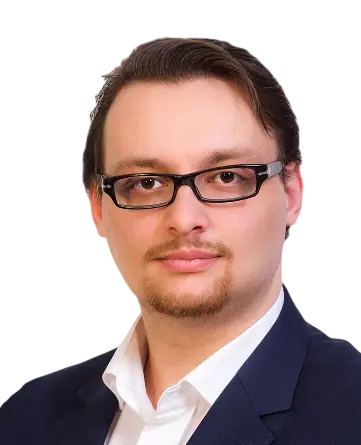
Last position:
Founder and CEO - Senior Business Analyst at fintechno AI GmbH
- Business analysis
- Requirements engineering
- System design
- Various insurance projects
- Technology stack: msg.Billing (InExkasso)
- Product: Pay-per-use car insurance based on blockchain and OBD-II real-time telemetry with AI
Gabriele B.
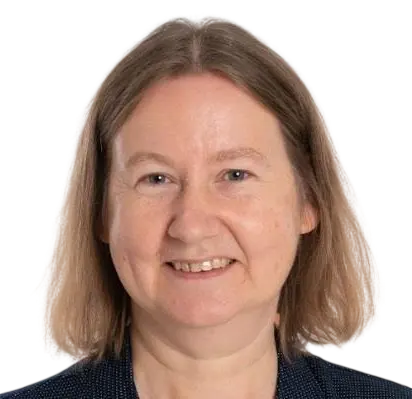
Last position:
Founder and Managing Director at PaiperOne GmbH
- Main tasks and responsibilities: development, acquisition, sales, consulting, and controlling
- Area of work or industry: Software as a Service in AI compliance and consulting
Selection of client projects:
- Creation and operation of an AI governance platform, including training content on the use of AI in companies
- Design, setup, and operation of the ISO 42001 management system at PaiperOne with certification by TÜV
- Auditor according to ISO 17024 at Austrian Standards for the "AI Manager"
- AI training for staff of two Austrian publishing groups
- AI training for the management level at the State of Lower Austria
- AI strategy workshop for a municipality in Styria and a municipality in Salzburg
- AI workshops for the House of Digitalization in Tulln
- AI training for municipalities at KDZ
- Delivery of training on "Certified AI Compliance Officer" at the Academy for Internal Audit
- Organizational consulting on AI governance at ÖGK
- Project support for the "homepage chatbot" at öbv
- Certification exams at Austrian Standards
Werner P.
Last position:
Industrial Innovation & Digital Product Advisory at VarionImpact
I help industrial companies in strategy and implementation of digital products.
I work with companies that see software, automation, and connected systems as core drivers of growth or are in the process of becoming exactly that. I help organizations turn technological potential into market-relevant solutions by aligning strategy, product thinking, and execution.
My work sits at the intersection of industry expertise, software, and business impact.
Jürgen E.
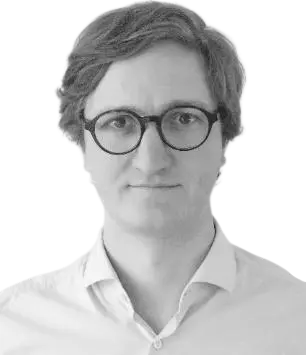
Last position:
Chief Executive Officer at Riddle&Code GmbH
- Pivoted the company into data-driven and AI-powered energy optimization solutions for microgrids, energy communities, and grid operators.
Patrik G.

Last position:
Engineering & Development at TOBG Services Ltd
- Increased system uptime and performance while decreasing costs. Managing server infrastructure for DLT and application services
- Design and implement AI-workflow automation
- Developed the stakit.io App using Redis, Prometheus, Grafana
- Creating a multi-AI chat App with advanced AI-integration
- Developing an AI-powered document analysis solution for in-house and service deployment
Christian M.

Last position:
Senior Feature Engineer - Banking at start.me app e.U.
- Requirements engineering & business analysis
- Architecture responsibility for core banking extensions
- Interface modeling for third-party systems (TiGital, ESA, ÖNB)
- AML, KYC & payment reporting
Discover over 15,000 top freelancers


Statistics of experts using Blockchain
Aggregated from the professional profiles of matched freelancers.

Experience
25 years

Position duration
3.7 years

Positions per freelancer
10

Top business areas
Information Technology, Product Development, Project Management

Top industries
Information Technology, Education, Professional Services

Certification focus areas
Information Technology, Legal, Product Development

Bachelor's degree or higher
83%

Master's degree or higher
67%

Doctorate
17%

Certifications per freelancer
3

Most common languages
German, English, Bulgarian

Speak two or more languages
100%
Based on our profile pool as of 29 Oct 2026.
Daily rate distribution
The chart shows how the daily rates of experts in this technology in Austria are distributed, based on recent contracts on our platform. Each bar covers a rate range — its height shows the share of experts charging within that range.
Average rates of experts in Austria using Blockchain
Rates are based on recent contracts and do not include FRATCH margin.

The average daily rate is the mean of all daily rates from recent contracts of comparable freelancers on our platform.
The median daily rate is the middle value of all daily rates — half of comparable freelancers charge less, half charge more. Unlike the average, it is barely affected by outliers.
Calculated based on our freelancers’ daily rates as of 29 Oct 2026. Actual rates may vary depending on seniority level, experience, skill specialization, project complexity, and engagement length.
Blockchain experts industry focus
See which industries our matched freelancers work in most often — every figure is calculated live from the freelancers on FRATCH.
- Information Technology (100%)
- Education (50%)
- Professional Services (50%)
- Automotive (33%)
- Energy (33%)
- Banking and Finance (33%)
- Insurance (33%)
- Manufacturing (33%)
Please note that freelancers can work across multiple industries, so percentages overlap.
About the technology
Distributed trust
Blockchain is a shared ledger that records transactions across a network instead of relying on one central database. Cryptographic signatures, consensus rules and tamper-evident records help participants coordinate without automatically trusting one another. Companies use it for verifiable ownership, shared records and programmable transactions.
What it builds
Blockchain projects range from smart-contract applications to tokenized assets and business networks. The right design depends on privacy, transaction volume, governance and the need for public or permissioned access.
- Smart contracts for payments, ownership and automated workflows
- Tokenization of assets, credentials and digital rights
- Decentralized applications with wallets and on-chain data
- Traceability systems for supply chains and shared records
Ecosystem and tooling
The ecosystem includes public networks such as Ethereum and Bitcoin, as well as enterprise frameworks such as Hyperledger Fabric. Specialists may work with Solidity, Rust or other contract languages, wallet integrations, node infrastructure, indexing services and decentralized storage. They also connect blockchain systems with APIs, cloud services and existing databases.
When companies need expertise
Freelance specialists are useful when a company must assess whether blockchain is justified, select a network or move a proof of concept toward production. They can review contract logic, define governance and prepare secure integrations. In Austria, projects may involve financial services, manufacturing, energy, logistics or public-sector records, with collaboration arranged remotely or on site.
- Evaluate a blockchain use case against a conventional database
- Design contract, identity and permission models
- Audit smart contracts and plan deployment controls
- Integrate wallets, custody services and enterprise systems
Strong professional practice
Strong professionals treat security as a system concern, not only a code review task. They understand key management, access control, upgrade strategies, privacy limits and failure recovery. They explain decentralization trade-offs clearly and document assumptions, threat models, testing and operational responsibilities.
Choosing the right specialist
Look for relevant deliveries rather than broad blockchain terminology. Ask how the professional handled contract testing, transaction failures, network fees, data privacy and monitoring. A capable specialist can compare Ethereum, Hyperledger, Bitcoin and conventional architectures without forcing every problem onto a distributed ledger. For Austria-based teams, clear communication in the required working languages and dependable remote collaboration can matter as much as technical depth.

Frequently asked questions
Need clarity? These are the questions we hear most often about Blockchain.

Companies use Blockchain for shared transaction records, smart-contract automation, digital identity, asset tokenization and traceability. It is most useful when several parties need a consistent record but do not want one participant to control the entire system.
A Blockchain distributes records and uses consensus and cryptography to make changes verifiable across participants. A conventional database is usually faster and simpler when one trusted organization owns the data and controls access.
The choice depends on the required programmability, privacy, governance, settlement model and integration needs. Blockchain specialists should compare Ethereum for programmable public applications, Bitcoin for its focused monetary network and Hyperledger Fabric for permissioned business networks.
A strong Blockchain professional may also understand Solidity or Rust, smart-contract testing, wallet security, cryptography, cloud infrastructure, APIs and frontend integration. Knowledge of compliance, product design and enterprise data architecture is valuable for business-facing projects.
The required depth depends on the risk and scope. A simple integration may need focused implementation skills, while a system handling assets or sensitive transactions requires proven work with smart-contract security, key management, audits and production operations.
Yes. Blockchain work is often well suited to remote collaboration because code, documentation, repositories and test networks are shared online. Agree on working hours, communication routines, security procedures and whether workshops or stakeholder sessions require on-site presence in Austria.
Review the professional’s architecture decisions, test strategy, security process and handling of failed or compromised transactions. Ask for a clear explanation of why a distributed ledger is needed and how the system behaves during upgrades, outages and disputed records.
Clarify the network, custody model, contract upgrade rules, data that may be stored on chain and the responsibilities of each participant. Distributed ledger technology projects also need clear decisions about governance, privacy, monitoring and who can authorize irreversible actions.
The average hourly rate of freelancers in Austria who have used Blockchain in their recent projects is 102 €, which corresponds to a daily rate of about 815 € based on an 8-hour working day.
Of the freelancers in Austria who have used Blockchain in their recent projects, 83% hold at least a Bachelor's degree, 67% hold at least a Master's degree, and 17% hold a doctorate.
On average, freelancers in Austria who have used Blockchain in their recent projects have 25 years of professional experience, with a single engagement typically lasting around 3.7 years.
The most common languages among freelancers in Austria who have used Blockchain in their recent projects are German (100%), English (100%), and Bulgarian (17%).
The most common industries among freelancers in Austria who have used Blockchain in their recent projects are Information Technology (100%), Education (50%), and Professional Services (50%).
The most common business areas among freelancers in Austria who have used Blockchain in their recent projects are Information Technology (100%), Product Development (100%), and Project Management (67%).
Main locations of FRATCH Experts, who have recently used Blockchain
Our freelancers and interim experts are at home across the DACH region — available on-site in the major business hubs or fully remote. Choose a location to discover matched specialists, local market insights and up-to-date availability.
Countries:
- Germany
- Austria
- Switzerland
 Vienna Graz
Request a free demo
Get in touch with the FRATCH team and we will get back to you within 4 hours.
Would you rather directly get in touch?
We always have the time for a call or email!

Philipp Thomaschewski
FRATCH CEO

