


BAIT Experts in Munich
for resilient banking IT, matched with vetted freelancers in minutesHire experts who translate Bankaufsichtliche Anforderungen an die IT into workable controls, ICT risk processes and audit-ready evidence. FRATCH matches you quickly and precisely with vetted, available freelancers for BAIT-related programmes.

Meet FRATCH Experts in Munich, who have recently used BAIT
Dheeraj K.

Last position:
Senior IT Audit Consultant at Confidential Financial Services Client
System Transformation Audit
Supporting a project-related IT audit of a system transformation within the financial services sector, focusing on controls associated with different types of system migrations. The work involves reviewing migration-specific documentation and supporting evidence to assess whether the controls for each migration type are adequately evidenced and sufficient to address the associated migration risks. Particular emphasis is placed on the adequacy of control measures, the reliability of supporting evidence, and safeguards relating to data integrity and migration-related risks.
Team Size: 2 project managers, 1 delivery manager, 2 senior consultants
Tasks & Responsibilities:
- Reviewing documentation and supporting evidence for different types of system migrations.
- Assessing migration-specific control procedures and evaluating whether the controls are appropriate and sufficient to address the associated risks.
- Evaluating the adequacy and completeness of evidence provided to demonstrate that migration controls have been performed as intended.
- Reviewing relevant control measures designed to safeguard data completeness, accuracy, and integrity during migration, where applicable.
- Identifying potential control gaps, insufficient evidence, and areas requiring further clarification or additional audit procedures.
- Assessing whether the documented migration approach and associated controls adequately address the risks arising from the respective migration type.
- Coordinating with relevant project stakeholders to clarify migration procedures, obtain supporting documentation, and follow up on open audit questions.
- Documenting audit procedures, evidence reviewed, control assessments, and observations in accordance with the engagement's audit methodology.
Audit Standards, Methodologies and Regulatory Frameworks: Migration Controls Assessment, Migration Risk Assessment, Evidence Review, Control Testing, IT Audit Documentation.
Areas of Expertise: System Transformation, System Migration Controls, Migration Risk Assessment, Control Evaluation, Evidence Assessment.
Main Results & Achievements:
- Contributing to the assessment of migration controls and the identification of potential control gaps.
- Identifying evidence deficiencies and areas requiring further clarification.
- Documenting audit observations and supporting the evaluation of migration-related risks and control effectiveness.
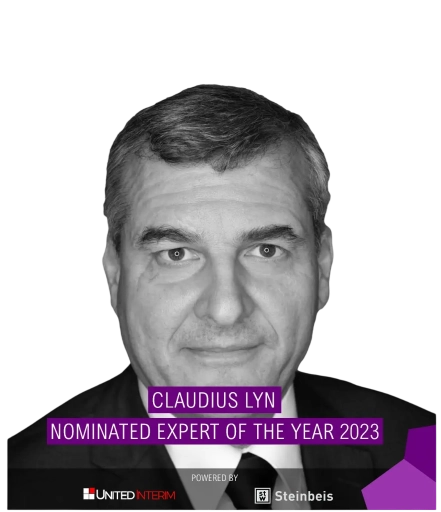
Claudius L.
Last position:
Multi-project manager
Industrial sector: Transport
Tasks: Continuation of existing projects, advice on artificial intelligence (AI), implementation of regulatory requirements, management of external service providers
Subprocesses: Order clarification, role clarification, consolidation, effort estimation, activity planning, status reporting, progress tracking, stakeholder discussions, risk analysis
Background: Cloud computing, artificial intelligence (AI), predictive maintenance, compliance, governance, standing orders compliance, KRITIS
Software: Cherwell, Docker, IoT, MS Sharepoint, MS Teams, SQL Server
Tadeusz A.

Last position:
Lead Architect Enterprise Architecture & Security at CGI
Lead Architecture in an interdisciplinary architecture team covering enterprise, solution, NOOTS, cloud and security architecture as well as regulatory and European interoperability requirements.
Public / Government
Development and management of target architectures, principles, standards and technical guardrails; assessment of Security-by-Design, IAM, data protection and interface/integration architectures; architecture reviews, security assessments, risk analyses, and preparation of decision records, target visions, roadmaps and decision papers. Architectural knowledge and consideration of relevant AD-NOOTS requirements, particularly for IAM, authorization, secure integration and interoperability.
Technologies / Methods: Enterprise Architecture, Solution Architecture, Security Architecture, Cloud Architecture, NOOTS / EU-OOTS, IAM, Authorization, Security-by-Design, API/Integration Architecture, Interoperability, Risk Analysis, Architecture Governance
Security and integration requirements as well as technical decisions are structured in reliable architecture and decision artifacts.
Florian B.

Last position:
Project Management / PMO Consultant
PMO & Project Organization Blueprint for Restructuring
Renewable Energy / Solar Equipment
Technologies / Methods: PMO setup, KPI tracking, project organization, Jira, Confluence
- Developed measures to improve management control during a restruct...
Rainer V.

Last position:
Advisor at IGDCR
- Digitalization
- Consulting
- Strategy
- Governance
Marcus D.

Last position:
Chairman of the Advisory Board at Delabo Gruppe
Chairman of the advisory board in the dental laboratory sector
Jörg S.

Last position:
Interim Release Management, Test Coordination at Deutsche Pfandbriefbank AG
- Cross-project test coordination and management for minor and major releases in a complex, integrated test environment
- Coordination of test batch executions
- Conducting project and release status meetings, collecting and communicating project status, and approving releases
Michael L.

Last position:
Identity & PAM Architect at BfArM
- Implementation of CyberArk OnPremise
- BSI basic protection (high protection needs)
- Breaking Class Strategy
- IdP / Identity Strategy / PIM
- Technologies: PAM, CyberArk OnPremise, KeyCloak
Björn K.

Last position:
Product Owner at ING Retail Bank
Organizational and technical process development and design of the digitization and online use of bank mandates. Responsible for accurately capturing requirements in Epics and User Stories, including backlog management, MVP, implementation support, and end-to-end testing of the implementation according to the SAFe Agile Framework methodology, creating process and interface documentation, and sprint demos. Established a knowledge management system based on Confluence and SharePoint, including employee training and workshops.
Discover over 15,000 top freelancers


Statistics of experts using BAIT
Aggregated from the professional profiles of matched freelancers.

Experience
22 years (Germany: 23 years)

Position duration
1.8 years (Germany: 2.3 years)

Positions per freelancer
14 (Germany: 16)

Top business areas
Information Technology, Project Management, Quality Assurance

Top industries
Information Technology, Banking and Finance, Professional Services

Certification focus areas
Information Technology, Project Management, Business Intelligence

Bachelor's degree or higher
100% (Germany: 93%)

Master's degree or higher
50%

Certifications per freelancer
6 (Germany: 7)

Most common languages
German, English, Spanish

Speak two or more languages
100% (Germany: 99%)
Based on our profile pool as of 18 Nov 2026.
Daily rate distribution
The chart shows how the daily rates of experts in this technology in Munich are distributed, based on recent contracts on our platform. Each bar covers a rate range — its height shows the share of experts charging within that range.
Average rates of experts in Munich using BAIT
Rates are based on recent contracts and do not include FRATCH margin.

The average daily rate is the mean of all daily rates from recent contracts of comparable freelancers on our platform.
The median daily rate is the middle value of all daily rates — half of comparable freelancers charge less, half charge more. Unlike the average, it is barely affected by outliers.
Calculated based on our freelancers’ daily rates as of 18 Nov 2026. Actual rates may vary depending on seniority level, experience, skill specialization, project complexity, and engagement length.
BAIT experts industry focus
See which industries our matched freelancers work in most often — every figure is calculated live from the freelancers on FRATCH.
- Information Technology (100%)
- Banking and Finance (89%)
- Professional Services (67%)
- Retail (67%)
- Telecommunication (44%)
- Transportation (33%)
- Manufacturing (33%)
- Media and Entertainment (33%)
Please note that freelancers can work across multiple industries, so percentages overlap.
About the technology
What BAIT covers
BAIT stands for Bankaufsichtliche Anforderungen an die IT. The German supervisory framework defines expectations for information technology, IT governance, information security, IT risk management and outsourcing in banks and financial institutions. It turns regulatory principles into controls, responsibilities and evidence that an organisation can operate and review.
Where it applies
BAIT work supports institutions that must govern critical systems, protect information and maintain reliable financial services. Typical deliverables include:
- IT strategies, policies and control frameworks
- Information-security and IT-risk assessments
- Business continuity and recovery procedures
- Outsourcing registers, provider oversight and exit plans
- Audit evidence and remediation tracking
The framework is especially relevant to German banking operations, payment services and regulated financial groups. In Munich, specialists often coordinate with internal risk, compliance, security and technology teams across hybrid workplaces.
Related requirements
BAIT connects with MaRisk, the German supervisory framework for risk management, and with requirements for outsourcing and operational resilience. Projects may also involve ISO 27001, the BSI IT-Grundschutz approach, data protection controls and the European DORA regime. Strong specialists understand where these requirements overlap and where separate evidence is needed.
Tools and deliverables
BAIT itself is not software. Professionals work with governance, risk and compliance systems, service-management tools, identity controls, security monitoring and document repositories. Their output can include control descriptions, risk registers, asset and provider inventories, incident processes, test plans, management reports and traceable audit packs.
When companies need specialists
Companies usually bring in freelance BAIT expertise when a regulatory review is approaching, a control framework is being redesigned or a major outsourcing arrangement needs assessment. Useful signals include:
- Repeated audit findings without clear owners
- Inconsistent evidence across business units
- A core-system migration or cloud transition
- Unclear recovery targets and resilience tests
- A need to map BAIT controls to DORA or ISO 27001
A specialist can establish a practical backlog, clarify accountability and help permanent teams embed the controls rather than producing documents that remain unused.
What strong experts bring
The best BAIT professionals combine supervisory knowledge with operational IT understanding. They can challenge a control, follow it into system and supplier processes, and explain its effectiveness to management, auditors and technical teams. Look for clear evidence of risk-based prioritisation, tested procedures, concise documentation and experience working with regulated financial services.

Frequently asked questions
The facts hiring teams ask for most often when it comes to BAIT.

BAIT sets supervisory expectations for how a bank governs IT, manages information security and controls technology risks. It helps institutions define responsibilities, protect critical services, oversee suppliers and provide evidence to auditors and supervisors.
Bankaufsichtliche Anforderungen an die IT works alongside MaRisk and must now be considered with the European DORA requirements. They overlap in areas such as ICT risk, resilience, incidents and third-party oversight, but each framework has its own scope and evidence needs.
A strong BAIT specialist often brings knowledge of information security, IT risk, outsourcing governance, business continuity and audit management. Experience with ISO 27001, BSI IT-Grundschutz, service management or GRC tools is useful when it supports the institution’s specific control model.
The right level depends on the work. A focused policy review may need a specialist who can assess controls and evidence, while a transformation across several entities requires leadership, banking-sector knowledge and the ability to coordinate risk, compliance and technology stakeholders.
Much of the BAIT work can be done remotely, including control mapping, evidence reviews and policy design. On-site sessions in Munich can help with workshops, interviews and access to sensitive processes, while German communication skills may matter when working with local governance and supervisory documentation.
Ask for examples of controls that the specialist helped implement, test or remediate rather than examples of documents they only prepared. A high-quality BAIT professional explains risk clearly, links requirements to operational evidence and distinguishes effective controls from formal compliance language.
BAIT applies within the German banking supervisory context, but the effort and depth should reflect an institution’s size, structure, risk profile and technology model. Smaller regulated institutions may still need disciplined IT governance, security controls, continuity planning and oversight of external providers.
A BAIT freelancer often starts with a current-state review covering governance, risks, controls, systems, suppliers and available evidence. The first deliverables may be a prioritised gap assessment, an ownership map and a remediation plan that aligns regulatory needs with practical operating work.
The average hourly rate of freelancers in Munich, Germany who have used BAIT in their recent projects is 102 €, which corresponds to a daily rate of about 819 € based on an 8-hour working day.
Of the freelancers in Munich, Germany who have used BAIT in their recent projects, 100% hold at least a Bachelor's degree and 50% hold at least a Master's degree.
On average, freelancers in Munich, Germany who have used BAIT in their recent projects have 22 years of professional experience, with a single engagement typically lasting around 1.8 years.
The most common languages among freelancers in Munich, Germany who have used BAIT in their recent projects are German (100%), English (89%), and Spanish (33%).
The most common industries among freelancers in Munich, Germany who have used BAIT in their recent projects are Information Technology (100%), Banking and Finance (89%), and Professional Services (67%).
The most common business areas among freelancers in Munich, Germany who have used BAIT in their recent projects are Information Technology (100%), Project Management (89%), and Quality Assurance (78%).
Main locations of FRATCH Experts, who have recently used BAIT
Our freelancers and interim experts are at home across the DACH region — available on-site in the major business hubs or fully remote. Choose a location to discover matched specialists, local market insights and up-to-date availability.
 Berlin Hamburg
 Munich Cologne Frankfurt Stuttgart Dusseldorf Leipzig Dortmund Essen Bremen Dresden Hanover Nuremberg
 Berlin
 Cologne
 Frankfurt
 Dusseldorf
Countries:
Request a free demo
Get in touch with the FRATCH team and we will get back to you within 4 hours.
Would you rather directly get in touch?
We always have the time for a call or email!

Philipp Thomaschewski
FRATCH CEO

