


T-SQL Experts in Germany
in minutes with precise AI matching and vetted, available freelancersHire experts who design SQL Server databases, tune complex queries and build reliable stored procedures, reporting workflows and data integrations. FRATCH matches you quickly and precisely with vetted, available freelancers for your T-SQL project.

Meet FRATCH Experts in Germany, who have recently used T-SQL
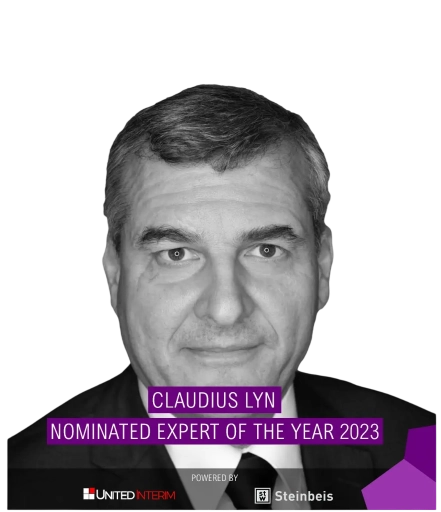
Claudius L.
Last position:
Multi-project manager
Industrial sector: Transport
Tasks: Continuation of existing projects, advice on artificial intelligence (AI), implementation of regulatory requirements, management of external service providers
Subprocesses: Order clarification, role clarification, consolidation, effort estimation, activity planning, status reporting, progress tracking, stakeholder discussions, risk analysis
Background: Cloud computing, artificial intelligence (AI), predictive maintenance, compliance, governance, standing orders compliance, KRITIS
Software: Cherwell, Docker, IoT, MS Sharepoint, MS Teams, SQL Server
Ravindra K.

Last position:
Data Engineer (Team Lead) at OPTUM – UnitedHealth Group
- Lakehouse build: Designed and built the member & eligibility domain of an Azure Databricks healthcare lakehouse, ingesting SQL Server, file and REST/SFTP sources (JSON, CSV, XML, Parquet) via Azure Data Factory into ADLS Gen2.
- Medallion pipelines: Transformed data through bronze, silver and gold Delta Lake layers with PySpark and Spark SQL; used Delta Live Tables / Lakeflow with built-in expectations for declarative, quality-checked pipelines.
- Platform modernisation: Delivered a SQL Server-to-cloud platform: ADF → ADLS Gen2 → Databricks → dbt Core models → Snowflake → Power BI, replacing legacy reporting with governed analytics.
- Robust ETL: Built metadata-driven, idempotent full, incremental and watermark-driven loads with schema evolution and failure-state handling, improving reliability and re-runnability.
- Data modelling: Designed Kimball star schemas with SCD Type 1 & 2 dimensions; tuned slow queries and pipelines using execution plans.
- Governance & security: Applied Unity Catalog RBAC, lineage and audit logging, with Azure Key Vault secrets and managed identities, to meet HIPAA and GDPR requirements.
- Leadership & mentoring: Led a 6-person team (2 data engineers, 2 analysts, BI developer, QA); mentored engineers, set delivery standards and coordinated with international stakeholders.
- Delivery & AI-assisted work: Ran CI/CD and work tracking in Azure DevOps; built Power BI semantic models with DAX and RLS; used Genie Code, Claude and Copilot to accelerate PySpark/SQL development, DAX and documentation.
Christian P.

Last position:
Power BI Developer & Consultant in an Agile Team (SAFe) at DB InfraGO AG
Further Development of the Integrated Capacity Management Platform InKa
Rail Infrastructure
- Power BI shared datasets and reports via DirectQuery on Amazon Redshift (timetable, construction and capacity data)
- Automated report testing with Playwright in Docker containers, version control with GitLab
- Concept and implementation of user communication (information page, changelog, known bugs)
Initial Situation:
The integrated capacity management platform (InKa) is a monitoring and analysis platform for data from timetable and capacity management: customer orders, infrastructure, timetable operations, construction, as well as route capacity and width. The data is stored and linked in a structured data warehouse. This makes it possible to create complex KPIs across different source systems and display current and future route utilization as well as construction activity across the network. The goal is to improve strategic, medium-term and intra-year planning and provide users with easy access to capacity management analyses.
Measures:
- Enablement: Introduction of Power BI with training and workshops for development teams.
- Consulting & Design: Problem analysis, concepts and solution consulting for reporting requirements; implementation of reporting solution plans.
- Data Model: Development of shared datasets with DirectQuery on Amazon Redshift and import tables; DAX measures for utilization and capacity KPIs.
- Development: Data analysis, data transformation and visualization in Power BI; extension and migration of business applications to Power BI; AI-supported development in VS Code with GitHub Copilot.
- Test Automation: Automated testing of Power BI reports with Playwright; setup of the test environment in Docker containers.
- User Communication: Concept and implementation of a central information page with hot news, changelog and known bugs, access from reports with report filters, updates via Power Automate.
- Deployment: Management of Power BI Deployment Pipelines across the DEV, TEST and PROD environments.
- Agile Working: Work in an agile team according to SAFe (Scaled Agile Framework); refinement of user stories and features including effort estimates in Jira; version control with Git and GitLab.
- Quality & Documentation: Reviews for quality assurance, error analysis and resolution, technical documentation in AsciiDoc and Confluence.
Technologies: Power BI, DAX, Power Query, DirectQuery, Amazon Redshift, Git / GitLab, Deployment Pipelines, Playwright, Docker, AsciiDoc, Power Automate, Jira, Confluence, VS Code with GitHub Copilot, SAFe
Results:
- Capacity management KPIs from multiple source systems combined on one platform
- Transparency regarding current and future route utilization and construction activity across the network
- Easy access to analyses for users
- Automated regression testing of Power BI reports
- User communication implemented: central information page with hot news, changelog and known bugs, directly accessible from the reports
Mahboobeh S.

Last position:
Senior Analytics Engineer at Jadoosoft
Engaged as an independent BI consultant for a FinTech SaaS platform, building and maintaining the end-to-end Microsoft Azure and Fabric analytics stack behind a multi-tenant accounting product used by business owners to track their own financial performance.
- Partnered with finance stakeholders to translate complex accounting workflows into real-time BI dashboards (P&L, Cash Flow, Balance Sheet), helping 2000+ business owners track cash flow and overall financial health effortlessly.
- Developed 10+ interactive dashboards, giving each business owner personalized, real-time visibility into their own sales performance, accounts receivable aging, and operational costs.
- Enforced strict enterprise data governance by implementing dynamic Row-Level Security (RLS) via DAX to isolate each business owner's data within the shared multi-tenant model.
- Maintained and extended an Azure ELT pipeline (Azure Data Factory, Azure SQL Database, Azure Synapse) that automated data ingestion and transformation.
- Contributed to a team-wide platform migration from Azure to Microsoft Fabric to optimize capacity licensing costs.
- Designed and implemented a Microsoft Fabric ELT pipeline (Lakehouse, Pipelines, PySpark) that automated data ingestion and transformation, replacing the prior Azure pipeline.
- Modeled cleansed data into a Star Schema within the data warehouse using T-SQL, powering the Power BI Semantic Model.
- Leveraged AI tools, including Copilot and Claude, as development partners across the entire ELT pipeline, from data ingestion to KPI reporting and visualization.
- Supported agile delivery processes, using Jira to track development tasks and Confluence to maintain technical and project documentation.
Markus B.

Last position:
Developer / DevOps, Consulting at A state authority in Baden-Württemberg / FSAS Technologies GmbH
Oracle Project Management and Automation
As part of the project, the operation of an Oracle infrastructure was automated through the development and enhancement of Puppet modules and the migration of existing Bash scripts to a standardized configuration management solution.
The project aimed to standardize and automate administrative processes, improve the maintainability of the Oracle platform, and increase the efficiency and traceability of infrastructure management through the use of Infrastructure as Code.
- Analyzed and migrated existing Bash shell scripts to a Puppet-based automation solution
- Developed and enhanced Puppet modules for Oracle environments
- Automated installation, configuration, and operational processes using Infrastructure as Code
- Standardized and optimized configuration management for Oracle systems
- Created and maintained technical and operational documentation
- Planned, coordinated, and provided technical support for project implementation
- Operated and automated Oracle systems on x86-based Linux server platforms
- Tested and ensured the quality of the developed Puppet modules
- Analyzed and resolved technical issues related to automation and migration
- Worked closely with business units and infrastructure teams to implement automation requirements
Technologies used: Puppet 7/8, SLES 15, Oracle 19, Oracle Grid, SVN, Windows Server, Confluence, VS Code, Ruby, Bash, Pass
Varsha P.

Last position:
Senior Data Analyst at Infosys
Enterprise Analytics Modernization – Germany-based enterprise reporting platform for operations and management analytics, used by 1,000+ internal users across multiple departments.
- Lead end-to-end Power BI and Microsoft Fabric reporting initiatives, delivering scalable dashboards and semantic models supporting daily operational and strategic decisions, achieving 30% faster decision turnaround and 25% reporting efficiency gains.
- Designed unified enterprise datasets using Microsoft Fabric Lakehouse and OneLake, automating historical data processing and reducing manual reporting effort by 40%.
- Built and maintained automated ingestion pipelines using Fabric Dataflows Gen2 and Data Pipelines, improving data refresh reliability to 99.8% uptime and ensuring consistent data quality.
- Implemented enterprise reporting governance, including Row-Level Security (RLS), workspace strategy, deployment pipelines, and documentation, increasing dashboard adoption by 35%.
Technologies used: Power BI, Microsoft Fabric, DAX, Power Query, SQL, Azure Data Fundamentals, Semantic Modeling, RLS, Agile
Andreas W.

Last position:
Self-employed Software Developer at amw-software.net
Giuseppe A.

Last position:
Embedded Software Development at Inheco
- AI Integration (LLM & RAG): Designed and built an internal intelligent RAG system (Retrieval-Augmented Generation) based on LLMs, n8n, and vector data to automatically analyze technical documents and error logs.
- Design & Implementation: Designed a robust RS-232/UART communication interface for an SBC-based embedded device used to control medical shaker systems.
- Architecture & Protocol Design: Built a highly maintainable software structure (OOP, SOLID) and defined resilient, hardware-level communication protocols, including multithreading and advanced error handling.
- Quality Assurance & DevOps: Automated testing with xUnit, ran integration tests directly on the hardware target, and maintained technical documentation to strict medical technology standards via Azure DevOps.
Label: C#, .NET, LLMs, RAG, n8n, RS-232, UART, Multithreading, async/await, xUnit, gRPC/protobuf, Blazor, MudBlazor, EF Core, Visual Studio 2026, Azure DevOps
Michael T.

Last position:
ETL Developer at Insurance service provider
DWH for customer and financial data
- Expansion of the DWH to include new data sources
- Report development
- Data quality management
Methodology: Scrum
Tools: Atlassian Confluence & Jira
Databases: Microsoft SQL Server
Programming languages: SQL, T-SQL
ETL: Microsoft SQL Server Integration Services (SSIS)
Frontend platform: PowerBI, Microsoft Reporting Services
Lutz H.

Last position:
Developer for Oracle Forms, PL/SQL, Java at AIG Europe S.A.
- Development and implementation of backend components with PL/SQL and Oracle Forms 12c. Adaptation and further development of the policy administration system. Technical consulting in UI design with a focus on integrating existing Oracle Forms and the requirements of the BIPRO framework.
- The project takes place in the technical environment of BIPRO, SQL databases and Oracle Forms applications. The assigned work includes backend development and technical further development in the above project with the following tasks:
- Development and implementation of backend components with PL/SQL and Oracle Forms 12c to technically map the business processes and ensure a stable and efficient system architecture
- Adaptation and further development of the policy administration system to ensure system functionality in line with the requirements of the new broker communication program
- Analysis of the existing system to identify and avoid errors and technical problems during implementation, in order to enable a smooth transition to the new system
- Carrying out patching and further development of existing Oracle and Oracle Forms applications to ensure compatibility and security of the systems in use
- Technical consulting in UI design with a focus on integrating existing Oracle Forms and the requirements of the BIPRO framework.
Label: PL/SQL, Java, Oracle RDBMS and Oracle Forms
Marcus B.

Last position:
Data Engineer at Deutsche Bahn AG via Scoore GmbH
- Development of ETL pipelines with Talend (7/ Enterprise)
- Development/adaptation of database schema/database functions (PostgreSQL)
- Development of GIT CI pipelines
Technologies: Talend Enterprise, Git, PostgreSQL, Dbeaver, SQL, PL-SQL, Liquibase
Mario T.
Last position:
Project Lead/Manager / Consultant at all-BI GmbH
- Establishing the Microsoft Fabric platform with the company as the central data warehouse and reporting system.
- The company migrated several operational systems including D365 to new version. The new data warehouse is based on a Fabric/Power BI architecture with Azure cloud Entra Authentication.
Tasks Performed:
- Full administrative responsibility for the Fabric platform F64 and F32 capacities, as well as two F8 capacities for development and prototyping.
- Integration of Fabric with Microsoft Entra.
- Data modeling for the data warehouse bronze, silver and gold layers using data modeling tools.
- Star Schema as well as entity relationship modeling.
- Data modeling for data marts and for dimensional modeling and Power BI (semantic model).
- Design of data models for Microsoft SSAS multidimensional and tabular OLAP cubes using DAX and MDX.
- Definition of design patterns for the ETL team for loading OLAP cubes (Tabular and MD), star schemas and data vault structures.
- Planning and managing team of 4 ETL and reporting developers.
- Performance Tuning of Power BI reports, particularly the semantic layer, as well as the Fabric notebooks
- SQL Performance Tuning.
- DB Design for Azure SQL.
- Reporting directly to project senior management.
Label: Power BI, Fabric, Analysis Services (multidimensional and tabular), D365, SSIS, Tabular Editor, SQL Server and Azure SQL, TOAD Data Modeler, DBSchema, Visual Studio Code, DAX Studio, SSMS, Visual Studio, Jira and Confluence.
Mirza A.

Last position:
Consultant Data Warehouse at InfoFabrik GmbH
- Data Management of Oracle based Data Warehouse
- Operational monitoring of DWH
- ETL Processes in Oracle SQL
- Consulting in reporting and DWH development
- Developing Dynamic List, Grid, Jxls, Pivot Reports in Report Server
- Data visualization in Report Server
Nisanthan S.

Last position:
Business Intelligence Consultant (freelance) at NBIC – Nisanthan BI Consulting
Advising companies on building, migrating and optimising BI and reporting landscapes (Power BI, SQL, Python, ETL)
5 client engagements in real estate and finance since 05/2025: taking over and stabilising existing reporting, automating recurring standard and management reports, building cash-flow models
Proposal and feasibility assessments for BI and reporting projects
Using AI-assisted development (Claude Code) to accelerate automation, tooling and web/app development
Custom ERP system
Problem: A client's core processes ran on scattered, siloed Excel files with no central data storage – error-prone, hard to scale and impossible to analyse end-to-end.
Approach: Captured the business processes and requirements, modelled the data and developed iteratively together with the business team.
Implementation: Built a tailored, web-based ERP system with a central database, role-based modules and automated reporting – delivered using AI-assisted development in Claude Code.
Timesheet app
Starting point: Time tracking based on an overgrown, macro-heavy Excel template – maintenance-intensive, single-user and error-prone.
Implementation: Migrated all functionality and VBA macros into a standalone web app with central data storage, multi-user support and automated reporting.
Cash-flow modelling
Starting point: The existing cash-flow model covered standing investments only; project developments were missing from steering.
Implementation: Built and extended the CF model to include project-development cash flows.
Optimisation: Reviewed and optimised existing CF models and expanded the KPI outputs for reporting and steering.
Ljubomir O.

Last position:
Senior Software Test Engineer at Keil KTM GmbH
Temporary employment
- System black-box integration tests (BBIT, IVVQ): Execution of regression, release, confirmation and conformity tests for safety-critical braking control units in the railway industry
- Software Test Application & Integration: Runtime configuration of software components and libraries, validation of interfaces, configuration dependencies and component interactions
- Test Automation (FEAT Framework): Co-development and further development of an automated test framework for test execution, reporting and result analysis
- Functional Safety (SiL4, FuSi): Ensuring compliance with safety requirements, traceability and coverage as well as conformity with EN50126/28/29
- Test Automation for Communication Components: Configuration and validation of fieldbus (CAN) and Ethernet-based TCMS data communication interfaces (TRDP and CIP)
- Requirements Analysis & Shift-Left (PTC Windchill ALM): Analysis of software and system artifacts to identify gaps, ambiguities and redundancies early in the SDLC
- Test Design & Test Case Development: Derivation of test conditions and coverage strategies and implementation of data-driven test cases (DDT) including reusable test data fixtures
- CI/CD & Automation (Python, PowerShell, Jenkins, SVN): Automation of build, test and HIL deployment processes as well as integration into CI/CD pipelines
- Test Data & Configuration Management (XML): Maintenance and adjustment of XML test vectors and system configurations with automated integration into test environments
- Non-Functional Testing: Execution of performance and load tests to assess stability and system behavior
- Agile Development & Defect Management (JIRA, Confluence): Work in Scrum teams, test coordination, review of test artifacts as well as defect tracking and root-cause analysis
- Error Analysis & Debugging (CANoe, CANalyzer): Analysis of errors and message flows across multiple system levels (application to bus)
- Model-Based Analysis (UML, Enterprise Architect): Specification of SUT/SOW and support for systematic test control
- Process & Test Documentation: Creation of integration and test documentation according to internal quality and certification requirements
Discover over 15,000 top freelancers


Statistics of experts using T-SQL
Aggregated from the professional profiles of matched freelancers.

Experience
24 years

Position duration
3.1 years

Positions per freelancer
17

Top business areas
Information Technology, Product Development, Business Intelligence

Top industries
Information Technology, Banking and Finance, Manufacturing

Certification focus areas
Information Technology, Project Management, Business Intelligence

Bachelor's degree or higher
85%

Master's degree or higher
56%

Doctorate
8%

Certifications per freelancer
4

Most common languages
German, English, French

Speak two or more languages
95%
Based on our profile pool as of 18 Nov 2026.
Daily rate distribution
The chart shows how the daily rates of experts in this technology in Germany are distributed, based on recent contracts on our platform. Each bar covers a rate range — its height shows the share of experts charging within that range.
Discover detailed T-SQL rate benchmarks:
Explore rate insightsAverage rates of experts in Germany using T-SQL
Rates are based on recent contracts and do not include FRATCH margin.

The average daily rate is the mean of all daily rates from recent contracts of comparable freelancers on our platform.
The median daily rate is the middle value of all daily rates — half of comparable freelancers charge less, half charge more. Unlike the average, it is barely affected by outliers.
Calculated based on our freelancers’ daily rates as of 18 Nov 2026. Actual rates may vary depending on seniority level, experience, skill specialization, project complexity, and engagement length.
T-SQL experts industry focus
See which industries our matched freelancers work in most often — every figure is calculated live from the freelancers on FRATCH.
- Information Technology (96%)
- Banking and Finance (61%)
- Manufacturing (61%)
- Professional Services (50%)
- Healthcare (45%)
- Automotive (41%)
- Transportation (38%)
- Government and Administration (36%)
Please note that freelancers can work across multiple industries, so percentages overlap.
About the technology
What T-SQL does
T-SQL, short for Transact-SQL, is Microsoft SQL Server’s procedural extension of SQL. It combines data querying with variables, control flow, transactions, error handling and reusable database routines. Companies use it to run business logic close to their data and to support operational systems, analytics and reporting.
Where it runs
T-SQL is central to Microsoft SQL Server and Azure SQL Database. It also appears in SQL Server Reporting Services, SQL Server Integration Services and SQL Server Agent workflows. Strong specialists understand relational design, indexes, execution plans, views, functions, stored procedures and permissions across these environments.
Common deliverables
- Stored procedures, functions and views for application workflows
- Query tuning, indexing and execution-plan analysis
- Data migration and validation between SQL Server environments
- Reporting datasets and scheduled database jobs
- Transaction-safe routines for finance, operations and customer systems
These deliverables often connect T-SQL with .NET applications, Power BI, ETL tools, APIs and cloud services. The right approach depends on data volume, concurrency, compliance needs and the wider Microsoft technology stack.
When companies bring in experts
Companies often seek freelance T-SQL expertise during SQL Server migrations, performance incidents, reporting redesigns or application modernisation. A specialist can investigate blocking, deadlocks, slow execution plans and fragile database logic without disrupting established operations. In Germany, this work may support manufacturing, logistics, finance, healthcare and public-sector systems, with collaboration arranged remotely or on site.
Skills around T-SQL
Effective work requires more than writing queries. Specialists should be comfortable with data modelling, normalization, indexing strategy, transactions, locking, backup and recovery, security and deployment processes. Familiarity with Git-based change control, automated testing, monitoring and Azure services helps when database changes are part of a larger delivery pipeline.
What strong specialists deliver
Good professionals explain trade-offs in terms of reliability, maintainability and business impact. They test changes with realistic data, compare execution plans before and after tuning, and document assumptions for the team that will maintain the system. They also distinguish a quick query fix from a structural issue in schema design, workload patterns or application behaviour, then leave behind clear, reviewable SQL.

Frequently asked questions
Need clarity? These are the questions we hear most often about T-SQL.

T-SQL is used to query and change data in Microsoft SQL Server and Azure SQL Database. It also supports stored procedures, transactions, validation rules, reporting datasets, scheduled jobs and other database-side business logic.
Transact-SQL extends standard SQL with procedural features such as variables, loops, conditional logic, error handling and transaction controls. These additions make it useful for SQL Server-specific routines, although they can reduce portability to database systems that use different SQL dialects.
T-SQL work benefits from knowledge of relational data modelling, indexing, execution plans, locking, backup and recovery. Depending on the project, experience with .NET, Power BI, SSIS, SSRS, Azure SQL, Git and deployment automation is also valuable.
T-SQL work on a contained report or data fix may need a focused specialist with a narrow brief. Migrations, high-concurrency systems and performance problems require someone who can inspect the schema, workload, execution plans and operational risks before changing production logic.
T-SQL projects are often suitable for remote collaboration because database scripts, plans and test results can be reviewed digitally. On-site work may still help during controlled production changes, workshops or incidents, while clear documentation and strong German or English communication keep distributed work effective.
Microsoft SQL Server is a practical fit when the existing estate relies on SQL Server, Azure services, SSIS, SSRS or Microsoft application tooling. A different database language may be preferable when portability, a non-Microsoft ecosystem or a different workload model is the primary concern.
T-SQL quality is visible in readable routines, sound transaction handling, appropriate indexes and predictable execution plans. Ask for evidence of testing with representative data, handling of edge cases, monitoring considerations and documentation that another specialist can maintain.
T-SQL assignments can range from query tuning and stored procedure work to migration planning and reporting integration. Professionals should clarify the SQL Server version, deployment process, access boundaries, data sensitivity, expected workload and whether changes must support related tools such as Power BI or SSIS.
The average hourly rate of freelancers in Germany who have used T-SQL in their recent projects is 94 €, which corresponds to a daily rate of about 754 € based on an 8-hour working day.
Of the freelancers in Germany who have used T-SQL in their recent projects, 85% hold at least a Bachelor's degree, 56% hold at least a Master's degree, and 8% hold a doctorate.
On average, freelancers in Germany who have used T-SQL in their recent projects have 24 years of professional experience, with a single engagement typically lasting around 3.1 years.
The most common languages among freelancers in Germany who have used T-SQL in their recent projects are German (100%), English (94%), and French (15%).
The most common industries among freelancers in Germany who have used T-SQL in their recent projects are Information Technology (96%), Banking and Finance (61%), and Manufacturing (61%).
The most common business areas among freelancers in Germany who have used T-SQL in their recent projects are Information Technology (100%), Product Development (80%), and Business Intelligence (70%).
Main locations of FRATCH Experts, who have recently used T-SQL
Our freelancers and interim experts are at home across the DACH region — available on-site in the major business hubs or fully remote. Choose a location to discover matched specialists, local market insights and up-to-date availability.
 Berlin Hamburg Munich Cologne Frankfurt Stuttgart Dusseldorf Leipzig Dortmund Essen Bremen Dresden Hanover Nuremberg
 Berlin
 Munich
 Cologne
 Frankfurt
 Dusseldorf
Countries:
- Germany
- Austria
- Switzerland
Request a free demo
Get in touch with the FRATCH team and we will get back to you within 4 hours.
Would you rather directly get in touch?
We always have the time for a call or email!

Philipp Thomaschewski
FRATCH CEO

