


Natural Language Processing Experts in Nuremberg
in minutes from over 15,000 CVs with the power of AIHire experts who turn text and speech into usable systems: document extraction, chatbots, search, sentiment analysis, and language models. Get fast, precise matching with vetted, available freelancers.

Meet FRATCH Experts in Nuremberg, who have recently used Natural Language Processing
Partha N.

Last position:
AI Software Developer at Fraunhofer IIS
- Built a custom AI chatbot for an e-commerce client using GPT-4 and LangChain with RAG, reducing customer support ticket volume by 45% and improving response accuracy to 92%.
- Designed and deployed an intelligent document processing system using LlamaIndex, Pinecone, and FastAPI for a FinTech startup, enabling semantic search across 100K+ financial documents.
- Developed multi-agent AI workflows using CrewAI and LangGraph for a marketing agency, automating lead research, content generation, and outreach — saving 20+ hours/week of manual work.
- Created AI-powered automation pipelines using n8n, Make, and Zapier integrated with CRMs (GoHighLevel, HubSpot), reducing manual data entry by 80% for a real estate firm.
- Delivered prompt engineering and LLM fine-tuning consulting for multiple clients, optimizing AI model outputs for customer support, content creation, and data extraction use cases.
- Built production-ready REST APIs with Python and FastAPI to serve AI models on AWS and GCP, handling 10K+ daily requests with 99.9% uptime.
Muntaha S.
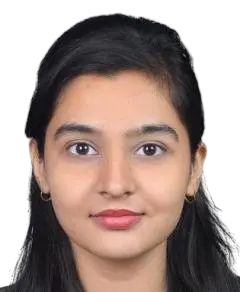
Last position:
AI Engineer (Freelance) at Upwork
- Delivered 40+ AI projects and 23 strategic consultations for international clients (US, Europe, Middle East), achieving a 98% job success rate and building long-term partnerships.
- Developed and deployed production-grade AI solutions in computer vision, NLP, deep learning, and generative AI (LLMs, RAG pipelines, Stable Diffusion, OCR, chatbots), enabling automation and improving client efficiency by up to 70%.
- Designed and fine-tuned large language models (LLMs), including prompt engineering and integration with enterprise knowledge bases, leading to smarter decision-making and reduced manual effort.
- Built real-time computer vision applications (detection, segmentation, OCR) and integrated them into business systems, significantly enhancing accuracy and scalability.
- Consulted startups and enterprises on AI strategy, architecture, and deployment (cloud & on-premise), accelerating product development and reducing time-to-market.
- Managed complete AI project lifecycles (requirements gathering, solution design, deployment, support) in agile, international, and cross-functional environments, ensuring high-quality delivery.
Kashyap K.

Last position:
Master’s Thesis - Synthetic Data Generation for Quality Inspection at Schaeffler Technologies AG
- Developed a synthetic data generation framework using 3D simulation (NVIDIA Omniverse) and Generative AI (Stable Diffusion) to model and augment industrial surface defects.
- Trained and evaluated Computer Vision models (YOLO, DETR), achieving 94% detection accuracy on real-world samples and demonstrating successful simulation-to-reality transfer.
- Applied domain adaptation to improve simulation-to-reality transfer, enabling scalable Industrial AI for automated quality inspection and reducing manufacturing downtime.
Pawan S.

Last position:
CAPTCHA Recognition using CRNN
- Built a CRNN model with VGG16 and BiLSTM backbone for text-based CAPTCHA recognition
- Achieved 9.37% character error rate and 68.36% sequence accuracy on validation data
- Expanded data augmentation pipeline with distortions, noise injection, and clutter to improve robustness
- Conducted detailed error analysis on confusable characters (O, Q, D) and proposed error-specific augmentation
- Tech Stack: Python, TensorFlow/Keras, OpenCV, NumPy, Matplotlib
Uddipan B.
Last position:
Research Team Member at Munich Music Labs, TUM
- Focused on exploring the intersection of Music and AI.
Ekaansh K.
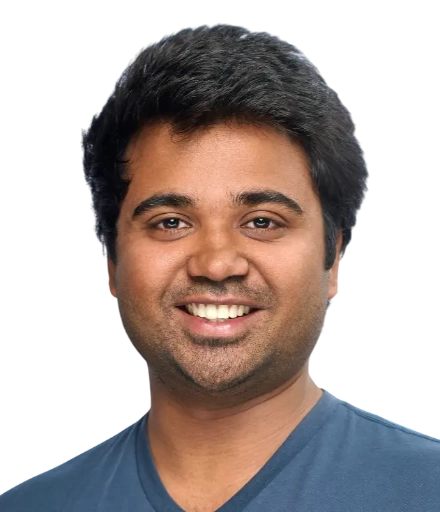
Last position:
Master thesis - LLM powered RAG System at Friedrich-Alexander-Universität Erlangen-Nürnberg
- Developed a RAG system to automate student queries with 96% accuracy, built using FastAPI and LangChain and deployed on the university server with Docker.
- Evaluated performance using RAGAS, comparing LLMs (Llama3.3, Llama3.1, GPT-4o-mini), vector embeddings, and various retrieval techniques within the RAG pipeline.
- Technical Skills: Python, FastAPI, Docker, AWS, LangChain, LangSmith, NLP, HTML, CSS
Discover over 15,000 top freelancers


Statistics of experts using Natural Language Processing
Aggregated from the professional profiles of matched freelancers.

Experience
6 years (Germany: 13 years)

Position duration
1.5 years (Germany: 2.1 years)

Positions per freelancer
5 (Germany: 8)

Top business areas
Product Development, Research and Development, Information Technology

Top industries
Information Technology, Education, Manufacturing

Certification focus areas
Information Technology, Research and Development, Business Intelligence

Bachelor's degree or higher
100% (Germany: 98%)

Master's degree or higher
100% (Germany: 81%)

Certifications per freelancer
3

Most common languages
German, English, Hindi

Speak two or more languages
100% (Germany: 98%)
Based on our profile pool as of 9 Oct 2026.
Daily rate distribution
The chart shows how the daily rates of experts in this technology in Nuremberg are distributed, based on recent contracts on our platform. Each bar covers a rate range — its height shows the share of experts charging within that range.
Average rates of experts in Nuremberg using Natural Language Processing
Rates are based on recent contracts and do not include FRATCH margin.

The average daily rate is the mean of all daily rates from recent contracts of comparable freelancers on our platform.
The median daily rate is the middle value of all daily rates — half of comparable freelancers charge less, half charge more. Unlike the average, it is barely affected by outliers.
Calculated based on our freelancers’ daily rates as of 9 Oct 2026. Actual rates may vary depending on seniority level, experience, skill specialization, project complexity, and engagement length.
Natural Language Processing experts industry focus
See which industries our matched freelancers work in most often — every figure is calculated live from the freelancers on FRATCH.
- Information Technology (83%)
- Education (50%)
- Manufacturing (50%)
- Automotive (33%)
- Banking and Finance (33%)
- Healthcare (33%)
- Retail (33%)
- Advertising (17%)
Please note that freelancers can work across multiple industries, so percentages overlap.
About the technology
What NLP does
Natural Language Processing, often called NLP, helps software understand and generate human language. It powers search, classification, extraction, summarization, and conversational systems. Strong specialists turn messy text into reliable outputs that teams can use in products and operations.
Common projects
- Chatbots and assistant flows
- Document parsing and data extraction
- Text classification and moderation
- Search, retrieval, and semantic ranking
- Summaries, tagging, and language enrichment
These projects often sit inside customer service, compliance, e-commerce, logistics, and internal knowledge tools. In Nuremberg, teams also bring in NLP help for multilingual content and systems that must work across German and English.
Tooling and stack
The ecosystem usually includes Python, spaCy, Hugging Face, transformers, and evaluation tools for precision and recall. Many projects also need vector databases, OCR, and integration with APIs, data pipelines, and cloud services. Good specialists know when to use classic machine learning and when a language model is the better fit.
When to bring in help
Companies usually need freelance expertise when they have domain text, a language problem, or unclear data quality. That can mean building a proof of concept, tuning an existing pipeline, fixing poor extraction, or reviewing an in-house model before release. The best experts reduce risk early and keep the scope practical.
What strong experts do
Strong NLP professionals start with the text source, the target language, and the failure modes. They define clear labels, test sets, and acceptance criteria before touching the model. They also pay close attention to bias, privacy, and how humans will review outputs in production.
Delivery in Nuremberg
Nuremberg companies often need specialists who can work remotely with product, data, and domain teams, then join on-site when workshops or security reviews matter. The right setup depends on the language mix, the data access rules, and how closely the work must align with local operations. Clear communication in German and English is often a plus.

Frequently asked questions
Need clarity? These are the questions we hear most often about Natural Language Processing.

A strong Natural Language Processing specialist builds systems that work with human language: chat interfaces, document extraction, text classification, search, and summarization. The exact scope depends on the data, the language, and the business process the team wants to improve. Many projects also include review workflows so humans can check sensitive outputs.
No. NLP is the broader field, while large language models are one approach inside it. Many production systems still use rule-based steps, classic machine learning, embeddings, OCR, and retrieval alongside newer models.
A strong Natural Language Processing expert usually brings Python, data cleaning, evaluation design, and API integration. Knowledge of spaCy, Hugging Face, transformers, search, and vector databases is common. Domain understanding matters too, especially when the text comes from support, legal, logistics, or operations.
Simple classification or extraction tasks can start with a focused specialist who has practical delivery experience. More complex work, such as multilingual pipelines or regulated use cases, needs someone who can design evaluation and failure handling from the start. The best fit depends more on the text and risks than on the label of the project.
Natural Language Processing is better when the meaning of language matters, not just fixed patterns. Search helps people find documents, rule engines handle predictable logic, and RPA automates steps across systems. NLP often sits alongside them to interpret text, route cases, or enrich records.
Yes, most NLP work can be done remotely if the specialist has access to the data and clear acceptance criteria. For Nuremberg teams, on-site time is useful for discovery workshops, stakeholder reviews, or sensitive environments. Mixed setups are common when the language or domain is complex.
Ask for examples of shipped systems, not just notebooks. A strong Natural Language Processing professional can explain the data preparation, the evaluation setup, the trade-offs, and how the system behaves on edge cases. Clear thinking about error analysis is a better sign than vague claims about model quality.
People often search for NLP when they mean Natural Language Processing, and both terms are used in practice. Depending on the context, you may also hear about text analytics, language processing, or language understanding. The right specialist should know how these terms overlap and where they differ.
The average hourly rate of freelancers in Nuremberg, Germany who have used Natural Language Processing in their recent projects is 37 €, which corresponds to a daily rate of about 294 € based on an 8-hour working day.
Of the freelancers in Nuremberg, Germany who have used Natural Language Processing in their recent projects, 100% hold at least a Bachelor's degree and 100% hold at least a Master's degree.
On average, freelancers in Nuremberg, Germany who have used Natural Language Processing in their recent projects have 6 years of professional experience, with a single engagement typically lasting around 1.5 years.
The most common languages among freelancers in Nuremberg, Germany who have used Natural Language Processing in their recent projects are German (100%), English (100%), and Hindi (33%).
The most common industries among freelancers in Nuremberg, Germany who have used Natural Language Processing in their recent projects are Information Technology (83%), Education (50%), and Manufacturing (50%).
The most common business areas among freelancers in Nuremberg, Germany who have used Natural Language Processing in their recent projects are Product Development (100%), Research and Development (100%), and Information Technology (83%).
Main locations of FRATCH Experts, who have recently used Natural Language Processing
Our freelancers and interim experts are at home across the DACH region — available on-site in the major business hubs or fully remote. Choose a location to discover matched specialists, local market insights and up-to-date availability.


 Berlin
  Hamburg
  Munich
  Cologne
  Frankfurt
  Stuttgart
 Request a free demo
Get in touch with the FRATCH team and we will get back to you within 4 hours.
Would you rather directly get in touch?
We always have the time for a call or email!

Philipp Thomaschewski
FRATCH CEO

