


MicroStrategy Experts in Germany
with precise AI matching and vetted, available freelancersHire experts who design governed analytics, build executive dashboards, and connect enterprise data sources through MicroStrategy. FRATCH matches your requirements with vetted, available freelancers quickly and precisely.

Meet FRATCH Experts in Germany, who have recently used MicroStrategy
Nadezhda U.

Last position:
Fractional CFO, Interim Finance Management at Stark Consult (NU Industries UG&Co.KG)
- Interim CFO leadership – operational within days, not months.
- End-to-end accounting, monthly closings, budgeting & controlling.
- Crisis management: cash-flow protection & insolvency risk mitigation.
- AI-driven process automation.
- Bilingual reporting in HGB, IFRS & US-GAAP.
Claudius L.
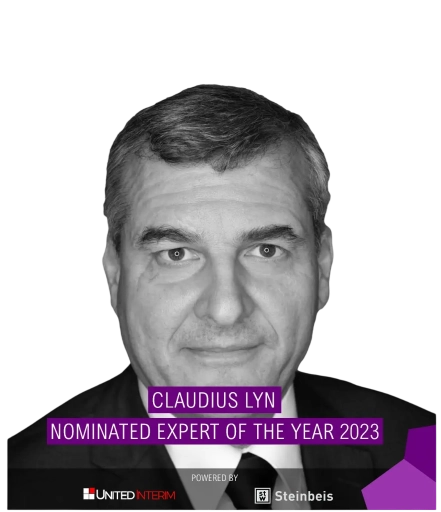
Last position:
Multi-project manager
Industrial sector: Transport
Tasks: Continuation of existing projects, advice on artificial intelligence (AI), implementation of regulatory requirements, management of external service providers
Subprocesses: Order clarification, role clarification, consolidation, effort estimation, activity planning, status reporting, progress tracking, stakeholder discussions, risk analysis
Background: Cloud computing, artificial intelligence (AI), predictive maintenance, compliance, governance, standing orders compliance, KRITIS
Software: Cherwell, Docker, IoT, MS Sharepoint, MS Teams, SQL Server
Mansharan K.

Last position:
MS Fabric | Power BI Consultant at Gropyus Technologies GmbH
- Architected an enterprise Fabric-based data-product governance framework, authoring data contracts and schema-validation KPIs to enforce completeness, freshness and SLA standards across reporting data products.
- Operationalized pipeline observability by integrating Dagster orchestration data into automated data-health reporting, proactively validating data integrity and pipeline reliability before production reporting layers refresh.
- Established BI-as-Code and end-to-end governance through Git-based version control, CI/CD and Alpha→GA release management, strengthening lineage, schema-drift detection and production change traceability.
Alexander F.

Last position:
Freelance Business Consultant and Interim Manager at A. Folch von Sydow INTERIM MANAGEMENT
Advising various companies in the areas of controlling, finance and planning, transformation, business partnering, management reporting and AI-driven forecasting systems
Amit S.

Last position:
IT Project Manager – SAP S/4 HANA Delivery Consultant at CHG Meridian UK Limited
- Managed the integrated SAP S/4HANA delivery plan for 12 BTS workstreams, including milestone, dependency, and governance management.
- Coordinated end-to-end delivery across Business, IT, and Operations, focusing on execution, readiness, and issue resolution.
- Responsible for RAID, test, cutover, and deployment management to ensure a successful go-live.
- Implemented KPI tracking, status reporting, and PMO governance to provide transparent management of performance, risks, and escalations.
Ludo P.

Last position:
Senior Consultant at Insurance
- DWH modernization
- Migration from Informatica PowerCenter to IDMC/CDI
- Migration from IBM DB2 to Databricks
Technologies: Informatica IDMC, Databricks
Mario T.

Last position:
Project Lead/Manager / Consultant at all-BI GmbH
- Establishing the Microsoft Fabric platform with the company as the central data warehouse and reporting system.
- The company migrated several operational systems including D365 to new version. The new data warehouse is based on a Fabric/Power BI architecture with Azure cloud Entra Authentication.
Tasks Performed:
- Full administrative responsibility for the Fabric platform F64 and F32 capacities, as well as two F8 capacities for development and prototyping.
- Integration of Fabric with Microsoft Entra.
- Data modeling for the data warehouse bronze, silver and gold layers using data modeling tools.
- Star Schema as well as entity relationship modeling.
- Data modeling for data marts and for dimensional modeling and Power BI (semantic model).
- Design of data models for Microsoft SSAS multidimensional and tabular OLAP cubes using DAX and MDX.
- Definition of design patterns for the ETL team for loading OLAP cubes (Tabular and MD), star schemas and data vault structures.
- Planning and managing team of 4 ETL and reporting developers.
- Performance Tuning of Power BI reports, particularly the semantic layer, as well as the Fabric notebooks
- SQL Performance Tuning.
- DB Design for Azure SQL.
- Reporting directly to project senior management.
Label: Power BI, Fabric, Analysis Services (multidimensional and tabular), D365, SSIS, Tabular Editor, SQL Server and Azure SQL, TOAD Data Modeler, DBSchema, Visual Studio Code, DAX Studio, SSMS, Visual Studio, Jira and Confluence.
Hervé T.

Last position:
Senior Data Engineer at Schweizerische Post AG
Tools: Fabric, AWS, dbt, Power BI, SQL, DWH, R, Python
- Supported customers in implementing an architecture design for extracting and preparing data
- Planned the design and implementation of the BI and DWH platform
- Ensured the scalability and performance of the data platform
David S.

Last position:
Senior Controller at DNS-Net
- Management Reporting
- Analysis of COGS and close cooperation with Accounting
- Variance analysis vs Plan/Forecast
- Development of sales controlling
- Business partnering for the CSO area
Axel K.

Last position:
Data Engineer & Business Analyst at Metafinanz
- Migration of existing data jobs from Cognos Data Manager to Tibco/IBI Datamigrator
- Migration data jobs parametrisation for dynamic runs
- Optimisation and cutting-back
- Regression tests
- Knowledge transfer and documentation
Ulrike W.

Last position:
Interim HR Business Partner at Industrial Company
Ulm P.

Last position:
DataStage ETL Expert at ING Bank
- Datastage 11.7, dbt, Oracle 19, Python 3.12 / PySpark 3.5, Azure GitHub, Azure DevOps, Automic
- Development of migration jobs to transfer data from the collection DWH to the new Risk Mart, as well as development of ETL pipelines to migrate historical data from the old Mart to the new Risk Mart.
- Storage of the silver layer on Hadoop and the gold layer in Oracle.
- Translation of DataStage jobs into dbt to publish reporting data in Google Cloud to a PostgreSQL database.
- Creation and optimization of complex SQL queries for data extraction from a data vault, taking into account historical data in the point-in-time tables.
- Creation of Oracle table definitions (DDL) and adjustment of existing stored procedures.
- Versioning changes in GitHub and deployment via the CI/CD portal.
- Refactoring long-running DataStage jobs into Python using PySpark to reduce server load.
- Migration of SAS scripts to PL/SQL, including new development of distribution functions that have no direct equivalent in Oracle.
- Development of Automic jobs to run DataStage pipelines and Python scripts (PySpark jobs) that control the population of the SME and institutional risk tables in the Risk Mart and perform business calculations.
- Participation in the agile process, including creating user stories, estimations, and planning in Azure DevOps.
- Handling Azure DevOps tickets and close collaboration with testers and business teams for error analysis and resolution.
Ulrich B.

Last position:
Director/Division Head at International consulting firms
- Steering strategic SAP S/4HANA transformation projects in global corporate structures
- Developing and implementing change management strategies and process optimizations
- Trusted advisor to C-level executives for carve-outs and post-merger integrations
- Information security management system (ISMS), ISO/IEC 27001, protection needs assessment, risk management & compliance
- Contract management focusing on legal, business and regulatory compliance
Mohamed G.
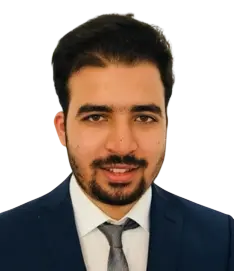
Last position:
Lead / Principal Cloud, AI & Security Architect at Freelancer / CC Conceptualise GmbH
Projects:
Project: RWE – Development of a company-wide Zero Trust cybersecurity architecture (CITADEL) Role: Senior Enterprise Cybersecurity Architect / Zero Trust Architect Company: RWE AG Description: Concept and implementation of the strategic CITADEL cybersecurity target architecture at RWE, based on the Zero Trust architecture principle and aligned with regulatory requirements such as NIS2, ISO 27001 and company-wide security governance policies. The goal was to build a measurable, auditable and scalable security architecture with a strong focus on Identity Governance, compliance transparency and operational manageability. Responsibilities & Achievements:
- Zero Trust architecture design: Developed a company-wide Zero Trust reference architecture (Identity, Device, Network, Application, Data) including trust zones, control points and enforcement mechanisms according to NIS2.
- Identity & Access Governance (IGA): Designed and introduced IGA governance structures including role models, recertification processes, segregation of duties (SoD) and lifecycle management for identities and access.
- Security governance & KPIs: Defined and implemented security KPIs and metrics to manage Zero Trust maturity, identity risks and compliance at the management level.
- Compliance & reporting: Built standardized compliance reports and dashboards to support internal audits, external assessments and regulatory evidence (e.g. NIS2).
- Architecture & stakeholder alignment: Worked closely with Enterprise Architecture, IT operations and business units to integrate the CITADEL architecture into existing IT and security landscapes.
- Strategic security consulting: Advised programs and projects on Zero Trust compliance, identity centricity and regulatory requirements in the energy and critical infrastructure (KRITIS) environment. Technologies & Methods: Zero Trust Architecture, NIS2, Identity Governance & Administration (IGA), IAM, RBAC, SoD, Entra ID, SailPoint, Zscaler, Terraform / IaC, Policy as Code, security KPIs, compliance reporting, NIST 2.0, ISO 27001, Enterprise Security Architecture, governance frameworks, risk & control management
Project: Scalable AI Workbench Platform on Microsoft Azure Role: Cloud Architect & Engineer Company: Siemens Energy Description: Design, development and operation of a secure, modular cloud infrastructure to support Data Science, Machine Learning and AI applications for various engineering teams at Siemens Energy. Responsibilities & Achievements:
- Cloud architecture: Designed and implemented an Infrastructure-as-Code solution (Terraform) for automated provisioning of Azure resources (Resource Groups, Storage Accounts, Cosmos DB, Application Insights, networking, PostgreSQL Flexible Server, Azure Container Apps, Azure Container Registry).
- Developer portal: Used Backstage with custom frontend and backend plugins (Node.js, TypeScript, React.js, PostgreSQL, Container Apps) to enable self-service and empower developers, data scientists and AI/ML engineers.
- Role-based access control: Implemented Azure RBAC to grant targeted access (e.g. Storage Blob Data Contributor, Reader) to engineering groups (e.g. AI Engineers) for relevant resources.
- Data platform engineering: Built and configured a multi-layered storage landscape (Raw, Curated, Vector data), including automated container creation and access control for advanced analytics and AI workloads.
- DevOps integration: Integrated with Azure DevOps for CI/CD pipelines to automate deployment, monitoring and compliance.
- Security & compliance: Implemented Private Endpoints, network policies and Managed Identities to ensure data protection and regulatory compliance.
- Collaboration: Worked closely with cross-functional teams to align the cloud infrastructure with business and technical requirements and drive digital transformation at Siemens Energy. Technologies: Azure, Terraform, Azure DevOps, Cosmos DB, Application Insights, Azure Storage, Private Endpoints, Azure Synapse, Azure Machine Learning, Azure Entra ID, RBAC, Backstage, Node.js, React.js, PostgreSQL, Python (automation), Git
Rohini A.

Last position:
Senior Product Manager at Zalando
- Product strategy & vision: Led campaign performance reporting platform serving 700+ partners, transformed manual MSTR-based weekly reporting to real-time self-service platform enabling partner autonomy and operational efficiency
- Strategic roadmap management: Led phased migration prioritizing Performance campaigns (70% revenue) ahead of Awareness and Engagement, driving iterative platform evolution aligned with objectives, partner feedback, GDPR compliance, and data retention policies
- User research & customer discovery: Conducted regular user interviews with partners to understand reporting needs, decision-making processes, and additional KPI requirements, translating insights into platform enhancements and feature prioritization
- Cross-functional leadership: Collaborated with Product Consultants, analysts, data engineers, frontend teams, and product marketing to execute seamless platform migration, reducing PC team size by 2 FTEs while improving service quality
- Scaled user adoption: Strategically onboarded partners starting with top 30 partner-program partners, expanding to all 700+ partner-program and wholesale partners through user education documentation, training coordination, and iterative feedback incorporation
- Data-driven product optimization: Implemented Google Analytics tracking and engagement monitoring, identified low-engagement features (report downloads, detailed links), deployed AppCues and re-education campaigns resulting in 40% weekly engagement rate
- KPI standardization & governance: Led cross-functional initiative to standardize KPI definitions and formulas across reports, dashboards, and ZMS platform, defined North Star metrics and essential KPIs for each campaign objective ensuring consistent measurement and decision-making
Discover over 15,000 top freelancers


Statistics of experts using MicroStrategy
Aggregated from the professional profiles of matched freelancers.

Experience
22 years

Position duration
3 years

Positions per freelancer
14

Top business areas
Information Technology, Business Intelligence, Project Management

Top industries
Information Technology, Banking and Finance, Professional Services

Certification focus areas
Information Technology, Project Management, Business Intelligence

Bachelor's degree or higher
94%

Master's degree or higher
85%

Doctorate
12%

Certifications per freelancer
5

Most common languages
German, English, French

Speak two or more languages
98%
Based on our profile pool as of 18 Nov 2026.
Daily rate distribution
The chart shows how the daily rates of experts in this technology in Germany are distributed, based on recent contracts on our platform. Each bar covers a rate range — its height shows the share of experts charging within that range.
Discover detailed MicroStrategy rate benchmarks:
Explore rate insightsAverage rates of experts in Germany using MicroStrategy
Rates are based on recent contracts and do not include FRATCH margin.

The average daily rate is the mean of all daily rates from recent contracts of comparable freelancers on our platform.
The median daily rate is the middle value of all daily rates — half of comparable freelancers charge less, half charge more. Unlike the average, it is barely affected by outliers.
Calculated based on our freelancers’ daily rates as of 18 Nov 2026. Actual rates may vary depending on seniority level, experience, skill specialization, project complexity, and engagement length.
MicroStrategy experts industry focus
See which industries our matched freelancers work in most often — every figure is calculated live from the freelancers on FRATCH.
- Information Technology (81%)
- Banking and Finance (64%)
- Professional Services (57%)
- Retail (48%)
- Manufacturing (45%)
- Insurance (38%)
- Telecommunication (38%)
- Automotive (31%)
Please note that freelancers can work across multiple industries, so percentages overlap.
About the technology
MicroStrategy’s role
MicroStrategy is an enterprise analytics and business intelligence platform for turning governed data into reports, dashboards, scorecards, and self-service analysis. It supports centralized semantic models, reusable metrics, pixel-perfect documents, and interactive visualizations across browser and mobile experiences. Many teams also encounter the current product branding, Strategy, and the name MicroStrategy ONE.
Typical delivery work
- Design dossiers, dashboards, scorecards, and executive reports
- Model attributes, facts, metrics, filters, prompts, and hierarchies
- Connect warehouses, relational databases, cloud services, and files
- Configure subscriptions, alerts, mobile delivery, and access controls
- Improve report performance, usability, and governed self-service
MicroStrategy projects often support finance, sales, supply chain, customer analytics, and operational reporting. Strong delivery connects business definitions with reliable data rather than treating dashboards as isolated visual work.
Ecosystem and skills
Professionals work across the MicroStrategy platform, its metadata repository, semantic layer, dossier experience, administration tools, and deployment processes. They commonly bring SQL, dimensional modeling, data warehousing, ETL or ELT, and cloud data platform knowledge. Useful adjacent skills include Python or R for advanced analysis, REST APIs for integration, and identity systems for secure access.
When companies need specialists
- A legacy reporting estate needs migration, cleanup, or consolidation
- Business definitions differ between departments or reports
- Dashboard performance suffers as data volume and usage grow
- A warehouse migration requires redesigned connections and metadata
- Internal teams need support with governance, enablement, or rollout
Freelance expertise is valuable when a project has a fixed delivery window, scarce platform knowledge, or a need for independent review. In Germany, collaboration may involve remote delivery across locations, on-site workshops, or communication in English and German.
What strong professionals deliver
Strong specialists clarify metrics before building visualizations. They separate source data issues from semantic-model issues, document dependencies, and test results against trusted business outcomes. They understand how metadata design, caching, prompts, security filters, and subscriptions affect daily use. They also leave maintainable structures that internal teams can extend.
Selecting the right fit
Assess candidates through a concrete project conversation: ask how they would model a business process, investigate a slow dossier, secure regional data, or migrate an existing reporting estate. Look for evidence of hands-on work with MicroStrategy administration, delivery, data integration, and stakeholder workshops. The right professional can explain trade-offs clearly and adapt the platform to the company’s data architecture instead of forcing every need into a dashboard.

Frequently asked questions
The facts hiring teams ask for most often when it comes to MicroStrategy.

MicroStrategy is used for enterprise business intelligence, governed reporting, interactive dossiers, scorecards, and self-service analytics. Companies use it to give different teams consistent metrics while connecting analysis to centralized data models and security rules.
MicroStrategy emphasizes governed semantic modeling, reusable metrics, enterprise administration, and standardized reporting. Tableau and Power BI may suit organizations prioritizing visual exploration or close integration with their existing vendor ecosystem, so the choice depends on governance, data architecture, user needs, and operating model.
A strong MicroStrategy specialist usually understands SQL, dimensional modeling, data warehouses, ETL or ELT pipelines, and database performance. Experience with cloud platforms, REST APIs, identity management, and stakeholder workshops is also useful for complete delivery.
The right MicroStrategy experience depends on the work, not only the platform name. A dashboard adjustment may need focused delivery skills, while a metadata redesign, migration, security model, or performance program calls for a professional who has handled comparable enterprise complexity.
MicroStrategy work can be delivered remotely when access, data ownership, environments, and review processes are clearly defined. On-site workshops may still help with metric alignment and adoption, while English or German communication can be agreed according to the project team.
Ask a MicroStrategy freelancer to explain a real approach to metric governance, performance diagnosis, security, and testing. Strong answers connect technical choices to business definitions, show awareness of maintainability, and include clear documentation and handover practices.
MicroStrategy supports self-service analysis through governed datasets, dossiers, reusable metrics, and controlled access. It works best when the underlying semantic model is well designed, because self-service becomes risky when users must rebuild business logic independently.
MicroStrategy is the name many companies still use for the platform and its established ecosystem, while Strategy is the newer corporate and product branding encountered in current materials. Freelancers should recognize both terms when reviewing documentation, environments, migration plans, or stakeholder requirements.
The average hourly rate of freelancers in Germany who have used MicroStrategy in their recent projects is 109 €, which corresponds to a daily rate of about 870 € based on an 8-hour working day.
Of the freelancers in Germany who have used MicroStrategy in their recent projects, 94% hold at least a Bachelor's degree, 85% hold at least a Master's degree, and 12% hold a doctorate.
On average, freelancers in Germany who have used MicroStrategy in their recent projects have 22 years of professional experience, with a single engagement typically lasting around 3 years.
The most common languages among freelancers in Germany who have used MicroStrategy in their recent projects are German (100%), English (93%), and French (33%).
The most common industries among freelancers in Germany who have used MicroStrategy in their recent projects are Information Technology (81%), Banking and Finance (64%), and Professional Services (57%).
The most common business areas among freelancers in Germany who have used MicroStrategy in their recent projects are Information Technology (95%), Business Intelligence (83%), and Project Management (79%).
Main locations of FRATCH Experts, who have recently used MicroStrategy
Our freelancers and interim experts are at home across the DACH region — available on-site in the major business hubs or fully remote. Choose a location to discover matched specialists, local market insights and up-to-date availability.

 Berlin
 Munich
 Frankfurt
Request a free demo
Get in touch with the FRATCH team and we will get back to you within 4 hours.
Would you rather directly get in touch?
We always have the time for a call or email!

Philipp Thomaschewski
FRATCH CEO

