


Machine Learning Experts in Hanover
matched in minutes by AIHire experts who design predictive models, recommendation systems and production-grade data pipelines. Work with vetted, available freelancers matched to your requirements with speed and precision.

Meet FRATCH Experts in Hanover, who have recently used Machine Learning
Michael S.

Last position:
Data Analyst, Data Scientist at CompuGroup Medical Deutschland AG, docmetric GmbH
Development of AI and traditional models to analyze medical and patient data, including medication analyses, diagnosis analyses, forecasts, procedure analyses, dosage analyses, comorbidity analyses, prescription analyses, patient potential analyses, referral profile analyses, and prescription analyses. Analyses in the field of Real World Evidence.
Healthcare IT, pharmaceutical industry
Tasks, responsibilities:
- Gathering customer requirements
- Planning the subproject
- Designing and defining KPIs
- Designing and developing models and visualizations of results using customer dashboards
- Developing and implementing data warehouse adaptations
- Deriving recommendations for action
Methods, technologies:
- Simulation
- Artificial intelligence
- Python
- R
- SQL
- Microsoft Power BI
- Amazon Web Services
- Elasticsearch
- PostgreSQL
- Databricks
- Multivariate statistics
Yenal Y.

Last position:
Shiny R Development at RadixITS Gbr
- Implementation and mapping of regulatory requirements (CSRD, ESRS) in Shiny dashboards and backend functions
- Design and development of data-driven modules in Shiny incl. ESG metrics and reporting templates
- Integration of data sources (SQL, SAP HANA, APIs, CSV/Excel) via DBI, odbc, httr and readr
- Creation of interactive visualizations with plotly, highcharter and DT (DataTables)
Arnav S.

Last position:
Scientific Assistant (HIWI) at Institute of Transport and Automation Engineering, Production Technology Center, Leibniz University Hannover
- Implemented stereo camera calibration and applied incremental Structure from Motion (SfM) algorithms to build a detailed 3D model of a forklift for an AR-enabled Smart Forklift project
- Developed OpenCV-based preprocessing that improved data accuracy by 20% and enhanced the analysis of industrial videos
Mei-Fang C.

Last position:
Medical Consultant at Atheneum
- Provided expert consultation by analyzing clinical and market data for 20+ cases, driving data-driven pipeline decisions that optimized R&D prioritization and accelerated project timelines.
- Advised on reimbursement pathways and pricing for critical medicines, aligning clinical data with payer expectations.
Andreas W.
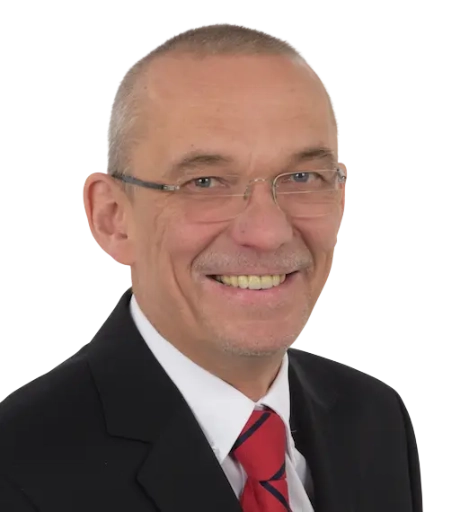
Last position:
Expert Cyber-Security at Akkodis GmbH
- Supported various branches like military, automotive, finance, production and critical infrastructure
- Served as trainer in the Akkademy of Akkodis (honoured with the trainer award 2024)
- Specialized in Cyber Threat Intelligence combined with ML and AI for an extended cyber defense centre (XCDC)
- Introduced CyberSecurity methodology to military vehicles and their lifecycle
Jan H.

Last position:
Project Manager Digital Services & Touchpoints at Allianz SE
- End-to-end responsibility for the service area relaunch
- Leadership of a squad (15 people) consisting of developers, UX designers, user researchers, business analysts, etc.
- Requirement analysis, coordination with internal and external stakeholders, C-level management
- Development of additional digital products and services for best-in-class digital customer interaction
- Collaboration with cross-functional teams and management of features and backlog
Jasser C.

Last position:
Artificial Intelligence Intern at Plug&Plai
- Supported the development of AI-powered voice assistants for recruitment automation.
- Helped optimize speech recognition models and conversational AI workflows.
Discover over 15,000 top freelancers


Statistics of experts using Machine Learning
Aggregated from the professional profiles of matched freelancers.

Experience
13 years (Germany: 14 years)

Position duration
1.6 years (Germany: 2.8 years)

Positions per freelancer
9

Top business areas
Product Development, Information Technology, Research and Development

Top industries
Information Technology, Professional Services, Automotive

Certification focus areas
Information Technology, Research and Development, Business Intelligence

Bachelor's degree or higher
100% (Germany: 97%)

Master's degree or higher
80% (Germany: 76%)

Doctorate
40% (Germany: 18%)

Certifications per freelancer
3 (Germany: 2)

Most common languages
German, English, Arabic

Speak two or more languages
100% (Germany: 98%)
Based on our profile pool as of 29 Oct 2026.
Daily rate distribution
The chart shows how the daily rates of experts in this technology in Hanover are distributed, based on recent contracts on our platform. Each bar covers a rate range — its height shows the share of experts charging within that range.
Average rates of experts in Hanover using Machine Learning
Rates are based on recent contracts and do not include FRATCH margin.

The average daily rate is the mean of all daily rates from recent contracts of comparable freelancers on our platform.
The median daily rate is the middle value of all daily rates — half of comparable freelancers charge less, half charge more. Unlike the average, it is barely affected by outliers.
Calculated based on our freelancers’ daily rates as of 29 Oct 2026. Actual rates may vary depending on seniority level, experience, skill specialization, project complexity, and engagement length.
Machine Learning experts industry focus
See which industries our matched freelancers work in most often — every figure is calculated live from the freelancers on FRATCH.
- Information Technology (71%)
- Professional Services (57%)
- Automotive (43%)
- Banking and Finance (43%)
- Insurance (43%)
- Transportation (43%)
- Manufacturing (43%)
- Government and Administration (43%)
Please note that freelancers can work across multiple industries, so percentages overlap.
About the technology
What Machine Learning does
Machine Learning enables software to learn patterns from data and use them for predictions, classifications, recommendations or automated decisions. It supports fraud detection, demand forecasting, computer vision, language processing and personalization. Unlike fixed business rules, a trained model can improve as relevant data changes.
Models and methods
Projects may use supervised learning for labeled outcomes, unsupervised learning for discovering structure, or reinforcement learning for decisions shaped by feedback. Strong specialists select suitable approaches, prepare representative data and validate results against the business goal. They also account for bias, drift, explainability and the cost of incorrect predictions.
Ecosystem and tooling
The work often spans Python, SQL, notebooks and cloud infrastructure. Common libraries include scikit-learn, PyTorch, TensorFlow, pandas and NumPy, with tools such as MLflow, Kubeflow or managed cloud services supporting experiments and deployment. Professionals connect these components to APIs, data warehouses, streaming systems and monitoring workflows.
Typical deliverables
- Data preparation, feature engineering and quality checks
- Classification, regression, clustering and forecasting models
- Computer vision and natural language processing solutions
- Training pipelines, model APIs and batch or real-time inference
- Monitoring for accuracy, latency, drift and responsible use
When companies bring in specialists
Companies often seek freelance expertise when internal teams have valuable data but lack a reliable path from experiment to production. A specialist can audit an existing model, establish an evaluation framework, reduce manual processing or create a proof of concept. In Hanover, this may support logistics, manufacturing, mobility, healthcare or research teams while allowing remote collaboration with clear documentation and regular reviews.
What strong professionals bring
The best specialists combine statistical judgment with software delivery skills. They can explain why a model is suitable, reproduce results, protect sensitive data and communicate limits to non-specialists. Look for evidence of sound validation, maintainable pipelines, useful documentation and models that continue to perform after deployment. German or English communication can both work when goals, data access and handovers are defined clearly.

Frequently asked questions
Everything clients usually want to know about Machine Learning, in one place.

Machine Learning is used to predict demand, detect anomalies, classify documents, recommend products and automate decisions based on data. It also supports image inspection, speech and text analysis, customer segmentation and forecasting. The right use case has a clear outcome, suitable data and a way to measure business value.
Machine Learning learns patterns from examples, while traditional software rules are written explicitly by a specialist. Learning-based systems are useful when relationships are complex or change over time, but they need reliable data, careful validation and ongoing monitoring. Rules may be preferable when logic is stable, transparent and easy to define.
A strong Machine Learning specialist often combines statistics, Python, SQL and data engineering with cloud deployment and software testing. Experience with APIs, containerization, experiment tracking, data privacy and model monitoring is also valuable. For language or image projects, knowledge of natural language processing or computer vision may be essential.
The required experience depends on the data, risk and delivery stage. A small proof of concept may need a specialist who can explore data and compare models, while a production system needs proven skills in deployment, monitoring, security and stakeholder communication. Ask for examples that resemble the intended use case rather than relying on a generic title.
Machine Learning work is often well suited to remote collaboration because data preparation, experiments and code reviews can happen online. On-site sessions in Hanover may still help with domain discovery, access to restricted systems or workshops with operational teams. Agree on communication, documentation, data permissions and handover practices before the project starts.
Assess whether a Machine Learning specialist can connect model choices to the business objective and explain evaluation results clearly. Review how they handle data leakage, imbalanced classes, bias, reproducibility and model drift. A quality professional discusses limitations openly and delivers maintainable work, not just an impressive experiment.
Machine Learning projects may benefit from deep learning when they involve large, complex data such as images, audio, video or free text. For structured business data, simpler methods can be easier to explain, faster to train and equally effective. The decision should follow data volume, target accuracy, operating cost and the need for transparency.
Before starting, a Machine Learning freelancer should clarify the decision being supported, available data, labels, success criteria and access constraints. They should also confirm who owns deployment, monitoring and future retraining. Clear expectations around German or English communication, review points and documentation make remote and on-site collaboration more effective.
The average hourly rate of freelancers in Hanover, Germany who have used Machine Learning in their recent projects is 91 €, which corresponds to a daily rate of about 726 € based on an 8-hour working day.
Of the freelancers in Hanover, Germany who have used Machine Learning in their recent projects, 100% hold at least a Bachelor's degree, 80% hold at least a Master's degree, and 40% hold a doctorate.
On average, freelancers in Hanover, Germany who have used Machine Learning in their recent projects have 13 years of professional experience, with a single engagement typically lasting around 1.6 years.
The most common languages among freelancers in Hanover, Germany who have used Machine Learning in their recent projects are German (100%), English (100%), and Arabic (29%).
The most common industries among freelancers in Hanover, Germany who have used Machine Learning in their recent projects are Information Technology (71%), Professional Services (57%), and Automotive (43%).
The most common business areas among freelancers in Hanover, Germany who have used Machine Learning in their recent projects are Product Development (100%), Information Technology (86%), and Research and Development (86%).
Main locations of FRATCH Experts, who have recently used Machine Learning
Our freelancers and interim experts are at home across the DACH region — available on-site in the major business hubs or fully remote. Choose a location to discover matched specialists, local market insights and up-to-date availability.


 Berlin
 Hamburg
 Munich
 Cologne
 Frankfurt
 Stuttgart
 Dusseldorf
 Dortmund
 Essen
 Bremen
 Dresden
 Nuremberg
Request a free demo
Get in touch with the FRATCH team and we will get back to you within 4 hours.
Would you rather directly get in touch?
We always have the time for a call or email!

Philipp Thomaschewski
FRATCH CEO

