


Jenkins Experts in Stuttgart
matched in minutes with vetted, available freelancersHire experts who automate build, test and deployment workflows with Jenkins, integrate pipelines with Docker and Kubernetes, and connect delivery processes to cloud infrastructure. FRATCH finds the right vetted, available freelancer through fast, precise AI matching.

Meet FRATCH Experts in Stuttgart, who have recently used Jenkins
Maik S.

- Development of a new generation of Spring Boot microservices for an archiving system on OpenShift, monitoring, security analyses
Stack: Java, Spring Boot, Kafka, Vaadin, OpenShift 4.x, Maven, Artifactory, Jenkins, Git/Github, GitHub Copilot, GitOps, CI/CD, Kargo/ArgoCD
German R.

Last position:
Freelance Technical Product Owner & AI Product Builder at Neckarshore AI / Freelance
Two complementary tracks: (a) building my own AI products and open-source tools under the Neckarshore AI brand, with a focus on AI-supported multi-agent development processes and documentation automation; (b) freelance support for industrial, logistics, and financial companies in IT-related transformation projects.
Current product portfolio under the Neckarshore AI brand:
- Omnopsis Documenter — AI-powered documentation engine: generates compliance, technical, and release documentation from Git, Jira, and Confluence. 500+ automated tests, 100+ API endpoints, RBAC, monitoring stack.
- TrustScope — trust analysis for public GitHub repos: deterministic three-pillar report (Security & Supply Chain, Governance, Community) based on OpenSSF Scorecard, with constructive fix suggestions instead of a single misleading score.
- md-viewer — dependency-free Markdown viewer for macOS (Finder Quick Action) and web, split view of rendered document and raw text.
- Obsidian Vault Autopilot — AI-supported vault automation for Obsidian × Claude Code: sorts the inbox, renames notes, enriches frontmatter.
- Phonesis Voice Bank — voice archive for families, hospices, and cultural archives (guided recordings, inheritable archive, optional voice cloning); currently in the GDPR compliance phase (Art. 9, biometric data).
- Multi-Agent Development Process — 12+ specialized agents (architecture, implementation, security, refactoring, marketing) with structured handoff protocol, parallel execution, and automated quality assurance — powers the entire product development.
- Freelance consulting: Technical Product Ownership for production, logistics, and compliance/AML systems; steering international rollouts including test, cutover, and change management.
Stack: NestJS, TypeScript, PostgreSQL, Redis/BullMQ, Next.js, Claude Code (Opus), Docker, GitHub Actions, Vercel
Artyom N.

Last position:
AI Automation Engineer & Solution Architect at Technology Research Project
Designed and developed an AI-powered automation platform using n8n to analyze social media niches, identify target audiences, and automate marketing strategy generation. The solution combined AI agents, workflow orchestration, and data analysis to automate research processes and generate data-driven insights.
- Designed and implemented complex automation workflows using n8n
- Developed AI-powered analysis agents for market and audience research
- Integrated multiple APIs and AI services into automated workflows
- Built automated market, competitor, and target audience analysis pipelines
- Leveraged Large Language Models (LLMs) for information summarization, classification, and prioritization
- Containerized and deployed the platform using Docker
Technologies: n8n, AI Agents, OpenAI APIs, Prompt Engineering, LLMs, Docker, Linux, REST APIs, Webhooks
Sercan T.

Last position:
Co-Founder & Lead Software Architect at Pflege-Pfad
- Focus: System architecture, cloud-native platforms, microservices, API design
- Product: Pflege-Pfad is a digital placement platform that directly connects relatives of people in need of care with verified care services and caregivers – without an agency and without ongoing fees.
- Business analysis & process design:
- Analysis of the German care market and identification of the key pain points of both target groups.
- Modeling of core business processes: registration, verification, care request, application, placement, and rating.
- Definition of the business model as a freemium/premium model with optional contact unlocking.
- Creation of user stories and requirements documentation for relatives, care services, and administrators.
- Design of trust and quality assurance mechanisms with document upload, admin review process, and rating system.
- Coordination with stakeholders and validation of product decisions with potential users.
- Technical implementation:
- Design and implementation of the entire platform architecture as the sole developer.
- Design and implementation of a REST API with Spring Boot and Kotlin, including JWT-based authentication.
- Development of the frontend as a single-page application with Angular 17.
- Implementation of the AWS infrastructure with EC2, RDS PostgreSQL, S3, CloudFront, and IAM.
- Document upload with AWS S3 using presigned URLs to verify care services.
- Email notifications via Resend API.
- AI-supported care service search via OpenAI API.
- Implementation of complete user flows such as registration, login, password reset, and the placement process.
- Development of an admin panel for user and care service management as well as analytics.
- CI/CD with GitHub Actions and containerized deployments with Docker.
- End-to-end tests with Playwright.
Technologies: Kotlin, Spring Boot 3, Spring Security, JWT, JPA/Hibernate, PostgreSQL, Angular 17, TypeScript, RxJS, AWS (EC2, ECS, S3, CloudFront CDN, RDS PostgreSQL, IAM), nginx, GitHub Actions, Playwright, Maven, Git, OpenAI API, Resend API, Docker, Scrum, i18n (DE/EN/TR), Kiro, feature flag architecture.
Salim C.

Last position:
Cloud / Systems Architect
- Development and introduction of operations processes
- Preparation of complete documentation packages (including incident management and operations support) to meet compliance requirements
- Introduction of a workshop on IaC (Infrastructure as Code)
- Technical consulting for the project security concept (ISMS)
- Installation and operation of Kubernetes clusters on AWS, on-prem, and Azure
- Hybrid cloud architecture design (on-prem, Hetzner, AWS)
- Analysis and troubleshooting of incidents and system outages
- Network adjustments for firewall rules, gateways, OpenVPN settings, and IPsec tunnels (pfSense)
- Technical consulting on Bitbucket, Jenkins, and GitLab CI/CD pipelines
- Consulting on Ansible deployments and infrastructure automation
- Consulting on building a scalable system in the cloud (AWS / Azure)
- Technologies / Tools: Ansible, Terraform, AWS, Azure, VPN, pfSense, Jenkins, Bitbucket, Kubernetes, GitLab Runner, ISMS, Golang, Prometheus, Grafana, S3, Lambda, RDS, ECS, Cognito, OIDC, Harbor, MinIO, Postgres, Redis, Keycloak, Ceph, Proxmox, CloudFormation, PostgreSQL, Flux CD, Hetzner, IONOS, Sonatype Nexus Repository, Entra ID, Dex IdP, Pulumi
Meenakumar V.
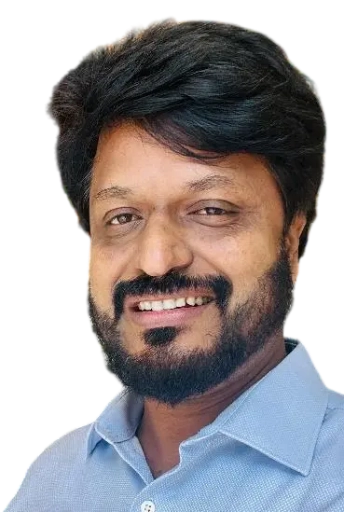
Last position:
Senior Embedded Technical Manager at IIT Madras Pravartak Technologies
- Led 14 member dev team and delivered postgresql database integration and performance optimization
- Delivered 8 K lines of C code with fewer defects (5 medium to low) in 8 months of development
- Integrate open source pgVector for AI application of the database for exact and nearest neighbor search
Will O.

Last position:
Solution Architect at Polizei Behörde Stuttgart
Designed a migration strategy for WLS applications to BKA Cloud and Stack IT
Created a hybrid cloud for internal testing and development with Kubernetes
Transformed the IT landscape from an outdated monolithic architecture to a cloud-based architecture
Integrated new CI/CD processes using Azure Pipelines
Quadrupled the processing throughput for personnel security checks
Migrated personnel security screening applications to Docker-based applications
Implemented CI/deployment pipelines using Azure DevOps
Environment: Java Springboot, Kubernetes, Oracle Weblogic, OpenID, Camunda, JUnit, TOGAF
Ahmed F.
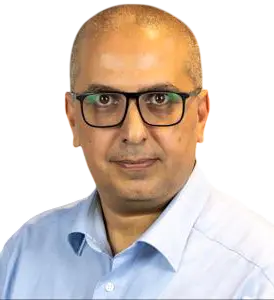
Last position:
Senior Lead Engineer (Freelance) at Atruvia AG
- Development of a wealth management application for investing in foreign currencies
- Full-stack development with Angular, Spring Boot, OpenShift, Oracle DB, Kafka
- Design and implementation of a microservice architecture
- Integration into Atruvia's BWS system and connection of multiple interfaces between Atruvia and DZ Privatbank
- Greenfield development of the application from the ground up
- Technical responsibility for architecture and interface design
- Close collaboration with business units and external stakeholders
Marcel S.

Last position:
Technical Lead / Lead Developer at REWE digital
- Following an organizational restructuring into product-based teams, the decision was made to build a Data Mesh for Digital Supplier Management (DSM).
- Highly available, real-time Data Mesh for providing large volumes of data to other products via Kafka and REST.
- Development of new core supplier management software using a (micro-)service-based architecture and a modern technology stack.
- Technologies/Tools:
- Java 21
- Spring Boot
- Angular
- TypeScript
- Golang
- MapR
- Kafka
- Docker
- Google Cloud Platform (GCP)
- Kubernetes
- Helm
- GitLab CI
- Maven
- JUnit
- Mockito
- WireMock
- Cypress
- Keycloak
- OAuth 2.0 & OpenID Connect
- Humio
- Nexus
- Artifactory
- SonarQube
- Renovate
- Git
- Postman
- IntelliJ
Hamza S.

Last position:
Full Stack Engineer at Straiv
- Improved backend performance by 30% and reduced downtime by 25% by optimizing database queries, fixing memory leaks, and implementing advanced monitoring tools.
- Delivered revenue-generating upsell features, integrated Apple/Google Wallet, and streamlined guest check-in/out with a redesigned frontend.
Ronald F.

Last position:
Senior IT Consultant – Requirement Engineer at Deutsche Bank - Strivion
Methodology: Agile project management
Goal: Digitization and implementation of CCD2 requirements within the Consumer Finance systems.
Analysis, identification, and assessment of business requirements, as well as their transfer into technical implementation requirements. Coordination and status reporting of the various requirements. Documentation and process management using UML and BMPN. Cross-functional stakeholder management, UAT testing, data management, API architecture management.
Tools: Jira, Confluence, Visual Code, Sql Developer, Enterprise Architect, MsOffice, Bruno, ALM, Camunda, Figma
Achille C.

Last position:
Backend/Frontend Developer at ITZ-Bund
- Development of a microservice application for calculating account bookings
- Development of backend components with Java / JEE, Quarkus, Kafka, REST API
- Development of the test component with mocking frameworks (Mockito)
- Development of unit tests with JUnit / ArchUnit, integration test components
- Creation of OpenAPI specification format
- Configuration of CI/CD pipeline
- Development of frontend component with React
- Design, further development and optimization of system architectures
- Migration from MySQL to PostgreSQL
- Code reviews
- Java Corretto 21, JEE, Quarkus, Golang
- Reactive programming with Spring WebFlux, Project Reactor, Liquibase, Elasticsearch, Hibernate, HQL, JPA, SQL
- Git, Azure DevOps for CI/CD pipeline, YAML, JSON, Swagger UI, Postman, REST OpenAPI, Kafka Streams, Kafka Connect, Log4J, JUnit / ArchUnit
- Microservices, Jira, Confluence, MySQL, PostgreSQL, Docker, Kubernetes (deployment via Helm charts)
- Spring Security, OAuth 2, JWT, SonarQube
- IntelliJ, Maven, logging framework Splunk, Agile Scrum method, Nexus, Vaadin V24, build tool Vite
- React, React.JS, Node.js, JavaScript, Tailwind CSS, Agile Scrum method, BITV accessibility, Playwright
Robin S.

Last position:
Senior Cloud & Backend Engineer at Media-Saturn-Holding GmbH
- Implementing applications with Kotlin and Ktor as microservices
- Using MongoDB in the MongoDB Atlas cloud
- Asynchronous communication of services via Google Pub/Sub
- Using Kotest and MockK for unit tests
- Developing an administration frontend with TypeScript, React and Express.js
- Provisioning environments in GCP using Terraform
- Implementing CI/CD processes with GitHub Actions
- Operating scalable production and test environments in GCP with Kubernetes, Helm and Flux CD
- Monitoring environments with Prometheus and Grafana
- Providing BI data in the Google BigQuery data warehouse
Lothar H.

Last position:
Multi-Cloud + Hybrid Cloud Transformations of Enterprise Solutions at IBM and various international clients
Multi-Cloud + Hybrid Cloud Transformations of Enterprise Solutions
- AI-assisted Kubernetes routing and resilience PoCs and testing of solutions for network stabilization and creating redundancy, DREAD and STRIDE Security Assessments, Hybrid Cloud Hosting Refinements, system hardening for clients, backend & datacenter.
- Refinement of routing systems within Kubernetes solutions using Tigera Calico and its network management policies and behavioral profile logs, as well as customized visualization tools to refine resilience and redundancy in fallback automation.
- Clients in the energy utility, network operator, banking, insurance and automotive sectors
Michael B.

Last position:
Developer/Consultant at Fresenius Medical Care
- Development of automated end-of-line tests (functional tests) for dialysis machines on a PLC test stand in a production environment
- Introduction of new technology based on Vector vTestStudio, CANoe, and Siemens S7 PLC
- Creation of test concepts
- Implementation of test cases and libraries in CAPL and C#
- Touch screen emulation and proprietary RPC (Remote Procedure Call) via CAN
- Connection to the PLC (Siemens Simatic)
- Definition of interfaces for device communication (vCDL)
- Definition of user interfaces and connection to the frontend (Json)
- Agile way of working with DevOps (Azure)
- Skills: CAPL, .NET, C#, vCDL, CANOpen, DevOps, PLC
- Tools used: Vector CANoe 18, vTestStudio 4, MS Azure DevOps, MS Visual Studio 2022, Mosquito MQTT, Git, Siemens TIA Portal
Discover over 15,000 top freelancers


Statistics of experts using Jenkins
Aggregated from the professional profiles of matched freelancers.

Experience
20 years (Germany: 19 years)

Position duration
1.7 years (Germany: 5.1 years)

Positions per freelancer
15 (Germany: 12)

Top business areas
Information Technology, Product Development, Project Management

Top industries
Information Technology, Automotive, Banking and Finance

Certification focus areas
Information Technology, Product Development, Project Management

Bachelor's degree or higher
100% (Germany: 92%)

Master's degree or higher
53% (Germany: 57%)

Certifications per freelancer
3

Most common languages
German, English, French

Speak two or more languages
100% (Germany: 97%)
Based on our profile pool as of 18 Nov 2026.
Daily rate distribution
The chart shows how the daily rates of experts in this technology in Stuttgart are distributed, based on recent contracts on our platform. Each bar covers a rate range — its height shows the share of experts charging within that range.
Average rates of experts in Stuttgart using Jenkins
Rates are based on recent contracts and do not include FRATCH margin.

The average daily rate is the mean of all daily rates from recent contracts of comparable freelancers on our platform.
The median daily rate is the middle value of all daily rates — half of comparable freelancers charge less, half charge more. Unlike the average, it is barely affected by outliers.
Calculated based on our freelancers’ daily rates as of 18 Nov 2026. Actual rates may vary depending on seniority level, experience, skill specialization, project complexity, and engagement length.
Jenkins experts industry focus
See which industries our matched freelancers work in most often — every figure is calculated live from the freelancers on FRATCH.
- Information Technology (89%)
- Automotive (83%)
- Banking and Finance (78%)
- Transportation (50%)
- Government and Administration (50%)
- Insurance (44%)
- Manufacturing (44%)
- Aerospace and Defense (39%)
Please note that freelancers can work across multiple industries, so percentages overlap.
About the technology
What Jenkins does
Jenkins is an open-source automation server for building continuous integration and continuous delivery workflows. It checks source changes, runs automated tests, packages applications and coordinates releases across development, staging and production environments. Teams use it for repeatable delivery rather than manual handovers.
Pipelines and automation
Jenkins Pipeline defines delivery logic as code, usually in a Jenkinsfile stored with the application. Professionals create declarative or scripted pipelines, manage approvals and credentials, and make failures visible through logs and notifications. Shared libraries help teams reuse reliable stages across services.
- Automate builds after source changes
- Run unit, integration and end-to-end tests
- Publish packages, images and reports
- Promote releases between environments
Ecosystem and tooling
Jenkins connects with Git, GitHub, GitLab, Bitbucket, Maven, Gradle, Docker and Kubernetes through plugins and integrations. Strong specialists also work with Linux, shell scripting, Groovy, artifact repositories, cloud services and infrastructure as code. They know how to control plugin dependencies and keep agents consistent.
When expertise matters
Companies often bring in freelance Jenkins specialists during a migration from manual releases, a pipeline redesign or a move to containerized delivery. In Stuttgart, this can support automotive, manufacturing, software and industrial teams coordinating distributed engineering groups. Remote work is practical when repositories, environments and access controls are ready; on-site collaboration can help with complex legacy systems.
- Pipelines are slow, fragile or difficult to understand
- Builds depend on undocumented manual steps
- Jenkins must connect to Kubernetes or cloud infrastructure
- Security, permissions or credential handling needs review
Reliable delivery practices
Good Jenkins work begins with a clear delivery model and small, testable pipeline stages. Professionals separate configuration from secrets, use version-controlled pipeline code and design agents that can be reproduced. They add meaningful test feedback, controlled rollback paths and monitoring instead of treating a green build as the only quality signal.
Choosing a specialist
Look for practical evidence with the systems your team actually uses, not plugin names alone. Ask how the specialist handles failed builds, flaky tests, parallel execution, plugin updates and access rights. A strong professional can explain trade-offs between Jenkins and managed CI services, document the result and work clearly with teams in German or English when required.

Frequently asked questions
Key details about Jenkins, drawn from the questions we get asked most.

Jenkins automates software delivery tasks such as compiling code, running tests, creating packages and deploying applications. It is commonly used to coordinate continuous integration and continuous delivery across self-hosted infrastructure, containers and cloud environments.
Jenkins offers broad customization, a large plugin ecosystem and control over where automation runs. GitHub Actions and GitLab CI are more tightly integrated with their respective source-control platforms, so the right choice depends on hosting preferences, governance, existing tools and maintenance capacity.
A strong Jenkins specialist usually understands Git, Linux, Groovy, Docker, Kubernetes and artifact repositories. Experience with cloud infrastructure, Terraform, testing frameworks, identity management and observability is also valuable when pipelines support production systems.
The right level depends on the delivery environment. A small pipeline cleanup may need focused knowledge of Jenkinsfile design, while a migration or shared platform requires experience with agents, permissions, plugin governance, failure recovery and integrations across the wider toolchain.
Yes, Jenkins work is often suitable for remote collaboration when repositories, build agents and environments can be accessed securely. On-site sessions in Stuttgart may be useful for legacy infrastructure, regulated access procedures or workshops with several teams; clear documentation and English or German communication help in either model.
Before modifying Jenkins, a specialist should review source repositories, credentials, agent configuration, plugins, artifact flow and deployment permissions. They should also understand the current release process, identify hidden manual steps and agree on a safe way to test changes without disrupting active delivery.
Quality in Jenkins work shows in reproducible builds, readable pipeline code, useful test feedback and controlled access to secrets. Ask for documentation, failure-handling examples and an explanation of how the setup will be maintained when plugins, dependencies or infrastructure change.
Jenkins can support containerized delivery through Docker and Kubernetes integrations, dynamic agents and pipeline-based deployment controls. It remains a practical fit when a company needs deep customization or existing self-hosted processes, although a managed CI service may require less operational maintenance for simpler environments.
The average hourly rate of freelancers in Stuttgart, Germany who have used Jenkins in their recent projects is 94 €, which corresponds to a daily rate of about 749 € based on an 8-hour working day.
Of the freelancers in Stuttgart, Germany who have used Jenkins in their recent projects, 100% hold at least a Bachelor's degree and 53% hold at least a Master's degree.
On average, freelancers in Stuttgart, Germany who have used Jenkins in their recent projects have 20 years of professional experience, with a single engagement typically lasting around 1.7 years.
The most common languages among freelancers in Stuttgart, Germany who have used Jenkins in their recent projects are German (100%), English (100%), and French (22%).
The most common industries among freelancers in Stuttgart, Germany who have used Jenkins in their recent projects are Information Technology (89%), Automotive (83%), and Banking and Finance (78%).
The most common business areas among freelancers in Stuttgart, Germany who have used Jenkins in their recent projects are Information Technology (100%), Product Development (94%), and Project Management (72%).
Main locations of FRATCH Experts, who have recently used Jenkins
Our freelancers and interim experts are at home across the DACH region — available on-site in the major business hubs or fully remote. Choose a location to discover matched specialists, local market insights and up-to-date availability.


 Berlin
 Hamburg
 Munich
 Cologne
 Frankfurt
 Dusseldorf
 Dortmund
 Essen
 Bremen
 Dresden
 Nuremberg
Request a free demo
Get in touch with the FRATCH team and we will get back to you within 4 hours.
Would you rather directly get in touch?
We always have the time for a call or email!

Philipp Thomaschewski
FRATCH CEO

