


Fused Deposition Modeling Experts in Germany
matched in minutes from over 15,000 CVsHire experts who turn CAD models into functional prototypes, production aids and custom parts using FDM printers, engineering thermoplastics and reliable additive manufacturing workflows. FRATCH connects you with vetted, available freelancers through fast, precise AI matching.

Meet FRATCH Experts in Germany, who have recently used Fused Deposition Modeling
Andrej U.

Last position:
Marketing Manager, Sales & Branding at A&S Gastromöbel GmbH
- Overall responsibility for marketing, sales communication, and company image
- Active sales and strategic, expert customer advice
- Maintenance, development, and technical support of the company website
- Concept and implementation of print and digital media
- Creation of CAD data, technical drawings, and renderings
- Product visualization for marketing, sales, and presentation purposes
Ismail Ö.
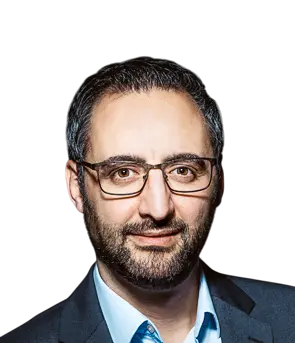
Last position:
Interim Manager; Systemic Business Coach; Freelance CNC-CAM Programmer and Product Designer; Founder and at Self-employed
- Process optimization
- Productivity increase in production
- Lean management
- Shopfloor management
- Production management
- Production control and planning
- Outsourcing
- Leadership training
- Private coaching
- Career coaching
- Self-management training
- Heidenhain, Siemens, Millplus
- CAD design with Fusion 360, SolidWorks
- FDM
- SLA
- Product design
- Prototyping
- Series production
Manuel E.
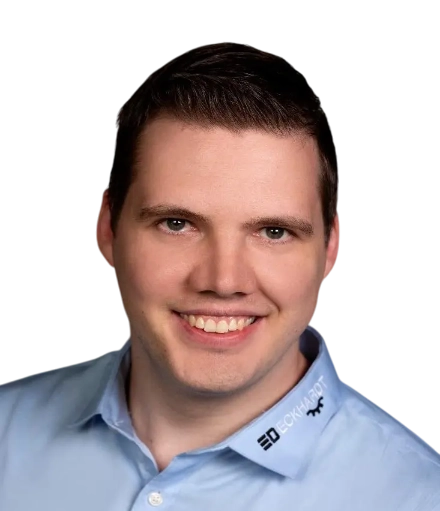
Last position:
Freelance Engineer at Ingenieurbüro ED Eckhardt
- Documentation of assembly steps in a cleanroom
- Improving assembly processes and boosting efficiency, ensuring required quality targets
- Revision of existing documents like parts lists and 3D models
- Creation of data sheets and product brochures
- Preparation and archiving of documents in the Promo-Office database
- Creation of qualification and validation documents for machines in the semiconductor industry (wafer production)
- Application of GMP principles for quality management of semiconductor machines
- Conducting FMEAs to increase process safety
- Performing risk assessments using and reviewing applicable standards and guidelines
- Creating and implementing IQ and OQ qualifications
- Creating test protocols and designing test rigs
- Conducting FMEAs and risk assessments for slicer machines in the food industry
- Considering FDA requirements and checking compliance
- Creation of operating manuals, product brochures, and catalogs for a medical technology mechanical engineering company
- Creation of FMEAs and risk assessments
- Creating spare parts lists
- Creation of operating manuals according to DIN EN ISO 20607
- Performing risk assessments according to DIN EN ISO 12100:2011
- Performing the CE marking process
- Standards research and standards assessment
- Creating 2D drawings and 3D graphics like exploded views, lubrication and maintenance plans (using CAD programs)
- Creation of data sheets and catalogs
- Experience with authoring tools such as Adobe FrameMaker, Paligo, Schema ST4, and Cosima
- Experience with data management modules like weclapp, SAP, and the Promo-Office database
- Experience with Adobe Photoshop, Illustrator, and InDesign
- Excellent skills in MS Office programs
Betim T.
Last position:
Project Effort Modeling Specialist at ACOTOR GmbH
- Responsible for modeling budget planning using machine learning and/or AI methods
- Rolled out a new planning tool for all major divisions in the ES department
- Led budget optimization programs in the ES area
- Prepared final budget cut decisions at HAL/BL level
Erik S.
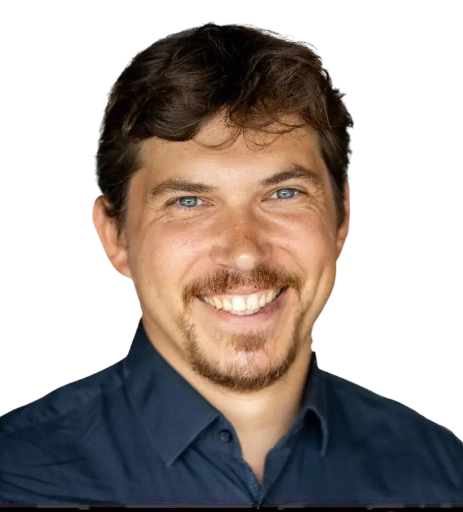
Last position:
CEO / Founder / Lead Developer at Supfix Germany GmbH
- Full responsibility for company management and strategic development
- Leading the development department with a focus on innovative product design
- Designing and developing the Supfix system using 3D and 2D CAD (SolidWorks)
- Building and testing prototypes on in-house CNC milling machines, laser cutters, and 3D printers
- Technical optimization of all components for transition to injection molding and mass production
- Planning and coordinating industrial mass production
- Filing a patent and receiving an award from the German Innovation Institute (DiiND) for outstanding innovation performance
Alexander W.

Last position:
Freelance Head of Development / Strategy Consultant at LabMaker GmbH
- Consulting on a wide range of open science hardware projects in the fields of electronics, mechatronics, and optoelectronics
- Comprehensive system analysis and DFM optimization of a novel open hardware miniaturized two-photon microscope
- Exchange with scientists from renowned academic institutions to align the customer’s work in the best possible way
- Production coordination with local and international partners for PCB assembly, CNC machining, and optics
- Process analysis for product design, production planning/execution, product lifecycle, and product data management
- Coaching employees from all departments on the requirements that complex technical products place on business processes
- Development of a comprehensive PLM & PDM concept tailored to the needs of development and manufacturing
- Initiating intensive and direct cross-departmental exchange to identify improvement potential
- Planning shopfloor layout improvements with the production team and supporting the implementation process
- Quick onboarding of two new English-speaking colleagues in technical product management and development
- Ad-hoc and in-depth training of employees in the use of software tools such as KiCad or Autodesk Inventor
- Consulting on long-term development into a scalable, even stronger partner for the open science hardware community
Maximilian D.
Last position:
Hardware Developer at Freelance Hardware Developer
- Optimization of a film stretching machine: concept design and proof of concept in SolidWorks and FEMM
- Development of a smart gas scale (Evergas) with mobile connectivity: functional and design prototype in SolidWorks, Cura, Eagle, Adafruit Web IDE
- Sensor system for brake disc measurement with Knorr-Bremse: proof of concept and patent preparation in SolidWorks, Cura, Eagle, FEMM, Adafruit Web IDE
- Development of a sensor for oil level measurement (Oilfox) with self-monitoring algorithms in SolidWorks, Cura, Eagle, Adafruit Web IDE
- Development of a miniature plastic extruder (Mcubus project) in SolidWorks, Cura, Eagle, LTSpice, FEMM, Arduino IDE
- Commissioning hardware for Magna Telemotive: electrical function tests, firmware porting in C++ and quality assurance coordination
- Electronics development for Sonnenglas: concepts for battery charging by solar power and LED control in Fusion 360, Eagle, Simplicity Studio, MPLab
- Development of a wake-up controller for Wing Man: vibration sensor and power-saving logic in Fusion 360, Eagle
- Hardware lead at Cariad SE: hardware testing, supplier communication, error management in iDEX, ODIS, CANoe
Philipp H.
Last position:
Freelance Mechanical Engineer at Helldorfer Engineering
- Product development, CAD design, production management, technical documentation, prototyping, kinetic installations
- Recent projects: Kinetic Art Installation 'MULTIPOLAR' (Atelier E), Art Sculpture 'Portal' (Augmentl Studio), Electronic IP 68 Enclosure (Agurotech)
Werner K.
Last position:
Development engineer, design, project management, project lead, resident engineering at Various major suppliers and engineering service providers of BMW AG
Discover over 15,000 top freelancers


Statistics of experts using Fused Deposition Modeling
Aggregated from the professional profiles of matched freelancers.

Experience
20 years

Position duration
2.6 years

Positions per freelancer
7

Top business areas
Product Development, Operations, Project Management

Top industries
Manufacturing, Automotive, Information Technology

Certification focus areas
Logistics, Operations, Quality Assurance

Bachelor's degree or higher
67%

Master's degree or higher
22%

Doctorate
11%

Certifications per freelancer
1

Most common languages
German, English, Albanian

Speak two or more languages
100%
Based on our profile pool as of 9 Oct 2026.
Daily rate distribution
The chart shows how the daily rates of experts in this technology in Germany are distributed, based on recent contracts on our platform. Each bar covers a rate range — its height shows the share of experts charging within that range.
Average rates of experts in Germany using Fused Deposition Modeling
Rates are based on recent contracts and do not include FRATCH margin.

The average daily rate is the mean of all daily rates from recent contracts of comparable freelancers on our platform.
The median daily rate is the middle value of all daily rates — half of comparable freelancers charge less, half charge more. Unlike the average, it is barely affected by outliers.
Calculated based on our freelancers’ daily rates as of 9 Oct 2026. Actual rates may vary depending on seniority level, experience, skill specialization, project complexity, and engagement length.
Fused Deposition Modeling experts industry focus
See which industries our matched freelancers work in most often — every figure is calculated live from the freelancers on FRATCH.
- Manufacturing (89%)
- Automotive (56%)
- Information Technology (33%)
- Professional Services (33%)
- Arts and Crafts (22%)
- Construction (22%)
- Education (22%)
- Energy (22%)
Please note that freelancers can work across multiple industries, so percentages overlap.
About the technology
Process
Fused Deposition Modeling, commonly called FDM, is an additive manufacturing process that creates parts layer by layer. A heated nozzle deposits thermoplastic filament along toolpaths generated from a digital model. The process supports rapid iteration, practical testing and small-batch production without machining a new tool for every design.
Applications
FDM is used for parts that need speed, flexibility and accessible materials across the product lifecycle.
- Functional prototypes for fit, form and assembly checks
- Jigs, fixtures and production aids for factory workflows
- Enclosures, brackets and replacement components
- Custom parts for research, education and specialized equipment
- Low-volume batches where conventional tooling is not economical
Materials
Strong FDM work depends on choosing the right filament for the operating environment. PLA suits visual prototypes and simple models, while PETG, ABS, ASA, nylon and polycarbonate can support greater toughness, heat resistance or outdoor durability. Professionals also assess warping, layer adhesion, moisture control and the limits of the selected printer.
Toolchain
The workflow combines CAD preparation, slicing and machine setup. Common tools include Fusion 360, SolidWorks, FreeCAD, Cura, PrusaSlicer and vendor-specific print software. Specialists manage STL or 3MF files, orientation, supports, infill, wall thickness, nozzle settings and post-processing while preserving dimensional intent.
Project Fit
Companies bring in freelance expertise when internal teams need a fast prototype cycle, a repeatable print process or guidance on moving from a model to a usable part. Germany-based manufacturers, research groups and product teams may need on-site access to equipment, while design and slicing work often runs remotely. Clear documentation supports collaboration across locations and languages.
Quality Signals
A strong professional understands both design and fabrication. They review tolerances, load paths, support strategy and material behavior before printing, then inspect the result against the design purpose. Look for a portfolio that explains failed iterations, printer calibration, validation methods and production constraints rather than showing finished objects alone.

Frequently asked questions
Quick answers to the questions that come up most around Fused Deposition Modeling.

Fused Deposition Modeling is used to produce prototypes, fixtures, housings, functional parts and small production runs from thermoplastic filament. It is especially useful when a team needs fast design changes without investing in dedicated molds or tooling.
FDM usually offers larger build volumes, tougher thermoplastic options and practical parts at accessible operating cost. Resin printing can deliver finer surface detail, but it often requires more handling, washing and curing, so the better choice depends on the required finish, strength and workflow.
A strong Fused Deposition Modeling specialist often combines CAD modeling, design for additive manufacturing, slicing, printer calibration and material selection. Skills in dimensional inspection, post-processing and basic mechanical testing are also valuable for functional parts.
The right level depends on the deliverable. A simple visual prototype may need solid CAD and slicing knowledge, while a load-bearing part or repeatable manufacturing process calls for experience with tolerances, material behavior, printer calibration and quality checks.
FDM work can often be planned remotely through shared CAD files, print settings, video reviews and documented test results. On-site collaboration becomes more important when the specialist must operate company equipment, inspect printed parts directly or improve a production workflow.
Fused Deposition Modeling commonly uses PLA, PETG, ABS, ASA, nylon and polycarbonate. Material choice should reflect heat, moisture, UV exposure, chemical contact, impact loads and the printer's extrusion and chamber capabilities.
Ask how the professional selects print orientation, supports, wall thickness and material for a specific part. A capable FDM professional can explain trade-offs, show inspection methods and document iterations instead of relying only on attractive sample prints.
Define the intended function, required dimensions, material constraints, surface expectations, printer access and acceptance checks. For Fused Deposition Modeling, it is also useful to agree on file formats, ownership of CAD changes, prototype review points and whether the final output is a model, print-ready file or validated part.
The average hourly rate of freelancers in Germany who have used Fused Deposition Modeling in their recent projects is 100 €, which corresponds to a daily rate of about 799 € based on an 8-hour working day.
Of the freelancers in Germany who have used Fused Deposition Modeling in their recent projects, 67% hold at least a Bachelor's degree, 22% hold at least a Master's degree, and 11% hold a doctorate.
On average, freelancers in Germany who have used Fused Deposition Modeling in their recent projects have 20 years of professional experience, with a single engagement typically lasting around 2.6 years.
The most common languages among freelancers in Germany who have used Fused Deposition Modeling in their recent projects are German (100%), English (100%), and Albanian (11%).
The most common industries among freelancers in Germany who have used Fused Deposition Modeling in their recent projects are Manufacturing (89%), Automotive (56%), and Information Technology (33%).
The most common business areas among freelancers in Germany who have used Fused Deposition Modeling in their recent projects are Product Development (100%), Operations (67%), and Project Management (67%).
Main locations of FRATCH Experts, who have recently used Fused Deposition Modeling
Our freelancers and interim experts are at home across the DACH region — available on-site in the major business hubs or fully remote. Choose a location to discover matched specialists, local market insights and up-to-date availability.
 Berlin Hamburg Munich Cologne Frankfurt Stuttgart Dusseldorf Leipzig Dortmund Essen Bremen Dresden Hanover Nuremberg
 Request a free demo
Get in touch with the FRATCH team and we will get back to you within 4 hours.
Would you rather directly get in touch?
We always have the time for a call or email!

Philipp Thomaschewski
FRATCH CEO

