


Backend for Frontend Experts in Germany
for faster, cleaner digital products with AI-matched talentHire experts who design client-specific APIs, shape data for web and mobile interfaces, and connect frontend applications with reliable services. FRATCH matches you quickly and precisely with vetted, available freelancers for Backend for Frontend work.

Meet FRATCH Experts in Germany, who have recently used Backend for Frontend
Deniel H.

Last position:
Shareholder & Senior Engineer, Product and Go-to-Market at Continua Systems GmbH
Consulting and software for intralogistics automation (AGV/FTS) · Product lines AGVHub (independent AGV project consulting, layout editor) and OneBob (all-in-one business software for small teams)
- Designed and planned the implementation of a supervisory control system for a bakery production line (engineering customer, kick-off workshop 08/2025): three development stages, eight acceptance-ready milestones, batch traceability, AGV integration with RFID, Vue frontend.
- Discovery and requirements discussions with plant logistics and IT teams at industrial customers (life science, aviation, steel, engineering): translated supervisory control, ERP interface, and VDA 5050 requirements into architecture and requirements specification structures.
- Go-to-market automation and analytics: Bing and Meta campaigns, LLM-supported LinkedIn content pipeline, performance dashboards for partners and sales.
- Expert posts on LinkedIn about robotics and intralogistics: around 170,000 impressions across 41 posts (03 to 08/2026).
Michael G.

Last position:
Lead Global eCommerce Operations at PUMAGroup
- Bedrock technology operations role providing the foundations on which PUMA's global product teams build PUMA.com and associated systems
- Managed a €3.5 million CAPEX portfolio including ~20 externals and 16 platform and tooling vendors
- Started up and led five functional teams for platform engineering, cloud administration, edge technology, continuous performance testing, and L2 support / incident management
- Person of last resort for mysteries, intractable bugs, compliance crises, litigation support, and black-hole issues where ownership was unclear or contested
- Sole author and driver of a multi-million-euro, multi-year RFP for Global Operations Center serving the direct-to-consumer technology estate for eCommerce, order management, and brick-and-mortar retail tech support
- Conceived, designed, developed and productionized Order Viewer, a secure internal application providing observability into PUMA.com order data at sub-second latency; independently delivered architecture, implementation, GCP deployment, SSO integration and organizational compliance.
Patrick W.

Last position:
AI Software Engineer at IppenMedia
- Analysis
- Consulting
- Software design
- Development
- Automation
- Testing
- Deployment
- Architecture, development and deployment of various proof-of-concept applications around the integration of current AI interfaces including conversational, realtime voice, images and videos
- Developed best practices for working with agentic systems and AI in practice
- Created code templates
Hüseyin K.

Last position:
Senior Full-Stack Engineer at DVAG
Architecture and implementation of a fully digitalized closing flow for managing securities contracts within the DVAG infrastructure. The platform aims for maximum user-friendliness, modular extensibility and compliant handling of sensitive data.
Implementation of a reactive UI structure with a focus on user guidance & accessibility.
Dynamic control of form and closing processes including validation logic.
Reactive state management via SignalStore (signals + selective effects).
UX optimization through adaptive components and Playwright-based UI tests.
Backend modularization to connect existing sales and contract logic.
API stability and DTO design according to Clean Architecture principles.
Collaboration with domain teams to define technical contracts and service boundaries.
Management with GitHub.
Unit tests with Jest, E2E tests with Playwright.
Code reviews, CI-integrated test execution, iterative refactorings.
Ensuring high coverage and UI stability in the closing flow.
Technologies: Angular 18, RxJS, SignalStore, HTML5, SCSS, Spring Boot, Kotlin, REST, OAuth2, Jest, Playwright, Clean Architecture.
André U.

Last position:
RTE / Agile Coach / Full SAFe Consultant at Siemens Energy
- RTE/Agile Coach for the SAFe 6 (Scaled Agile Framework) rollout
- Building and establishing a LACE (Lean-Agile Center of Excellence) for several ARTs
- Using the tools: Azure DevOps with SCALE, Loop, MS Whiteboard
- Building the ART with 7 teams
- Training Product Owners, e.g. through SAFe POPM training and LearnSnacks
- Running the initial PI Planning as a Kickoff Planning Event
- Introducing a demand process
Jonas T.

Last position:
IT Consultant at Bechtle AG
- Prequalified 200 demands within five weeks on the multi-cloud-commerce platform bechtle-clouds.com with three external consultants
- Served a dual role as project manager and requirements engineer for various enhancements
- Domain topics: reimplementation of Entra ID Sync, improvement of support processes, optimizations in the product catalog
- Demand and project management in ServiceNow
- Refinement of epics and stories with internal teams and external service providers
- Management of the external international service provider
Matthias L.

Last position:
Typescript Fullstack Engineer at Card Complete / Bank Austria
- Designed and developed the "Credit Risk Engine" using Camunda, Node.js and Typescript
- Greenfield project for credit card credit assessment for existing and new customers, including EBA KPIs, SCHUFA and CRIF scorings
- Built and modeled workflows (BPMN) and decision logic (DMN) with Camunda Modeler in close collaboration with stakeholders
- Implemented service tasks, user tasks and jobs with Nest.js, Node.js and Typescript, including exception handling
- Backend-for-Frontend (BFF), frontend with React, Tailwind and Ant Design UI library
- CI/CD with GitLab, Kubernetes/Rancher
Dennis O.

Last position:
Lead Software Engineer at Heinemann
- Led a team of four developers in a comprehensive rewrite of the Heinemann iOS app, successfully navigating a highly undocumented software environment.
- Implemented a frontend-first approach by adopting the backend-for-frontend (BFF) pattern, enabling frontend developers to lead API specification development for enhanced alignment and efficiency.
Muthukumar K.

Last position:
Senior Java Backend Developer at Upwork
- Developed Java 21 / Spring Boot 3.2 microservices with REST and GraphQL APIs for GDPR-compliant consent workflows using Hexagonal Architecture
- Enhanced Backend-for-Frontend (BFF) performance using AI-assisted tools for code refactoring and optimization
- Built event-driven workflows with Kafka, RabbitMQ, AWS SQS, and integrated Salesforce Marketing Cloud for real-time consent tracking
- Implemented OAuth2 and Keycloak security, automated CI/CD with Jenkins, GitHub Actions, and Gradle, and deployed containerized services on Docker and Kubernetes with AWS and Azure
- Executed unit, integration, and contract testing with JUnit 5, TestNG, Mockito, and TestContainers; monitored performance via Grafana, Kibana, and AWS CloudWatch
- Developed microservices for digital identity verification and e-signature management with Hexagonal Architecture
- Integrated Keycloak 24.x with OAuth2.1 and OpenID Connect for SSO and RBAC, ensuring EU eIDAS compliance
- Designed API-first microservices with OpenAPI 3.1, Swagger, and GraphQL for improved interoperability
- Automated CI/CD pipelines with Jenkins, GitHub Actions, and Gradle; deployed containerized services on AWS EKS and Azure; monitored with Grafana, Kibana, CloudWatch, and TestContainers
Andreas N.

Last position:
Open Source Founder at Privatier
- AI-supported source code analysis
- AI image generation for a shirt shop
- AI-supported analysis of connected YouTube channels and commenting users
- AI-supported software prototyping
- Operation of a local AI environment
- 3D printing and scanning: development of a process to repair GfK parts using 3D-printed negative molds
The focus is on practical applications of new technologies, founding an open-source project for a yacht autopilot, as well as yacht refit and motorhome conversion.
Marc H.

Last position:
Senior Architect, Coach and Developer
Fixing issues in the application logic
Covering the changes with component tests
Analyzing and documenting the data structure of the different applications
Analyzing and documenting the parameters for configuring the applications
Analyzing and documenting the necessary measures to ensure the operation of the applications
Analyzing and designing the separation of the individual database structures
Analyzing and estimating the effort for planned enhancements
Analysis, maintenance and documentation of a heterogeneous legacy system landscape for a print media service provider
Technology: C#, VB.NET, C, Python, Microsoft SQL Server, Visual Studio 2010, JetBrains Rider, Visual Studio Code, arc42, Draw.io, Jira, GitLab
Roland S.

Last position:
mediagear GmbH
- Implementation and support of digital transmission of laboratory report data to various practice software systems according to KVB standards
- Ensuring audit-proof archiving of all laboratory reports
- Developing and implementing sustainable optimization measures to increase efficiency in laboratory operations
- Close collaboration with software providers, practice teams, and the Bavarian Association of Statutory Health Insurance Physicians
- Applying agile methods such as Scrum and tools like Jira, Confluence, and MS Office
- Utilizing AI-driven processes to develop innovative solutions
Martin M.

Last position:
Florio C3G
- App that helps patients schedule their medication, track their symptoms, and biomarkers
- The app is being certified as a medical device
- Technologies: React Native, Expo, Redux Toolkit
Chris T.
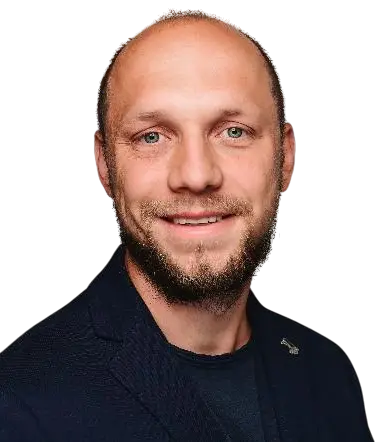
Last position:
Backend Developer | DevOps at DEVK
The goal of the project is to integrate a new document creation system (MText) into the existing system landscape. For this, I independently develop several Spring Boot microservices that handle the conversion from XML to JSON formats and control direct communication with MText. The applications are containerized and run in the AWS Cloud with Kubernetes and Helm.
- Developed an integration service that bundles multiple calls and acts as a facade for communicating with various services
- Developed a conversion service to transform unstructured XML files into structured JSON files for different business units
- Extensive unit and integration tests for file conversion; mocking interfaces with WireMock, Aspects, etc.
- Unified exception handling with @ControllerAdvice and Aspects
- Professional design of OAS definitions (design-first approach)
- Created client and server implementations based on OAS definitions (OpenAPI Specification) using code generators and managed them in Nexus
- Logging in combination with the ELK stack
- Integrated the MText server via HTTP calls
- Created DORA-compliant tests with Xray in coordination with testers
- Set up the CI/CD pipeline with GitLab Actions
- Handled security issues from AquaScan and coding issues from SonarQube
- Distributed services across different stages (Dev, Test, VProd, Prod)
- Set up and maintained Helm charts
Technologies used:
- Backend: Spring Boot, Java 17, JUnit5, OpenAPI (OAS), OAuth2, WireMock
- DevOps: GitLab CI/CD, Kubernetes, Docker, Anypoint, Nexus
- Cloud: AWS, EKS
- Project management: Jira, Confluence
Discover over 15,000 top freelancers


Statistics of experts using Backend for Frontend
Aggregated from the professional profiles of matched freelancers.

Experience
16 years

Position duration
1.5 years

Positions per freelancer
13

Top business areas
Information Technology, Product Development, Quality Assurance

Top industries
Information Technology, Automotive, Healthcare

Certification focus areas
Information Technology, Product Development, Human Resources

Bachelor's degree or higher
90%

Master's degree or higher
40%

Doctorate
10%

Certifications per freelancer
3

Most common languages
German, English, French

Speak two or more languages
79%
Based on our profile pool as of 9 Oct 2026.
Daily rate distribution
The chart shows how the daily rates of experts in this technology in Germany are distributed, based on recent contracts on our platform. Each bar covers a rate range — its height shows the share of experts charging within that range.
Average rates of experts in Germany using Backend for Frontend
Rates are based on recent contracts and do not include FRATCH margin.

The average daily rate is the mean of all daily rates from recent contracts of comparable freelancers on our platform.
The median daily rate is the middle value of all daily rates — half of comparable freelancers charge less, half charge more. Unlike the average, it is barely affected by outliers.
Calculated based on our freelancers’ daily rates as of 9 Oct 2026. Actual rates may vary depending on seniority level, experience, skill specialization, project complexity, and engagement length.
Backend for Frontend experts industry focus
See which industries our matched freelancers work in most often — every figure is calculated live from the freelancers on FRATCH.
- Information Technology (93%)
- Automotive (57%)
- Healthcare (57%)
- Education (50%)
- Banking and Finance (50%)
- Manufacturing (50%)
- Media and Entertainment (50%)
- Energy (43%)
Please note that freelancers can work across multiple industries, so percentages overlap.
About the technology
What BFF means
Backend for Frontend, commonly called BFF, is an architectural pattern that gives each user interface a backend tailored to its needs. A web application, mobile app, smart device or partner portal can receive the exact data and actions it requires without adapting to a general-purpose service. This keeps presentation concerns close to the client while core business logic remains in shared services.
Where it fits
BFF layers are useful when different interfaces consume the same domain but need different payloads, authentication flows or response times. Typical applications include customer portals, mobile banking, commerce journeys, media platforms and internal workspaces. In Germany, companies often use this pattern across distributed digital products where several teams release interfaces independently.
- Aggregate data from several services into one client response
- Adapt APIs for web, mobile and device-specific experiences
- Reduce frontend calls and unnecessary payloads
- Coordinate authentication, permissions and session handling
Ecosystem and tooling
Strong BFF work connects API design with the surrounding service landscape. Specialists may use Node.js, Java with Spring Boot, .NET, Go or another suitable runtime, alongside REST, GraphQL, gRPC and event-driven integrations. They also work with API gateways, service meshes, observability tools, automated tests, container orchestration and cloud deployment workflows.
When expertise helps
Companies bring in freelance expertise when an existing frontend depends on slow or inconsistent APIs, or when one backend must serve very different clients. A specialist can define the BFF boundary, map data contracts, remove orchestration from the frontend and plan a safe migration from a monolithic endpoint. This is especially useful during a mobile launch, platform redesign, service decomposition or ownership change between teams.
Delivery and collaboration
A BFF professional should clarify client journeys, source systems, failure handling and ownership before writing endpoints. They document contracts, protect sensitive data, add tracing and metrics, and test responses against real interface needs. Remote collaboration works well when teams maintain clear API documentation, shared design decisions and reliable access to development environments; on-site workshops can help when many German business units must align.
What distinguishes strong specialists
The best specialists do more than expose existing services through a new URL. They balance frontend usability with domain boundaries, avoid copying business rules into every client, and choose aggregation strategies that remain maintainable as products change. Look for evidence of versioned contracts, resilient integration patterns, secure authorization, useful monitoring and clear handover material. They should also explain when a BFF is better than a shared API, a direct service call or a gateway-only approach.

Frequently asked questions
Not sure where to start with Backend for Frontend? These answers cover the essentials.

Backend for Frontend is used to create a backend layer tailored to a specific interface, such as a web application or mobile app. It combines and reshapes data from underlying services so each client receives a simpler, safer and more efficient API.
A Backend for Frontend usually contains client-specific orchestration and response shaping, while an API gateway focuses more on shared concerns such as routing, authentication, throttling and observability. They can work together, but a gateway alone is not always a good place for interface-specific behavior.
A strong BFF specialist understands API design, frontend data needs, distributed systems and service integration. Useful adjacent skills include REST or GraphQL, authentication, caching, automated testing, cloud deployment, monitoring and security.
The right level of experience depends on the number of clients, service dependencies and migration risks. For a small interface, a specialist with focused API delivery experience may be enough; a complex landscape needs someone who has handled contracts, resilience and ownership across teams.
Backend for Frontend work is often suitable for remote collaboration because contracts, code reviews and interface tests can be shared digitally. German teams should agree on documentation standards, working language, access controls and meeting routines, while on-site sessions can support complex domain workshops.
A Backend for Frontend layer may add unnecessary maintenance when clients have identical needs and a stable shared API already serves them well. It can also be a poor choice if it becomes a hidden place for core business rules or duplicates logic across many interfaces.
Review whether the BFF has clear ownership, focused endpoints, resilient service calls and contracts that reflect real client journeys. Ask how the specialist handles failures, authorization, observability, versioning and changes in the underlying services.
Before taking on a Backend for Frontend project, clarify the target interfaces, source services, authentication model, release ownership and success criteria. It is also important to understand whether the layer is a temporary migration step or a long-term product boundary.
The average hourly rate of freelancers in Germany who have used Backend for Frontend in their recent projects is 99 €, which corresponds to a daily rate of about 789 € based on an 8-hour working day.
Of the freelancers in Germany who have used Backend for Frontend in their recent projects, 90% hold at least a Bachelor's degree, 40% hold at least a Master's degree, and 10% hold a doctorate.
On average, freelancers in Germany who have used Backend for Frontend in their recent projects have 16 years of professional experience, with a single engagement typically lasting around 1.5 years.
The most common languages among freelancers in Germany who have used Backend for Frontend in their recent projects are German (86%), English (86%), and French (14%).
The most common industries among freelancers in Germany who have used Backend for Frontend in their recent projects are Information Technology (93%), Automotive (57%), and Healthcare (57%).
The most common business areas among freelancers in Germany who have used Backend for Frontend in their recent projects are Information Technology (100%), Product Development (100%), and Quality Assurance (64%).
Main locations of FRATCH Experts, who have recently used Backend for Frontend
Our freelancers and interim experts are at home across the DACH region — available on-site in the major business hubs or fully remote. Choose a location to discover matched specialists, local market insights and up-to-date availability.
 Berlin Hamburg Munich Cologne Frankfurt Stuttgart Dusseldorf Leipzig Dortmund Essen Bremen Dresden Hanover Nuremberg
 Request a free demo
Get in touch with the FRATCH team and we will get back to you within 4 hours.
Would you rather directly get in touch?
We always have the time for a call or email!

Philipp Thomaschewski
FRATCH CEO

