


Facilitators in Switzerland
for productive workshops, aligned teams and clear decisions, matched in minutesHire specialists in workshop design, strategic alignment, team development and agile collaboration. FRATCH connects you with precise, AI-matched facilitators who are vetted and available for freelance projects.

Meet FRATCH Facilitators in Switzerland
Adrian S.

Last position:
Facilitator for Personal & Organizational Development at Schenk Beratung
- Develops governance structures and supports organizational development.
- Supports executive teams and committees with strategic decision-making (SMEs).
- Coaching and team development
- Personal development and debriefing
Elena S.

Last position:
Learning & Development Consultant | Executive Coach | Leadership Development Facilitator at Indipendent Advisor
Independent HR & Learning Consultant | Founder, Elevate Growth
- Partner with consulting firms and corporate clients on Learning & Development strategy, leadership development, executive and management coaching, organisational development, and culture and change initiatives.
- Design and deliver tailored learning programmes, leadership workshops and team development interventions, combining strategic consulting, facilitation and coaching.
- Support organisations in exploring the opportunities and challenges of AI-enabled people development, integrating emerging research with practical organisational needs.
- Leverage 15 years of corporate HR and L&D experience in multinational environments, including Barilla and CNH Industrial, to translate business challenges into practical, impactful development solutions.
Enrico T.

Last position:
Freelance Design Lead at Cosmico
Drawing on extensive experience across agency and client-side projects, I cover both the strategic and hands-on sides of design — managing client relationships and team workflows, while staying directly involved in the end-to-end design process, from defining the overall approach to delivering the final outcomes.
Hans S.
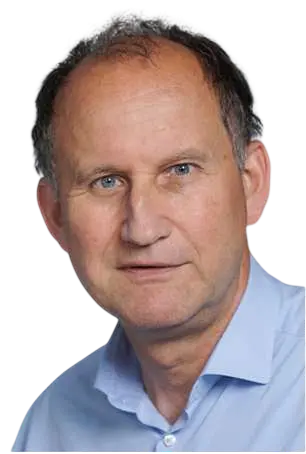
Last position:
Product Development Team Member at Smell Discettes GmbH
- Supply chain and regulatory setup for medical device re-engineering, launch and manufacturing ramp-up
Floris S.

Last position:
Business Coaching & Advisory at The NeO Frequency
- Activate the energy within organisations to evolve beyond outdated structures
- Guide leaders to unlock natural intelligence and flow, aligning human potential with purpose
Séverine B.

Last position:
Cross-Border HR Advisor at HR Graff Consulting GmbH
Supporting international clients with formal processes like serving judicial documents under Hague protocols, coordinating certified translations, and ensuring local compliance.
Skills: International Legal Coordination, Certified Translation Management, Cross-Jurisdictional HR
Discover over 15,000 top freelancers


Facilitators statistics
Aggregated from the professional profiles of matched freelancers.

Experience
23 years

Position duration
3.7 years

Positions per freelancer
14

Top business areas
Human Resources, Product Development, Project Management

Top industries
Professional Services, Banking and Finance, Healthcare

Certification focus areas
Human Resources, Information Technology, Project Management

Bachelor's degree or higher
75%

Master's degree or higher
75%

Doctorate
25%

Certifications per freelancer
4

Most common languages
English, German, French

Speak two or more languages
100%
Based on our profile pool as of 28 Nov 2026.
Daily rate distribution
The chart shows how the daily rates of experts in this role in Switzerland are distributed, based on recent contracts on our platform. Each bar covers a rate range — its height shows the share of experts charging within that range.
Average rates for Facilitators in Switzerland
Rates are based on recent contracts and do not include FRATCH margin.

The average daily rate is the mean of all daily rates from recent contracts of comparable freelancers on our platform.
The median daily rate is the middle value of all daily rates — half of comparable freelancers charge less, half charge more. Unlike the average, it is barely affected by outliers.
Calculated based on our freelancers’ daily rates as of 28 Nov 2026. Actual rates may vary depending on seniority level, experience, skill specialization, project complexity, and engagement length.
Facilitators experts industry focus
See which industries our matched freelancers work in most often — every figure is calculated live from the freelancers on FRATCH.
- Professional Services (83%)
- Banking and Finance (50%)
- Healthcare (50%)
- Information Technology (50%)
- Aerospace and Defense (33%)
- Construction (33%)
- Education (33%)
- Food and Beverage (33%)
Please note that freelancers can work across multiple industries, so percentages overlap.
About the role
Workshops with direction
A facilitator designs and guides structured sessions so groups can solve problems, make decisions and move forward together. They clarify the objective, prepare the agenda, choose suitable methods and create a setting where every relevant voice can be heard. The work may cover a leadership retreat, customer workshop, innovation sprint, project kickoff or difficult alignment meeting.
Typical deliverables include:
- Session goals, agendas and participant preparation
- Workshop formats, exercises and discussion structures
- Decision logs, documented outcomes and next steps
- Follow-up recommendations for implementation
Skills and methods
Strong facilitators combine group psychology, business understanding and precise communication. They remain neutral on the outcome while keeping the process focused. Depending on the assignment, they use design thinking, Liberating Structures, systems thinking, retrospectives, stakeholder mapping or consensus-building techniques.
They may work as a workshop facilitator, meeting facilitator, team facilitator or agile facilitator. Useful skills include conflict moderation, active listening, visual thinking, questioning, time management and the ability to adapt a session when dynamics change. Digital collaboration tools such as Miro, Mural, Microsoft Teams and Zoom are common in remote work.
When companies engage one
Companies bring in freelance facilitators when an important conversation needs structure, neutrality or momentum. This is especially useful for cross-functional teams, post-merger alignment, strategy development, product discovery, organisational change and meetings where internal power dynamics limit open discussion. A freelancer can step in for a defined intervention without becoming part of one department’s agenda.
In Switzerland, assignments often involve international teams, multilingual stakeholders and a mix of remote and on-site work. Clear expectations around working language, travel and confidentiality should be agreed before the first session. The engagement may cover one workshop or a broader sequence from diagnosis through follow-up.
What distinguishes strong facilitators
The best professionals do more than keep a meeting on schedule. They understand the business question, identify hidden assumptions and select methods that fit the group rather than applying a fixed template. They make participation balanced without forcing artificial consensus and turn discussion into owned decisions.
When evaluating a freelancer, look for relevant case examples, a clear discovery process and evidence of well-documented outcomes. Ask how they handle dominant voices, conflict, silence, scope changes and decisions that cannot be reached in the room. Strong facilitators also define success before the session and protect the quality of follow-through afterwards.

Frequently asked questions
What clients ask us most about Facilitators — answered in short.

A freelance facilitator plans and leads structured group processes. They help participants clarify issues, exchange perspectives, make decisions and agree on concrete next steps. Their work can include preparation interviews, session delivery, documentation and follow-up.
A facilitator designs the process that helps a group work effectively toward a shared outcome. A moderator usually manages discussion and participation, while a coach focuses more directly on the development of an individual or team. In practice, one professional may use elements of all three roles, but the assignment and expected deliverables should be clear.
A strong workshop facilitator combines session design, active listening, neutral questioning and conflict management. They should understand the subject enough to frame useful questions without taking ownership of the group’s decision. Experience with comparable participants, objectives and levels of complexity is more useful than a generic method list.
A facilitator is particularly useful when neutrality, specialist process knowledge or an outside perspective matters. This often applies to strategic alignment, sensitive conflict, cross-functional decisions or a high-stakes workshop that an internal manager cannot lead impartially. Freelance support also fits projects with a defined start, outcome and follow-up period.
Yes, a facilitator can lead effective remote sessions with tools such as Miro, Mural, Teams or Zoom. The design must allow for shorter interaction cycles, clear digital instructions and deliberate participation. For Swiss teams, agree early on the working language, time zones and whether selected sessions should take place on-site.
A workshop facilitator may provide a decision record, prioritised actions, ownership, open questions and a summary of the process. The exact output depends on the purpose of the session and should be agreed during scoping. Good documentation reflects what participants actually decided rather than producing a generic meeting report.
A facilitator should be able to explain how they diagnose a group, select methods and respond when the planned process stops working. Ask for anonymised examples that show the starting problem, intervention and resulting decisions or actions. References, a practical session outline and clear success criteria provide stronger evidence than confident presentation alone.
A freelance facilitator should clarify the business objective, decision rights, participants, political context, working language and expected outputs. They should also confirm who sponsors the process, how much preparation is available and what happens after the session. In Switzerland, travel, on-site requirements and collaboration across language regions may affect the design and scope.
The average hourly rate for Facilitators in Switzerland is 133 €, which corresponds to a daily rate of about 1,067 € based on an 8-hour working day.
Of the freelancers working as Facilitators in Switzerland, 75% hold at least a Bachelor's degree, 75% hold at least a Master's degree, and 25% hold a doctorate.
On average, freelancers working as Facilitators in Switzerland have 23 years of professional experience, with a single engagement typically lasting around 3.7 years.
The most common languages among freelancers working as Facilitators in Switzerland are English (100%), German (83%), and French (50%).
The most common industries among freelancers working as Facilitators in Switzerland are Professional Services (83%), Banking and Finance (50%), and Healthcare (50%).
The most common business areas among freelancers working as Facilitators in Switzerland are Human Resources (83%), Product Development (67%), and Project Management (67%).
FRATCH Facilitators main locations
Our freelancers and interim experts are at home across the DACH region — available on-site in the major business hubs or fully remote. Choose a location to discover matched specialists, local market insights and up-to-date availability.
Countries:
- Germany
- Switzerland
 Zurich Geneva Basel Bern
Request a free demo
Get in touch with the FRATCH team and we will get back to you within 4 hours.
Would you rather directly get in touch?
We always have the time for a call or email!

Philipp Thomaschewski
FRATCH CEO

