


Stable Diffusion Experts in Nuremberg
in minutes from over 15,000 CVs with the power of AIHire experts who create Stable Diffusion image pipelines, tune prompts and negative prompts, and adapt SDXL workflows for product and marketing needs. Get fast, precise matching with vetted, available freelancers.

Meet FRATCH Experts in Nuremberg, who have recently used Stable Diffusion
Muntaha S.
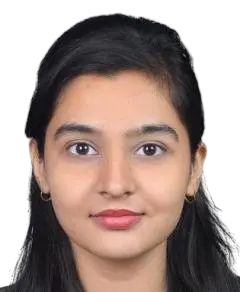
Last position:
AI Engineer (Freelance) at Upwork
- Delivered 40+ AI projects and 23 strategic consultations for international clients (US, Europe, Middle East), achieving a 98% job success rate and building long-term partnerships.
- Developed and deployed production-grade AI solutions in computer vision, NLP, deep learning, and generative AI (LLMs, RAG pipelines, Stable Diffusion, OCR, chatbots), enabling automation and improving client efficiency by up to 70%.
- Designed and fine-tuned large language models (LLMs), including prompt engineering and integration with enterprise knowledge bases, leading to smarter decision-making and reduced manual effort.
- Built real-time computer vision applications (detection, segmentation, OCR) and integrated them into business systems, significantly enhancing accuracy and scalability.
- Consulted startups and enterprises on AI strategy, architecture, and deployment (cloud & on-premise), accelerating product development and reducing time-to-market.
- Managed complete AI project lifecycles (requirements gathering, solution design, deployment, support) in agile, international, and cross-functional environments, ensuring high-quality delivery.
Kashyap K.

Last position:
Master’s Thesis - Synthetic Data Generation for Quality Inspection at Schaeffler Technologies AG
- Developed a synthetic data generation framework using 3D simulation (NVIDIA Omniverse) and Generative AI (Stable Diffusion) to model and augment industrial surface defects.
- Trained and evaluated Computer Vision models (YOLO, DETR), achieving 94% detection accuracy on real-world samples and demonstrating successful simulation-to-reality transfer.
- Applied domain adaptation to improve simulation-to-reality transfer, enabling scalable Industrial AI for automated quality inspection and reducing manufacturing downtime.
Tobias V.
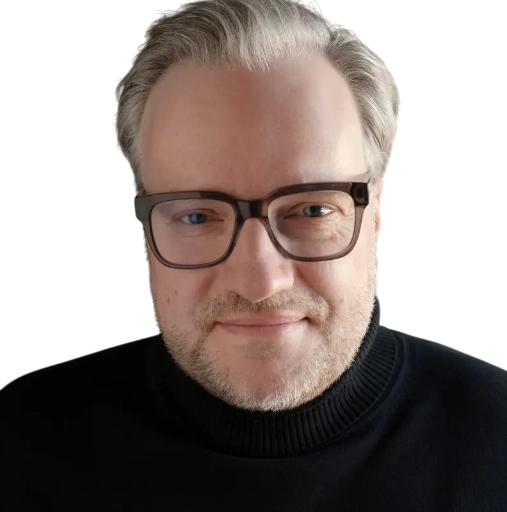
Last position:
Managing Partner at Unwritten GmbH
- Pioneer work in personalized AI: development of a framework for “Interactive Content” (RAG) for novels, lectures, expert debriefing
- Successful launch of Einbug, the Pantopia chatbot, with media resonance (SZ interview)
- Creation of compelling AI personalities: AI blog ([link]), 100% personalized learning environments, Perry Rhodan, and others.
Puranjan B.

Last position:
Internship - Generative AI at Continental
- Gathered tire images and their feature descriptions.
- Cleaned dataset of image metadata using pandas.
- Stored image feature embeddings in Chroma vector db.
- Used image augmentations to increase dataset size.
- Used sklearn to create shuffled datasets and imbalanced-learn to balance class sizes in dataset.
- Used PyTorch to train and test different neural networks.
- Validated model using custom accuracy metric based on similarity search in ChromaDB.
- Visualized accuracy predictions using matplotlib.
- Plugged trained model into DreamBooth to train stable diffusion model and generate new images of tires.
- Created custom Docker image in Amazon Elastic Container Registry for machine learning script.
Pawan S.

Last position:
CAPTCHA Recognition using CRNN
- Built a CRNN model with VGG16 and BiLSTM backbone for text-based CAPTCHA recognition
- Achieved 9.37% character error rate and 68.36% sequence accuracy on validation data
- Expanded data augmentation pipeline with distortions, noise injection, and clutter to improve robustness
- Conducted detailed error analysis on confusable characters (O, Q, D) and proposed error-specific augmentation
- Tech Stack: Python, TensorFlow/Keras, OpenCV, NumPy, Matplotlib
Ekaansh K.

Last position:
Master thesis - LLM powered RAG System at Friedrich-Alexander-Universität Erlangen-Nürnberg
- Developed a RAG system to automate student queries with 96% accuracy, built using FastAPI and LangChain and deployed on the university server with Docker.
- Evaluated performance using RAGAS, comparing LLMs (Llama3.3, Llama3.1, GPT-4o-mini), vector embeddings, and various retrieval techniques within the RAG pipeline.
- Technical Skills: Python, FastAPI, Docker, AWS, LangChain, LangSmith, NLP, HTML, CSS
Discover over 15,000 top freelancers


Statistics of experts using Stable Diffusion
Aggregated from the professional profiles of matched freelancers.

Experience
12 years

Position duration
2.2 years

Positions per freelancer
5

Top business areas
Product Development, Research and Development, Information Technology

Top industries
Information Technology, Education, Manufacturing

Certification focus areas
Business Intelligence, Information Technology, Research and Development

Bachelor's degree or higher
100%

Master's degree or higher
100%

Certifications per freelancer
2

Most common languages
English, German, Bangla

Speak two or more languages
100%
Based on our profile pool as of 9 Oct 2026.
Daily rate distribution
The chart shows how the daily rates of experts in this technology in Nuremberg are distributed, based on recent contracts on our platform. Each bar covers a rate range — its height shows the share of experts charging within that range.
Average rates of experts in Nuremberg using Stable Diffusion
Rates are based on recent contracts and do not include FRATCH margin.

The average daily rate is the mean of all daily rates from recent contracts of comparable freelancers on our platform.
The median daily rate is the middle value of all daily rates — half of comparable freelancers charge less, half charge more. Unlike the average, it is barely affected by outliers.
Calculated based on our freelancers’ daily rates as of 9 Oct 2026. Actual rates may vary depending on seniority level, experience, skill specialization, project complexity, and engagement length.
Stable Diffusion experts industry focus
See which industries our matched freelancers work in most often — every figure is calculated live from the freelancers on FRATCH.
- Information Technology (83%)
- Education (50%)
- Manufacturing (50%)
- Automotive (33%)
- Healthcare (33%)
- Professional Services (33%)
- Aerospace and Defense (17%)
- Chemical (17%)
Please note that freelancers can work across multiple industries, so percentages overlap.
About the technology
Image generation
Stable Diffusion is used to create images from text, reference images, and inpainting workflows. Companies bring it in for concept art, product mockups, campaign visuals, and internal content tools. It is also common in generative design pipelines where fast iteration matters.
Typical work
- Prompt design for brand-safe outputs
- Image-to-image and inpainting flows
- Style control and model testing
- Batch generation for content teams
- Workflow setup for repeatable delivery
Ecosystem
Strong specialists work with SDXL, ControlNet, LoRA, and common UIs such as ComfyUI and Automatic1111. They understand checkpoints, samplers, schedulers, and how to combine them into stable production workflows. Good work also includes version control for prompts, assets, and model settings.
When to hire
Bring in freelance expertise when you need a custom visual pipeline, better output consistency, or help moving from experiments to production use. Teams in Nuremberg often want support for agency work, industrial marketing, and product visualization where local collaboration can be useful. Remote support also works well when the team already has clear creative direction.
What strong experts do
A strong specialist does more than produce attractive images. They know how to reduce artifacts, keep subjects consistent, and adapt the model to a brand, style guide, or workflow. They also document settings so teams can repeat results instead of guessing.
Quality signals
Look for clear examples of prompt control, model adaptation, and practical delivery. Good professionals explain why a workflow uses SDXL, a custom LoRA, or inpainting instead of generic generation. They should also be able to talk about licensing, asset handling, and how the results fit your review process.

Frequently asked questions
Before you brief your next project: the most common questions about Stable Diffusion.

Stable Diffusion is used to generate and edit images from text prompts, reference images, and masks. Companies use it for concept work, marketing visuals, product mockups, and rapid creative testing. It is especially useful when teams need many visual variants without starting each one from scratch.
Stable Diffusion gives teams more control over the workflow because it can run with custom models, local setups, and tools like ControlNet or LoRA. Midjourney is often chosen for fast stylistic output, while DALL·E is often used for simpler prompt-based generation. Stable Diffusion is usually the better fit when you need repeatability, tuning, or integration into a larger pipeline.
Stable Diffusion is the family name, and SDXL is a newer model line within that ecosystem. Many projects still use Stable Diffusion 1.5, SDXL, or custom fine-tuned variants depending on the quality target and the workflow. A good specialist should know when to choose one version over another.
A strong Stable Diffusion specialist should also understand model selection, image editing workflows, and practical tooling such as ComfyUI or Automatic1111. Useful adjacent skills include Python, basic GPU setup, asset management, and a good eye for visual quality. For production work, documentation and repeatable settings matter as much as creativity.
A Stable Diffusion project works better when the team can describe the visual goal, output format, style boundaries, and where the images will be used. A freelancer can help shape the workflow, but the brief should cover brand rules, review steps, and any sensitive content limits. The clearer the use case, the faster the expert can design a useful setup.
Yes, most Stable Diffusion work can be done remotely if the team can share references, feedback, and asset files clearly. For companies in Nuremberg, on-site sessions can still help during kickoffs, workshops, or when close collaboration with creative or marketing teams is important. Many projects use a hybrid setup.
Ask for examples that show consistency, not just attractive images. A good Stable Diffusion professional can explain why they chose a model, how they controlled the output, and how they handled revision rounds. Strong candidates also talk clearly about limits, licensing concerns, and how they keep results repeatable.
A Stable Diffusion expert may deliver prompt sets, custom workflows, fine-tuned models, inpainting templates, or documented generation pipelines. Some also hand over creative style guides and review rules so your team can keep using the setup after the project ends. The best deliverables are practical and easy to reuse.
The average hourly rate of freelancers in Nuremberg, Germany who have used Stable Diffusion in their recent projects is 61 €, which corresponds to a daily rate of about 486 € based on an 8-hour working day.
Of the freelancers in Nuremberg, Germany who have used Stable Diffusion in their recent projects, 100% hold at least a Bachelor's degree and 100% hold at least a Master's degree.
On average, freelancers in Nuremberg, Germany who have used Stable Diffusion in their recent projects have 12 years of professional experience, with a single engagement typically lasting around 2.2 years.
The most common languages among freelancers in Nuremberg, Germany who have used Stable Diffusion in their recent projects are English (100%), German (83%), and Bangla (17%).
The most common industries among freelancers in Nuremberg, Germany who have used Stable Diffusion in their recent projects are Information Technology (83%), Education (50%), and Manufacturing (50%).
The most common business areas among freelancers in Nuremberg, Germany who have used Stable Diffusion in their recent projects are Product Development (100%), Research and Development (100%), and Information Technology (83%).
Main locations of FRATCH Experts, who have recently used Stable Diffusion
Our freelancers and interim experts are at home across the DACH region — available on-site in the major business hubs or fully remote. Choose a location to discover matched specialists, local market insights and up-to-date availability.
Countries:
 Berlin Hamburg Munich Cologne Frankfurt Stuttgart Dusseldorf Leipzig Dortmund Essen Bremen Dresden Hanover
  Nuremberg
 Request a free demo
Get in touch with the FRATCH team and we will get back to you within 4 hours.
Would you rather directly get in touch?
We always have the time for a call or email!

Philipp Thomaschewski
FRATCH CEO

