


Python Experts in Basel
matched in minutes by AIHire experts who deliver data platforms, automation workflows, APIs and machine learning solutions with Python, supported by the right frameworks and cloud tools. FRATCH connects you with precise matches among vetted, available freelancers.

Meet FRATCH Experts in Basel, who have recently used Python
Malik O.
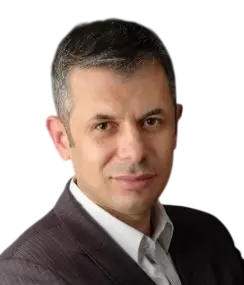
Last position:
AI Scientist at SQPS
- Intelligent Document Processing Engine with OCR & Computer Vision: Architected the end-to-end AI pipeline at the core of the SQPS GenAI document-processing product, which turns scanned paper and PDF batches into organised, searchable documents, combining image pre-processing, OCR and layout analysis for mixed-quality scans. Technologies: Python, OpenCV, Tesseract / PaddleOCR, PyTorch, FastAPI
- Automatic Document Splitting & Classification: Developed models that detect where one document ends and the next begins inside a single multi-document scan, and classify each one by type (invoices, contracts, letters, reports) to enable fully automated filing. Technologies: Python, PyTorch, scikit-learn, Hugging Face Transformers
- Information Extraction & Intelligent File Naming with LLMs: Implemented an LLM-based GenAI extraction system that reads dates, names and reference numbers from unstructured documents and uses them to generate consistent, rule-based file names, with configurable naming conventions per organisation. Technologies: Python, LangChain, OpenAI, SentenceTransformers, SQL
Andreas H.

Last position:
Test Automation Architect at Banking Bank (name withheld)
- Set up a shift-left DevOps E2E system testing architecture
- Set up "DevOps Shift-left" E2E tests for 240+ applications
- Under NDA
Patryk S.

Last position:
Test Manager at HIQT GmbH
- Set up a partnership to support UiPath from migrating new clients to the UiPath tool landscape
- RPA testing
Martin G.
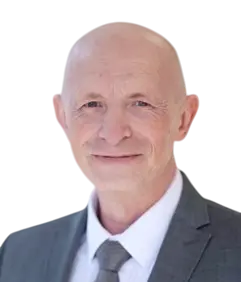
Last position:
IT Project Manager ALV-eGOV, Deputy Head, Group Leader, Business Analyst, Requirements Engineer at SECO
- Planning, implementation, and rollout of 7 eGov services for companies and job seekers for the Unemployment Insurance Fund (ALV)
Discover over 15,000 top freelancers


Statistics of experts using Python
Aggregated from the professional profiles of matched freelancers.

Experience
15 years (Switzerland: 20 years)

Position duration
3.3 years (Switzerland: 2.5 years)

Positions per freelancer
10 (Switzerland: 12)

Top business areas
Information Technology, Project Management, Product Development

Top industries
Information Technology, Energy, Manufacturing

Certification focus areas
Quality Assurance, Information Technology, Product Development

Bachelor's degree or higher
100% (Switzerland: 93%)

Master's degree or higher
75% (Switzerland: 64%)

Doctorate
50% (Switzerland: 14%)

Certifications per freelancer
10 (Switzerland: 4)

Most common languages
German, English, French

Speak two or more languages
100% (Switzerland: 99%)
Based on our profile pool as of 29 Oct 2026.
Python experts industry focus
See which industries our matched freelancers work in most often — every figure is calculated live from the freelancers on FRATCH.
- Information Technology (100%)
- Energy (75%)
- Manufacturing (75%)
- Pharmaceutical (50%)
- Government and Administration (50%)
- Telecommunication (50%)
- Advertising (25%)
- Automotive (25%)
Please note that freelancers can work across multiple industries, so percentages overlap.
About the technology
Python at a glance
Python is a general-purpose programming language used for web services, automation, data processing, scientific computing and artificial intelligence. Its readable syntax and broad standard library help teams move from an early idea to a maintainable production system. CPython is the main implementation, while a mature package ecosystem supports work across many industries.
What Python builds
Python specialists create backend services, internal tools and data products that connect reliably with existing systems. Common deliverables include REST and GraphQL APIs, scheduled workflows, notebooks, analytics applications and machine learning pipelines. Python also supports test automation, command-line utilities and integrations with cloud services.
- Design services with Django, Flask or FastAPI
- Prepare data with pandas, NumPy and SQL
- Train and serve models with PyTorch or scikit-learn
- Automate operational tasks and system integrations
Ecosystem and tooling
Professional Python work often combines virtual environments, package management, type hints, testing and continuous integration. Tools such as Poetry, uv, pytest, mypy and Ruff help teams keep code reproducible and consistent. Docker, Kubernetes, PostgreSQL, Redis and major cloud services frequently surround Python applications in production.
When companies bring in experts
Freelance expertise is useful when a team needs to launch a Python service, modernize a legacy codebase or turn scattered data into a dependable product. It can also fill a gap in machine learning, automation, testing or performance work without changing the company’s permanent structure. In Basel, Python projects may support life sciences, finance, logistics, research and industrial operations, with collaboration arranged remotely, on site or in a hybrid format.
- A prototype must become a stable production service
- Data pipelines are slow, fragile or difficult to monitor
- An API, integration or automation project lacks specialist capacity
- A team needs stronger testing, deployment or code quality practices
What strong professionals contribute
A strong specialist understands more than Python syntax. They clarify interfaces, data contracts, security needs and operational constraints before choosing a framework or library. They write tested, observable code, document important decisions and make sensible trade-offs between delivery speed, maintainability and system performance.
Choosing the right fit
Match the specialist’s background to the actual deliverable: Django or FastAPI for services, pandas and SQL for analytical work, or PyTorch for model-heavy systems. Review comparable repositories, architecture decisions, testing habits and experience with deployment. For Basel-based collaboration, agree early on working hours, remote or on-site expectations, and the languages needed for stakeholder communication.

Frequently asked questions
Everything clients usually want to know about Python, in one place.

Python is used for web backends, APIs, automation, data analysis, scientific computing and machine learning. It is also effective for testing, integration work and internal tools when a team needs clear, adaptable code.
Python is often chosen for its concise syntax, strong libraries and fast development cycle. JavaScript is central to browser applications, Java is common in large enterprise systems, and Go can be preferable for lean, highly concurrent services. The right choice depends on runtime needs, team skills and the existing architecture.
A capable Python specialist may also work with SQL, REST APIs, Docker, cloud infrastructure, Linux and Git. Data-focused work often requires pandas, NumPy and machine learning libraries, while backend work may involve Django, Flask or FastAPI.
The required background depends on the risk and scope of the work, not just the language. A small automation task may need focused scripting knowledge, while a regulated data platform or machine learning service calls for experience with architecture, testing, security and production operations in Python.
Yes. Python work is well suited to remote collaboration when repositories, environments, tickets and deployment processes are documented clearly. Basel teams should define overlap hours, meeting routines and whether German, English or another working language is expected.
Python may be less suitable when a system has strict low-latency requirements, constrained device resources or a need for highly parallel execution at the language-runtime level. A specialist can assess whether another language should handle the critical path while Python remains useful for services, tooling or data workflows.
Ask how the specialist approaches testing, dependency management, security, observability and deployment. Review a small technical discussion or relevant portfolio, and look for clear interfaces, readable structure and evidence that Python systems have been maintained after their initial release.
A Python professional should clarify the target users, existing architecture, Python version, framework choices, data sources, deployment environment and definition of done. It is also important to agree on code review, documentation, access, communication routines and ownership of the delivered work.
Of the freelancers in Basel, Switzerland who have used Python in their recent projects, 100% hold at least a Bachelor's degree, 75% hold at least a Master's degree, and 50% hold a doctorate.
On average, freelancers in Basel, Switzerland who have used Python in their recent projects have 15 years of professional experience, with a single engagement typically lasting around 3.3 years.
The most common languages among freelancers in Basel, Switzerland who have used Python in their recent projects are German (100%), English (100%), and French (50%).
The most common industries among freelancers in Basel, Switzerland who have used Python in their recent projects are Information Technology (100%), Energy (75%), and Manufacturing (75%).
The most common business areas among freelancers in Basel, Switzerland who have used Python in their recent projects are Information Technology (100%), Project Management (100%), and Product Development (75%).
Main locations of FRATCH Experts, who have recently used Python
Our freelancers and interim experts are at home across the DACH region — available on-site in the major business hubs or fully remote. Choose a location to discover matched specialists, local market insights and up-to-date availability.


 Zurich
Countries:
Request a free demo
Get in touch with the FRATCH team and we will get back to you within 4 hours.
Would you rather directly get in touch?
We always have the time for a call or email!

Philipp Thomaschewski
FRATCH CEO

