


Patch Management Experts in Austria
in minutes from over 15,000 CVs with the power of AI.Hire experts who keep Windows, Linux and third-party software patched, reduce exposure to known vulnerabilities, and work with tools like WSUS, Microsoft Configuration Manager and automation scripts. Get fast, precise matching with vetted, available freelancers.

Meet FRATCH Experts in Austria, who have recently used Patch Management
Zoran J.

Last position:
Technical Writer – Implementation of the BNPP IT PROD SEC Service Catalog at BNP Paribas Germany
Design, authorship and finalization of the IT PROD SEC service catalog with eight standardized security services (S-ID001–S-ID008).
Development of consistent service components & deliverables, RACI assignments and SLA and KPI definitions for each service.
Integration of BaFin document requirements under DORA into the service descriptions.
Coordination with IT, compliance, risk and operations teams to validate all service descriptions.
Specifically for governance & monitoring: definition of governance cadence, evidence delivery processes, audit support and definition of measurable KPIs and measurement methods.
Ensuring that all services are standardized, measurable and documented in an audit-proof manner.
Result: Approved service catalog with eight services as a binding basis for delivery, governance and audits; transparent SLAs/KPIs for each service and DORA/BAIT/MaRisk-compliant documentation with clear responsibilities and evidence trails.
Technologies and tools: Confluence, Jira, ServiceNow, Microsoft PowerPoint, Microsoft Visio, Office 365.
Emre H.

Last position:
DevOps Engineer at SIWA Online GmbH
- Planning and implementation of IT infrastructures for clients
- Automating deployments with AWS CloudFormation and AWS CDK
- Monitoring and optimizing cloud environments and the entire IT infrastructure
- Providing technical support and troubleshooting infrastructure issues
- Collaborating with development teams on CI/CD processes
René Z.

Last position:
DevSecOps & Kubernetes Engineer (Freelance) at mgm technology partners GmbH
Development of a Custom Jenkins Shared Library (Groovy)
Integration of security checks in CI/CD pipeline (Shift-Left Approach)
Automated vulnerability scanning and remediation workflows
GitOps-based deployments with ArgoCD
Semantic versioning automation with Git integration
Container lifecycle management (Build/Scan/Tag/Push)
ArgoCD webhook integration for event-driven deployments
Complete cluster automation with Ansible
Bare-metal Kubernetes installation from scratch
High-availability control plane setup
Unified deployment system for multi-application orchestration
Configuration management according to NIST SP 800-128
Host security: Linux hardening, SELinux/AppArmor
Network security: NetworkPolicies, micro-segmentation
Application security: RBAC, Pod Security Standards
Data security: Encryption at rest and in transit
Defense-in-depth principles
Certificate management with cert-manager
Secrets management with External Secrets Operator connected to Vault
Infrastructure monitoring with Checkmk
Prometheus/Grafana monitoring stack
Security event detection and logging
Automated health checks and incident response procedures
MetalLB load balancing for bare-metal
Nginx ingress controller with SSL passthrough
NetworkPolicies for security zones
Rook-Ceph distributed storage, CNI configuration (Weave Net)
Container & orchestration: Kubernetes (bare-metal), Docker, Helm
CI/CD & GitOps: Jenkins (Custom Shared Library), ArgoCD, Groovy
Automation: Ansible, Bash, Python
Security: nftables, RBAC, NetworkPolicies, cert-manager, Vault, Sealed Secrets
Monitoring: Checkmk, Prometheus, Grafana
Storage & networking: Rook-Ceph, MetalLB, Nginx Ingress, Calico
Collaboration: Jira, Confluence
OS: Debian, Ubuntu
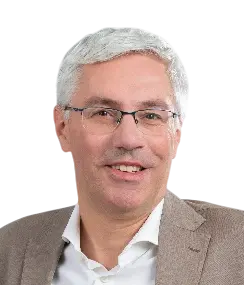
Thomas L.
Last position:
Interim Director of Telecommunications Operations at Plusnet
- Leading and restructuring operations departments
- Transforming into a digital ISP
- Managing support for telecommunications services (FTTx, xDSL, voice, DWDM, access)
- Network operations center (NOC)
- Managing customer satisfaction
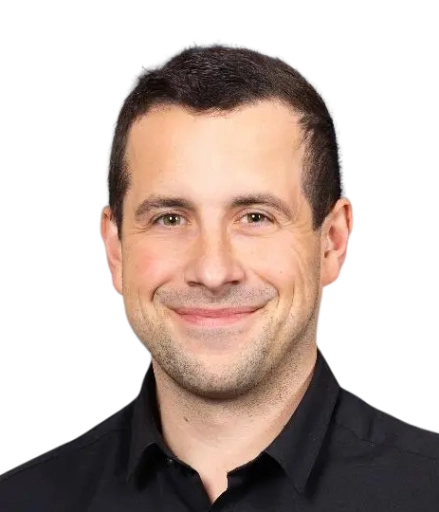
Fadil K.
Last position:
Self-employed IT Service Provider at HG46-IT e.U.
- Setup of server and application infrastructures
- 3rd-level support for issues
- Consulting for application software and hardware
- Website design
- Network setup and conclusion of maintenance contracts
Christian B.

Last position:
Lead Consultant SAP SuccessFactors Employee Central Payroll (ECP) at Medium-sized trading company
- Project management for Austria payroll as part of an EC/ECP rollout (Full Lifecycle: Blueprint, Realization, Test, Go-Live, Hypercare)
- Leading and training two junior consultants (mentoring, knowledge transfer, configuration reviews)
- Ensuring compliance with Austrian regulations (income tax, social insurance, wage garnishment, special payments) and integration with Employee Central
- Process optimization and handover to ongoing operations
Discover over 15,000 top freelancers


Statistics of experts using Patch Management
Aggregated from the professional profiles of matched freelancers.

Experience
25 years

Position duration
3.3 years

Positions per freelancer
14

Top business areas
Information Technology, Operations, Customer Service

Top industries
Information Technology, Manufacturing, Banking and Finance

Certification focus areas
Information Technology, Procurement, Project Management

Bachelor's degree or higher
25%

Master's degree or higher
25%

Certifications per freelancer
6

Most common languages
German, English, Bosnian

Speak two or more languages
100%
Based on our profile pool as of 9 Oct 2026.
Daily rate distribution
The chart shows how the daily rates of experts in this technology in Austria are distributed, based on recent contracts on our platform. Each bar covers a rate range — its height shows the share of experts charging within that range.
Average rates of experts in Austria using Patch Management
Rates are based on recent contracts and do not include FRATCH margin.

The average daily rate is the mean of all daily rates from recent contracts of comparable freelancers on our platform.
The median daily rate is the middle value of all daily rates — half of comparable freelancers charge less, half charge more. Unlike the average, it is barely affected by outliers.
Calculated based on our freelancers’ daily rates as of 9 Oct 2026. Actual rates may vary depending on seniority level, experience, skill specialization, project complexity, and engagement length.
Patch Management experts industry focus
See which industries our matched freelancers work in most often — every figure is calculated live from the freelancers on FRATCH.
- Information Technology (100%)
- Manufacturing (67%)
- Banking and Finance (50%)
- Professional Services (50%)
- Automotive (33%)
- Energy (33%)
- Retail (33%)
- Aerospace and Defense (17%)
Please note that freelancers can work across multiple industries, so percentages overlap.
About the technology
What it covers
Patch management is the planned process of finding, testing and rolling out software updates across endpoints, servers and cloud workloads. It keeps operating systems, applications, firmware and security fixes current. Strong work in this area lowers risk without interrupting day-to-day operations.
Common toolchain
- Windows Server Update Services, Microsoft Configuration Manager and Intune
- Linux package managers and repository controls
- Vulnerability scans and patch compliance reporting
- Change windows, rollback plans and release notes
When to bring in help
Companies usually bring in freelance specialists when patching is inconsistent, manual or tied to legacy systems. It also matters when teams need to clean up update rings, standardize patch baselines or prepare for an audit. In Austria, this often comes up in regulated industries, manufacturing and distributed office environments.
What good specialists do
A strong professional does more than click install. They define test groups, sort updates by risk, watch for conflicts with business software and confirm that devices return to a healthy state after deployment. They also document exceptions, failed patches and recovery steps so the process stays repeatable.
Skills that matter
Patch management work often overlaps with endpoint management, vulnerability remediation, PowerShell, Bash, package lifecycle control and change management. Good specialists understand how patching affects identity tools, remote access, backup jobs and maintenance windows. They should also know when to use WSUS, SCCM, Microsoft Endpoint Manager or scripted automation instead of ad hoc updates.
Outcomes to expect
Well-run patch management gives you fewer exposed systems, clearer compliance evidence and less time spent on firefighting after updates fail. It also supports stable operations for remote users, branch offices and mixed Windows-Linux estates. Whether you call it patching, update management or WSUS-based maintenance, the goal is the same: controlled change with fewer surprises.

Frequently asked questions
Everything clients usually want to know about Patch Management, in one place.

Patch Management keeps software, systems and devices updated in a controlled way. It covers discovery, testing, deployment, verification and rollback when something breaks. The goal is to close known security gaps without creating new outages.
No. Patch Management often starts with Windows, WSUS and Microsoft Configuration Manager, but it also includes Linux packages, third-party applications and sometimes firmware. Strong specialists handle the full update path, not just operating system patches.
Patch Management is the action of applying fixes, while vulnerability management is the broader process of finding and prioritizing weaknesses. The two work together, but they are not the same. A company may scan for risk with one tool and use patching workflows to remediate it.
A strong Patch Management freelancer usually knows endpoint management, scripting, change control and basic troubleshooting. PowerShell, Bash, Intune, SCCM and Linux package tools are common companions. Clear documentation matters just as much as technical skill.
Companies usually need Patch Management help when updates are inconsistent, manual or causing repeat failures. It also helps when the environment is mixed, the rollout process needs structure, or internal teams need support during a migration. Freelance specialists are useful for both cleanup and steady operations.
Most Patch Management work can be done remotely because the key tasks are planning, testing, reporting and automation. On-site access can still help with local network issues, server rooms or tightly controlled environments in Austria. Many projects use a mix of remote coordination and limited on-site support.
Look for someone who can explain their rollout process, test strategy and rollback plan in plain language. A good Patch Management specialist should show how they handle exceptions, failed updates and reporting. They should also be comfortable working with change windows and business-critical systems.
A typical Patch Management engagement includes an inventory review, policy cleanup, test rings, deployment rules and reporting. It may also cover WSUS or SCCM tuning, automation scripts and documentation for operations teams. The exact scope depends on whether the focus is security, stability or compliance.
The average hourly rate of freelancers in Austria who have used Patch Management in their recent projects is 117 €, which corresponds to a daily rate of about 940 € based on an 8-hour working day.
Of the freelancers in Austria who have used Patch Management in their recent projects, 25% hold at least a Bachelor's degree and 25% hold at least a Master's degree.
On average, freelancers in Austria who have used Patch Management in their recent projects have 25 years of professional experience, with a single engagement typically lasting around 3.3 years.
The most common languages among freelancers in Austria who have used Patch Management in their recent projects are German (100%), English (100%), and Bosnian (17%).
The most common industries among freelancers in Austria who have used Patch Management in their recent projects are Information Technology (100%), Manufacturing (67%), and Banking and Finance (50%).
The most common business areas among freelancers in Austria who have used Patch Management in their recent projects are Information Technology (100%), Operations (83%), and Customer Service (67%).
Main locations of FRATCH Experts, who have recently used Patch Management
Our freelancers and interim experts are at home across the DACH region — available on-site in the major business hubs or fully remote. Choose a location to discover matched specialists, local market insights and up-to-date availability.
Countries:
- Germany
- Austria
 Vienna Graz
 Request a free demo
Get in touch with the FRATCH team and we will get back to you within 4 hours.
Would you rather directly get in touch?
We always have the time for a call or email!

Philipp Thomaschewski
FRATCH CEO

