


Monte Carlo Simulation Experts in Munich
in minutes from vetted experts with the power of AI.Hire experts who model uncertainty, stress-test scenarios, and build risk simulations for finance, engineering, and operations. Get fast, precise matching with vetted, available freelancers.

Meet FRATCH Experts in Munich, who have recently used Monte Carlo Simulation
Philipp G.
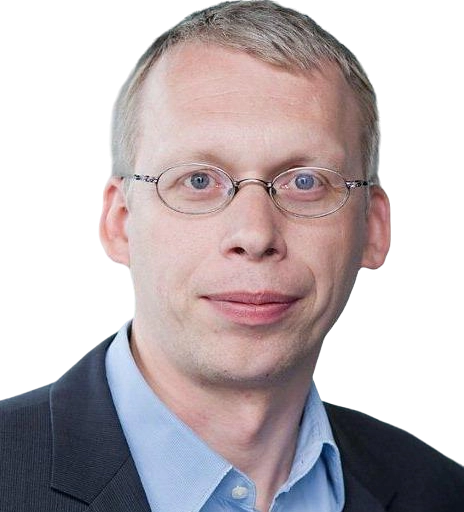
Last position:
Data Scientist & ML Engineer at Data-Science Factory GmbH
- Building, implementing and selling automated Data Science solutions such as Scorecard Factory and Forecast Factory
- Implementation of automated end-to-end cloud processes
- Development of LLM and NLP models
- Creation of interactive reports
- Support for national and international large corporations as well as medium-sized companies in implementing ML projects
Serge K.

Last position:
Founder
- Idea, design and initial implementation of a service that aggregates publicly available data to estimate prices for certain types of objects
- Collection of data from different data sources and its normalization. Embedding the data using SentenceTransformer and training gradient boost models
- Implementation of a web service that
- reads arbitrary user text
- extends it if some parts of data are missing
- uses a local LLM model to prepare the data for prediction
- embed the data and call for prediction from the gradient boost model
- uses a LLM model to generate a report for the user request including explanations
- Stack: BigQuery, Vertex AI, Cloud Run (GCP), Python, Terraform, DBT, SentenceTransformer, Qwen
- Minor SEO optimizations
- More to come...
Raghu Ram V.
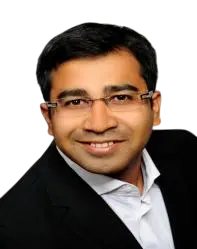
Last position:
Telco Customer Churn Prediction – End-to-End ML Pipeline at Self-Initiated Project
- Designed and implemented a full machine learning pipeline for churn prediction using the Telco dataset.
- Applied preprocessing techniques including missing value handling, categorical encoding, feature scaling, and PCA.
- Built and compared over 15 models (logistic regression, random forest, XGBoost, etc.) and evaluated them using accuracy, precision, recall, F1 score, ROC AUC, and PR AUC.
- Tuned hyperparameters with GridSearchCV, achieving 80.6% accuracy with random forest and XGBoost.
- Created visual reports (bar plots, heatmaps, radar charts) to interpret model performance and churn drivers.
- Exported reusable pipelines and trained models with joblib for deployment.
Nargiz B.

Last position:
Risk Manager Consultant at Friedrich Vorwerk Unternehmensgruppe
- Responsible for developing and implementing the Risk Management Policy and Plan, ensuring structured risk identification, assessment, and mitigation
- Conducted comprehensive risk assessments on material quantities, procurement schedules, and contractor performance to ensure accurate forecasting and prevent delays
- Developed and maintained a risk register covering technical, financial, safety, quality, and environmental risks with focus on quality assurance and quantity control
- Collaborated with engineering, procurement, and construction teams to identify deviations in material usage and construction standards, reducing rework incidents by 18% and achieving 10% savings on material costs
- Prepared monthly Risk Management Reports highlighting key risks such as supply chain disruptions, cost escalations, and regulatory compliance issues
- Led quantitative risk analyses, including Monte Carlo simulations and sensitivity analyses, to evaluate the impact of uncertainties on project timelines and budgets
Borui L.

Last position:
Spectral Analysis of Neural Network Kernels at Borui Li Projects
- Explored the impact of neural network structure on network-inspired kernels, such as Neural Tangent Kernel (NTK).
- Demonstrated through theoretical analysis and empirical studies that the RKHS of NNGP is a subspace of NTK.
- Explored the connections between these kernels and the Matérn family.
Zakaria M.

Last position:
Instrument Scientist at Forschungszentrum Jülich GmbH
- Designing and conducting Small-Angle Neutron Scattering (SANS) experiments as an integral part of nanomaterial analysis.
- Conducting training sessions, providing support, and offering advice to users on sample preparation and data analysis to ensure they utilize the instruments to their maximum potential.
- Supporting the enhancement of neutron scattering instruments to explore and characterize magnetic phenomena in novel composite materials.
- Collaborating with an interdisciplinary team to evaluate and interpret experimental results, comprehend the scientific value of measurements, and engage in discussions to draw meaningful conclusions.
Discover over 15,000 top freelancers


Statistics of experts using Monte Carlo Simulation
Aggregated from the professional profiles of matched freelancers.

Experience
20 years

Position duration
3.3 years

Positions per freelancer
9

Top business areas
Product Development, Research and Development, Business Intelligence

Top industries
Education, Banking and Finance, Information Technology

Certification focus areas
Business Intelligence, Information Technology, Legal

Bachelor's degree or higher
100%

Master's degree or higher
83%

Doctorate
33%

Certifications per freelancer
2

Most common languages
German, English, French

Speak two or more languages
100%
Based on our profile pool as of 9 Oct 2026.
Daily rate distribution
The chart shows how the daily rates of experts in this technology in Munich are distributed, based on recent contracts on our platform. Each bar covers a rate range — its height shows the share of experts charging within that range.
Average rates of experts in Munich using Monte Carlo Simulation
Rates are based on recent contracts and do not include FRATCH margin.

The average daily rate is the mean of all daily rates from recent contracts of comparable freelancers on our platform.
The median daily rate is the middle value of all daily rates — half of comparable freelancers charge less, half charge more. Unlike the average, it is barely affected by outliers.
Calculated based on our freelancers’ daily rates as of 9 Oct 2026. Actual rates may vary depending on seniority level, experience, skill specialization, project complexity, and engagement length.
Monte Carlo Simulation experts industry focus
See which industries our matched freelancers work in most often — every figure is calculated live from the freelancers on FRATCH.
- Education (67%)
- Banking and Finance (67%)
- Information Technology (67%)
- Automotive (33%)
- Construction (33%)
- Energy (33%)
- Healthcare (33%)
- Manufacturing (33%)
Please note that freelancers can work across multiple industries, so percentages overlap.
About the technology
What it does
Monte Carlo Simulation turns uncertain inputs into many possible outcomes. It is used to estimate risk, forecast ranges, and compare decisions when exact answers are not realistic.
Typical use cases
- Financial risk and portfolio analysis
- Project schedule and cost forecasting
- Supply chain and demand uncertainty
- Engineering reliability and failure analysis
- Pricing, valuation, and scenario planning
Methods and tooling
Strong specialists work with probability distributions, random sampling, convergence checks, and sensitivity analysis. They often use Python, R, MATLAB, Excel, or specialized Monte Carlo tools, depending on the team and the model.
When to bring in freelance help
Companies bring in freelance expertise when a model must be built, reviewed, or repaired quickly. This is common when internal teams need support for a new risk model, a simulation layer inside an existing system, or a second opinion on assumptions.
What strong experts deliver
A good professional does more than run repeated simulations. They define clear inputs, test whether the model is stable, document assumptions, and explain the output in plain language so stakeholders can use it with confidence.
Munich projects
In Munich, Monte Carlo Simulation is often relevant in insurance, mobility, manufacturing, and industrial planning. Teams may work partly on-site for workshops and model reviews, then continue remotely once the assumptions and data are clear.

Frequently asked questions
The facts hiring teams ask for most often when it comes to Monte Carlo Simulation.

Monte Carlo Simulation is used when a team needs to understand uncertainty instead of a single fixed result. It helps with risk analysis, forecasting, valuation, reliability checks, and decision support under changing inputs. Companies use it when the outcome depends on variables that are hard to predict exactly.
A simple spreadsheet forecast usually shows one expected path. Monte Carlo Simulation runs many trials with random input values, so it shows a range of possible outcomes and their likelihood. That makes it better for decisions where risk and volatility matter.
A strong Monte Carlo Simulation specialist should be able to define assumptions, choose suitable distributions, and check whether the model behaves sensibly. They should also explain results clearly and point out limits, not just deliver charts. Good work includes documentation that others can maintain.
The most useful adjacent skills are statistics, probability, and strong data handling. Depending on the project, Python, R, Excel, or domain knowledge in finance, engineering, or operations may matter as well. A good specialist also knows how to validate inputs and communicate uncertainty.
The right level depends on model complexity and business risk. A small forecasting model may need a generalist with solid Monte Carlo Simulation skills, while regulated or high-stakes work needs someone who has built and reviewed similar models before. The key is not a title, but proven work on the same kind of problem.
Choose Monte Carlo Simulation when inputs are uncertain, linked to each other, or too complex for a closed-form formula. If the problem is mostly deterministic, a simpler analytical method or rule-based model may be enough. It becomes especially useful when you need a full outcome distribution, not just one estimate.
Most Monte Carlo Simulation work can be done remotely if the data, assumptions, and review process are in place. On-site time in Munich can help at the start, especially for workshops with finance, operations, or engineering teams. Many projects use a mix of both.
Look for transparent assumptions, sensible input distributions, and results that pass basic sanity checks. A good Monte Carlo Simulation deliverable should also show convergence, explain uncertainty clearly, and match the business question. If the output is hard to trace back to inputs, quality is usually weak.
The average hourly rate of freelancers in Munich, Germany who have used Monte Carlo Simulation in their recent projects is 76 €, which corresponds to a daily rate of about 611 € based on an 8-hour working day.
Of the freelancers in Munich, Germany who have used Monte Carlo Simulation in their recent projects, 100% hold at least a Bachelor's degree, 83% hold at least a Master's degree, and 33% hold a doctorate.
On average, freelancers in Munich, Germany who have used Monte Carlo Simulation in their recent projects have 20 years of professional experience, with a single engagement typically lasting around 3.3 years.
The most common languages among freelancers in Munich, Germany who have used Monte Carlo Simulation in their recent projects are German (100%), English (100%), and French (50%).
The most common industries among freelancers in Munich, Germany who have used Monte Carlo Simulation in their recent projects are Education (67%), Banking and Finance (67%), and Information Technology (67%).
The most common business areas among freelancers in Munich, Germany who have used Monte Carlo Simulation in their recent projects are Product Development (83%), Research and Development (83%), and Business Intelligence (67%).
Main locations of FRATCH Experts, who have recently used Monte Carlo Simulation
Our freelancers and interim experts are at home across the DACH region — available on-site in the major business hubs or fully remote. Choose a location to discover matched specialists, local market insights and up-to-date availability.
Countries:
 Berlin Hamburg
  Munich Cologne Frankfurt Stuttgart Dusseldorf Leipzig Dortmund Essen Bremen Dresden Hanover Nuremberg
 Request a free demo
Get in touch with the FRATCH team and we will get back to you within 4 hours.
Would you rather directly get in touch?
We always have the time for a call or email!

Philipp Thomaschewski
FRATCH CEO

