


Data Warehouse Experts in Munich
, matched in minutes by AIHire experts who design reliable analytical data models, build ELT pipelines and optimize cloud warehouse performance. FRATCH connects you with vetted, available freelancers through fast, precise AI matching.

Meet FRATCH Experts in Munich, who have recently used Data Warehouse
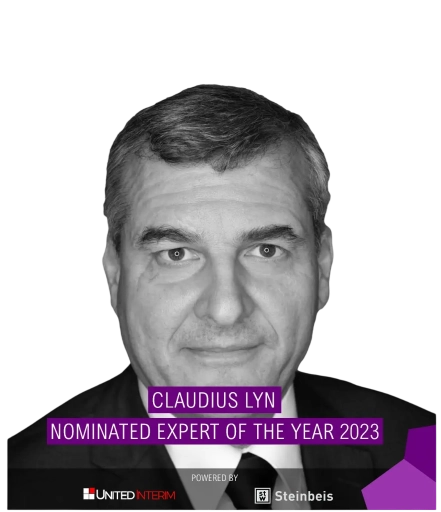
Claudius L.
Last position:
Multi-project manager
Industrial sector: Transport
Tasks: Continuation of existing projects, advice on artificial intelligence (AI), implementation of regulatory requirements, management of external service providers
Subprocesses: Order clarification, role clarification, consolidation, effort estimation, activity planning, status reporting, progress tracking, stakeholder discussions, risk analysis
Background: Cloud computing, artificial intelligence (AI), predictive maintenance, compliance, governance, standing orders compliance, KRITIS
Software: Cherwell, Docker, IoT, MS Sharepoint, MS Teams, SQL Server
Emanuel F.

Last position:
Interim Architect & Data Taskforce at Freelancer / Project Assignments
- Data Engineering: Design and implementation of scalable data pipelines
- Legacy migrations to Microsoft Fabric (Lakehouse, Dataflows Gen2, Pipelines)
- BO Universe migrations to MS Fabric / Semantic Models / Power BI
- Taskforce for data-driven transformation projects involving Azure Fabric / Oracle / MSSQL
Xinyang M.

Last position:
Sales Operations Analyst Intern at Capgemini
- Developed and maintained 5 Power BI dashboards for pipeline tracking, forecasting, revenue-gap, quota-achievement, and deal-performance analysis.
- Delivered weekly, monthly, and quarterly reporting used by approximately 100 stakeholders across Sales, Finance, and Marketing.
- Built semantic data models and ETL workflows using Power Query, DAX, and SQL; integrated Salesforce, SharePoint, internal data warehouse, and Excel sources.
- Automated data ingestion, cleaning, transformation, format standardization, KPI calculations, dashboard refresh, and reporting preparation using Power Query, DAX, and Power BI, eliminating several hours of recurring manual data preparation and reporting work.
- Standardized KPI calculations and built interactive reports with row-level security, drill-through, and Waterfall analysis for business reviews and forecasting.
Hardeep B.

Last position:
Sr. Data Engineer at Charles Schwab Bank
- Designed and implemented end-to-end data pipelines (batch & streaming) using Python, SQL, and Apache Spark, Databricks on AWS reducing ETL latency by 40%.
- Developed serverless event-driven ingestion pipelines using AWS Lambda and SQS, ensuring real-time data availability for downstream analytics.
- Leveraged Google Cloud Platform (GCP) services including BigQuery and Dataflow to manage cross-cloud data warehousing and analytics integration.
- Expertise in DMS (CDC, Full Load) and Airflow for scalable data pipeline automation and orchestration.
- Managed and customized data pipelines using Databricks, Airflow. Automation using Docker, Kubernetes, Terraform.
- Automated data quality checks using dbt to modularize transformations and ensure production-grade data lineage, improving reliability by 30%.
- Collaborated with compliance teams to ensure GDPR and SOC2 alignment. Mentored junior engineers and contributed to architecture refactoring for scalability.
- Created and maintained dashboards in Power BI to provide actionable insights.
Anitha N.

Last position:
Senior Data Engineer at Accenture GmbH
- Designed, developed, and configured scalable data applications aligned with business processes and technical requirements.
- Architected scalable, cost-effective data architectures leveraging Snowflake across AWS, Azure and GCP, integrating dbt for data transformation and modeling.
- Built and maintained robust ETL Data Pipelines, ensuring high data quality for seamless migration and cross-system integration.
- Demonstrated strong expertise in SQL & Python with extensive experience in data modeling, ETL/ELT pipeline development, and streaming data processing; proficient in Git-based version control, CI/CD practices, and testing frameworks, with solid knowledge of data quality, observability, cost optimization, security, and data governance principles.
- Led multiple data migration initiatives from SAP HANA to Snowflake using a modular dbt framework.
- Designed and maintained end-to-end data transformation workflows using dbt on Snowflake, implemented layered data models, optimized performance, and ensured high-quality data delivery for business intelligence and reporting.
- Managed development, QA, and production deployments through structured version control and release management using GitLab.
- Integrated and centralized data from multiple sources including relational databases, flat files, Excel, and large-scale systems into Snowflake.
- Applied strong expertise in Sales, Marketing, HR, and ERP data domains, developing and maintaining relevant KPIs and reporting solutions.
- Collaborated with cross-functional teams to deliver end-to-end data solutions on schedule through proactive issue resolution and effective coordination.
- Administered the Snowflake sandbox environment for Data Engineering division.
- Trained colleagues transitioning into data roles on Snowflake and provided technical guidance and mentorship to junior team members.
Maziyar K.

Last position:
Data Engineer at MSD Germany
- Lead Architect to design and implement the data lake and ETL Pipeline using AWS Stack
- Performance Optimization of Data Ingestion of ETL Pipeline
- Development of Data Validation using Great Expectations
- Leading of the data migration for two sources exchanges
- Data Modeling in AWS Redshift
MLOps
- Model inference implementation by mlflow and AWS SageMaker
- Feature Engineering for the running ML Models ( Recommender Engineer, Clustering )
- Implementatino of Model Registry and artifactory using mlflow
- Historization an Profiling of the Input Data Using AWS Glue Crawler and AWS Data Catalog
- Feature importance using mlflow
Tech. Stack: Python 3, AWS Glue, AWS Step Fucntion, AWS Lambda, AWS EventBridge, AWS IAM Role, AWS SageMaker, AWS EC2, AWS Glue Crawler, AWS CloudWatch, MLFlow, ETL, Data lake, GitHub Action, Terraform, Jenkins, Ansible playbooks (Infrastructure as Code), CI/CD, GitLab, SQL, PySparkSCRUM, Agile, Jira, BigData, VSCode, DBeaver, MSSQL, MySQL, grafana, Docker, Linux, Bash, MapReduce, Data Modeling (ORM), Pandas, YAML, SQL-Alchemy
Michael T.

Last position:
ETL Developer at Insurance service provider
DWH for customer and financial data
- Expansion of the DWH to include new data sources
- Report development
- Data quality management
Methodology: Scrum
Tools: Atlassian Confluence & Jira
Databases: Microsoft SQL Server
Programming languages: SQL, T-SQL
ETL: Microsoft SQL Server Integration Services (SSIS)
Frontend platform: PowerBI, Microsoft Reporting Services
Philip K.

Last position:
Consulting / Interim Management at Self-employed
- Focus areas: Restructuring, operations management, commercial management, purchasing, production
- Industries: Automotive, metalworking, shipbuilding, electrical, elevators / escalators
Any-Arlene N.
Last position:
Co-Founder · Data Engineering & Backend at zirikana (Kirundi Bible Web App) – Civic Technology
- Built a Python pipeline that converts lectionary web content into structured daily JSON, applying liturgical-calendar rules for accurate weekday and Sunday coverage.
- Shipped a read-only FastAPI REST API with shared Pydantic models and delivered a Kirundi-first web client for browser and mobile use.
- Owned the data layer and backend architecture, collaborating closely on system architecture and interfaces while automating refreshes with GitHub Actions and validating the ETL with pytest.
- Impact: Created a reliable, API-driven source of truth for daily Bible readings in Kirundi, enabling consistent access to previously unstructured content.
Florian B.

Last position:
Project Management / PMO Consultant
PMO & Project Organization Blueprint for Restructuring
Renewable Energy / Solar Equipment
Technologies / Methods: PMO setup, KPI tracking, project organization, Jira, Confluence
- Developed measures to improve management control during a restruct...
Adithya B.

Last position:
Edge AI Software Engineer at Neura Robotics GmbH
- Deployed and optimized Vision-Language-Action (VLA) and diffusion policy models on NVIDIA Jetson Orin and Jetson Thor, meeting real-time inference latency targets for humanoid robot control loops.
- Built TensorRT engine pipelines (PyTorch → ONNX → TensorRT) with INT8/FP8 post-training quantization, calibration dataset design, and quantization-aware validation, reducing inference memory footprint by over 3× on Jetson without accuracy regression.
- Developed custom CUDA C++ plugins and CUDA Graphs for latency-deterministic, real-time policy execution – meeting hard runtime and memory constraints on embedded GPU targets.
- Developed an inference engine for VLA models on top of llama.cpp bringing different VLA policies under single runtime, packaging each as a single self-contained GGUF that needs no Python or PyTorch.
- Profiled and tuned GPU execution using NVIDIA Nsight Systems and Nsight Compute, identifying CUDA kernel bottlenecks, memory bandwidth saturation, and SM occupancy issues across Jetson Orin and Thor compute profiles for cross-layer performance optimization.
Sara Z.

Last position:
Data Analyst / Analytics Engineer at IDG Tech Media GmbH
- Designed, built, and maintained scalable ETL/ELT data pipelines using Python, SQL, REST APIs, AWS Lambda, S3, PostgreSQL RDS, EventBridge, CloudWatch, Docker, Apache Airflow, and BigQuery – integrating data from GA4, Google Ads, Meta Ads, CMS, CRM, newsletters, events, and B2C ordering systems into analytics-ready datasets.
- Built a cross-brand lakehouse architecture from AWS to BigQuery – transforming raw JSON/CSV data into structured, partitioned, and reusable reporting layers with staging, intermediate, canonical, and mart models.
- Designed relational and dimensional data models: 3NF staging models, star schemas, fact tables, dimension tables, daily KPI aggregates, and dashboard-optimized marts for marketing, content, subscription, event, CRM, and revenue analysis.
- Implemented production-grade data quality and pipeline reliability features: incremental loads, idempotent upserts, deduplication, schema validation, row matching, null checks, anomaly detection, freshness monitoring, logging, retries, and error alerts.
- Automated cross-brand reporting processes and data products – pipelines for 73 newsletter campaigns, 31 lead list syncs, 52 event partner reports, and a 500K-record company matching pipeline; reduced manual data preparation by approx. 70% and increased analyst productivity by approx. 30%.
Ajay Kumar D.

Last position:
Senior BI and Analytics Engineer at Novartis
- Led enterprise reporting modernization by migrating legacy SSRS reporting solutions to Power BI, supporting 500+ business users while ensuring full GDPR/DSGVO compliance.
- Designed and optimized Power BI and Microsoft Fabric semantic models using star schema, dimensional modeling, advanced DAX, and performance optimization techniques, reducing query latency by 25%.
- Delivered 20+ executive and operational dashboards featuring KPI scorecards, drill-through, bookmarks, and row-level security, improving reporting efficiency by 20%.
- Enabled self-service analytics through governed Power BI datasets, dataflows, and gateway architecture, increasing business-led reporting adoption by 35%.
- Configured an incremental refresh policy and query folding for a 50+ million row sales dataset, reducing daily report refresh times by 85%.
- Deployed automated ETL/ELT pipelines using Azure Data Factory, Microsoft Fabric, and Snowflake, reducing reporting delivery timelines by 40% through workflow automation.
- Spearheaded Microsoft Fabric analytics modernization initiatives including lakehouse architecture, OneLake integration, and centralized data platform development, reducing data latency from 2 hours to 20 minutes.
- Translated business requirements from 15+ stakeholders into scalable Power BI semantic models and dashboards, improving reporting consistency and reducing ad-hoc reporting requests by 25%.
- Applied Microsoft Copilot and generative AI tools to accelerate SQL development, DAX authoring, technical documentation, and testing activities, reducing development effort by approximately 15 hours per week.
Waldemar L.

Last position:
Technical Program Manager at Autoscout24
Technical Program Manager for data- and architecture-driven transformation initiatives in complex system landscapes. Focus on target architecture, data and integration strategy, legacy decommissioning, migration planning, delivery management, and technical governance. Experience in decoupling highly integrated platforms, managing data and process migrations, defining service-oriented target states, coordinating cross-domain engineering streams, and evaluating technical solution options regarding effort, risk, operating model, and feasibility. Proven work in programs focusing on data flows, data provisioning, dealer/customer provisioning, API transition, reporting target architectures, and modernization of business-critical backend and integration systems.
- Definition of goals, milestones, and dependencies
- Program and roadmap management
- Managing cross-country teams to achieve targets
- Aligning the target architecture
- Risk analysis, assessment, and management
- Stakeholder management
- Planning releases, capacities, and dependencies
- Status tracking and C-level reporting
- Defining strategies, tools, frameworks, and integrations
- Quality assurance and acceptance
Nandana R.

Last position:
IT Product Owner at PwC
- Project: SAP migration (ECC to S/4HANA) – US-based internal analytics product to manage finance and personnel performance insights of 10,000+ users across the Americas.
- Led cloud migration from a legacy data warehouse to Azure Data Lake and Databricks, improving system scalability by 40% and reducing manual interventions by 60%.
- Delivered end-to-end product ownership across 3 cross-functional Agile teams using SAFe methodology and Azure DevOps.
- Designed and implemented data pipelines using Azure Data Factory, improving data ingestion speed by 30% and reducing data errors by 25%.
- Defined the product roadmap, backlog, and sprint goals in collaboration with stakeholders, ensuring 95% of deliverables met business expectations.
- Managed the product backlog and prioritised feature development based on stakeholder needs, achieving a 25% increase in sprint velocity and a 100% sprint completion rate.
- Facilitated Agile ceremonies (sprint planning, reviews, retrospectives) that improved team collaboration and reduced delivery times by 20%.
- Led requirement gathering and analysis, enhancing data quality and aligning with business objectives, resulting in a 25% improvement in migration efficiency.
- Worked closely with business owners, achieving a 15% reduction in dispute resolution time and stronger alignment with business value.
- Established KPI dashboards to measure product adoption and platform stability, resulting in 20% improved stakeholder satisfaction.
Discover over 15,000 top freelancers


Statistics of experts using Data Warehouse
Aggregated from the professional profiles of matched freelancers.

Experience
24 years (Germany: 22 years)

Position duration
3.7 years (Germany: 3.2 years)

Positions per freelancer
14 (Germany: 13)

Top business areas
Information Technology, Business Intelligence, Project Management

Top industries
Information Technology, Banking and Finance, Professional Services

Certification focus areas
Information Technology, Business Intelligence, Project Management

Bachelor's degree or higher
92% (Germany: 90%)

Master's degree or higher
69% (Germany: 59%)

Doctorate
13% (Germany: 10%)

Certifications per freelancer
3

Most common languages
German, English, French

Speak two or more languages
94% (Germany: 96%)
Based on our profile pool as of 18 Nov 2026.
Daily rate distribution
The chart shows how the daily rates of experts in this technology in Munich are distributed, based on recent contracts on our platform. Each bar covers a rate range — its height shows the share of experts charging within that range.
Average rates of experts in Munich using Data Warehouse
Rates are based on recent contracts and do not include FRATCH margin.

The average daily rate is the mean of all daily rates from recent contracts of comparable freelancers on our platform.
The median daily rate is the middle value of all daily rates — half of comparable freelancers charge less, half charge more. Unlike the average, it is barely affected by outliers.
Calculated based on our freelancers’ daily rates as of 18 Nov 2026. Actual rates may vary depending on seniority level, experience, skill specialization, project complexity, and engagement length.
Data Warehouse experts industry focus
See which industries our matched freelancers work in most often — every figure is calculated live from the freelancers on FRATCH.
- Information Technology (81%)
- Banking and Finance (61%)
- Professional Services (61%)
- Automotive (54%)
- Insurance (44%)
- Retail (44%)
- Manufacturing (43%)
- Media and Entertainment (43%)
Please note that freelancers can work across multiple industries, so percentages overlap.
About the technology
Analytical foundation
A data warehouse consolidates information from business systems into a structured environment for reporting, analytics and decision-making. It separates analytical workloads from operational applications and creates consistent definitions for metrics such as revenue, retention and inventory. Teams use it to give finance, sales, operations and leadership a shared view of the business.
Models and pipelines
Specialists design dimensional, normalized or data vault models around the way teams consume information. They build dependable ELT and ETL pipelines that ingest data from applications, APIs, files and event sources, then clean, transform and document it. Strong work includes incremental loading, deduplication, lineage, validation and clear ownership of critical datasets.
Cloud ecosystem
A modern DWH can run in a managed cloud service or alongside a broader lakehouse architecture. Common environments include Snowflake, Google BigQuery, Amazon Redshift and Microsoft Fabric, supported by SQL, dbt, orchestration tools and business intelligence systems. The right choice depends on data volume, access patterns, governance needs, existing cloud services and team capabilities.
When expertise matters
Companies often bring in freelance specialists when a warehouse has become difficult to trust, slow to query or expensive to operate. Typical assignments include:
- Migrating from spreadsheets or legacy databases to a governed analytical environment
- Rebuilding fragile pipelines and resolving inconsistent business metrics
- Preparing a warehouse for self-service reporting and advanced analytics
- Establishing testing, documentation, access controls and data quality monitoring
Munich delivery needs
In Munich, data warehouse work supports sectors such as manufacturing, automotive, insurance, retail and technology. A professional may collaborate remotely with a distributed team or work on site during discovery, migration and stakeholder workshops. German and English communication can both matter when data owners, compliance teams and business units are involved.
What strong specialists deliver
The best professionals connect technical design with business meaning. They ask where data comes from, who relies on it, how often it changes and what decisions it should support before choosing a model or tool. They leave behind observable pipelines, efficient queries, understandable documentation, secure access patterns and a practical operating process that internal teams can maintain.

Frequently asked questions
Quick answers to the questions that come up most around Data Warehouse.

A data warehouse stores integrated, historical business data for reporting, dashboards, analysis and planning. It is built for analytical queries across many sources rather than the fast, small transactions handled by operational databases.
A data warehouse usually emphasizes structured, modeled and governed data that is ready for business consumption. A data lake stores raw data in many formats, while a lakehouse combines lake flexibility with warehouse-style management and analytics; the best choice depends on use cases, governance and existing architecture.
A data warehouse specialist commonly works with advanced SQL, dimensional modeling, ELT, dbt, orchestration, cloud storage and business intelligence tools. Useful adjacent skills include Python, data governance, access management, testing, observability and communicating metric definitions to nontechnical stakeholders.
A data warehouse assignment needs enough practical experience to assess source systems, model business processes and plan reliable delivery. The required depth depends on factors such as migration risk, data quality, compliance, query load and the number of teams that will use the result.
A data warehouse project can often be delivered remotely when access, documentation and stakeholder availability are well organized. On-site sessions in Munich may still help with source-system discovery, workshops, security reviews and agreement on shared business definitions.
A data warehouse professional should explain the proposed model, source mappings, testing approach and failure handling in clear terms. Ask for evidence of reliable lineage, documented assumptions, monitored pipelines, secure access and queries that remain practical for the intended users.
A data warehouse freelancer is useful when reporting depends on manual exports, teams disagree about core metrics or existing pipelines fail without warning. A specialist can diagnose the current setup, define a target architecture and transfer operating knowledge to the internal team.
A data warehouse specialist with Snowflake or BigQuery experience can align storage, compute, loading patterns and security with the chosen cloud environment. They should also understand the limits of each service and avoid copying a design without considering data access patterns, governance and operating cost.
The average hourly rate of freelancers in Munich, Germany who have used Data Warehouse in their recent projects is 102 €, which corresponds to a daily rate of about 820 € based on an 8-hour working day.
Of the freelancers in Munich, Germany who have used Data Warehouse in their recent projects, 92% hold at least a Bachelor's degree, 69% hold at least a Master's degree, and 13% hold a doctorate.
On average, freelancers in Munich, Germany who have used Data Warehouse in their recent projects have 24 years of professional experience, with a single engagement typically lasting around 3.7 years.
The most common languages among freelancers in Munich, Germany who have used Data Warehouse in their recent projects are German (98%), English (93%), and French (22%).
The most common industries among freelancers in Munich, Germany who have used Data Warehouse in their recent projects are Information Technology (81%), Banking and Finance (61%), and Professional Services (61%).
The most common business areas among freelancers in Munich, Germany who have used Data Warehouse in their recent projects are Information Technology (96%), Business Intelligence (91%), and Project Management (69%).
Main locations of FRATCH Experts, who have recently used Data Warehouse
Our freelancers and interim experts are at home across the DACH region — available on-site in the major business hubs or fully remote. Choose a location to discover matched specialists, local market insights and up-to-date availability.


 Berlin
 Hamburg
 Cologne
 Frankfurt
 Stuttgart
 Dusseldorf
 Dortmund
 Essen
 Hanover
 Nuremberg
Request a free demo
Get in touch with the FRATCH team and we will get back to you within 4 hours.
Would you rather directly get in touch?
We always have the time for a call or email!

Philipp Thomaschewski
FRATCH CEO

