


Cloud Native Experts in Munich
, vetted and AI-matched in minutesHire experts who design containerized platforms, automate Kubernetes delivery and modernize monoliths for cloud environments. FRATCH connects you with vetted, available freelancers through fast, precise AI matching.

Meet FRATCH Experts in Munich, who have recently used Cloud Native
Ales L.

Last position:
Senior DevOps Consultant (Freelance) at European Union Agency (via IBM)
- Worked as freelance Senior DevOps Consultant on-site for IBM at a European Union Agency, operating in a highly secure, air-gapped environment managing classified systems.
- Led automation and DevOps initiatives for a large-scale OpenShift platform (>400 nodes), driving deployment efficiency, GitOps adoption, and operational automation using Ansible, Python, and Bash while ensuring compliance with security requirements.
- Spearheaded automation of release and deployment workflows in a private cloud environment hosting 400+ OpenShift nodes, significantly improving deployment speed and reliability.
- Migrated existing playbooks, roles, and templates from Ansible Tower to Ansible Automation Platform (AAP), ensuring full compliance with fully-qualified collection names (FQCN) and preparing custom Execution Environments (EE) for containerized automation.
- Implemented GitOps Agent for AAP Controller Configuration as Code, enabling automated synchronization (CRUD) of Ansible Controller objects based on repository-stored configuration definitions using GitHub webhooks.
- Designed and automated complex multi-step operational workflows including environment cleanup, Helix cluster component re-creation, Kafka topic management, and OpenShift object lifecycle management across ~100 environments.
- Achieved a reduction of multi-day manual operations to under a few hours through automation improvements spanning multiple AAP clusters and OpenShift environments.
- Integrated Ansible Automation Platform with Thycotic (Delinea) Secret Server via lookup plugin to enhance secure credential management in automated processes.
- Managed deployment tasks, platform troubleshooting, and Istio network configurations while adhering to stringent EU PSC security and compliance standards.
- Collaborated with infrastructure and application teams to refine deployment procedures, develop naming conventions, and continuously improve automation coverage in an air-gapped, classified environment.
Marcus B.

Last position:
Java and Quarkus Expert at Large German energy service provider
- Modernization of a large-scale Java enterprise application*
The project is modernizing a complex enterprise application that has grown over many years. The existing Spring-based legacy system runs on Java 8, OSGi, and Eclipse RCP and is being gradually migrated to a modern, maintainable architecture with Java 25 and Quarkus.
Marcus works on analysis, architecture, refactoring, and implementation. One focus is on untangling historically grown structures and dependencies and on building a clean, sustainable Java and Quarkus technology stack.
Tools & technologies: Java 8, Java 25, Quarkus, Hibernate ORM with Panache, EclipseLink, OSGi, Eclipse RCP, Maven, JUnit, Mockito, REST, JSON, Git, Eclipse IDE, IntelliJ IDEA Ultimate, Jira, Confluence
Tamás E.

Last position:
Senior Software Developer / Tech Lead at NDA (defense / OSINT)
- Designing the audit logging framework
- Implementing APIs for developers to integrate in their codebase
- Implementing ingestion pipeline, database query layer and UI for browsing the audit events
- Improving stability and reliability of the backend system
Giuseppe A.

Last position:
Embedded Software Developer at Inheco
- AI Integration (LLM & RAG): Design and build of an internal intelligent RAG system (Retrieval-Augmented Generation) based on LLMs, n8n, and vector data for the automated analysis of technical documents and error logs.
- Design & Implementation: Design of a robust RS-232/UART communication interface for an SBC-based embedded device to control medical shaker systems.
- Architecture & Protocol Design: Implementation of a highly maintainable software structure (OOP, SOLID) and definition of hardware-close, resilient communication protocols including multithreading and advanced error handling.
- Quality Assurance & DevOps: Test automation using xUnit, integration tests directly on the hardware target, and maintenance of technical documentation according to strict medical technology standards via Azure DevOps.
Label: C#, .NET, LLMs, RAG, n8n, RS-232, UART, Multithreading, async/await, xUnit, gRPC/protobuf, Blazor, MudBlazor, EF Core, Visual Studio 2026, Azure DevOps
Tezcan D.

Last position:
Solution Architect / Project Manager at German Football Association
- Overall responsibility for the project lifecycle from scope definition to completion
- Close collaboration with platform teams, IT leaders, and external service providers
- Application of SAFe principles and structured sprint work
- Creation of a migration roadmap with clear milestones
- Monitoring of the lifecycle: onboarding, repository migration, replication of permissions, and system tests
- Visualization of the architecture with PlantUML and Gliffy as well as documentation in Confluence
- Regular status reports and running knowledge transfer sessions
Alexandru G.
Last position:
Principal Cloud DevOps Architect at BP
In my role as Senior Cloud DevOps Architect for BP, an oil and gas company, I had the mission to migrate the Electric Vehicle Charging platform of the EV Division from on-premises and Azure to AWS cloud, resulting in a hybrid multi-cloud, multi-tenant SaaS solution.
Deployment with Kubernetes for the application layer meant provisioning Kubernetes clusters managed by EKS and AKS, with a focus on integrating them into a multi-tenant environment. This integration was achieved by using Kubernetes namespaces and access controls to ensure data isolation and privacy enforcement.
In the database layer, we chose an RDS instance with PostgreSQL to support the backend infrastructure of our applications. Tenants shared the same RDS instance, but each had a dedicated schema.
To ingest near real-time data from physical charge points (CPOs), as IoT devices, via the OCPI protocol, we ran into significant delays with batch processing. As a result, we built a real-time streaming data pipeline using Apache Kafka, while prioritizing an event-driven architecture.
Led collaboration across multiple internal teams, external vendors, cloud providers, and on-site partners to integrate over five systems into a unified solution.
Achievements:
- Successfully designed and implemented hybrid multi-cloud solutions, integrating multiple cloud platforms (AWS, Azure) with on-premises infrastructure, using Site-to-Site VPNs, Firewalls, and Load Balancing.
- Led the migration of on-premises infrastructure to multi-cloud, multi-tenant infrastructure, resulting in 30% faster processing times.
- Migrated workloads from VMware and Hyper-V environments to cloud-based VMs, leveraging cloud-native services to optimize performance, cost efficiency, and scalability.
- Designed a multi-tenant Kubernetes platform leveraging the Kubernetes ecosystem, using Karpenter for dynamic EC2 node provisioning, KEDA for event-driven pod autoscaling (e.g., Kafka message lag), and Rancher for centralized monitoring of multiple clusters (EKS, AKS, or on-prem K8s), replacing Microsoft-centric Azure Arc management service.
- Designed and implemented Python-based FastAPI microservices as part of the EV core-backend on AWS EKS application layer, powering data ingestion and customer analytics pipelines.
- Developed asynchronous, event-driven APIs (Python-FastAPI) for real-time integration with CPOs, supporting OCPI 2.3 and OICP protocols.
- Designed and implemented a secure, production-grade Azure Databricks platform using Terraform, ensuring scalability and cost efficiency.
- Migrated on-premises ERP to a hybrid Dynamics 365 architecture with ERP hosted locally and CRM running in Azure, integrated via Azure Arc.
- Automated CI/CD pipelines for Databricks notebooks and jobs using GitHub Actions & Databricks CLI, reducing deployment time. Reduced infrastructure provisioning time by 70% by automating cloud resource deployment with GitOps.
- Ensured compliance with internal audit and data governance standards (GDPR) through OAuth2/OIDC-based authentication and fine-grained role-based access controls.
- Developed a Zero Trust security model, enforcing least-privilege access and microsegmentation, enhancing security posture and compliance with GDPR and NIST.
- Built interactive analytics dashboards in Amazon QuickSight, integrating data from S3 and Redshift to deliver real-time business insights and visualizations with embedded access for multi-tenant users.
- Led cloud security assessments and full-lifecycle cybersecurity integration during M&A, covering AWS, Azure, IAM (Entra ID), and data protection, while aligning security posture with NIST, ISO 27001, and GDPR across hybrid and cloud-native environments.
- Reduced cloud costs by 64% for a client's dev environment by implementing automated start/stop schedules for EC2 and RDS instances via AWS CDK with EventBridge Scheduler or AWS Systems Manager.
Tech stack:
- Infrastructure as Code: Terraform, AWS CDK, Ansible.
- Containers: Kubernetes on EKS, AKS, Docker.
- Streaming Data Processing: Kafka to Confluent Cloud, after AWS MSK.
- Frontend: TypeScript, React, NextJS, Hooks, Styled Components.
- Backend: Python with FastAPI, also Node.js with NestJS.
- Database: Aurora on PostgreSQL with TypeORM, RDS on SQL Server, Azure Databricks full setup and administration, ETL Pipelines.
- CI/CD and GitOps: GitHub Actions, Azure DevOps, ArgoCD.
- Monitoring and Observability: Prometheus and Grafana.
- Virtualization: Hyper-V, VMware Cloud on AWS, Azure Migrate.
- ERP Systems: Odoo, Microsoft Dynamics 365 Business Central on Azure, integrated with Azure Arc.
- Networking: Site-to-Site VPNs, AWS Direct Connect, Azure ExpressRoute, Firewalls (AWS Network Firewall, Azure Firewall).
- Security: IAM, NIST Framework, Zero Trust Security, AWS WAF, AWS Shield, GuardDuty.
Srinivasu K.

Last position:
Atruvia
Project: Tax Exemption Order Application
The client has an existing application for creating and maintaining tax exemption orders for end customers; design and implementation of a comparable application for internal employees.
- Design and implementation of microservices and the UI for the business area "tax exemption orders" using Domain Driven Design as well as Spring Boot and Angular.
- Implementation of reactive, non-reactive, and asynchronous APIs (Spring REST, WebFlux, GraphQL).
- Development of the Angular application, including state management using Signals, RxJS Observables, and subscriptions.
- Securing the API and the application using OAuth2, JWT, and OpenID Connect.
- Configuration and setup of CI/CD pipelines with Jenkins.
- Collaboration with cross-functional teams and conducting code reviews.
Environment: Java, Spring Boot, Angular 18 & 19 (standalone, signals), RxJs, Bootstrap CSS, Vitesting, OpenShift, Istio, microservices, Kafka, Dynatrace, Jenkins, GitLab, Graylog, Sonar, Oauth2, OracleDB
Omar A.

Last position:
Senior Fullstack AI Engineer (Team Lead – B2C Platform) at mama health
- Partner directly with C-level leadership (CEO, CAIO, CTO) on architecture, OKR strategy, and cross-team roadmap prioritization, translating strategic goals into structured engineering requirements.
- Surfaced and mapped technical debt across the entire organization with C-level leadership and co-defined a prioritized remediation strategy, balancing debt paydown against feature delivery.
- Led code reviews and technical standards across the team, fostering a mentor-first environment with two-way feedback dialogue — pairing on complex pipeline work and unblocking junior engineers on async architecture patterns.
- Re-architected the AI companion's core processing pipeline from synchronous to asynchronous with a queue-based worker architecture, enabling horizontal scalability and cutting upload processing time ~4x (from ~22s to 5–10s) while improving response accuracy.
- Designed an AI-driven document intelligence workflow with automatic multi-document classification, per-document summarization, and relevance guardrails for the patient care journey.
- Built a unified patient memory system (short- and long-term context) bridging the document vault and chatbot into a single bidirectional, context-aware platform.
Vitaliy R.

Last position:
DevOps GitOps (temp) at Signal Iduna
- Responsible for Openshift/Kubernetes on-prem administration and developer support.
- Developed URP infrastructure automation with Python, Ansible, Kustomize and ArgoCD, Argo Workflow/Events stack.
- Wrote smoke and load tests for URP infrastructure utilizing Python, Kustomize and ApplicationSets.
- Helped to set up and deploy URP infrastructure in Google Cloud, GKE.
- Set up monitoring for URP and ArgoCD stack with Splunk Cloud.
- Performed system administration tasks across RedHat Linux, Kubernetes/Openshift, ArgoCD, GitLab, Bitbucket Enterprise, Kafka and MongoDB.
Tadeusz A.

Last position:
Lead Architect Enterprise Architecture & Security at CGI
Lead Architecture in an interdisciplinary architecture team covering enterprise, solution, NOOTS, cloud and security architecture as well as regulatory and European interoperability requirements.
Public / Government
Development and management of target architectures, principles, standards and technical guardrails; assessment of Security-by-Design, IAM, data protection and interface/integration architectures; architecture reviews, security assessments, risk analyses, and preparation of decision records, target visions, roadmaps and decision papers. Architectural knowledge and consideration of relevant AD-NOOTS requirements, particularly for IAM, authorization, secure integration and interoperability.
Technologies / Methods: Enterprise Architecture, Solution Architecture, Security Architecture, Cloud Architecture, NOOTS / EU-OOTS, IAM, Authorization, Security-by-Design, API/Integration Architecture, Interoperability, Risk Analysis, Architecture Governance
Security and integration requirements as well as technical decisions are structured in reliable architecture and decision artifacts.
Robert L.
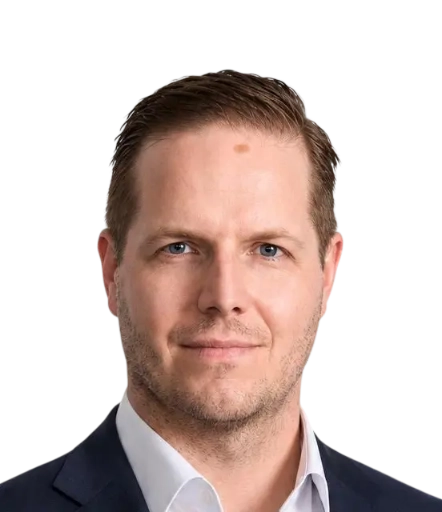
Last position:
Senior Project Manager AI & Data at Large German energy provider
AI Assistance and Target Vision for Partially Autonomous Energy Portfolio Management
Building an AI control layer directly on the up-to-date daily live portfolio of a large energy provider — not as an isolated pilot, but as an operational extension of the existing DB1 and portfolio management. The goal is the gradual development from assistance through monitoring/alerting to analysis agents with Human-in-the-Loop approvals, supplemented by a role-specific System of Engagement alongside the BI System of Record. At the same time, the business case, target vision and management pitch compared with static monthly reporting are being developed.
- AI control layer: Design and build on the existing live portfolio data product (several million contracts) — development stages assistance → monitoring/alerting → agents with Human-in-the-Loop approvals.
- LLM-supported data analysis: Semantic queries, SQL/tool integration and additional RAG components based on portfolio, plan-versus-actual and data quality data (Azure OpenAI, Snowflake), with drill-downs to individual contract level.
- Analysis agents: Multi-stage agents for variance and driver analyses of churn, price adjustments, volumes and procurement costs.
- Views concept: Role-specific interfaces for business units, management and C-level as a System of Engagement alongside the BI System of Record.
- Business case & pitch: Target vision and cost-benefit argumentation compared with static monthly reporting.
- LLM setup (privacy & security): Coordination with IT Security and Data Protection — EU region, data separation and approval processes.
- Agent architecture: Multi-stage agent pipelines (analysis → validation → summary) with documented data sources, tool calls, review steps and source references for each statement.
- Data foundation: Built on the up-to-date daily DB1 data product (Snowflake, dbt) — portfolio, plan-versus-actual and data quality metrics as the common basis for all AI analyses.
- Guardrails & evaluation: Evaluation and approval processes for LLM responses relating to management-relevant statements — test sets, metrics and human review.
- Prototyping & validation: Iterative validation of agent responses with the business unit — test question catalogue, feedback loops and response quality for each release.
- Roadmap & development stages: Detailed stages from assistance → monitoring/alerting → partially autonomous management, including transition criteria and governance for each stage.
- Integration: Integration into the existing BI and data landscape — BI remains the System of Record, while the AI layer provides interactive drill-down paths as the System of Engagement.
- Enablement: Enablement of business users — prompting guides, training and an operating model for ongoing use.
- Management: Coordination of business units, Data Engineering, IT Security and Data Protection.
- Change Management: Communication and expectation management with business units and management throughout the development stages.
Results:
- Built on an existing up-to-date daily data product with several million contracts
- Established an LLM setup coordinated with Data Protection and IT Security in the EU region, including data separation and approvals
- Defined three development stages through to partially autonomous management
- Designed role-specific views for business units, management and C-level
- Developed the business case and management pitch for the development stages
- Established an iterative response-quality validation process with the business unit
- Designed the operating model for assistance operations and initiated validation
Stack: Azure OpenAI, Azure AI Foundry, Snowflake, dbt, React, TypeScript, Entra ID, RAG, Agentic AI, analysis agents, Human-in-the-Loop, Prompt Engineering, LLM Evaluation, LLMOps, GDPR / EU region, Azure DevOps, Python, SQL, Change Management
Esmaeil M.

Last position:
System Test & Integration Engineer (5G Core / Security / Cloud-Native) at Secuvera GmbH
- Independently carried out integration, testing, and acceptance activities on 5G core systems in a containerized test environment; structured test protocols and documentation
- Built a 5G core and RAN integration environment from scratch (Docker Compose) for reproducible test scenarios across multiple vendor configurations
- Performed fault analysis and troubleshooting across the entire protocol stack (SBI, RRC, NAS, NGAP, TLS) to precisely isolate integration issues
- Contributed to the BSI-related NESAS-CCS-GI evaluation project – experience in security-critical, regulated customer projects
Thomas H.

Last position:
VP Mid-Market & SaaS Transformation (interim) at WithSecure Corp.
- Led the transition from regional to segment-based GTM structure, rebuilding regional ownership, focus, and accountability, especially around the high-growth MSP partner segment.
- Redesigned and operationalized a cross-functional GTM engine for the partner channel, enabling scalable, data-driven upsell and cross-sell programs.
- Established an agile, data-driven operating rhythm with a unified business planning and execution model including QBRs, forecast reviews, and GTM planning cadences.
- Launched 360° business and partner analytics, providing actionable visibility into performance, partner contribution, churn signals, and growth potential across mid-market segments.
- Restructured and re-aligned RevOps teams, introducing segment-specific roles, ICP-based account segmentation, and a clear focus on expansion plays.
- Authored and implemented the company-wide SaaS Playbook, translating SaaS strategy into standardized GTM practices and launching a modular training curriculum to align regional and functional teams.
Enis S.

Last position:
Software Developer at 50Hertz Transmission GmbH
- Participated in the gradual modernization of components into cloud-native 12-factor applications.
- Worked closely with the business operations team to eliminate manual processes and resolve several performance bottlenecks.
- Designed and implemented a CI/CD pipeline to increase developer productivity, enforce quality and security checks, and automate product delivery.
- Migrated several components into the OpenShift Kubernetes cluster.
- Built a monitoring stack from scratch with Prometheus and Grafana to monitor services running in OpenShift.
- Developed dashboards in both Grafana and Splunk for operational transparency.
- Implemented an OIDC/OAuth2-based single sign-on (SSO) solution with Keycloak to secure multiple applications.
- Technologies: Java, Spring, Quarkus, Kafka, MySQL, Cassandra, Redis, Spring Data, Hibernate, Docker, Kubernetes, OpenShift, Keycloak, OIDC, OAuth2, Helm, Prometheus, Grafana, Splunk, Spark.
Nima N.
Last position:
Co founding LLM Engineer at LLM Ventures
- Co-founded an AI venture focused on building production-grade LLM applications and agentic systems
- Designed and implemented multi-agent AI workflows for financial and trading applications
- Developed LLM-powered copilot architectures for portfolio analysis, trade management, and personalized user coaching
- Built on-device and edge-deployed inference applications, optimizing models for low latency, privacy, and resource-constrained environments
- Led system architecture decisions across model selection, orchestration, state management, and deployment
Discover over 15,000 top freelancers


Statistics of experts using Cloud Native
Aggregated from the professional profiles of matched freelancers.

Experience
23 years (Germany: 17 years)

Position duration
2.3 years (Germany: 2.2 years)

Positions per freelancer
12 (Germany: 10)

Top business areas
Information Technology, Product Development, Project Management

Top industries
Information Technology, Banking and Finance, Automotive

Certification focus areas
Information Technology, Project Management, Business Intelligence

Bachelor's degree or higher
100% (Germany: 93%)

Master's degree or higher
71% (Germany: 57%)

Doctorate
21% (Germany: 6%)

Certifications per freelancer
2 (Germany: 3)

Most common languages
German, English, Spanish

Speak two or more languages
100% (Germany: 99%)
Based on our profile pool as of 9 Oct 2026.
Daily rate distribution
The chart shows how the daily rates of experts in this technology in Munich are distributed, based on recent contracts on our platform. Each bar covers a rate range — its height shows the share of experts charging within that range.
Average rates of experts in Munich using Cloud Native
Rates are based on recent contracts and do not include FRATCH margin.

The average daily rate is the mean of all daily rates from recent contracts of comparable freelancers on our platform.
The median daily rate is the middle value of all daily rates — half of comparable freelancers charge less, half charge more. Unlike the average, it is barely affected by outliers.
Calculated based on our freelancers’ daily rates as of 9 Oct 2026. Actual rates may vary depending on seniority level, experience, skill specialization, project complexity, and engagement length.
Cloud Native experts industry focus
See which industries our matched freelancers work in most often — every figure is calculated live from the freelancers on FRATCH.
- Information Technology (93%)
- Banking and Finance (67%)
- Automotive (52%)
- Manufacturing (44%)
- Government and Administration (41%)
- Retail (41%)
- Telecommunication (37%)
- Insurance (33%)
Please note that freelancers can work across multiple industries, so percentages overlap.
About the technology
What Cloud Native means
Cloud Native is an approach to building and operating software around containers, APIs, automation and elastic infrastructure. It commonly uses Kubernetes and the CNCF ecosystem to make services portable, observable and easier to release. The focus is on resilient systems that can change without long infrastructure handovers.
Systems it supports
Cloud Native solutions run customer-facing applications, internal platforms, data services and event-driven workloads. Companies use them for:
- Microservices with independent deployment and scaling
- Kubernetes platforms across public, private or hybrid clouds
- Automated delivery pipelines with repeatable environments
- Resilient APIs, background processing and streaming systems
Ecosystem and tooling
Strong specialists work across Kubernetes, Docker or other container runtimes, Helm, service meshes and ingress controllers. They connect infrastructure as code with Terraform or similar tools, and build delivery workflows with GitHub Actions, GitLab CI or Jenkins. Monitoring, logging and tracing with tools such as Prometheus, Grafana and OpenTelemetry are part of reliable operations.
When companies need specialists
Freelance expertise helps when a team is moving from virtual machines or a monolith to containerized services, establishing a platform team or repairing an unreliable delivery process. It is also useful during cloud migrations, Kubernetes upgrades, security reviews and efforts to reduce operational friction. In Munich, specialists may support local product, automotive, manufacturing and financial organizations while collaborating remotely or on site.
What strong professionals deliver
A capable Cloud Native professional connects application design with platform needs. They define service boundaries, deployment patterns, identity controls, resource policies and recovery procedures instead of treating Kubernetes as a standalone tool. Their deliverables can include platform architecture, infrastructure code, deployment charts, runbooks, observability standards and tested migration plans.
How to assess expertise
Look for clear reasoning about failure modes, cost controls, security and team ownership. A strong specialist can explain why a managed service, a simpler deployment model or Kubernetes is appropriate for a given workload. They document decisions, automate repeatable work and leave teams able to operate the result independently.

Frequently asked questions
Curious about Cloud Native? Here are the answers that come up again and again.

Cloud Native is used to build and run applications that need independent releases, automated operations and flexible scaling. Typical work includes microservices, APIs, event-driven processing, internal platforms and resilient data services.
Cloud Native goes beyond moving an existing application to a virtual machine or managed server. It emphasizes containers, declarative infrastructure, automated delivery, service resilience and observable operations, although a simpler hosted architecture can be the better choice for some workloads.
A strong Cloud Native specialist should understand Kubernetes, container security, networking, infrastructure as code and continuous delivery. Experience with cloud services, software architecture, observability, databases and incident response is also valuable.
The right level depends on the scope, risk and existing team. A small container deployment may need focused platform knowledge, while a multi-team Kubernetes environment requires proven experience with architecture, upgrades, security, reliability and operational ownership.
Yes. Cloud Native work is well suited to remote collaboration because infrastructure, configuration and delivery workflows are managed through shared repositories and automated systems. A Munich-based team should agree on working hours, documentation standards, communication routines and whether German is needed for stakeholder work.
Kubernetes can be useful when teams operate many services, need consistent deployment controls or run workloads across environments. It may add needless complexity for a small application, so a good specialist first compares managed containers, serverless options and simpler orchestration.
Ask the specialist to explain deployment safety, recovery objectives, access controls, observability and ownership after handover. High-quality Cloud Native work includes automated tests, documented operations, controlled failure handling and clear evidence that the platform solves the stated business problem.
Freelancers working with Cloud Native should expect close coordination between application teams, security, operations and product stakeholders. Clear boundaries, reusable automation and practical documentation matter because the work often changes how several teams build and run software.
The average hourly rate of freelancers in Munich, Germany who have used Cloud Native in their recent projects is 102 €, which corresponds to a daily rate of about 818 € based on an 8-hour working day.
Of the freelancers in Munich, Germany who have used Cloud Native in their recent projects, 100% hold at least a Bachelor's degree, 71% hold at least a Master's degree, and 21% hold a doctorate.
On average, freelancers in Munich, Germany who have used Cloud Native in their recent projects have 23 years of professional experience, with a single engagement typically lasting around 2.3 years.
The most common languages among freelancers in Munich, Germany who have used Cloud Native in their recent projects are German (96%), English (96%), and Spanish (15%).
The most common industries among freelancers in Munich, Germany who have used Cloud Native in their recent projects are Information Technology (93%), Banking and Finance (67%), and Automotive (52%).
The most common business areas among freelancers in Munich, Germany who have used Cloud Native in their recent projects are Information Technology (100%), Product Development (85%), and Project Management (70%).
Main locations of FRATCH Experts, who have recently used Cloud Native
Our freelancers and interim experts are at home across the DACH region — available on-site in the major business hubs or fully remote. Choose a location to discover matched specialists, local market insights and up-to-date availability.
 Berlin Hamburg
  Munich Cologne Frankfurt Stuttgart Dusseldorf Leipzig Dortmund Essen Bremen Dresden Hanover Nuremberg
  Berlin
  Hamburg
  Cologne
  Frankfurt
  Dusseldorf
 Request a free demo
Get in touch with the FRATCH team and we will get back to you within 4 hours.
Would you rather directly get in touch?
We always have the time for a call or email!

Philipp Thomaschewski
FRATCH CEO

