


Apache Mesos Experts in Germany
matched in minutes with vetted, available freelance specialistsHire experts who design resilient cluster scheduling, operate Marathon and integrate Docker or Kubernetes workloads. Get precise AI matching with vetted, available freelancers who can support remote or on-site delivery in Germany.

Meet FRATCH Experts in Germany, who have recently used Apache Mesos
Niko S.

Last position:
Developing Architect, Technical Lead "gridlytics" at HH Energienetze
- Building a data integration platform for high, medium, and low voltage assets for contextual analysis of time series with master data from the SCADA control system (IEC 60870 104), INIS, and SAP.
- Responsibility for the architecture and implementation of the solution, as well as sparring partner for the Product Owner.
- Use of Kotlin, Spring Boot, Maven, TimescaleDB, PostgreSQL, liquibase, Elements IoT, Docker, Kubernetes, Grafana, Python, jupyter, and various API gateways.
Sabahattin K.

Last position:
Sole responsibility (design, development, infrastructure, operations) at Own project busik.ch
- Ride-sharing and bus platform, live and fully functional. Backend with Spring Boot 4.1 on Java 21, PostgreSQL with Flyway, and Testcontainers integration tests. Hosted in my own AWS account (ECS Fargate, ALB, ECR, IAM Least-Privilege) with CI/CD via GitHub Actions and OIDC federation without static credentials. Development fully AI-supported with Claude Code, including custom skills and project-specific memory. Spring Boot · Java 21 · PostgreSQL · Flyway · Docker · AWS ECS/ALB/ECR · CI/CD · GitHub Actions · Claude Code
Jorge M.

Last position:
Technical Lead / Fractional CTO at Würth GmbH
I designed and developed an AI-powered multi-tenant platform on Azure that transforms SAP process recordings into technical documentation, presentations and automated tests, processing over 15,000 process recordings for enterprise customers like Würth. I owned the architecture, the production releases and the DevOps setup. I also designed a multi-tenant system with SSO and role-based access on Azure. Implemented an MCP Server with Dynamic OAuth Authentication.
Main Tasks:
- Sprint planning and feature preparation
- Design the multi-tenant platform architecture (FastAPI, SQLAlchemy, PostgreSQL row-level security for tenant isolation)
- Develop AI pipelines with Prefect for transcription (Azure Speech API), document generation and SAP screen-recording analysis (Claude, gpt-4-mini)
- Design and implement an MCP server to expose tenant knowledge to LLM clients (Claude), with async retrieval and reranking
- Implement LLM cost tracking, rate limiting and client pooling for Anthropic/OpenAI/Azure OpenAI endpoints
- Set up CI/CD: Docker images to Azure Container Registry, GitHub Actions, Azure Static Web Apps, Alembic migrations in containers
- Manage production releases and execute live data migrations for enterprise customers
- Define engineering standards and architecture patterns for the team
Environment: Azure / Azure Foundry / Python / FastAPI / Prefect / React / PostgreSQL
Serge K.

Last position:
Founder
- Idea, design and initial implementation of a service that aggregates publicly available data to estimate prices for certain types of objects
- Collection of data from different data sources and its normalization. Embedding the data using SentenceTransformer and training gradient boost models
- Implementation of a web service that
- reads arbitrary user text
- extends it if some parts of data are missing
- uses a local LLM model to prepare the data for prediction
- embed the data and call for prediction from the gradient boost model
- uses a LLM model to generate a report for the user request including explanations
- Stack: BigQuery, Vertex AI, Cloud Run (GCP), Python, Terraform, DBT, SentenceTransformer, Qwen
- Minor SEO optimizations
- More to come...
Celso K.

Last position:
SAP Commerce Cloud FullStack Developer at Spar
- Implementation of a GitLab CI/CD pipeline based on SAP Commerce Cloud 2211
- Development of a new B2C shop with Vue, Node and TypeScript to ensure scalability, extensibility and performance optimization
- Integration of Microsoft Azure Event Grid with SAP Hybris
- Implementation of BDD with Cucumber using Gherkin syntax to promote collaboration between development and business teams
- Support and customization of a Spartacus shop
- Technologies/Languages: Java, REST, OData, Behavior Driven Development (BDD), Cucumber, Node, Vue, TypeScript, Spartacus, GitLab CI/CD, Gradle, Maven, Ant, SonarQube
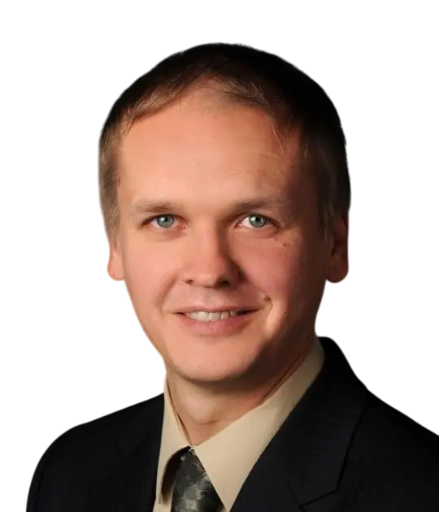
Anton K.
Last position:
Head of Overall Technical Integration NSC / Hadoop Cloud Development at IABG
Head of overall technical integration NSC (National Secure Cloud, project with approx. 60 employees).
Technical integration of all subprojects into one product, definition of interfaces and basic components of a cloud including hardware, technical architecture of the IABG platform.
Development of a Cloud Management Platform (CMP) capable of creating private/mixed clouds of any complexity based on a textual description with one click or interactively.
CMP also includes the complete hardware management lifecycle.
Kubernetes, OpenStack and Hadoop are used as the foundation.
The management layer includes Harbor, Gitea, Longhorn, Keycloak, Rancher and Jenkins, which are configured automatically.
Private cloud can run any customer workloads, including a full Hadoop layer with HDFS, Spark, MapReduce, Mesos, HBase and around 20 additional ML/DL technologies.
Hadoop worker clusters can also be installed automatically without Kubernetes on bare metal or commodity hardware.
OpenStack with Nova, Neutron, Ironic, Swift, Cinder, Ceph.
Development of a Java application Rudi: SOAP, REST, containers, DB.
Technologies: Kubernetes (K3s, Rke2, Minikube, Harbor, Gitea, Jenkins, Longhorn, Keycloak, Rancher), OpenStack (Nova, Neutron, Keystone, Swift, Ceph, Cinder, Sahara, Magnum, Kayobe, Kolla, Bigrost, Ironic), Hadoop (HDFS, Ambari, Solr, Livy, Ranger, YARN, Tez, HBase, Kafka, Hive, Zookeeper, MapReduce, Spark, Oozie, Flink), virtualization (Kubernetes (K3S), VMware, Oracle), scripting (Ansible, Puppet, Juju, Shell, Groovy, Gradle, Maven).
Andreas N.

Last position:
Open Source Founder at Privatier
- AI-supported source code analysis
- AI image generation for a shirt shop
- AI-supported analysis of connected YouTube channels and commenting users
- AI-supported software prototyping
- Operation of a local AI environment
- 3D printing and scanning: development of a process to repair GfK parts using 3D-printed negative molds
The focus is on practical applications of new technologies, founding an open-source project for a yacht autopilot, as well as yacht refit and motorhome conversion.
Tan P.

Last position:
DevOps Engineer in the DevOps Team at Rise-World
- Implementation of specified DevOps solutions to automate infrastructure (Terraform, Bicep, CloudFormation, Ansible) on-premises datacenter (Ovirt, Proxmox, Ceph Cluster, MinIO) and private cloud.
- Administration, configuration and implementation of CI/CD DevOps pipelines (GitLab, GitFlow) to support development process (Artifactory, Prometheus, Istio, service mesh, Helm Chart, OpenShift (Red Hat Enterprise) / Kubernetes cluster), Red Hat Satellite.
- Administration, setup, monitoring and patching of Linux infrastructure based on Red Hat Enterprise for Dev, Test and QA.
- Use of Scrum and Kanban methods.
- Administration, configuration and implementation of security standards for deploying on Dev, Test, QA and Prod stages of the new ePA applications.
- Development of new plugins and add-ons needed on current infrastructure.
- Database support.
- Data analytics support (Python, Spark, Pandas, Power BI, Splunk Enterprise).
- Implementation of best practices for DevSecOps and BizDevOps using GitOps (ArgoCD), Streamlit framework, Semaphore Ansible UI.
- Configuration and testing of iperf, uperf, sysbench using benchmark-operator for external source data and IoT/MDM devices, creating reports via ELK / OpenSearch.
- Building a new Databricks platform to collect and analyze big data from different sources and IoT devices into Hadoop framework (Python, Pandas, PySpark, Power BI, Apache Airflow).
- Building backend data aggregation and processing to automate configuration deployment between different OpenShift clusters and big data framework (Python, Pandas, PySpark, Apache Spark, PostgreSQL, Django 2, Ansible Automation, Jira JSM).
- Building a new ML pipeline platform using Kubeflow, TensorFlow, KServe.
- Data extraction, transformation and loading from different data sources including structured and unstructured data to analytic DWH / big data cluster using Python, Pandas, Polars, Power BI, Django backend and PostgreSQL.
- Setup of new DevOps Test and QA HashiCorp Vault cluster for PKI and IAM.
- Configuration and testing of automated patching based on CVSS score, SIEM-integrated CVEs.
- Use of Nexpose and InsightVM to scan vulnerability events in network, host, container and application.
- Design and implementation of secure and scalable AWS architectures including VPC, EC2, S3, RDS and Route53 and similar setups on Azure and GCP.
- Automated system provisioning and deployment using CloudFormation templates.
- Configuration of IAM roles, policies and permissions to ensure secure access control.
- Patch management, backup automation and disaster recovery setup on AWS infrastructure.
- Monitoring and optimization of system performance using AWS CloudWatch and AWS Trusted Advisor.
- Support of VMware services (vSphere, Aria, Horizon) and the virtual desktop environment.
- Development and maintenance of CI/CD pipelines using Jenkins, GitLab CI/CD and AWS CodePipeline with interface to Nutanix.
- Configuration of AWS CloudWatch to monitor application performance and system events.
- Planning and execution of migration of on-premises applications to AWS cloud platforms.
- Deployment of containerized applications using Docker and Kubernetes in AWS environments.
- Deployment of internal software packages between availability zones using AWS CodeDeploy.
- Building and deploying ML models using Scikit-learn, XGBoost and Spark MLlib including hyperparameter tuning, model evaluation and production deployment.
Jorge M.

Last position:
Data Architect at Deutsche Bahn
- Design and provide best practices on data modeling for dbt, including changing dimensions, late arriving data handling, and testing
- Design the ingestion flow from other systems into S3 and Redshift
- Design and implement new partitions for Dagster and incremental loading with dbt
- Map business requirements to technical architectures
- Instruct junior team members
Uwe S.

Last position:
living brain GmbH
- Established a cost-effective application development platform and critical infrastructure for a groundbreaking medical startup, revolutionising rehabilitation therapy with Virtual Reality
- Guided strategic technical business decisions
- Led software development based on Java microservices
- Managed Platform-as-a-Service provider selection process
- Engineered software lifecycle automation using GitHub Actions
Aram H.
Last position:
Platform Chapter Lead (Container Orchestration & Observability Teams) at zooplus
Discover over 15,000 top freelancers


Statistics of experts using Apache Mesos
Aggregated from the professional profiles of matched freelancers.

Experience
25 years

Position duration
1.4 years

Positions per freelancer
21

Top business areas
Information Technology, Product Development, Operations

Top industries
Information Technology, Retail, Energy

Certification focus areas
Information Technology, Business Intelligence, Operations

Bachelor's degree or higher
100%

Master's degree or higher
86%

Doctorate
14%

Certifications per freelancer
6

Most common languages
English, German, French

Speak two or more languages
100%
Based on our profile pool as of 9 Oct 2026.
Daily rate distribution
The chart shows how the daily rates of experts in this technology in Germany are distributed, based on recent contracts on our platform. Each bar covers a rate range — its height shows the share of experts charging within that range.
Average rates of experts in Germany using Apache Mesos
Rates are based on recent contracts and do not include FRATCH margin.

The average daily rate is the mean of all daily rates from recent contracts of comparable freelancers on our platform.
The median daily rate is the middle value of all daily rates — half of comparable freelancers charge less, half charge more. Unlike the average, it is barely affected by outliers.
Calculated based on our freelancers’ daily rates as of 9 Oct 2026. Actual rates may vary depending on seniority level, experience, skill specialization, project complexity, and engagement length.
Apache Mesos experts industry focus
See which industries our matched freelancers work in most often — every figure is calculated live from the freelancers on FRATCH.
- Information Technology (100%)
- Retail (91%)
- Energy (64%)
- Insurance (64%)
- Automotive (55%)
- Banking and Finance (55%)
- Education (45%)
- Transportation (45%)
Please note that freelancers can work across multiple industries, so percentages overlap.
About the technology
Cluster scheduling
Apache Mesos is an open-source cluster manager that abstracts CPU, memory, storage and other resources across distributed machines. Its two-level scheduling model lets frameworks request resources while Mesos allocates them across a shared cluster. Companies use it to run resilient services, batch processing and mixed workloads on common infrastructure.
Framework ecosystem
Mesos works through frameworks that handle the logic for specific workloads. Marathon supports long-running services, while Chronos targets scheduled jobs and batch tasks. Strong specialists also understand Mesos agents, masters, schedulers, executors, service discovery and the operational boundaries between the platform and each framework.
- Configure masters, agents and high-availability coordination
- Deploy services with Marathon and manage application constraints
- Schedule recurring workloads with Chronos
- Integrate containers, registries and external storage
Delivery scenarios
Apache Mesos appears in platforms that need to share infrastructure between services, data pipelines and compute-heavy jobs. It can support internal cloud environments, continuous delivery systems and large distributed applications. In Germany, specialists may contribute to industrial, logistics, media or enterprise technology environments where predictable resource use matters.
When expertise helps
Companies often bring in freelance expertise during a migration, a cluster redesign or an operational recovery. They may need help replacing legacy scheduling patterns, improving isolation, or connecting Mesos with observability and deployment systems. Remote collaboration is practical when documentation and access are ready; on-site work can help with sensitive infrastructure and team handover in Germany.
Adjacent skills
Effective Mesos work reaches beyond the scheduler itself. Professionals commonly bring Linux operations, networking, container runtimes, Apache ZooKeeper, infrastructure automation and distributed-systems troubleshooting. Experience with Docker, Kubernetes, Prometheus, Grafana, CI/CD pipelines and cloud or bare-metal environments helps place Mesos decisions in the wider platform landscape.
Quality signals
Look for evidence of production ownership rather than familiarity with configuration alone. A strong specialist can explain resource offers, roles, quotas, constraints, failover, framework behavior and recovery procedures in clear terms. They should produce runbooks, deployment conventions, monitoring dashboards and tested rollback plans, while identifying when Mesos is preferable to alternatives such as Kubernetes or Nomad.

Frequently asked questions
Everything clients usually want to know about Apache Mesos, in one place.

Apache Mesos pools resources from many machines and presents them to distributed workload frameworks. Companies use it to run long-lived services, scheduled jobs, data processing and mixed workloads on shared clusters.
Apache Mesos provides a general resource-management layer and delegates workload control to frameworks such as Marathon. Kubernetes offers a more integrated container orchestration model, so the right choice depends on existing tooling, workload requirements and the team’s operating model.
An Apache Mesos specialist should usually understand Linux, networking, containers, Apache ZooKeeper and infrastructure automation. Experience with Marathon, Chronos, observability tools, CI/CD and distributed systems is also valuable.
An Apache Mesos project needs practical experience that matches its risk and scope, not a particular résumé label. Cluster migration, failover design and production incidents require evidence of hands-on ownership, while a contained integration may need narrower framework knowledge.
Yes, Apache Mesos work can often be delivered remotely when secure access, documentation and operational contacts are available. German companies may still prefer on-site collaboration for sensitive environments, incident response or knowledge transfer, and language expectations should be agreed early.
Ask an Apache Mesos expert to explain resource offers, quotas, constraints, framework registration and recovery behavior using a relevant project example. Review the quality of their runbooks, monitoring approach and rollback plan, not just their ability to deploy a cluster.
Marathon is a Mesos framework for running and maintaining long-lived applications, and it remains relevant in existing Mesos environments. A specialist should assess its fit with the current cluster, deployment process and support requirements rather than introduce it automatically.
Apache Mesos remains useful for professionals supporting established distributed platforms with shared resource pools and multiple workload frameworks. Freelance assignments often involve stabilization, modernization, migration planning, performance analysis or operational handover.
The average hourly rate of freelancers in Germany who have used Apache Mesos in their recent projects is 109 €, which corresponds to a daily rate of about 869 € based on an 8-hour working day.
Of the freelancers in Germany who have used Apache Mesos in their recent projects, 100% hold at least a Bachelor's degree, 86% hold at least a Master's degree, and 14% hold a doctorate.
On average, freelancers in Germany who have used Apache Mesos in their recent projects have 25 years of professional experience, with a single engagement typically lasting around 1.4 years.
The most common languages among freelancers in Germany who have used Apache Mesos in their recent projects are English (100%), German (91%), and French (27%).
The most common industries among freelancers in Germany who have used Apache Mesos in their recent projects are Information Technology (100%), Retail (91%), and Energy (64%).
The most common business areas among freelancers in Germany who have used Apache Mesos in their recent projects are Information Technology (100%), Product Development (100%), and Operations (73%).
Main locations of FRATCH Experts, who have recently used Apache Mesos
Our freelancers and interim experts are at home across the DACH region — available on-site in the major business hubs or fully remote. Choose a location to discover matched specialists, local market insights and up-to-date availability.
 Berlin Hamburg Munich Cologne Frankfurt Stuttgart Dusseldorf Leipzig Dortmund Essen Bremen Dresden Hanover Nuremberg
 Request a free demo
Get in touch with the FRATCH team and we will get back to you within 4 hours.
Would you rather directly get in touch?
We always have the time for a call or email!

Philipp Thomaschewski
FRATCH CEO

