


WebRTC Experts in Berlin
matched in minutes by AIHire experts who deliver browser-based video calls, secure audio streaming, screen sharing and real-time data channels. Work with vetted, available freelancers matched precisely to your WebRTC project and its technical requirements.

Meet FRATCH Experts in Berlin, who have recently used WebRTC
Hamza K.

Last position:
Academic Research Contributor in Health Sector (Volunteer) at n/a
- Acted as technical consultant to optimize multi-layer ensemble models combining ResNet, CNN-BiGRU-Attention, and XGBoost.
- Guided implementation of a Logistic Regression meta-learner to solve class imbalance problems, achieving 92.86% accuracy and 0.9644 AUC on PTB-XL and Chapman-Shaoxing datasets.
Olaf T.
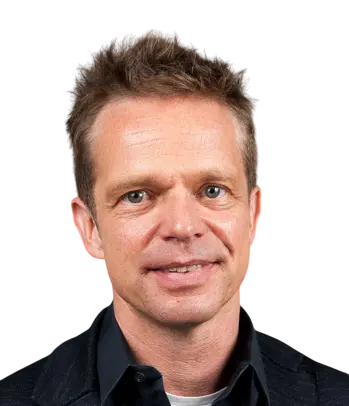
Last position:
CTO, Shareholder, Agile Coach, Product Owner at fluidx digital GmbH
- Development and rollout of a browser-based platform for camera streaming, augmented reality (AR), and visual computing
- Device-independent camera streaming for smartphones, tablets, desktop PCs, as well as VR and AR headsets
- Ensuring GDPR-compliant hosting in Open Telekom Cloud and other sovereign cloud providers
- Intuitive visual and collaborative features to increase efficiency and integrate smoothly into existing business software
Qaiser A.

Last position:
Freelance Lead DevOps Engineer at Schwarz Gruppe Produktion
Bootstrapping a CloudOps team and building a multi-cloud provider backend for a low-code Internal Developer Platform (IDP) with env zero
Introducing user story mapping, ADRs, milestones, and backlog management
Designing and developing core APIs, setting up CI/CD pipelines, OpenTofu/Terraform scripts
Representing and communicating the team with third-party stakeholders (e.g. env zero)
(Cross-)team coaching on DevOps, software design, Terraform, Golang, and agile practices
Stefan D.

Last position:
Frontend Developer – Sports Event and City Portal Projects at München Betriebs GmbH
- Developed an accessible, responsive website based on Figma designs for a major sports event in compliance with WCAG, BITV and EN 301 549
- Planned and set up the tool stack with Vite, Playwright, Docker and GitLab CI
- Worked on two existing projects (Vue.js & Nuxt), focusing on bug fixing, accessibility audits and developing new features
- Collaborated with Design and QA to consistently implement accessible UI patterns
- Advised on improving existing frontend architectures in terms of accessibility, performance and maintainability
Dimitri P.

Last position:
Lead Product Manager (freelance) at Wonder Technologies GmbH
- Led the entire product organisation through complete rebuild of the product resulting in a 25% increase in engagement, considerably greater technical stability and a reduction in server costs.
- Product Manager for three teams: Media (webrtc), Cockpit (static functionality) and World (rendering engine).
- Coached and mentored the product organisation to become outcome-oriented and active in shaping their way of working.
- Led the transformation of the product organisation to start scaling. Implemented a culture of empowerment and discovery.
Marcus B.

Last position:
Strategic Digitalization Consulting and Process Architecture at De-NE
NET Cloud and NET Scan
- Structured end-to-end processes, roles, interfaces, approvals and decision requirements.
Discover over 15,000 top freelancers


Statistics of experts using WebRTC
Aggregated from the professional profiles of matched freelancers.

Experience
18 years

Position duration
2.2 years

Positions per freelancer
11

Top business areas
Information Technology, Product Development, Project Management

Top industries
Information Technology, Automotive, Banking and Finance

Certification focus areas
Information Technology, Project Management, Quality Assurance

Bachelor's degree or higher
83%

Master's degree or higher
67%

Certifications per freelancer
1

Most common languages
German, English, French

Speak two or more languages
100%
Based on our profile pool as of 18 Nov 2026.
Daily rate distribution
The chart shows how the daily rates of experts in this technology in Berlin are distributed, based on recent contracts on our platform. Each bar covers a rate range — its height shows the share of experts charging within that range.
Average rates of experts in Berlin using WebRTC
Rates are based on recent contracts and do not include FRATCH margin.

The average daily rate is the mean of all daily rates from recent contracts of comparable freelancers on our platform.
The median daily rate is the middle value of all daily rates — half of comparable freelancers charge less, half charge more. Unlike the average, it is barely affected by outliers.
Calculated based on our freelancers’ daily rates as of 18 Nov 2026. Actual rates may vary depending on seniority level, experience, skill specialization, project complexity, and engagement length.
WebRTC experts industry focus
See which industries our matched freelancers work in most often — every figure is calculated live from the freelancers on FRATCH.
- Information Technology (100%)
- Automotive (67%)
- Banking and Finance (50%)
- Media and Entertainment (50%)
- Telecommunication (50%)
- Utilities (50%)
- Education (33%)
- Healthcare (33%)
Please note that freelancers can work across multiple industries, so percentages overlap.
About the technology
Real-time foundations
WebRTC is an open technology for real-time audio, video and data exchange between browsers, mobile apps and connected devices. It supports direct peer connections while using signaling, session negotiation and network traversal to establish communication. Companies use it for video meetings, customer support, telehealth, online education, live collaboration and interactive media.
Media and data flows
A WebRTC solution can carry camera and microphone streams, screen content, chat events, files or application state. Strong implementations handle permissions, device selection, codec negotiation, adaptive bitrate, latency and connection recovery. Media servers are often added when a product needs recording, broadcasting, moderation or calls with many participants.
Ecosystem and tooling
The browser APIs are only one part of the delivery stack. Specialists work with JavaScript or TypeScript, React and mobile SDKs, signaling over WebSocket, and protocols such as STUN, TURN, ICE, SDP and RTP. Common infrastructure includes coturn and media platforms such as Janus, Jitsi, mediasoup or LiveKit, alongside observability and automated browser testing.
Where expertise matters
- Video conferencing with rooms, presence and participant controls
- Support calls with screen sharing, recording and escalation
- Live classrooms, interviews and remote assessments
- Voice features embedded in marketplaces or business software
- Low-latency collaboration with synchronized data channels
In Berlin, this expertise fits products in media, software, education, healthcare and customer operations. Remote work is practical, but close coordination with product, security and frontend teams remains important when call quality is business-critical.
When companies hire specialists
Freelance expertise helps when a team is adding calling to an existing product, replacing a hosted video service or investigating unstable connections. It is also valuable for building a signaling service, choosing between peer-to-peer and server-assisted media, or preparing recording and moderation workflows. Specialists can turn a prototype into a reliable production feature.
Quality signals
Strong professionals understand both browser behavior and network conditions. They test across devices, browsers, microphones, cameras, restrictive firewalls and changing bandwidth rather than relying on a single successful call. They also protect signaling and media flows, explain trade-offs clearly, instrument quality metrics, and leave maintainable integration points for the wider product team.

Frequently asked questions
Before you brief your next project: the most common questions about WebRTC.

WebRTC enables live audio, video and data communication inside browsers and applications. Companies use it for meetings, support calls, telehealth sessions, remote interviews, classrooms, screen sharing and collaborative tools without requiring a separate media application.
WebRTC provides the real-time communication layer, while hosted video APIs package signaling, media infrastructure, recording and operational tooling around it. A hosted service can reduce delivery effort, whereas a more direct WebRTC implementation offers greater control over user flows, infrastructure and data handling.
A strong WebRTC specialist usually understands JavaScript or TypeScript, browser media APIs, WebSocket signaling and backend session management. Useful adjacent skills include STUN and TURN deployment, SDP and ICE troubleshooting, media servers, mobile integration, security and automated cross-browser testing.
A WebRTC freelancer should be able to explain real production decisions, not only demonstrate a browser call. Look for experience with reconnection, device permissions, network failures, codec behavior, call quality monitoring and the chosen media architecture. The right depth depends on whether the work is a small feature, a multi-party product or a full communication service.
Yes. WebRTC work is well suited to remote collaboration because code, test environments and network diagnostics can be shared online. Teams in Berlin should still align closely on time zones, language, security expectations and access to representative devices and networks.
A reliable WebRTC implementation behaves well across browsers, devices and difficult networks. Ask for evidence of testing behind restrictive firewalls, handling dropped connections, clear observability, secure signaling and sensible use of TURN or media servers. A quality specialist can explain failures and trade-offs in plain terms.
WebRTC can connect peers directly, but many products use a selective forwarding media server for group calls, recording, moderation or consistent performance. TURN servers may relay traffic when network rules prevent a direct path. The architecture should follow the product's scale, privacy, reliability and media requirements.
When working with WebRTC, freelancers commonly investigate signaling errors, failed ICE negotiation, missing permissions, incompatible codecs and unstable bandwidth. They also inspect browser logs, connection statistics and TURN configuration before changing application code. A disciplined diagnosis separates network, media and product-layer problems.
The average hourly rate of freelancers in Berlin, Germany who have used WebRTC in their recent projects is 93 €, which corresponds to a daily rate of about 747 € based on an 8-hour working day.
Of the freelancers in Berlin, Germany who have used WebRTC in their recent projects, 83% hold at least a Bachelor's degree and 67% hold at least a Master's degree.
On average, freelancers in Berlin, Germany who have used WebRTC in their recent projects have 18 years of professional experience, with a single engagement typically lasting around 2.2 years.
The most common languages among freelancers in Berlin, Germany who have used WebRTC in their recent projects are German (100%), English (100%), and French (33%).
The most common industries among freelancers in Berlin, Germany who have used WebRTC in their recent projects are Information Technology (100%), Automotive (67%), and Banking and Finance (50%).
The most common business areas among freelancers in Berlin, Germany who have used WebRTC in their recent projects are Information Technology (100%), Product Development (100%), and Project Management (67%).
Main locations of FRATCH Experts, who have recently used WebRTC
Our freelancers and interim experts are at home across the DACH region — available on-site in the major business hubs or fully remote. Choose a location to discover matched specialists, local market insights and up-to-date availability.
Countries:
 Berlin
 Hamburg Munich Cologne Frankfurt Stuttgart Dusseldorf Leipzig Dortmund Essen Bremen Dresden Hanover Nuremberg
Request a free demo
Get in touch with the FRATCH team and we will get back to you within 4 hours.
Would you rather directly get in touch?
We always have the time for a call or email!

Philipp Thomaschewski
FRATCH CEO

