


QML Experts in Germany
matched in minutes by AIHire experts who create responsive Qt Quick interfaces, connect QML views with C++ back ends, and prepare embedded or desktop applications for release. FRATCH matches you quickly and precisely with vetted, available freelancers.

Meet FRATCH Experts in Germany, who have recently used QML
Vishnu V.
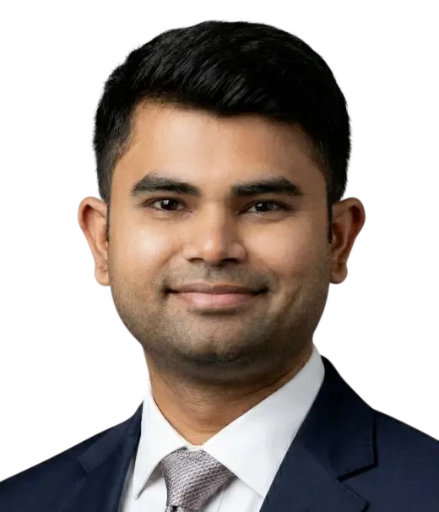
Last position:
Senior Software Architect at Roche Diagnostics Automation Solutions
- Own the software system architecture for laboratory automation products; specify interfaces across software, middleware, hardware and motor control in a regulated IVD environment.
- Led architecture evaluations and proof-of-concepts for integrating AI capabilities (anomaly detection, predictive maintenance) into lab automation under medical-device quality standards.
- Introduced GenAI-assisted development tools across the team, improving productivity and code review quality.
- Communicate architecture decisions to product and project management; coordinate research and improvement projects with system, electronics and external partners.
Muhammad J.

Last position:
Embedded Linux Intern – IoT Sensor Prototype Development at DHL
- Built a modular C++ 20 embedded Linux acquisition system on a Raspberry Pi, synchronizing IMU and dual-camera data streams to sub-millisecond accuracy.
- Integrated retro-reflective and contrast sensors to trigger acquisition and detect gaps between sorter rails.
- Implemented SPI & I2C sensor communication, GPIO interrupt handling with libgpiod, and CSV & JSON output.
- Designed a multi-threaded acquisition pipeline and an SPSC queue between acquisition and writer threads.
- Built a Python/HTML/CSS based web-server and validated the prototype in a DHL warehouse for defect detection.
- Documented software behavior, configuration, and results for maintainable handover and further development.
Kai W.

Last position:
biobedded systems GmbH
- Embedded software development for EMS safety boards in medical technology according to IEC 62304 / ISO 13485
- Technologies: C++, OpenCV, Python, Qt6, JTAG, UART, CMake, IEC 62304, ISO 13485
Reginald L.

Last position:
ERP System Redesign (web-based)
PHP and React redesign of a web-based ERP system.
- Development of the header and parts of the navigation
- Development of various modules in React, such as a calendar, chat and various tables
Andreas S.

Last position:
Mobile and Web Portal Full-Stack Development (Freelance)
- Maintained and further developed a web portal and mobile app as a full-stack developer.
- Handled customer requests and fixed bugs.
- Implemented REST APIs and database access using Java Spring.
- Maintained and expanded a web frontend with AngularJS.
- Maintained and expanded an iOS and Android mobile app with Qt/C++/Qml, including updating the app in the respective stores.
- Technologies: Qt/C++/QML, AngularJS, Java Spring, MongoDB, OAuth.
Ravi K.
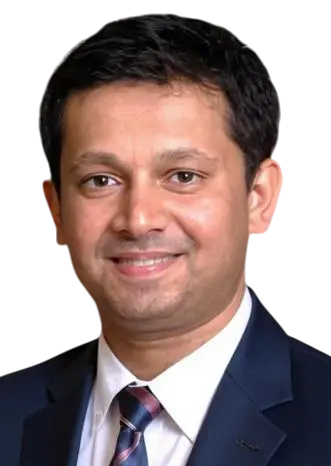
Last position:
System Test Coordinator at Visteon Electronics Germany GmbH
- Project coordination: Managed timelines, deliverables, change requests (CRs) and resources, combining maturity gate reviews and program increments.
- Stakeholder management: Building strong relationships with both internal teams and external customers.
- BMW programs: BCP, BDC, MIC Next, IDC Evo, covering functional validation (including functional safety), product validation, homologation and compliance.
- Risk management: Proactively identified and resolved critical risks in software/product releases through cross-functional coordination to keep projects on track.
Rainer K.

Last position:
Course “Data and AI Analyst” at International University
Mario J.

Last position:
Architect / Developer at handyhase
- Overhaul of the entire design and implementation of new UI/UX aspects using React
- Planning of the software architecture and structuring of the project for long-term scalability using Git for version control
Ronald T.

Last position:
Product Owner at Dataport AöR
- Setting up and growing the business unit
- Stakeholder management
- Conducting and facilitating workshops to gather requirements
- Requirements analysis and solution design
- Backlog management
- Project planning and management
- Resource planning
Alban T.

Last position:
C/C++ Developer on AIX Systems for SAP Kernel System Integration at IBM Research and Development
- AIX/Linux system administrator: deployment of LPARs (Logical Partitions) for SAP Kernel Development
- C/C++ SAP kernel development and integration to SAP HANA Database
- C/C++ programming and software integration, support for SAP kernel on AIX system; development and testing on SAP VDI
- Example: development of the ABEC Tool (AIX Build Environment Checker) to create SAP build environments for debugging process and benchmarking
- Benchmarking and test execution of SAP kernels (test from the communication to the SAP HANA Database and to SAP NetWeaver) on AIX
- Automate the SAP kernel build via Jenkins and benchmarking over crontab jobs
- New C/C++ compiler design and testing (based on Clang++ and LLVM)
- Customer ticket handling to resolve SAP kernel bugs and build failures
- SAP kernel development with Rust programming language, migrating some sub-kernel projects from C/C++ to Rust because of Rust's memory safety model, ownership system, and concurrency features
- Refactoring selected components in Rust and integrating them with existing C++ codebase via FFI
Thomas K.

Last position:
Software Design & Development: VideoDownloader at Ing.-Büro Thomas Klaube
Development of an application for macOS to view and download video streams as well as to view and record live TV streams.
Technologies: C/C++, Objective-C, Qt 6.7.2 / Qt 5.9.6, QtCreator, QtDesigner, QtLinguist, Xcode, UI development based on QtWidgets, qmake, make, git, shell scripting, Apple LauchAgents, Apple AVFoundation, ffmpeg, ffplay, fffprobe.
Platforms: macOS Sonoma, macOS Mojave.
Holger D.

Last position:
Software Developer
- Gained familiarity with complex legacy software for controlling central ship systems (Ada, Java, C++).
- Implemented tests to identify memory leaks.
- Refactored existing project content and tests to object-oriented standards.
- Identified and fixed bugs in existing distributed Java and C++ applications on a DONAR/CORBA network.
- Products: Squish, NetBeans, MKS Integrity, DONAR, CORBA, DOORS, Windchill.
- Skills: Python, Java, Linux, C++, Ada.
José Francisco F.

Last position:
Consultant - Model Based Systems Engineering at System Design Central
- Definition of software architecture and behavior using UML
- Development and evaluation of software functions in cooperation with software developers
- Definition of modeling guidelines for software design activities
- Analysis of the current and target states of the tools to be migrated
- Definition of migration steps and migration planning
- Execution of the migration
- Requirements elicitation and requirements documentation
- Analysis of model-based software development tools against identified customer requirements, followed by recommendations
- Definition and analysis of textual software requirements
- Analysis of customer requirements with regard to understandability, unambiguity, completeness, and verifiability
- Development and evaluation of system concepts in cooperation with hardware and software specialists
- Definition of system architecture and behavior using SysML
- Definition of modeling guidelines for the automatic creation of textual specifications from SysML models
- Definition of training concepts for Model Based Systems Engineering processes
- Definition of modeling methods for system development activities
- Development of standalone executable system models with IBM Rhapsody
- Development of graphical user interfaces in QML and Altia Design for system models
- Definition of modeling guidelines for the specification of model-based tests
- Implementation of UTP2 concepts in SysML
- Support for test engineers in defining system tests
- Development of IBM Rhapsody extensions for the automatic verification of the consistency, correctness, and completeness of SysML models
- System design training with SysML & MagicDraw, SysML & IBM Rhapsody, and SysML & Enterprise Architect
- Definition of project tasks and project schedules
- Preparation of effort estimates
- Customer support and project acquisition
Kai N.

Last position:
Firmware Developer (GPS Receiver) at Collins Aerospace
- Continued updates to NavHub GPS server firmware on ARM system
- Developed embedded C/C++ code using Eclipse, embedded Linux, GCC
- Implemented web UI with JavaScript/jQuery, PHP, CSS, HTML
- Configured HTTPS/PKI setup using OpenSSL and Nginx
Oliver O.

Last position:
Embedded Software Architect at Automotive supplier
Stellar SR6 G7 line, 32-bit Arm® Cortex®-R52+ MCU.
- MISRA-C, C99, Greenhills ARM compiler
- Dassault AUTOSAR Builder
- EB Tresos
- Sparx Enterprise Architect 16.1
- VS Code
- Python xml, lxml, NumPy and Pandas
ISO 26262, ISO 21434, hypervisor, key management, HSM. Tooling & automation. LieberLieber LemonTree + Sparx EA. Jira, Confluence, SharePoint. Git/Github. DevOps through Jenkins & Conan.
Discover over 15,000 top freelancers


Statistics of experts using QML
Aggregated from the professional profiles of matched freelancers.

Experience
23 years

Position duration
3.6 years

Positions per freelancer
16

Top business areas
Information Technology, Product Development, Quality Assurance

Top industries
Information Technology, Manufacturing, Automotive

Certification focus areas
Information Technology, Product Development, Business Intelligence

Bachelor's degree or higher
95%

Master's degree or higher
85%

Certifications per freelancer
2

Most common languages
German, English, Spanish

Speak two or more languages
100%
Based on our profile pool as of 29 Oct 2026.
Daily rate distribution
The chart shows how the daily rates of experts in this technology in Germany are distributed, based on recent contracts on our platform. Each bar covers a rate range — its height shows the share of experts charging within that range.
Average rates of experts in Germany using QML
Rates are based on recent contracts and do not include FRATCH margin.

The average daily rate is the mean of all daily rates from recent contracts of comparable freelancers on our platform.
The median daily rate is the middle value of all daily rates — half of comparable freelancers charge less, half charge more. Unlike the average, it is barely affected by outliers.
Calculated based on our freelancers’ daily rates as of 29 Oct 2026. Actual rates may vary depending on seniority level, experience, skill specialization, project complexity, and engagement length.
QML experts industry focus
See which industries our matched freelancers work in most often — every figure is calculated live from the freelancers on FRATCH.
- Information Technology (100%)
- Manufacturing (78%)
- Automotive (65%)
- Education (48%)
- Telecommunication (43%)
- Healthcare (39%)
- Aerospace and Defense (30%)
- Banking and Finance (26%)
Please note that freelancers can work across multiple industries, so percentages overlap.
About the technology
What QML is
QML is a declarative language from the Qt ecosystem for describing user interfaces and application behavior. It uses a JavaScript-like syntax, property bindings, signals and reusable components to create fluid screens with less UI boilerplate. Qt Quick provides the visual and interaction layer, while C++ commonly handles performance-sensitive or system-level logic.
Where it runs
QML is used for touch interfaces, desktop tools, industrial panels, automotive displays, medical equipment and connected devices. Qt applications can target embedded Linux, Windows, macOS, Android and other supported environments from a shared codebase. In Germany, companies often use it where a consistent interface must run across a product family or specialized hardware.
- Embedded HMIs for machines and vehicles
- Desktop applications with rich, responsive views
- Touchscreen control panels and device interfaces
- Cross-platform Qt Quick products
Ecosystem and tooling
Strong QML specialists work comfortably across Qt Quick, Qt Quick Controls, Qt Multimedia, Qt Network and Qt Location when a project needs them. They use Qt Creator, Qt Design Studio, QML modules, resource systems and build tools such as CMake or qmake. Practical work may also involve JavaScript, C++, Git, CI pipelines, GPU rendering and platform deployment.
When companies need help
Freelance expertise is useful when an existing Qt application needs a modern interface, when a prototype must become a reliable product, or when an embedded team lacks QML capacity. Specialists can establish component structures, connect views to C++ services, improve startup and rendering performance, and prepare releases for several target platforms.
- Refactor tangled QML components and property bindings
- Migrate older Qt Quick interfaces to current Qt versions
- Add automated UI tests and visual regression checks
- Diagnose memory, rendering or input problems
What strong specialists deliver
Effective QML professionals separate presentation, state and business logic instead of placing everything in one view. They understand binding loops, model-view patterns, delegates, animations, threading boundaries and C++ ownership. They also test on the real screen size, input method and hardware rather than relying only on a desktop preview.
Working together in Germany
QML projects can be handled remotely when repositories, device access and build environments are available. On-site collaboration may matter for factory equipment, vehicle displays or hardware that cannot leave the facility. Clear documentation, reliable English or German communication, and disciplined handovers help distributed teams keep UI and native code aligned.

Frequently asked questions
Quick answers to the questions that come up most around QML.

QML is mainly used to describe interactive user interfaces for applications built with Qt Quick. It is well suited to touchscreens, embedded HMIs, desktop software and automotive displays where fluid transitions and reusable components matter.
QML offers declarative UI composition and property bindings while staying close to Qt's native application ecosystem. Compared with web interfaces, it can provide tighter access to C++ services and device hardware; compared with traditional native toolkits, it often makes animated, responsive views quicker to structure.
QML work commonly requires C++, Qt Quick Controls, JavaScript, CMake and Git. Depending on the product, useful adjacent knowledge includes embedded Linux, model-view design, OpenGL or scene-graph rendering, automated UI testing and deployment to target devices.
A QML engagement needs enough practical experience to match its scope, not a fixed tenure threshold. A small screen or component may need focused UI expertise, while a multi-platform product requires proven work with C++ integration, performance profiling, testing and release pipelines.
QML projects can often be delivered remotely when specialists have repository access, reproducible builds and dependable access to target hardware. For industrial, automotive or device work, planned visits in Germany may still help with integration, usability checks and hardware debugging.
QML is a strong fit when a product needs animated, touch-friendly interfaces with reusable visual components and a native Qt back end. A widget-based Qt UI may be simpler for conventional desktop forms, while a web approach can be preferable when browser delivery is the main requirement.
Review QML samples for clear component boundaries, controlled state, sensible bindings and responsive behavior on the real target. Ask how the specialist handles binding loops, model updates, C++ ownership, accessibility, testing and performance issues rather than judging appearance alone.
QML specialists should clarify the Qt version, target platforms, hardware constraints, build system, C++ interfaces and testing expectations before starting. They should also confirm whether the work covers new interface design, legacy maintenance, device integration or performance tuning, since each requires a different workflow.
The average hourly rate of freelancers in Germany who have used QML in their recent projects is 93 €, which corresponds to a daily rate of about 747 € based on an 8-hour working day.
Of the freelancers in Germany who have used QML in their recent projects, 95% hold at least a Bachelor's degree and 85% hold at least a Master's degree.
On average, freelancers in Germany who have used QML in their recent projects have 23 years of professional experience, with a single engagement typically lasting around 3.6 years.
The most common languages among freelancers in Germany who have used QML in their recent projects are German (100%), English (100%), and Spanish (17%).
The most common industries among freelancers in Germany who have used QML in their recent projects are Information Technology (100%), Manufacturing (78%), and Automotive (65%).
The most common business areas among freelancers in Germany who have used QML in their recent projects are Information Technology (100%), Product Development (100%), and Quality Assurance (78%).
Main locations of FRATCH Experts, who have recently used QML
Our freelancers and interim experts are at home across the DACH region — available on-site in the major business hubs or fully remote. Choose a location to discover matched specialists, local market insights and up-to-date availability.
 Berlin Hamburg Munich Cologne Frankfurt Stuttgart Dusseldorf Leipzig Dortmund Essen Bremen Dresden Hanover Nuremberg
Request a free demo
Get in touch with the FRATCH team and we will get back to you within 4 hours.
Would you rather directly get in touch?
We always have the time for a call or email!

Philipp Thomaschewski
FRATCH CEO

