


Open Telekom Cloud Experts in Germany
, matched in minutes from over 15,000 CVsHire experts who design Open Telekom Cloud environments, automate Huawei Cloud infrastructure and build resilient workloads with Kubernetes, Terraform and OpenStack. FRATCH connects you with vetted, available freelancers through fast, precise AI matching.

Meet FRATCH Experts in Germany, who have recently used Open Telekom Cloud
Shamaila M.

Last position:
Founder/Kubernetes and Cloud Architect at Kubekanvas
- Developed a browser-based platform for Kubernetes no-code deployment and cluster management
- Developed a CLI in TypeScript to deploy resources in the cluster without leaving the browser UI.
- Implemented DevSecOps pipelines: image scanning, SBOM, policy enforcement, supply-chain security, and used Kyverno. Implemented IAM integration for the command-line utility tool.
- Designed role and permission models for Keycloak, OAuth/OIDC, and social login flows.
- Used LLMs to convert user intent into diagrams.
- Worked on integration with multiple sovereign clouds like StackIT, Hetzner, CIVO, UpCloud, plus public clouds like AWS, GCP, and Azure
- The technology stack includes Java, Spring Boot, Kubernetes, OpenAI, Kubernetes multi-tenancy using vCluster, Karpenter, RBAC for CLI, Helm, React
Marijn S.

Last position:
Senior Software Engineer at Puls Security GmbH
Optimizing and acceleration of our Gitlab CI pipeline
Conceptual work for the PoC of the Zero Trust system
Extension of the policy-engine backend in Go
Extension of the policy-testing mechanism in Python
Architectural design of the PEP component of Zero Trust
Documentation of the product
Technologies: Zero Trust, Go, Python, Gitlab CI, Docker, JWT, Domain-Driven Design
Salim C.

Last position:
Cloud / Systems Architect
- Development and introduction of operations processes
- Preparation of complete documentation packages (including incident management and operations support) to meet compliance requirements
- Introduction of a workshop on IaC (Infrastructure as Code)
- Technical consulting for the project security concept (ISMS)
- Installation and operation of Kubernetes clusters on AWS, on-prem, and Azure
- Hybrid cloud architecture design (on-prem, Hetzner, AWS)
- Analysis and troubleshooting of incidents and system outages
- Network adjustments for firewall rules, gateways, OpenVPN settings, and IPsec tunnels (pfSense)
- Technical consulting on Bitbucket, Jenkins, and GitLab CI/CD pipelines
- Consulting on Ansible deployments and infrastructure automation
- Consulting on building a scalable system in the cloud (AWS / Azure)
- Technologies / Tools: Ansible, Terraform, AWS, Azure, VPN, pfSense, Jenkins, Bitbucket, Kubernetes, GitLab Runner, ISMS, Golang, Prometheus, Grafana, S3, Lambda, RDS, ECS, Cognito, OIDC, Harbor, MinIO, Postgres, Redis, Keycloak, Ceph, Proxmox, CloudFormation, PostgreSQL, Flux CD, Hetzner, IONOS, Sonatype Nexus Repository, Entra ID, Dex IdP, Pulumi
Tezcan D.

Last position:
Solution Architect / Project Manager at German Football Association
- Overall responsibility for the project lifecycle from scope definition to completion
- Close collaboration with platform teams, IT leaders, and external service providers
- Application of SAFe principles and structured sprint work
- Creation of a migration roadmap with clear milestones
- Monitoring of the lifecycle: onboarding, repository migration, replication of permissions, and system tests
- Visualization of the architecture with PlantUML and Gliffy as well as documentation in Confluence
- Regular status reports and running knowledge transfer sessions
Eduard V.

Last position:
Lead of workshop “Introduction to AI Development Tools” at Software company in Wiesbaden
- Presentation introducing generic A.I. and Large Language Models
- Explanation of legal frameworks (EU AI Act, US CLOUD Act, DSGVO)
- Systematic review of AI tools along the SDLC and holistic systems
- Comparison of on-prem LLMs vs. cloud-based solutions, as well as change management and works council considerations
- Moderation of the discussion and definition of next steps for introducing AI development tools
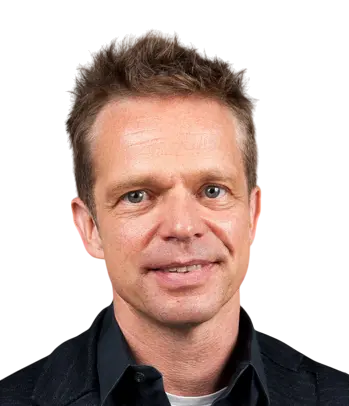
Olaf T.
Last position:
CTO, Shareholder, Agile Coach, Product Owner at fluidx digital GmbH
- Development and rollout of a browser-based platform for camera streaming, augmented reality (AR), and visual computing
- Device-independent camera streaming for smartphones, tablets, desktop PCs, as well as VR and AR headsets
- Ensuring GDPR-compliant hosting in Open Telekom Cloud and other sovereign cloud providers
- Intuitive visual and collaborative features to increase efficiency and integrate smoothly into existing business software
Frank H.

Last position:
Project Manager Database Upgrade at Bank
- Planning, coordination and tracking of the work for database administration (DBA)
- Coordination with the application developers and test managers (QA) involved in the project
- Migration of the existing databases in several stages
- Coordination with and provision of information to stakeholders
- Technologies: MariaDB
- Tools: MS Office, Confluence, Jira
- Methods: Project management according to the customer-specific procedure
- Project language: English / German
Florian E.

Last position:
Lead Software Engineer
- In this role, I was responsible as Lead Software Engineer for automating various meat production lines.
- My focus was on developing highly available (High Availability) systems using C/C++.
- I also implemented and supported container orchestration with Kubernetes to ensure smooth and scalable production operations.
Kai K.

Last position:
OpenAI Integration at Akademische Arbeitsgemeinschaft Verlagsgesellschaft mbH
- OpenAI chatbot for German tax content
- Chat backend with Python on Azure
- Retrieval augmented generation with vector database
- Flutter frontend
Bernhard D.

Last position:
Enterprise Architect. And responsible for the cross-functional architecture as well as all domains with a focus on the sales at Süddeutsche Krankenversicherung
Creation of business and technical concepts as well as support for enterprise architecture management as part of the migration to the Adesso standard insurance solutions and the renewal of surrounding systems
Interface definitions
Business analysis and creation of the business concepts for input management and sales
Creation of architecture guidelines and processes
Processing technical and business decisions in the architecture board
Definition of service processes and system management aspects
Creation of the technical target operating model
Creation of an integration architecture for AI/LLMs from the providers Commasoft and Insiders
CommaSoft (Alan) webpages and web services
Insiders for Smartfix based on web services
Creation of a question catalog for a security/regulatory check.
Analysis of threats using threat modeling / STRIDE incl. creation of a set of measures to secure the systems
System environment: Jira, Confluence, Java, Enterprise Architect, VAIT/DORA, KritisV, GDPR, IT ServiceMgmt, Adesso Ecosphere and Insure Health, DoPIX and successor product, SmartFix, SmartFlow, Zabas, Kolumbus, Clarc archive, BiPRO, AI / LLM, MS Azure, AWS, TOM/FMO
Daniel S.

Last position:
DevOps Engineer / Cloud Infrastructure Engineer at ComputerStack GmbH
- Provisioned a Kubernetes platform on Open Telekom Cloud CCE with comprehensive network isolation
- Built a VPC architecture with public, private, and data subnets
- Integrated managed services: RDS PostgreSQL, DCS Redis, DMS Apache Kafka
- Implemented monitoring with Cloud Eye and Log Tank Service
IMPACT: Cloud Infrastructure Engineer delivered a production-ready platform in 5 days with full network security isolation
Hasan K.

Last position:
Customer Project Manager at Nokia Networks
- Orange France - APEX
- Network APIs testing, NEF deployment on AWS (SaaS)
- Network APIs testing via NEF deployment on fCaaS (Orange Cloud, OTC)
- Orange Moldova Cloud SDM and IMS swap project
- Telenor SCIP cloudification project (case solution management with R&D)
Discover over 15,000 top freelancers


Statistics of experts using Open Telekom Cloud
Aggregated from the professional profiles of matched freelancers.

Experience
20 years

Position duration
1.5 years

Positions per freelancer
14

Top business areas
Information Technology, Product Development, Operations

Top industries
Information Technology, Banking and Finance, Telecommunication

Certification focus areas
Information Technology, Project Management, Business Intelligence

Bachelor's degree or higher
80%

Master's degree or higher
50%

Doctorate
10%

Certifications per freelancer
10

Most common languages
German, English, French

Speak two or more languages
100%
Based on our profile pool as of 9 Oct 2026.
Daily rate distribution
The chart shows how the daily rates of experts in this technology in Germany are distributed, based on recent contracts on our platform. Each bar covers a rate range — its height shows the share of experts charging within that range.
Average rates of experts in Germany using Open Telekom Cloud
Rates are based on recent contracts and do not include FRATCH margin.

The average daily rate is the mean of all daily rates from recent contracts of comparable freelancers on our platform.
The median daily rate is the middle value of all daily rates — half of comparable freelancers charge less, half charge more. Unlike the average, it is barely affected by outliers.
Calculated based on our freelancers’ daily rates as of 9 Oct 2026. Actual rates may vary depending on seniority level, experience, skill specialization, project complexity, and engagement length.
Open Telekom Cloud experts industry focus
See which industries our matched freelancers work in most often — every figure is calculated live from the freelancers on FRATCH.
- Information Technology (100%)
- Banking and Finance (67%)
- Telecommunication (50%)
- Transportation (42%)
- Automotive (33%)
- Insurance (33%)
- Manufacturing (33%)
- Media and Entertainment (33%)
Please note that freelancers can work across multiple industries, so percentages overlap.
About the technology
Cloud foundation
Open Telekom Cloud is a public cloud service operated by Deutsche Telekom and built on Huawei Cloud technology. It provides compute, storage, networking, databases, container services and security capabilities for enterprise workloads. Companies use it to host applications, modernize infrastructure and run regulated data services in European environments.
Services and architecture
Professionals work across Elastic Cloud Server, Object Storage Service, Virtual Private Cloud, Relational Database Service and Cloud Container Engine. They design networks, identity controls, backup strategies and highly available application landscapes. OpenStack concepts and Huawei Cloud service patterns are useful when shaping the platform around existing infrastructure.
Automation toolkit
Strong specialists combine Open Telekom Cloud with infrastructure-as-code and delivery tooling. Common work includes Terraform modules, Ansible automation, Kubernetes operations, Helm releases, Git-based pipelines and observability with logs, metrics and alerts. They also connect cloud resources to enterprise identity, DNS, certificates and monitoring systems.
Typical delivery work
- Migrate virtual machines and databases from on-premises environments
- Build landing zones with networks, access policies and account structures
- Deploy containerized services through Cloud Container Engine
- Create backup, recovery and business-continuity processes
- Establish automated provisioning and release workflows
Germany-based organizations often involve specialists when cloud adoption must align with internal security, procurement and operations processes. Remote collaboration works well for architecture, automation and documentation, while on-site sessions can help with workshops, legacy systems and stakeholder coordination.
When to bring in expertise
Freelance expertise is valuable during a first migration, a platform redesign or a period of rapid delivery. Companies also seek support when internal teams need help with capacity planning, cost controls, access models or incident readiness. A specialist can assess the current estate, define a practical target architecture and leave behind maintainable automation.
Signs of quality
Look for professionals who can explain trade-offs between managed services, virtual machines and Kubernetes rather than simply naming products. Relevant evidence includes secure network designs, repeatable Terraform or Ansible automation, tested recovery procedures and clear operational runbooks. Experience with German teams, German-language workshops or remote collaboration across time zones can simplify delivery.

Frequently asked questions
Before you brief your next project: the most common questions about Open Telekom Cloud.

Open Telekom Cloud is used to host business applications, virtual machines, databases, backups and containerized workloads. Companies also use it for data platforms, disaster recovery, development environments and gradual migration from on-premises infrastructure.
Compared with AWS, Azure or Google Cloud, Open Telekom Cloud is often considered when European operations, Deutsche Telekom relationships or specific data-residency requirements matter. The right choice depends on required services, existing skills, compliance needs, connectivity and the portability of the workload.
A strong Open Telekom Cloud specialist usually brings knowledge of networking, Linux, identity and access management, Kubernetes, Terraform or Ansible, CI/CD and observability. OpenStack experience can also help when teams connect cloud resources with established private-cloud practices.
The level of experience depends on the scope. A simple workload migration may need focused knowledge of compute, storage and networking, while a multi-account platform or regulated production environment requires proven architecture, security, automation and recovery skills.
Yes. Open Telekom Cloud architecture, provisioning, monitoring and documentation are well suited to remote collaboration from Germany. On-site work can still help with discovery workshops, data-center dependencies, legacy integrations and alignment with operations teams.
Ask for concrete examples involving the services your project needs, such as Elastic Cloud Server, Object Storage Service, virtual networks or Cloud Container Engine. Discuss security boundaries, automation ownership, migration planning, recovery testing and the operational handover before the engagement begins.
A capable Open Telekom Cloud professional can explain design decisions, document dependencies and show how changes are tested and rolled back. Look for practical evidence such as reusable infrastructure code, least-privilege access, meaningful monitoring and recovery exercises rather than a list of product names.
Freelancers working with Open Telekom Cloud should be comfortable with its console, APIs, identity model, networking services and automation options. They should also clarify the client’s region, support model, language expectations and access process, especially when collaborating remotely with teams in Germany.
The average hourly rate of freelancers in Germany who have used Open Telekom Cloud in their recent projects is 114 €, which corresponds to a daily rate of about 914 € based on an 8-hour working day.
Of the freelancers in Germany who have used Open Telekom Cloud in their recent projects, 80% hold at least a Bachelor's degree, 50% hold at least a Master's degree, and 10% hold a doctorate.
On average, freelancers in Germany who have used Open Telekom Cloud in their recent projects have 20 years of professional experience, with a single engagement typically lasting around 1.5 years.
The most common languages among freelancers in Germany who have used Open Telekom Cloud in their recent projects are German (100%), English (100%), and French (33%).
The most common industries among freelancers in Germany who have used Open Telekom Cloud in their recent projects are Information Technology (100%), Banking and Finance (67%), and Telecommunication (50%).
The most common business areas among freelancers in Germany who have used Open Telekom Cloud in their recent projects are Information Technology (100%), Product Development (92%), and Operations (75%).
Main locations of FRATCH Experts, who have recently used Open Telekom Cloud
Our freelancers and interim experts are at home across the DACH region — available on-site in the major business hubs or fully remote. Choose a location to discover matched specialists, local market insights and up-to-date availability.
 Berlin Hamburg Munich Cologne Frankfurt Stuttgart Dusseldorf Leipzig Dortmund Essen Bremen Dresden Hanover Nuremberg
  Frankfurt
  Dusseldorf
 Request a free demo
Get in touch with the FRATCH team and we will get back to you within 4 hours.
Would you rather directly get in touch?
We always have the time for a call or email!

Philipp Thomaschewski
FRATCH CEO

