


Object-Oriented Programming Experts in Cologne
matched in minutes from over 15,000 CVsHire experts who design domain models, build maintainable applications and work across Java, C#, C++, Python or Ruby. FRATCH connects you with vetted, available freelancers through fast, precise AI matching.

Meet FRATCH Experts in Cologne, who have recently used Object-Oriented Programming
Jens R.

Last position:
Platform Architect & Senior Developer at Direct client, industrial measurement technology, medium-sized company
- Technical leadership across hardware, firmware, and software teams; scope: hardware/firmware team (4 people) and leadership group (5 people)
- Consolidated and documented a product family that had grown over more than 15 years and aligned it with CRA compliance — from the bare-metal I/O module to the cloud interface.
- Provided the most important customer product with the essential requirements and architecture documentation within two months — for a firmware landscape that had grown over more than 15 years. It now supports the customer’s modernization strategy.
- Established a monthly reporting line to the supervisory board and executive board within three months: nine meetings since 12/2025. The report itself is versioned and built from the CI pipeline; it is based on automatically collected activity and release data instead of assessments.
- Built a container-based CI/CD infrastructure from scratch: cross-compilation, host tests, and documentation builds in one continuous pipeline.
- Introduced declarative QA gates for DevOps and development artifacts — from the start using lefthook instead of pre-commit, executed in a dedicated container image.
Technologies used: arc42, req42, tpo42, docToolchain, PlantUML, ArchiMate, C4 model, ADR, C, C++ (GTest), CMake, Bare Metal (ARM Cortex-M3/M7), OCI containers, Jenkins, lefthook, Prometheus, Grafana, SBOM, CRA, OPC, SCADA, PLC integration, IPv6 migration, Zero Trust, Sociocracy 3.0, Cynefin
Burhan D.

Last position:
Enterprise Architect & Solution Architect at DB Netz AG
With project PRIZMA, DB will modernize its infrastructure on the one hand, and develop a fail-safe IT landscape on the other hand, which can be restored quickly and securely in case of a disaster.
- Capture current architectures of existing systems as well as methodical consulting and development of target architectures
- Deepen and maintain the building plan / target IT landscape
- Implement technical architecture concepts & architecture descriptions
- Implement migration concepts for updating and further developing the platform and information systems
- Assess submitted improvement suggestions as part of the project
- Capability management: identify capability gaps, develop target visions, and support transformation planning within the enterprise architecture.
- Create a compatibility matrix of the components in use and compare dependencies of specific versions
- Create an IT concept for extending the platform with the following topics: hardware and software requirements, security, licensing, high availability, load balancing, backup & recovery, update strategy, monitoring integration, etc.
- Coordinate with business architects as well as technical architects from the cross-functional architecture area of the PRISMA program for the topics (backup, Active Directory, monitoring, Citrix, and business applications ...)
- Status meetings and alignment of project planning with the Release Train Engineer / Project Manager
- Advise the Release Train Engineer / Project Manager in identifying project risks
- Advise the System Architect Engineers in steering the implementation of the concept
- Implement the IT concept
- Document the infrastructure
Label: MS Project, LINUX, Windows, ORACLE, Java, REST, SharePoint, Microsoft Exchange, UML, Enterprise Architect, BPMN, AZURE, AWS, V-MODEL, Micro Service, VisualStudio, SAP S/4HANA, SCRUM(SAFE), ESB (TIBCO), Python, Innovator, LeanIX (TOGAF), Ansible, Ansible Tower, Ansible Automation, ROBOT, SpringBoot
Michael K.

Last position:
Enterprise Architect, Lead Architect of the transformation program and coach at Swiss Ministry
- Development of the overall architecture
- Support for the respective workstreams in developing architectures in the areas of infrastructure, data centers, security, and network topology
- Management of the architect pool
- Support for program management in setting up the transformation project based on agile methods
- Consideration of regulatory requirements for IT projects in the federal administration
Alexander K.

Last position:
Software Tester at Buhl Tax Service GmbH
- AI-assisted creation of test cases and test data
- Creation of test cases based on requirements
- Execution of manual tests
- Defect documentation, retesting and tracking
Technologies & Tools: SCRUM, Jira, Confluence, Zephyr Scale
Nawfal C.

Last position:
Internship in Software Development at Haeger Consulting
- working in a team using an agile method (Scrum)
- Backend development in Java (Spring Boot)
- Frontend development in Angular
Jens H.

Last position:
#52 Test Manager in Safety-Critical Infrastructure at Telecommunications Company
- Network elements, network, operational and operator-related systems
- Supporting around 20 different products (managed agile)
- Requirements analysis and management (functional and non-functional)
- Test concept and planning (scope, test phases, effort, schedule, resources, organization, etc.)
- Aligning approach with clients and service providers
- Managing and assisting in creation of test cases for system, integration and end-to-end tests
- Guiding and supporting test execution
- Defect management and planning bug fixes with external providers
- Preparing and facilitating workshops
- Regular reporting and creating automated test reports
- Further development of agile testing methodology and configuration of supporting tools
- Conceptual support in developing a quality seal for rating product and service quality of internal and external providers
- Requirements engineering based on ISO/IEC 25010, Scrum, SaFE
- BMC Remedy, Atlassian Confluence, Atlassian Jira (including plugins Xray, Structure), Microsoft Office (incl. Visio), Obsidian, doxis document management system, Gitlab, Obsidian
Vladimir M.

Last position:
Developer at Financial services provider
- Support and further development of a framework for developing applications in a banking association: DynS/OSPE
- Migration of the framework to Java 11 and Java 17
- Java8, Java11 and Java17, Spring, Spring-Batch, Spring WebServices, Spring-Security, Spring-Data, JPA, Hibernate, OpenSource libraries etc.
- XML, JAXB, JSON, REST and SOAP services, DB2, Oracle, WebSphere or Liberty AS, FreeMaker, Junit, mock libraries, JaCoCo, Maven, IntelliJ, Eclipse, GitHub, SVN, Jira
Peter B.

Last position:
Data Warehouse Consultant (Development and Analysis) at Atruvia AG
- Developed and enhanced ETL loading jobs with IBM DataStage and optimized SQL in an IBM DB2 environment as part of the Agree21 data migration
- Analyzed data quality and developed test procedures
- Created PowerShell scripts and documented GIT deployment processes
- Technologies: RedHat Linux, IBM DB2 with DBVisualizer, IBM InfoSphere DataStage 11.7, JIRA, TortoiseGIT, TortoiseSVN, PowerShell scripts
Louis N.

Last position:
Specialist in Adobe Experience Manager & Microservices at Nguenkam Consulting & Engineering
Java 11/21
Springboot
Swagger/OpenApi
Azure Pipelines
Trivy Integration
Apache Sling
OSGI
Java Content Repository (JCR)
Apache Jackrabbit Oak
Adobe HTL
GraphQL
Maven
GitLab
IntelliJ
Azure Cloud
Azure DevOps
Terraform
AEM specialist in the Scrum team
Development and deployment of microservices via Open API interfaces
Operation of microservices in the Azure Cloud
Implementation of AEM modules and integration with microservices
Member of the knowledge transfer team and a backend coordination team
Dirk H.

Last position:
Owner at Soorce GmbH
- On secondment to REWE digital GmbH
- Agile team coach for a brick-and-mortar retail team
- Coaching, lateral leadership and facilitation
- Establishing agile values and applying agile methods
- Team development and conflict moderation
- Facilitating company-wide strategy workshops
- Technologies: Kanban, Scrum, Microsoft Teams, Liberating Structures, Jira, Confluence, Concept Board, Miro, Test-Driven Development, OOP, DBMS (SQL, MySQL, MariaDB, PostgreSQL)
Ingo C.

Last position:
Founder, freelance CMS expert at CMS Consulting Cousin
- Freelance work as a CMS expert
Muhammet T.
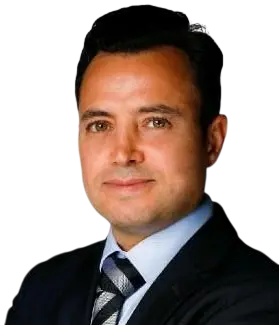
Last position:
Head of IT at Audit Association of German Banks
- Overall responsibility for the strategic and operational realignment and management, further development of IT with direct reporting to the executive board
- Cloud transformation projects: MS365, Exchange Online, SharePoint Cloud, infrastructure cloud migration
- Leading an IT organization with around 20 employees
- Realigning IT as a strategic enabler for the entire organization
- Developing and implementing a holistic IT strategy ("Cloud First") including governance, security, and operational models
- Building a modern service management framework (ITIL) and effective control mechanisms
- Strategically managing software development and delivery (DevOps, CI/CD)
- Implementing cloud and digitization strategies
- Strategic planning and IT roadmap
- Optimizing IT infrastructure
- Budget and cost management
- Infrastructure migration: on-premise to on-premise (colocation)
- Overall responsibility for budget, cost optimization, resource and staff development
- Managing central digitization and transformation initiatives as well as board-level processes
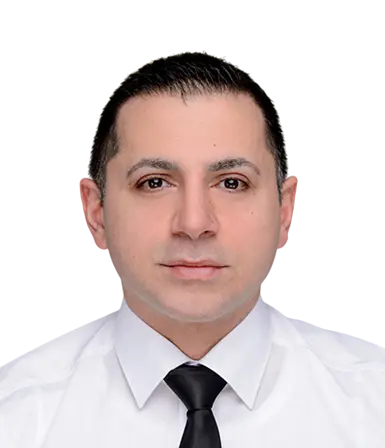
Last position:
Rewe Digital
- Creation of Spring Boot integration tests
- Creation of JUnit tests for the coupon system
- Creation of component tests for Kafka topics
- Creation of CI/CD pipeline scripts
- Creation of UI tests with Playwright
- Creation of UI tests with Cypress
- Review of developer unit tests
- Planning the test architecture for integration tests
- Creation of the test automation concept
- Evaluation and creation of test reports
René P.

Last position:
CIO at clics GmbH
- Software development
- Team management
- Project management
Alexander S.

Last position:
TYPO3 Senior Fullstack Developer, Backend & Frontend at Vergleich.de Gesellschaft für Verbraucherinformation mbH via HALIAN GmbH
- Typoscript
- Extbase
- Fluid
- Typescript
- requireJS
- WebVital
Discover over 15,000 top freelancers


Statistics of experts using Object-Oriented Programming
Aggregated from the professional profiles of matched freelancers.

Experience
26 years (Germany: 22 years)

Position duration
3.8 years (Germany: 3.2 years)

Positions per freelancer
19 (Germany: 15)

Top business areas
Information Technology, Product Development, Project Management

Top industries
Information Technology, Banking and Finance, Insurance

Certification focus areas
Information Technology, Project Management, Product Development

Bachelor's degree or higher
75% (Germany: 89%)

Master's degree or higher
63% (Germany: 60%)

Doctorate
13% (Germany: 8%)

Certifications per freelancer
3

Most common languages
German, English, French

Speak two or more languages
100% (Germany: 95%)
Based on our profile pool as of 9 Oct 2026.
Daily rate distribution
The chart shows how the daily rates of experts in this technology in Cologne are distributed, based on recent contracts on our platform. Each bar covers a rate range — its height shows the share of experts charging within that range.
Average rates of experts in Cologne using Object-Oriented Programming
Rates are based on recent contracts and do not include FRATCH margin.

The average daily rate is the mean of all daily rates from recent contracts of comparable freelancers on our platform.
The median daily rate is the middle value of all daily rates — half of comparable freelancers charge less, half charge more. Unlike the average, it is barely affected by outliers.
Calculated based on our freelancers’ daily rates as of 9 Oct 2026. Actual rates may vary depending on seniority level, experience, skill specialization, project complexity, and engagement length.
Object-Oriented Programming experts industry focus
See which industries our matched freelancers work in most often — every figure is calculated live from the freelancers on FRATCH.
- Information Technology (100%)
- Banking and Finance (60%)
- Insurance (40%)
- Government and Administration (40%)
- Telecommunication (40%)
- Aerospace and Defense (33%)
- Automotive (33%)
- Healthcare (33%)
Please note that freelancers can work across multiple industries, so percentages overlap.
About the technology
Core concept
Object-Oriented Programming, commonly called OOP, organizes software around objects that combine state and behavior. Classes define reusable structures, while encapsulation protects internal data and inheritance or composition supports specialization. The approach helps teams represent business concepts clearly and keep changing code manageable.
What it builds
OOP is used for business applications, APIs, desktop software, mobile products, games and embedded systems. Its patterns are especially useful when software contains many interacting entities, rules and workflows.
- Domain models for complex business processes
- Services and APIs with clear responsibilities
- Reusable libraries and application components
- User interfaces with stateful behavior
Languages and tooling
Experts apply OOP through languages such as Java, C#, C++, Python, Ruby, Kotlin and Swift. They may work with Spring, .NET, Qt, Django or Rails, alongside testing frameworks, package managers, version control and continuous integration. The right practices depend on the language and system boundaries.
When expertise matters
Companies bring in freelance specialists when an existing codebase has tangled dependencies, weak tests or unclear domain logic. They can introduce a coherent object model, modernize legacy code, establish design conventions or support a critical delivery without disrupting the wider team. In Cologne, remote collaboration can combine with on-site workshops when product, business and technology stakeholders need close alignment.
Strong professional practice
A strong professional chooses objects and abstractions because they clarify a real problem, not because a pattern is fashionable. They understand cohesion, coupling, interfaces, composition, polymorphism and dependency injection. They also connect design decisions to persistence, APIs, security, performance and observability.
- Explains trade-offs in plain language
- Tests behavior at the right boundaries
- Refactors safely in unfamiliar code
- Keeps models aligned with domain language
Choosing the right specialist
Review examples that show more than isolated classes or framework knowledge. Look for evidence of sound domain modeling, readable interfaces, automated tests and careful handling of legacy constraints. Discuss how the specialist would investigate your codebase, communicate design choices and measure whether the resulting system is easier to change.

Frequently asked questions
Not sure where to start with Object-Oriented Programming? These answers cover the essentials.

Object-Oriented Programming is used to structure software around objects that hold data and behavior. It suits business systems, APIs, desktop applications, games, mobile software and embedded products where entities interact through defined responsibilities.
OOP models behavior through objects, encapsulation and collaboration between components. Functional programming emphasizes pure functions, immutable data and transformations; many modern systems combine both approaches rather than treating them as mutually exclusive.
Object-Oriented Programming expertise should be supported by software design, testing, version control and knowledge of the relevant language ecosystem. Experience with APIs, databases, dependency injection, refactoring and continuous integration is also valuable.
The right level of Object-Oriented Programming experience depends on system complexity, codebase condition and the specialist's responsibilities. A focused feature may need strong language and testing skills, while a legacy modernization requires proven judgment in modeling, refactoring and technical communication.
OOP projects can work effectively with remote teams when design decisions, code reviews and domain terminology are documented. Shared repositories, regular technical discussions and clear ownership reduce misunderstandings; Cologne-based teams can add on-site workshops when close stakeholder collaboration is useful.
Ask how the Object-Oriented Programming specialist handles changing requirements, shared state and dependencies. Strong answers connect abstractions to business needs, explain trade-offs, include testing strategies and show how the design remains understandable for the team.
Object-Oriented Programming is a design approach rather than a single language. It is central to Java, C#, C++ and Ruby, and is also widely used in Python, Kotlin, Swift and other languages that support classes or object-based abstractions.
OOP may be a poor fit when a problem is primarily a sequence of data transformations, requires highly predictable immutable state or benefits from a simple procedural flow. A capable specialist evaluates the domain and may combine object-oriented design with functional or procedural techniques.
The average hourly rate of freelancers in Cologne, Germany who have used Object-Oriented Programming in their recent projects is 100 €, which corresponds to a daily rate of about 800 € based on an 8-hour working day.
Of the freelancers in Cologne, Germany who have used Object-Oriented Programming in their recent projects, 75% hold at least a Bachelor's degree, 63% hold at least a Master's degree, and 13% hold a doctorate.
On average, freelancers in Cologne, Germany who have used Object-Oriented Programming in their recent projects have 26 years of professional experience, with a single engagement typically lasting around 3.8 years.
The most common languages among freelancers in Cologne, Germany who have used Object-Oriented Programming in their recent projects are German (100%), English (100%), and French (47%).
The most common industries among freelancers in Cologne, Germany who have used Object-Oriented Programming in their recent projects are Information Technology (100%), Banking and Finance (60%), and Insurance (40%).
The most common business areas among freelancers in Cologne, Germany who have used Object-Oriented Programming in their recent projects are Information Technology (100%), Product Development (87%), and Project Management (80%).
Main locations of FRATCH Experts, who have recently used Object-Oriented Programming
Our freelancers and interim experts are at home across the DACH region — available on-site in the major business hubs or fully remote. Choose a location to discover matched specialists, local market insights and up-to-date availability.


 Berlin
  Hamburg
  Munich
  Frankfurt
  Stuttgart
  Dusseldorf
  Dortmund
 Countries:
Request a free demo
Get in touch with the FRATCH team and we will get back to you within 4 hours.
Would you rather directly get in touch?
We always have the time for a call or email!

Philipp Thomaschewski
FRATCH CEO

