


MLOps Experts in Frankfurt
in minutes from over 15,000 CVs with the power of AI.Hire experts who turn machine learning into reliable production systems: model pipelines, deployment workflows, monitoring, retraining, and governance. Get fast, precise matching with vetted, available freelancers.

Meet FRATCH Experts in Frankfurt, who have recently used MLOps
Bardiya B.
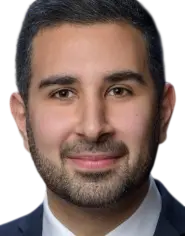
Last position:
Data Scientist at Rewe Digital GmbH
Statistical Forecasting Algorithm
- Improvement of an statistical probabilistic forecasting algorithm for sales + evaluation
- Migration from R/On-premise to Python/Snowflake
- Productionalization on Snowflake in cooperation with data engineers & DevOps
Monitoring Dashboard
- Data engineering for preparation & provisioning of necessary data/resources on Snowflake
- Development & deployment of a Streamlit dashboard in Snowflake
ML-based Probabilistic Forecasting on Vertex AI
- Development of a ML-based probabilistic forecasting algorithm from scratch
- Implementation of MLOps pipeline in Kubeflow on Google Cloud Vertex AI
Tech Stack: Python, Snowflake/Snowpark, R, Streamlit, Gitlab/Gitlab CICD, Terraform, Google Cloud, Vertex AI (aiplatform SDK, gcloud CLI, feature store, model registry, etc), kubeflow
Eduard V.

Last position:
Lead of workshop “Introduction to AI Development Tools” at Software company in Wiesbaden
- Presentation introducing generic A.I. and Large Language Models
- Explanation of legal frameworks (EU AI Act, US CLOUD Act, DSGVO)
- Systematic review of AI tools along the SDLC and holistic systems
- Comparison of on-prem LLMs vs. cloud-based solutions, as well as change management and works council considerations
- Moderation of the discussion and definition of next steps for introducing AI development tools
Anton R.

Last position:
AI-Engineer at Publicly traded company, industrial safety technology
- Designed and implemented the agent-based AI architecture for a company-wide platform to securely deploy LLM-based agents
- Designed and implemented end-to-end RAG pipelines from multiple sources: document preprocessing, chunking strategies for different document types, embeddings, retrieval with re-ranking, and robust prompt orchestration
- Developed a modular context engineering framework with skill architecture, context isolation, and dynamic resource management; human-in-the-loop control for enterprise tool integrations
- Built the CI/CD pipeline, testing strategy, tracing on the software side as well as automated LLM and agent evaluations, red team testing and tracing, and handed over to a reproducible production environment (ISO27001 and SOC2 compliant)
Mathew D.

Last position:
Data Science Expert and AI Strategist at Freelancer
- Built an API to ingest, clean, translate, and index EU tenders documents in Neo4j, enabling hybrid search with RAG and Cypher queries via a Streamlit dashboard
- Deployed the API on AWS Lightsail container services with CI/CD automation via GitHub Actions, ensuring stability through pytest unit and integration tests
- Designed and developed a comprehensive online course on data analysis using ChatGPT for professionals and learners, creating instructional videos and interactive Jupyter notebooks
- Utilized OBS and professional audio equipment to ensure high-quality video and audio content
- Led a CRM data normalization and cleaning project visualized via a Sankey diagram to aid customer understanding and pipeline development
- Implemented and validated a genAI-driven web crawling strategy on AWS, ensuring data quality, scalability, and CRM data augmentation
Leonard H.

Last position:
Freelance Software Engineer & Cloud Architect at Leonard Hußke - IT Solutions
- Evaluation of potential providers (Snowflake vs Databricks) and design of the analytics data platform using Databricks
- Data storage and ingestion layer with Amazon S3
- Creation of ETL processes and data transformations with AWS Glue and Databricks Notebooks
- Orchestration with AWS Glue Workflow, Databricks Workflow and Databricks DLT
- Processing of unstructured data including text, image and video
- Databricks workspace setup and administration
- Setting up a medallion architecture to ensure data quality
- Evaluation of possible BI tools (Power BI, AWS QuickSight, Tableau)
- Establishing MLOps using MLflow
- Introducing data governance and data lineage using Unity Catalog
Michael Y.
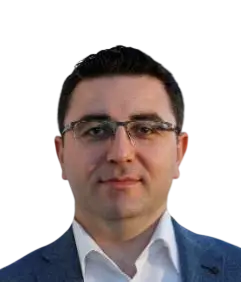
Last position:
Senior Consultant, Senior DevOps Engineer at DB Regio AG
- Supported implementation and operation of a portal used online and offline in customer-facing vehicles
- Automated processes by introducing CI/CD pipelines
- Provided enablement and methodological guidance for adopting software engineering best practices
- System environment: NestJS, Node.js, npm, AWS, Docker, Docker Swarm, GitLab CI, WhiteSource, PostgreSQL, Prometheus, Grafana, OpenSearch, REST API
Sibi L.

Last position:
Founder (Product Initiative) at Regu-AI
- Founded Regu-AI, an enterprise-grade AI governance and compliance platform integrating EU AI Act, ESG, and CSRD frameworks to help organizations operationalize responsible AI.
- Developed proprietary modules for AI Maturity Assessment, Measurability, and Battery Passport compliance.
- Built and scaled the product architecture and designed a 45-KPI AI governance index, positioning Regu-AI as a first mover in AI governance automation across Germany and the EU.
Discover over 15,000 top freelancers


Statistics of experts using MLOps
Aggregated from the professional profiles of matched freelancers.

Experience
10 years (Germany: 13 years)

Position duration
1.9 years (Germany: 2.9 years)

Positions per freelancer
8 (Germany: 9)

Top business areas
Information Technology, Product Development, Business Intelligence

Top industries
Information Technology, Professional Services, Banking and Finance

Certification focus areas
Information Technology, Business Intelligence, Research and Development

Bachelor's degree or higher
100% (Germany: 99%)

Master's degree or higher
67% (Germany: 78%)

Doctorate
33% (Germany: 24%)

Certifications per freelancer
6 (Germany: 3)

Most common languages
German, English, French

Speak two or more languages
100% (Germany: 97%)
Based on our profile pool as of 9 Oct 2026.
Daily rate distribution
The chart shows how the daily rates of experts in this technology in Frankfurt are distributed, based on recent contracts on our platform. Each bar covers a rate range — its height shows the share of experts charging within that range.
Average rates of experts in Frankfurt using MLOps
Rates are based on recent contracts and do not include FRATCH margin.

The average daily rate is the mean of all daily rates from recent contracts of comparable freelancers on our platform.
The median daily rate is the middle value of all daily rates — half of comparable freelancers charge less, half charge more. Unlike the average, it is barely affected by outliers.
Calculated based on our freelancers’ daily rates as of 9 Oct 2026. Actual rates may vary depending on seniority level, experience, skill specialization, project complexity, and engagement length.
MLOps experts industry focus
See which industries our matched freelancers work in most often — every figure is calculated live from the freelancers on FRATCH.
- Information Technology (86%)
- Professional Services (57%)
- Banking and Finance (43%)
- Manufacturing (43%)
- Advertising (29%)
- Education (29%)
- Energy (29%)
- Transportation (29%)
Please note that freelancers can work across multiple industries, so percentages overlap.
About the technology
Production MLOps
MLOps connects model work with real software delivery. It covers the path from training data to deployment, monitoring, and controlled retraining. Companies use it to keep models stable after release and to make machine learning repeatable across teams.
Typical delivery
- Training and inference pipelines
- Model packaging and deployment
- Monitoring for drift, latency, and data quality
- Reproducible experiments and versioning
- Rollback, approval, and release flows
Tooling stack
Strong specialists work with MLflow, Kubeflow, Airflow, Docker, Kubernetes, Terraform, and cloud ML services. They also understand feature stores, model registries, and CI/CD for data and models. The right stack depends on how much automation, scale, and governance the environment needs.
When to bring help
Teams usually need freelance MLOps expertise when models work in notebooks but not in production, when releases are slow, or when monitoring is weak. It also helps during platform redesign, cloud migration, or audit preparation. In Frankfurt, this is common in finance, logistics, and regulated enterprise environments.
What strong experts do
- Design pipelines that are easy to test and repeat
- Separate training, validation, and serving concerns
- Build clear observability for model behavior
- Document decisions for handover and governance
- Work well with data, software, and operations teams
What to look for
A good specialist knows both machine learning and delivery discipline. They can explain trade-offs around batch versus real-time scoring, cloud versus on-premise setups, and how to keep models reliable over time. For Frankfurt companies, clear communication in English and, when needed, German helps a lot.

Frequently asked questions
Before you brief your next project: the most common questions about MLOps.

MLOps covers the full lifecycle from data preparation and model training to deployment, monitoring, and retraining. It is the operating model that keeps machine learning usable after the first successful experiment. Most projects also include versioning, approval steps, and incident handling for model issues.
MLOps builds on DevOps ideas, but it adds data, model, and experiment management. A model can change behavior even when the code stays the same, so you need extra controls for drift, reproducibility, and validation. That makes the workflow more complex than standard software delivery.
A strong MLOps specialist often works with MLflow, Kubeflow, Airflow, Docker, Kubernetes, Terraform, and cloud ML services. They may also use feature stores, model registries, and monitoring tools for data quality and inference behavior. The best setup depends on whether the team needs batch jobs, real-time serving, or both.
The best MLOps freelancers usually combine machine learning knowledge with software delivery skills. Look for experience in Python, CI/CD, cloud infrastructure, containers, and observability. Data engineering and security awareness are also important when models depend on sensitive or fast-changing data.
A simple MLOps setup may only need one specialist to design pipelines and deployment flows. More complex environments often need someone who can work across data, infrastructure, and governance. The key is not the title but whether the person has shipped models into production and supported them after release.
Yes. MLOps work is often well suited to remote collaboration because much of it happens in code, pipelines, and infrastructure as code. In Frankfurt, on-site time can still help when teams need workshop sessions, access reviews, or close alignment with compliance and operations.
A good MLOps specialist can explain how they handled deployment, monitoring, and retraining in past work. Ask for concrete examples of model release flows, failure recovery, and how they measured stability over time. Clear documentation and practical trade-offs matter more than polished slide decks.
No. MLOps is useful anywhere machine learning has to run reliably, even in small teams. Smaller projects may only need a lightweight pipeline and basic monitoring, while larger setups need stricter governance and platform design. The right level depends on risk, scale, and how often models change.
The average hourly rate of freelancers in Frankfurt, Germany who have used MLOps in their recent projects is 118 €, which corresponds to a daily rate of about 945 € based on an 8-hour working day.
Of the freelancers in Frankfurt, Germany who have used MLOps in their recent projects, 100% hold at least a Bachelor's degree, 67% hold at least a Master's degree, and 33% hold a doctorate.
On average, freelancers in Frankfurt, Germany who have used MLOps in their recent projects have 10 years of professional experience, with a single engagement typically lasting around 1.9 years.
The most common languages among freelancers in Frankfurt, Germany who have used MLOps in their recent projects are German (100%), English (100%), and French (29%).
The most common industries among freelancers in Frankfurt, Germany who have used MLOps in their recent projects are Information Technology (86%), Professional Services (57%), and Banking and Finance (43%).
The most common business areas among freelancers in Frankfurt, Germany who have used MLOps in their recent projects are Information Technology (100%), Product Development (100%), and Business Intelligence (86%).
Main locations of FRATCH Experts, who have recently used MLOps
Our freelancers and interim experts are at home across the DACH region — available on-site in the major business hubs or fully remote. Choose a location to discover matched specialists, local market insights and up-to-date availability.


 Berlin
  Hamburg
  Munich
 Request a free demo
Get in touch with the FRATCH team and we will get back to you within 4 hours.
Would you rather directly get in touch?
We always have the time for a call or email!

Philipp Thomaschewski
FRATCH CEO

