


JBoss EAP Experts in Germany
for secure enterprise applications, matched in minutes with AIHire experts who configure JBoss EAP domains, modernize Java EE applications, and connect enterprise systems through messaging and APIs. FRATCH matches you quickly and precisely with vetted, available freelancers who fit your technical requirements.

Meet FRATCH Experts in Germany, who have recently used JBoss EAP
Timo H.

Last position:
Software Developer at Continentale Krankenversicherung AG
- Implementation of a REST-based web service for querying contract, claims, customer, and sales data as part of the Dialogmanager project.
- Data release is done in compliance with CoC requirements and individual user permissions from IAM (Identity and Access Management).
- Implementation using JBoss EAP 8.1 (JakartaEE 10) and Java 21 as well as JAX-RS, CDI, Microprofile-Config, Microprofile-OpenAPI.
Vitaliy R.

Last position:
DevOps GitOps (temp) at Signal Iduna
- Responsible for Openshift/Kubernetes on-prem administration and developer support.
- Developed URP infrastructure automation with Python, Ansible, Kustomize and ArgoCD, Argo Workflow/Events stack.
- Wrote smoke and load tests for URP infrastructure utilizing Python, Kustomize and ApplicationSets.
- Helped to set up and deploy URP infrastructure in Google Cloud, GKE.
- Set up monitoring for URP and ArgoCD stack with Splunk Cloud.
- Performed system administration tasks across RedHat Linux, Kubernetes/Openshift, ArgoCD, GitLab, Bitbucket Enterprise, Kafka and MongoDB.
Patrick W.

Last position:
AI Software Engineer at IppenMedia
- Analysis
- Consulting
- Software design
- Development
- Automation
- Testing
- Deployment
- Architecture, development and deployment of various proof-of-concept applications around the integration of current AI interfaces including conversational, realtime voice, images and videos
- Developed best practices for working with agentic systems and AI in practice
- Created code templates
Kyu-Wang L.

Last position:
Software Architect & Lead Software Engineer at Landesamt für Steuern Niedersachsen
The goal of BIENE is to provide a uniform program for tax collection for all states.
In tax collection, the aim is to collect the assessed taxes. This includes handling due dates, documenting incoming and outgoing payments, triggering reminders or refunds. Statute of limitations and payment reminders also play an important role. All payment transactions with banks and accounting are mapped in BIENE.
Setting up the architecture and coordinating the provisioning of development and test environments at the Hanover location
Installing and configuring environments on Linux servers (Apache Kafka, PostgreSQL)
Interface tasks: coordinating and aligning the integration of software products from other departments and their test data
Upgrading application server, JDK, Maven project structure
Environment coordination and build management
Implementing external interfaces
Implementing business requirements
Designing and implementing RESTful APIs and OpenAPI specifications
Designing and implementing microservice architecture
Setting up and maintaining CI/CD pipelines
Deploying applications on OpenShift
Creating technical documentation and diagrams
Working with SQL databases (Oracle and PostgreSQL)
Setting up authentication and authorization for the application and users
Containerizing the application (automated deployment via CI/CD pipeline)
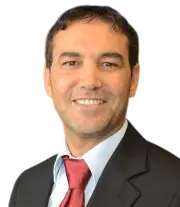
Allal K.
Last position:
Java Senior Full Stack Developer at Insurance ÖRAG
- Further development of a policy administration system (contract/claims) for the legal expenses insurer ÖRAG.
- My role: Senior Software Developer.
- The team consists of 12 developers.
- Technologies used: Java 8/21, Java EE, Quarkus, WebLogic, JPA, RabbitMQ, JTA, CI, CD, Jenkins, DB2, Maven, Jenkins, GIT (bitbucket) later GitLab, Junit, Elasticsearch, Mockito, Jira, SonarQube, Scrum, React, Workflow
- Migration and modernization of legacy systems: rewrote C and C++ code in Java to improve maintainability, scalability, and performance. Refactored Python into Java, including optimization and integration into modern architectures.
- Study on the use of AI (Codex) for implementing a Java feature. The goal is to compare the time spent and productivity of AI-supported development with a classic implementation by a developer. The results should show how strongly the use of AI affects development time and efficiency.
- Development of the following tariff calculators for the years 2024/2026: private, companies, doctors, farmers, owner-occupied G + H, landlords, traffic, club, top managers, sales representatives, special criminal law, savings bank, municipal, BayGT, doctors, Dehoga
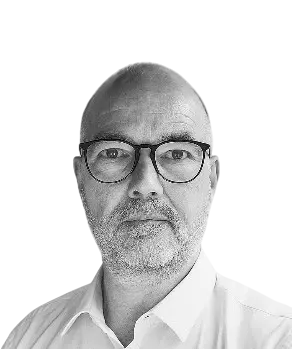
Ralf K.
Last position:
Senior Java Developer, Consultant at Dataport AÖR
- Maintenance and further development of the Java/Swing-based @rtus FormsEditor
- Design and development of a graphical formula editor based on Google Blockly for representing a project-specific DSL, including parsing and code generation
- Implementation of character-accurate synchronization between the editor and print preview to improve the user experience
- Technologies: Java 17/21, Swing, JavaFX, JBoss/Wildfly, JUnit, Mockito, Blockly, JPedal, ICEPDF, Eclipse
Markus G.

Last position:
Full Stack Developer at REWE Digital
- A warehouse valuation system was reimplemented using Java, Spring Boot, and Camunda. The backend solution focuses on integration and batch calculations, the frontend on managing formulas and reviewing results.
- Java 21
- Spring Boot
- JPA
- Maven
- REST
- Kafka
- PostgreSQL
- DB2
- Liquibase
- Google Cloud Storage
- Keycloak
- GitLab CI/CD
- Helm
- Terragrunt
- SonarQube
- Angular
- IntelliJ
- JUnit 5
- Mockito
- Open API
Nikhil G.

Last position:
Co-founder / Solution Architect at Lima Care GmbH
- Developed a comprehensive business concept for a medical fall detection device based on a patented process registered in Germany
- Identified and collected use cases for medical device deployment in residential buildings and healthcare provider facilities
- Expanded the product scope to industry standards such as HL7/FHIR and designed a product based on modern communication protocols for IIoT
- Supported offshoring activities, defined SLA and scope-of-work documents for development teams after selecting various vendors
- Identified and selected hardware components (Terrabee, E-Con Systems) for LIDAR/TDOA functions
- Defined integrated AI features and LLM models for patient fall detection as well as AI-based audio triggers
- Oversaw the implementation of algorithms for object detection, fall detection, and false alarm identification
Manfred S.

Last position:
Senior System Engineer Linux at DB InfraGo AG
- Set up and updated virtual machines for railway operations infrastructure.
- Used VMWare vSphere 6–8, Veeam Backup, Microsoft Active Directory, DNS, NPS, and WSUS.
- Used RedHat Satellite Server, rSyslog Server, Icinga2, Postfix, Tacacs, Ansible, and Ansible Automation Platform.
- Operated HPE rack servers and HPE Synergy blade servers with Meinberg NTP Server, Brocade FC, and Cisco Nexus 9000.
Rolf M.

Last position:
Lead Developer and Reviewer of Specialized Applications for the 2021 Census Project at Federal Statistical Office
- Kubernetes, AWS Cloud, Docker, RESTful Services, ActiveMQ, Oracle Advanced Queuing, JBoss EAP, Spring Batch, Git, Keycloak, Kafka, Maven
- Set up CI/CD pipelines with Jenkins
- Developed automated integration tests
- Performed DevOps tasks
- Regularly performed static code analyses during development on all releases of the Census specialized applications using SonarQube
- Set up an R server for household generation
- Set up a Kafka server for the CVTS application
- Set up a Keycloak instance
- Set up a Jira instance to carry out the Jira migration
- Set up an IRI Workbench instance and Cosort for test data creation
- Set up test systems for Java web applications with JBoss8, JDK17 and Oracle and MySQL databases
- Set up the associated Oracle databases, including functionally relevant data
- Identified weaknesses in the technical communication between the specialized applications
- Built extensive business and technical knowledge of all Census specialized applications
- Supported and advised the departments on Census business processes in pre-production and production
- Performed load and performance tests with JMeter and Bash scripting
Dmitry V.

Last position:
Fullstack Software Developer at Mercedes-Benz Tech Innovation
- Backend development of the cloud-based microservice
- Frontend development of the microfrontend
- Migration of the cloud backend environment
- Rollout of the distributed high-availability Privacy Data Service
- Technologies: Java, Kotlin, Spring Boot, REST Services, Kubernetes, Microsoft Azure, Cloud Security, OpenAPI, Postman, JavaScript, Vue.js, AngularJS, TypeScript, Micro Frontend, Redis, Kibana, Grafana, CI/CD, GitHub Actions, Jenkins, Helm Charts, Sec-Hub, Black Duck, Docker, Maven, Git, Scrum
Martin E.
Last position:
Software Developer at Atruvia AG
- Designing and creating a service board and kitchen board for company cafeterias to coordinate and process orders and preparation.
- Languages: Java 17, JavaScript, TypeScript.
- Frameworks: Spring Boot 3.4, JPA/Hibernate, Angular 19.
- Tools: Maven, Jira, Confluence, Jenkins.
- Testing/QA: JUnit, Cypress.
- Technologies: OpenAPI, REST, JSON, OpenID.
- Databases: Oracle.
- Cloud/Container: Tomcat 10.1, Payara.
- Operating Systems: Windows, Linux.
Janusz M.

Last position:
IoT Edge Computing / Self-Driving-Cars at Automotive consulting company
- Platform: Python ecosystem, RHEL 8, K10, AWS IoT Core, AWS Lambda, MLOps
- Software: Java JEE/cloud, IntelliJ IDEA, AWS IoT Core, AWS Edge and Lambda, AWS SageMaker SDK, Docker Compose, Kubernetes, OpenShift 4, Tekton, Flux, Helm charts, JSON/XML technology, Nginx, Apache Spark, OpenAI (GPT Plus, DALL-E 3, Whisper), GAN, GitHub Copilot, AI/machine and deep learning, Jupyter notebooks, TensorFlow 2, Colab, Keras API, Prometheus, Grafana, Conda, Python 3.9, PySci stack (NumPy, pandas, Scikit-learn, matplotlib)
- Responsible for webinar:
- IoT edge computing: architecture, components, resources, management
- IoT edge computing with MicroK8s, designing and creating flows/diagrams for AWS, three-step model for IoT ecosystem
- IoT processes, connectivity, data transfer and deployment, security
- Optimization of edge computing for IoT networks and services (AWS SQS queue, SNS notifications, events, analytics, buttons, device management/defender, Things Graph)
- Machine/deep learning frameworks (models, training, pipeline optimization, deployment in the cloud/at the edge (OpenShift), monitoring workloads with Prometheus and Grafana)
- Performance optimization for low latency/resilience using adaptive ML/DL/RL models for customer IoT data
- Analysis of large sensor data sets with Apache Spark, Kafka clusters
- Kasten K10 data management platform on Kubernetes multi-cluster with Helm chart, deployment, backup/disaster recovery (RTO/RPO), data lifecycle and security management
- Implementation of multilayer artificial neural network (ANN) with TensorFlow 2 and Colab for regression and classification; data analysis and provisioning for applications; development of models for testing and training, deployment of models
- Automation of business streamline processes with AI (Azure OpenAI, Discord bots/Zapier apps AI assistants (IntelliJ, GitHub Copilot))
Hans L.
Last position:
Public administration
- Development of web services for processing vehicle registrations (registration, transfer, deregistration)
- Implemented with Spring Boot, JMS (ActiveMQ), Oracle, Tomcat/JBoss, TomEE, OpenSearch
Discover over 15,000 top freelancers


Statistics of experts using JBoss EAP
Aggregated from the professional profiles of matched freelancers.

Experience
25 years

Position duration
2.1 years

Positions per freelancer
15

Top business areas
Information Technology, Product Development, Quality Assurance

Top industries
Information Technology, Banking and Finance, Government and Administration

Certification focus areas
Information Technology, Product Development, Operations

Bachelor's degree or higher
90%

Master's degree or higher
60%

Doctorate
10%

Certifications per freelancer
2

Most common languages
German, English, French

Speak two or more languages
93%
Based on our profile pool as of 9 Oct 2026.
Daily rate distribution
The chart shows how the daily rates of experts in this technology in Germany are distributed, based on recent contracts on our platform. Each bar covers a rate range — its height shows the share of experts charging within that range.
Average rates of experts in Germany using JBoss EAP
Rates are based on recent contracts and do not include FRATCH margin.

The average daily rate is the mean of all daily rates from recent contracts of comparable freelancers on our platform.
The median daily rate is the middle value of all daily rates — half of comparable freelancers charge less, half charge more. Unlike the average, it is barely affected by outliers.
Calculated based on our freelancers’ daily rates as of 9 Oct 2026. Actual rates may vary depending on seniority level, experience, skill specialization, project complexity, and engagement length.
JBoss EAP experts industry focus
See which industries our matched freelancers work in most often — every figure is calculated live from the freelancers on FRATCH.
- Information Technology (86%)
- Banking and Finance (79%)
- Government and Administration (71%)
- Telecommunication (50%)
- Insurance (43%)
- Retail (43%)
- Automotive (36%)
- Transportation (36%)
Please note that freelancers can work across multiple industries, so percentages overlap.
About the technology
Enterprise Java Platform
JBoss EAP is Red Hat’s supported application server for enterprise Java workloads. It runs Jakarta EE and Java EE applications, including transactional web services, APIs, portals and integration services. Companies use it when reliability, security and controlled operations matter.
Applications and Delivery
JBoss EAP specialists deliver and maintain systems such as:
- REST and SOAP services for internal and external consumers
- Web applications with servlet, CDI, JPA and JMS components
- Transaction-heavy systems connected to relational databases
- Deployments across standalone servers or managed domains
- Upgrades from older JBoss AS or Red Hat middleware estates
They handle packaging, deployment descriptors, datasources, connection pools and application configuration. They also support release processes from development through production.
Red Hat Ecosystem
The platform fits closely with Red Hat Enterprise Linux, Red Hat subscriptions and enterprise support processes. Its ecosystem includes Elytron security, Infinispan caching, ActiveMQ Artemis messaging, RESTEasy and MicroProfile capabilities. Specialists may also work with Maven, Jenkins, Ansible, containers and OpenShift when applications move toward automated delivery.
When Specialists Help
Companies often bring in freelance JBoss EAP expertise during migrations, platform upgrades, production incidents or major application releases. They may need to resolve classloading conflicts, tune JVM and server settings, define high-availability strategies or replace unsupported configuration. In Germany, remote collaboration is common, while regulated or complex enterprise environments may require on-site workshops and German-language communication.
Skills That Matter
Strong professionals understand both the server and the applications running on it. Look for experience with Java, Jakarta EE or Java EE APIs, SQL databases, messaging, transactions, authentication and TLS. Useful adjacent skills include Linux operations, networking, Git, CI/CD, Kubernetes and OpenShift. They should explain configuration choices clearly and document changes for internal teams.
Quality in Practice
A capable JBoss EAP professional starts by mapping the current topology, application dependencies and operational risks. They test deployments, failover, security rules and rollback procedures rather than changing production settings blindly. Good delivery includes reproducible configuration, useful monitoring, clear runbooks and a migration plan that respects the differences between JBoss EAP, WildFly and older JBoss AS installations.

Frequently asked questions
Quick answers to the questions that come up most around JBoss EAP.

JBoss EAP is an enterprise application server for running Java and Jakarta EE applications. It commonly hosts web applications, REST and SOAP services, transactional systems, messaging workloads and integration layers that need managed security and reliable operations.
JBoss EAP is Red Hat’s supported and subscription-based enterprise distribution, while WildFly is the upstream community project. Their technologies overlap, but release timing, support terms, tested components and long-term maintenance differ.
A strong JBoss EAP freelancer usually combines application-server knowledge with Java, Jakarta EE or Java EE, SQL, Linux and network troubleshooting. Experience with Maven, CI/CD, Ansible, containers, OpenShift, messaging and identity systems can be important for larger environments.
The right level depends on the scope. A simple deployment may need focused configuration skills, while a migration, clustered production system or security redesign calls for a professional who has handled comparable topology, application dependencies and operational risks.
JBoss EAP work can often be performed remotely from Germany through secure access, documentation and planned release windows. On-site sessions may still help with regulated systems, architecture workshops, incident response or coordination with infrastructure and operations teams.
JBoss EAP can suit organizations that need a governed Jakarta EE runtime, centralized administration, mature transactions and established Red Hat support. Spring Boot may be a better fit for independently deployable services, so the decision should reflect the existing platform, team skills and operational model.
Ask a JBoss EAP specialist to describe a similar deployment, including topology, security, monitoring, rollback and troubleshooting methods. Strong answers connect technical changes to business risk and include testable documentation rather than relying on product terminology alone.
A JBoss EAP migration typically includes inventorying applications, libraries, datasources, messaging and server configuration before testing compatibility. The professional should plan changes for namespaces, classloading, security, deployment automation and cutover, especially when moving from JBoss AS or an older EAP release.
The average hourly rate of freelancers in Germany who have used JBoss EAP in their recent projects is 100 €, which corresponds to a daily rate of about 800 € based on an 8-hour working day.
Of the freelancers in Germany who have used JBoss EAP in their recent projects, 90% hold at least a Bachelor's degree, 60% hold at least a Master's degree, and 10% hold a doctorate.
On average, freelancers in Germany who have used JBoss EAP in their recent projects have 25 years of professional experience, with a single engagement typically lasting around 2.1 years.
The most common languages among freelancers in Germany who have used JBoss EAP in their recent projects are German (100%), English (93%), and French (29%).
The most common industries among freelancers in Germany who have used JBoss EAP in their recent projects are Information Technology (86%), Banking and Finance (79%), and Government and Administration (71%).
The most common business areas among freelancers in Germany who have used JBoss EAP in their recent projects are Information Technology (100%), Product Development (100%), and Quality Assurance (64%).
Main locations of FRATCH Experts, who have recently used JBoss EAP
Our freelancers and interim experts are at home across the DACH region — available on-site in the major business hubs or fully remote. Choose a location to discover matched specialists, local market insights and up-to-date availability.
 Berlin Hamburg Munich Cologne Frankfurt Stuttgart Dusseldorf Leipzig Dortmund Essen Bremen Dresden Hanover Nuremberg
 Request a free demo
Get in touch with the FRATCH team and we will get back to you within 4 hours.
Would you rather directly get in touch?
We always have the time for a call or email!

Philipp Thomaschewski
FRATCH CEO

