


IEC 61131-3 Experts in Germany
matched in minutes from over 15,000 CVs with the power of AIWork with specialists who architect modular PLC software, implement complex motion sequences, and commission automated machinery. Access vetted, available freelance professionals matched rapidly to your plant requirements.

Meet FRATCH Experts in Germany, who have recently used IEC 61131-3
Jens R.
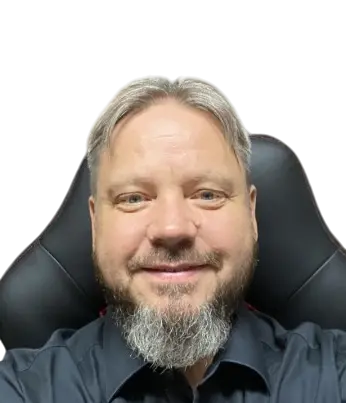
Last position:
Platform Architect & Senior Developer at Direct client, industrial measurement technology, medium-sized company
- Technical leadership across hardware, firmware, and software teams; scope: hardware/firmware team (4 people) and leadership group (5 people)
- Consolidated and documented a product family that had grown over more than 15 years and aligned it with CRA compliance — from the bare-metal I/O module to the cloud interface.
- Provided the most important customer product with the essential requirements and architecture documentation within two months — for a firmware landscape that had grown over more than 15 years. It now supports the customer’s modernization strategy.
- Established a monthly reporting line to the supervisory board and executive board within three months: nine meetings since 12/2025. The report itself is versioned and built from the CI pipeline; it is based on automatically collected activity and release data instead of assessments.
- Built a container-based CI/CD infrastructure from scratch: cross-compilation, host tests, and documentation builds in one continuous pipeline.
- Introduced declarative QA gates for DevOps and development artifacts — from the start using lefthook instead of pre-commit, executed in a dedicated container image.
Technologies used: arc42, req42, tpo42, docToolchain, PlantUML, ArchiMate, C4 model, ADR, C, C++ (GTest), CMake, Bare Metal (ARM Cortex-M3/M7), OCI containers, Jenkins, lefthook, Prometheus, Grafana, SBOM, CRA, OPC, SCADA, PLC integration, IPv6 migration, Zero Trust, Sociocracy 3.0, Cynefin
Volker F.
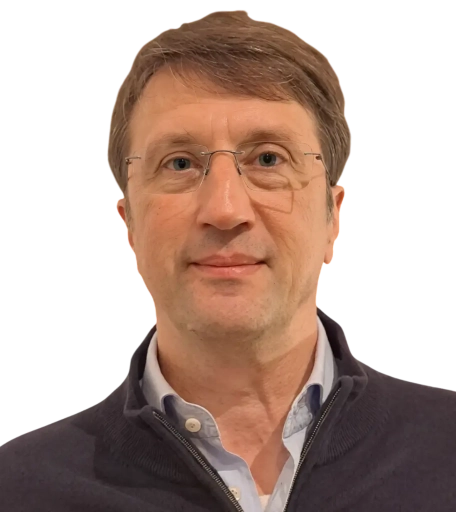
Last position:
Technical Lead | Software Architect | Embedded Software Engineer at Hydac
- Development of safety-related embedded software for a mobile machine on a Hydac TTC 2390 controller.
- Implementation in C with consideration of SIL 3 / ASIL D and MISRA-C:2025.
- Implementation of communication via CAN, CANopen, and J1939.
Standards, guidelines and norms: ISO 26262, IEC 61508, MISRA-C:2025
Technologies: C99, Hydac TTC 2390, Infineon TriCore Aurix TC397, Hightec C/C++ Compiler, PC-lint Plus, CAN, CANopen, J1939, MISRA-C:2025
Kusay T.

Last position:
Freelance System & Software Architect - DNA-Extraction Robot at QIAGEN GmbH
- System and software architecture for the QIA-symphony Connect DNA-extraction robot in Life Science / IVD automation.
- Designed features and control logic for extraction, pipetting, lysis and eluate modules using C++, PLC/ST (Beckhoff IPC / TwinCAT 3) and model-based concepts.
- Delivered ISO 13485-oriented requirements, architecture, unit/integration/regression tests and DHF/VEP/VER/TCL documentation.
- Used Polarion, Jira, Confluence, Azure and AI-assisted documentation to improve traceability and engineering efficiency.
Jürgen K.

Last position:
Project Management and System Architecture at 3E-motion Ventures GmbH
- Managed and developed the system architecture for the INEOS Grenadier model year 2028/29, ensuring interaction of all E/E system components according to GB/T 32960.
- Developed a product reference model for the entire E/E system of the vehicle.
- Coordinated requirements for Battery Management Systems (BMS) between OEM and suppliers at SYS.1 and SYS.2 levels for VW and Porsche.
- Created and aligned requirements for BMS fan control and OBD within Polarion.
- Developed a secure system architecture for steer-by-wire systems, including ECU hardware, software, and communication.
- Integrated various process design approaches from CARIAD, including SAFe (Scaled Agile Framework), FUSE/FAME, and RFLP, with ASPICE requirements.
- Created a process model in ESCAPE mapping essential components of SAFe onto ASPICE.
- Served as Lead Architect for electric drive development, focusing on parklock and cooling and lubrication functions for Mercedes AMG.
- Analyzed requirements in Integrity and developed functional models in UML using Enterprise Architect.
- Developed generic models for parklock and cooling functions, including sequence diagrams and a navigation model for the overall project.
Hendrik W.
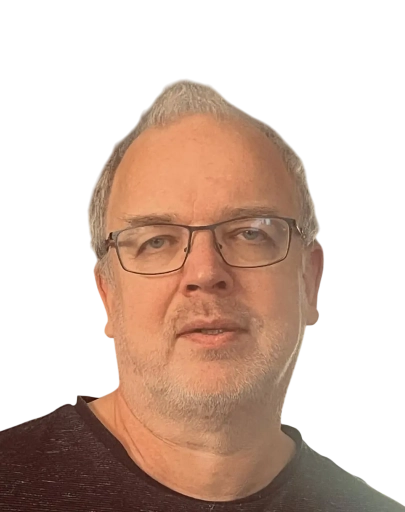
Last position:
Software Test and Maintenance Support at Anton Paar ProveTec GmbH
- Add/create test specifications
- Conduct regression tests
- Conduct release tests
- Analyze Jira tickets
- Identify software defects and fix them with C#
Tilmann S.
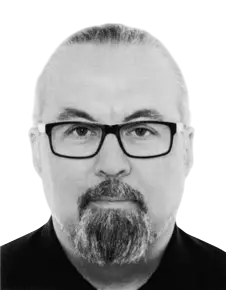
Last position:
Technical Expert, Software Architect at Rolls Royce Power Systems / MTU
- Created concepts and architecture for ECU diagnostics over CAN-Bus using UDS, PDX, ODX and safety paradigms
- Designed system deployment for EMS and documented using UML, Draw.io, MS Word, MS Visio and Confluence
- Developed process flows for development, planning, logistics, test & diagnostics in Scrum with Jira and MS Planner
- Communicated across multiple customer teams, conducted knowledge transfer
Tamás N.
Last position:
JAVA development for thermal printer test program at GeBE Elektronik und Feinwerktechnik GmbH
JAVA development for thermal printer test program
Further development of the free thermal printer test program in Java 1.8 AWT and Swing
Creating new plugins for sensor feedback using a real-time bar chart
Using multiple printer languages for USB, UDP, TCP and RS232 communication
Improving usability and responsiveness with threads and string buffering
Querying and displaying network configuration
Converting and processing hex data from printer responses
Advanced study of servomotors and USB bus
Enumerating available USB ports from the Windows Registry, retrieving additional information via PowerShell, parsing and listing all in a Java list box
Fixing reported database errors
Detecting if the printer driver is installed and recognizing physically connected devices
Migration to Windows 11
Handling customer tickets as part of support in C++ and Qt6
Writing CMake scripts
Compiling STM32 printer firmware with CMake and managing the process in FileMaker Pro
Technologies: Eclipse, Java 1.8, AWT, Swing, RS232, USB, TCP, UDP, PowerShell, servomotor technology, Windows 10 and Windows 11, WSL 2.4, Ubuntu Linux, CMake, Qt6, FileMaker Pro
Peter K.

Last position:
Hardware and Software Developer / Project Manager at Anonymer Kunde
- Development of control units for the automotive industry incl. embedded software
- CAN bus, Vector Tools, CANoe
- Support of the development process according to ISO 26262
- Ensuring cyber security standards:
- Key exchange (PKI) between vehicle and control units
- Hardware Security Module (HSM)
- Communication with external service providers (international)
- Development (PCB) of measuring adapters, statistical analysis of sensors
- IoT and embedded software development, backend administration
Andreas N.

Last position:
Open Source Founder at Privatier
- AI-supported source code analysis
- AI image generation for a shirt shop
- AI-supported analysis of connected YouTube channels and commenting users
- AI-supported software prototyping
- Operation of a local AI environment
- 3D printing and scanning: development of a process to repair GfK parts using 3D-printed negative molds
The focus is on practical applications of new technologies, founding an open-source project for a yacht autopilot, as well as yacht refit and motorhome conversion.
Natdanai P.
Last position:
Software Developer for SiC-Mold Production Line at Vitesco Technologies Germany GmbH
- Developing software solutions based on technical requirements and existing systems
- Developing TLV commands for automated laser cleaning and laser power measurement
- Supporting and assisting production processes
- Performing software tests as well as analyzing and fixing errors
- Integrating and connecting MES systems
- Using C# and Structured Text (ST according to IEC 61131-3)
- Using TwinCAT 3.1 as the development environment
- Implementing visualizations with Windows Forms
- Working with Beckhoff CX controllers and Stäubli industrial robots
- Using Ethernet and EtherCAT networks
- Integrating TRUMPF TruMark 3330 and 7050 laser systems
- Using a KEYENCE vision system
- Version control with Git and GitLab
Arnauld S.
Last position:
PLC Programmer/Maintenance Technician at Tiernahrung Deuerer GmbH
- Planning of automation systems
- PLC programming (Simatic S7, TIA Portal: AWL, SCL, FUP, KOP)
- Visualization of automation systems (WinCC, Sirvac, GUI)
- Commissioning of systems with various drives and sensors
- Creating and maintaining documentation and training materials
Thomas S.

Last position:
Automation Technology Lecturer at HWK Munich and Upper Bavaria
- Training professionals in PLC technology, pneumatics, control engineering, and KUKA robots
- Creating scripts for Siemens systems: STEP 5, STEP 7, TIA Portal, WinCC
- Creating scripts for pneumatics, control engineering, and KUKA robot programming
- Serving on the examination committee for quality assurance in vocational training
- Training and certifying over 500 professionals
Wolfgang F.
Last position:
Delphi Software Developer at Goebel Instrumentelle Analytik
- Took over software development and further development of an HPLC and photometer control and evaluation system
- Skills: software development · software system engineering · Microsoft SQL Server · software design · Delphi · HPLC · analytics · PDF · product data management
Okan A.
Last position:
Team Leader / Project Manager at OEM in the Stuttgart area
- development, setup and deployment of a custom HIL system for aerodynamic components
- adaptation of the system specification and creation of the test specification
- coordination and planning of test cases, as well as specification of component and K-HIL tests at the system level and in integration
- planning, specification and execution of interface tests
- participation in vehicle trials
- led a team of 10 members following classic and agile A-SPICE standards with development according to the V-model
- Tools used: Jira, MS Project, GitTea, Gox, Confluence, KPM, MoveIT, DOORS, PTC Integrity, Intense, JFrog
Stefan P.

Last position:
Managing Director at ootb automation GmbH
- Sales of scalable automation applications in the field of machine control
Discover over 15,000 top freelancers


Statistics of experts using IEC 61131-3
Aggregated from the professional profiles of matched freelancers.

Experience
25 years

Position duration
4.7 years

Positions per freelancer
14

Top business areas
Product Development, Information Technology, Quality Assurance

Top industries
Manufacturing, Information Technology, Automotive

Certification focus areas
Information Technology, Product Development, Business Intelligence

Bachelor's degree or higher
92%

Master's degree or higher
62%

Doctorate
15%

Certifications per freelancer
2

Most common languages
German, English, French

Speak two or more languages
100%
Based on our profile pool as of 9 Oct 2026.
Daily rate distribution
The chart shows how the daily rates of experts in this technology in Germany are distributed, based on recent contracts on our platform. Each bar covers a rate range — its height shows the share of experts charging within that range.
Discover detailed IEC 61131-3 rate benchmarks:
Explore rate insightsAverage rates of experts in Germany using IEC 61131-3
Rates are based on recent contracts and do not include FRATCH margin.

The average daily rate is the mean of all daily rates from recent contracts of comparable freelancers on our platform.
The median daily rate is the middle value of all daily rates — half of comparable freelancers charge less, half charge more. Unlike the average, it is barely affected by outliers.
Calculated based on our freelancers’ daily rates as of 9 Oct 2026. Actual rates may vary depending on seniority level, experience, skill specialization, project complexity, and engagement length.
IEC 61131-3 experts industry focus
See which industries our matched freelancers work in most often — every figure is calculated live from the freelancers on FRATCH.
- Manufacturing (100%)
- Information Technology (69%)
- Automotive (63%)
- Education (56%)
- Energy (50%)
- Healthcare (44%)
- Telecommunication (25%)
- Banking and Finance (19%)
Please note that freelancers can work across multiple industries, so percentages overlap.
About the technology
Standardized Industrial Control Architecture
IEC 61131-3 defines the global programming standard for industrial automation and programmable logic controllers. It establishes five primary languages: Structured Text, Function Block Diagram, Ladder Diagram, Instruction List, and Sequential Function Chart. Industrial facilities rely on this architecture to ensure software reuse, deterministic execution, and hardware independence across machine lines.
Core Engineering Capabilities
- Developing deterministic state machines and sequence controls in Structured Text
- Encapsulating device drivers and mathematical models into reusable function blocks
- Integrating industrial fieldbus systems including PROFINET, EtherCAT, and Modbus TCP
- Structuring complex multi-axis motion and robotics routines within execution cycles
- Implementing object-oriented extensions for modular machine programming
Vendor Platforms and Tooling
While the standard provides cross-platform specifications, implementations vary across major hardware ecosystems. Practitioners frequently deploy control software through TwinCAT, CODESYS, Siemens TIA Portal, Beckhoff, and B&R Automation Studio. Tooling includes simulation environments, integrated oscilloscopes for real-time task debugging, and version control workflows adapted for industrial runtimes.
Industrial Automation Demands in Germany
Germany represents a premier hub for mechanical engineering, automotive assembly, and chemical processing. Enterprises across Baden-Wuerttemberg, Bavaria, and North Rhine-Westphalia continuously modernize special-purpose machinery. Project engagements often require on-site hardware-in-the-loop testing, sensor validation, and dry-run commissioning directly on the factory floor.
Reasons to Retain Specialist Professionals
Companies hire external specialists during production ramp-ups, machine retrofits, or platform migrations. Transitioning legacy Ladder logic to modern object-oriented Structured Text demands deep system-level competence. External specialists resolve complex timing bottlenecks, integrate edge connectivity protocols like OPC UA, and stabilize plant software under tight project deadlines.
Indicators of Qualified Practice
Exceptional practitioners separate cyclic real-time tasks from non-deterministic communication layers. They adhere to clean coding conventions, employ modular function block design, and document interfaces thoroughly. Proficient professionals navigate electrical schematics effortlessly, diagnose bus faults via hardware analyzers, and collaborate closely with mechanical commissioning teams.

Frequently asked questions
Key details about IEC 61131-3, drawn from the questions we get asked most.

A specialist in IEC 61131-3 designs, tests, and deploys software that governs automated production machinery and programmable controllers. They write real-time routines using standard notations like Structured Text and Function Block Diagrams, ensuring that mechanical equipment functions predictably, safely, and without timing jitter.
While the standard outlines five languages, modern projects heavily emphasize Structured Text for complex logic, data handling, and mathematical algorithms. Ladder Diagram and Function Block Diagram remain standard choices for discrete interlocking, diagnostic visibility, and safety circuits across industrial operations.
The IEC 61131-3 standard establishes the syntax and structural foundations that environments like CODESYS, TwinCAT, and Siemens TIA Portal build upon. While each automation vendor adds proprietary hardware configuration tools and libraries, core logic written in Structured Text or Function Blocks transfers between platforms with minimal restructuring.
Beyond writing IEC 61131-3 software, strong specialists understand industrial fieldbuses such as EtherCAT and PROFINET, sensor integration, and servo drive parameterization. Familiarity with electrical wiring diagrams, safety integrity levels, and protocols like OPC UA for plant floor communication is also essential.
Initial architecture, modular coding, and simulation can be completed remotely using digital twins or virtual PLC runtimes. However, final commissioning for IEC 61131-3 projects in Germany typically requires on-site presence at the production plant to interface directly with actuators, sensors, and mechanical assemblies.
English is widely used for international engineering teams and code documentation. However, domestic projects in Germany often require conversational or professional German for on-site commissioning, coordination with shop-floor technicians, and review of localized electrical schematics.
Modern revisions of the IEC 61131-3 specification introduce object-oriented concepts such as classes, interfaces, methods, and inheritance. These capabilities allow teams to build modular, reusable machine components that scale cleanly across varied plant variants while maintaining strict real-time execution constraints.
Quality in IEC 61131-3 projects is indicated by non-blocking code execution, clean separation of communication tasks from real-time cycles, and consistent naming conventions. Strong professionals avoid global variables where possible, write self-contained function blocks, and provide thorough diagnostic messaging for plant operators.
The average hourly rate of freelancers in Germany who have used IEC 61131-3 in their recent projects is 99 €, which corresponds to a daily rate of about 795 € based on an 8-hour working day.
Of the freelancers in Germany who have used IEC 61131-3 in their recent projects, 92% hold at least a Bachelor's degree, 62% hold at least a Master's degree, and 15% hold a doctorate.
On average, freelancers in Germany who have used IEC 61131-3 in their recent projects have 25 years of professional experience, with a single engagement typically lasting around 4.7 years.
The most common languages among freelancers in Germany who have used IEC 61131-3 in their recent projects are German (100%), English (88%), and French (31%).
The most common industries among freelancers in Germany who have used IEC 61131-3 in their recent projects are Manufacturing (100%), Information Technology (69%), and Automotive (63%).
The most common business areas among freelancers in Germany who have used IEC 61131-3 in their recent projects are Product Development (100%), Information Technology (88%), and Quality Assurance (88%).
Main locations of FRATCH Experts, who have recently used IEC 61131-3
Our freelancers and interim experts are at home across the DACH region — available on-site in the major business hubs or fully remote. Choose a location to discover matched specialists, local market insights and up-to-date availability.
 Berlin Hamburg Munich Cologne Frankfurt Stuttgart Dusseldorf Leipzig Dortmund Essen Bremen Dresden Hanover Nuremberg
 Request a free demo
Get in touch with the FRATCH team and we will get back to you within 4 hours.
Would you rather directly get in touch?
We always have the time for a call or email!

Philipp Thomaschewski
FRATCH CEO

