


Flask Experts in Munich
matched in minutes by AIHire experts who create Python web applications, REST APIs and lightweight backend services with Flask, Jinja2 and SQLAlchemy. FRATCH quickly connects you with vetted, available freelancers whose skills match your project precisely.

Meet FRATCH Experts in Munich, who have recently used Flask
Michael N.

Last position:
Senior AI Engineer | Forward Deployed Engineer at Tiefbau
- Development of an AI-powered project organization tool for a civil engineering company that intelligently links project, task, tender, schedule, and document data through a knowledge graph.
- Implementation of AI features for document analysis, information extraction, context-based assistance, and voice-based data capture based on Microsoft Azure AI, reducing administrative effort, making information available faster, and supporting project teams in decision-making.
- Tech stack: Python, React, TypeScript, FastAPI, Claude Code, Codex, Graphify, PostgreSQL, Microsoft Azure AI Foundry, Azure OpenAI, Azure AI Speech, Azure AI Document Intelligence, Microsoft Graph, Microsoft Entra ID, Docker, Git, CI/CD.
Philipp G.
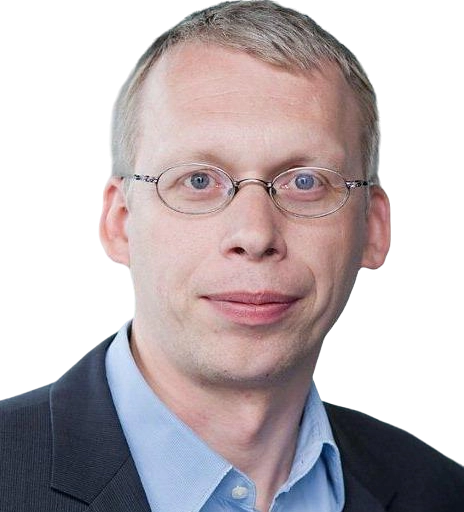
Last position:
Data Scientist & ML Engineer at Data-Science Factory GmbH
- Building, implementing and selling automated Data Science solutions such as Scorecard Factory and Forecast Factory
- Implementation of automated end-to-end cloud processes
- Development of LLM and NLP models
- Creation of interactive reports
- Support for national and international large corporations as well as medium-sized companies in implementing ML projects
Michael T.

Last position:
ETL Developer at Insurance service provider
DWH for customer and financial data
- Extension of the DWH with new data sources
- Report development
- Data quality management
Methodology: Scrum
Tools: Atlassian Confluence & Jira
Databases: Microsoft SQL Server
Programming languages: SQL, T-SQL
ETL: Microsoft SQL Server Integration Services (SSIS)
Frontend platform: PowerBI, Microsoft Reporting Services
Robert L.
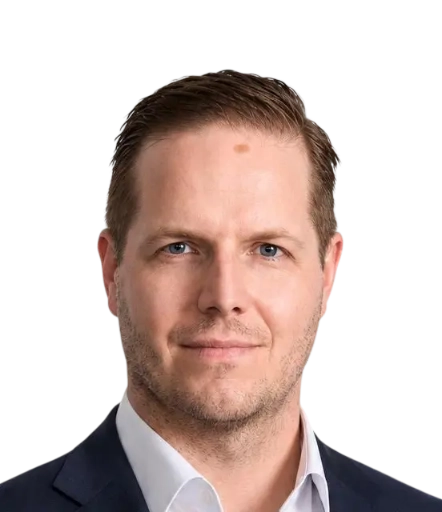
Last position:
Senior Project Manager AI & Data at Large German energy provider
AI Assistance and Target Vision for Partially Autonomous Energy Portfolio Management
Building an AI control layer directly on the up-to-date daily live portfolio of a large energy provider — not as an isolated pilot, but as an operational extension of the existing DB1 and portfolio management. The goal is the gradual development from assistance through monitoring/alerting to analysis agents with Human-in-the-Loop approvals, supplemented by a role-specific System of Engagement alongside the BI System of Record. At the same time, the business case, target vision and management pitch compared with static monthly reporting are being developed.
- AI control layer: Design and build on the existing live portfolio data product (several million contracts) — development stages assistance → monitoring/alerting → agents with Human-in-the-Loop approvals.
- LLM-supported data analysis: Semantic queries, SQL/tool integration and additional RAG components based on portfolio, plan-versus-actual and data quality data (Azure OpenAI, Snowflake), with drill-downs to individual contract level.
- Analysis agents: Multi-stage agents for variance and driver analyses of churn, price adjustments, volumes and procurement costs.
- Views concept: Role-specific interfaces for business units, management and C-level as a System of Engagement alongside the BI System of Record.
- Business case & pitch: Target vision and cost-benefit argumentation compared with static monthly reporting.
- LLM setup (privacy & security): Coordination with IT Security and Data Protection — EU region, data separation and approval processes.
- Agent architecture: Multi-stage agent pipelines (analysis → validation → summary) with documented data sources, tool calls, review steps and source references for each statement.
- Data foundation: Built on the up-to-date daily DB1 data product (Snowflake, dbt) — portfolio, plan-versus-actual and data quality metrics as the common basis for all AI analyses.
- Guardrails & evaluation: Evaluation and approval processes for LLM responses relating to management-relevant statements — test sets, metrics and human review.
- Prototyping & validation: Iterative validation of agent responses with the business unit — test question catalogue, feedback loops and response quality for each release.
- Roadmap & development stages: Detailed stages from assistance → monitoring/alerting → partially autonomous management, including transition criteria and governance for each stage.
- Integration: Integration into the existing BI and data landscape — BI remains the System of Record, while the AI layer provides interactive drill-down paths as the System of Engagement.
- Enablement: Enablement of business users — prompting guides, training and an operating model for ongoing use.
- Management: Coordination of business units, Data Engineering, IT Security and Data Protection.
- Change Management: Communication and expectation management with business units and management throughout the development stages.
Results:
- Built on an existing up-to-date daily data product with several million contracts
- Established an LLM setup coordinated with Data Protection and IT Security in the EU region, including data separation and approvals
- Defined three development stages through to partially autonomous management
- Designed role-specific views for business units, management and C-level
- Developed the business case and management pitch for the development stages
- Established an iterative response-quality validation process with the business unit
- Designed the operating model for assistance operations and initiated validation
Stack: Azure OpenAI, Azure AI Foundry, Snowflake, dbt, React, TypeScript, Entra ID, RAG, Agentic AI, analysis agents, Human-in-the-Loop, Prompt Engineering, LLM Evaluation, LLMOps, GDPR / EU region, Azure DevOps, Python, SQL, Change Management
Frederik C.
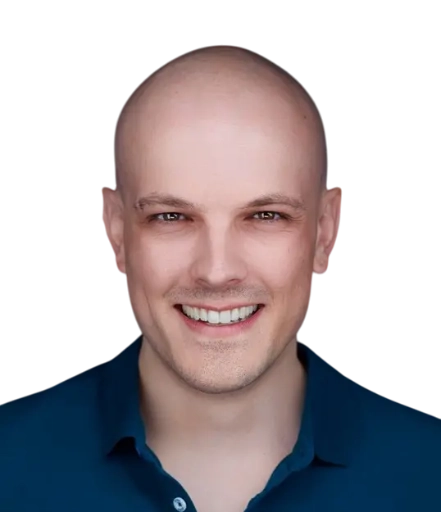
Last position:
Freelance Full-Stack Software Developer at Bundesdruckerei GmbH
Development of the digital organ donation register, commissioned by the Federal Institute for Drugs and Medical Devices (BfArM)
Implementation of user stories in several microservices (frontend and backend)
Ensuring quality with unit, integration, and E2E tests
Conducting code reviews
Coordination with other development teams
Taking over the software license check and simplifying the process
Responsibility for implementing and documenting the business logging
Setting up a development environment with Docker Compose
Narges D.
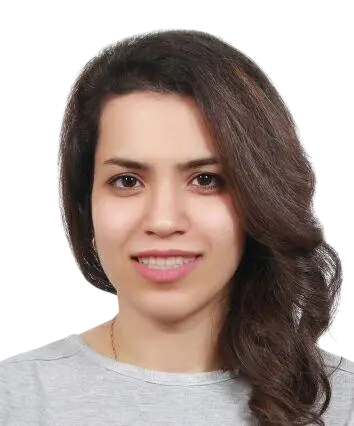
Last position:
Research Assistant at Hochschule München
Introduced an integrated approach for structural damage detection across concrete, steel, and glass using advanced technologies such as LiDAR and thermal imaging. Highlighted cross-material interactions to enhance diagnostics and enable predictive maintenance.
Developed an NLP-based medical note simplifier that transforms complex clinical instructions into plain, child-level English. Applied prompt engineering with Flan-T5 transformer models to extract patient-relevant actions and rephrase them into clear to-do items. Built dual Flask and Tornado backends with a printable web interface.
Christian S.
Last position:
Data-Scientist/AI Engineer at The Marcom Engine GmbH & Co. KG
- Concept creation and implementing AI Agents in AWS Cloud
- Continuously alignment with stakeholders
- Collaborate with DevOps
- Technologies: Git, CI/CD (GitHub Actions), Python/ML, Streamlit, Deno/typescript, AWS SAM, AWS Bedrock, AWS Lambda, AWS Dynamo DB, AWS S3, AWS Event Bridge etc.
Jiri S.
Last position:
Quality Manager/Test Management at Noriba GmbH
- Test concept creation
- Creation of test processes
- Coordination of TC development: stress tests, functional tests, performance tests, high data rate tests, integration tests, etc.
- HW testing: FPGA, RF
- Test automation and regression tests
- Ensuring 24/7 operation of the test system
- Analysis & reporting
- Regular coordination of the test team, meetings with other stakeholders
- Communication and coordination with stakeholders and the project manager
Nurbüke T.

Last position:
Working Student – Software Engineer at Rohde & Schwarz
- Developing software tools within the EICACS program (LDACS project) supporting secure avionics communication.
- Built Python-based automation and monitoring services to validate AI components under Trustable AI guidelines.
- Designed CI/CD and test pipelines improving reproducibility and reliability across teams.
Anton K.
Last position:
Head of Overall Technical Integration NSC / Hadoop Cloud Development at IABG
Head of overall technical integration NSC (National Secure Cloud, project with approx. 60 employees).
Technical integration of all subprojects into one product, definition of interfaces and basic components of a cloud including hardware, technical architecture of the IABG platform.
Development of a Cloud Management Platform (CMP) capable of creating private/mixed clouds of any complexity based on a textual description with one click or interactively.
CMP also includes the complete hardware management lifecycle.
Kubernetes, OpenStack and Hadoop are used as the foundation.
The management layer includes Harbor, Gitea, Longhorn, Keycloak, Rancher and Jenkins, which are configured automatically.
Private cloud can run any customer workloads, including a full Hadoop layer with HDFS, Spark, MapReduce, Mesos, HBase and around 20 additional ML/DL technologies.
Hadoop worker clusters can also be installed automatically without Kubernetes on bare metal or commodity hardware.
OpenStack with Nova, Neutron, Ironic, Swift, Cinder, Ceph.
Development of a Java application Rudi: SOAP, REST, containers, DB.
Technologies: Kubernetes (K3s, Rke2, Minikube, Harbor, Gitea, Jenkins, Longhorn, Keycloak, Rancher), OpenStack (Nova, Neutron, Keystone, Swift, Ceph, Cinder, Sahara, Magnum, Kayobe, Kolla, Bigrost, Ironic), Hadoop (HDFS, Ambari, Solr, Livy, Ranger, YARN, Tez, HBase, Kafka, Hive, Zookeeper, MapReduce, Spark, Oozie, Flink), virtualization (Kubernetes (K3S), VMware, Oracle), scripting (Ansible, Puppet, Juju, Shell, Groovy, Gradle, Maven).
Kaan K.

Last position:
Computer Vision Engineer at Axulus Reply GmbH
- Computer vision engineer responsible for development of industrial vision solutions, beginning as a working student and transitioning to a full-time role in May 2025.
- Designed and implemented vehicle detection and counting models; integrated the pipeline into a cloud-deployed system (Azure) that delivers live analytics dashboards.
- Building an offline print quality assurance system that scans corrugated-board prints on production lines to detect and classify defects such as splashes, impurities and colour deviations, deploying the solution on Jetson edge devices.
- Collaborated with cross-functional teams while focusing on computer vision components, containerization, and deployment.
Stephan S.

Last position:
Senior Data/ML Consultant & Technical Lead at Jolin.io
Role: Software Engineer & Applied Mathematician (Mathematical optimization for scheduling; duration: 1 months; team setting: Team of 2, remote; technologies: JuMP, Julia, Pluto, Svelte, JavaScript, TypeScript, JetBrains Space, Terraform, Nomad)
Role: Software & Cloud & Web Engineer (Building scalable data science compute cluster from scratch; duration: 11 months; team setting: Team of 1, on-site; technologies: Terraform, Kubernetes, k8s ingress, k8s services, k8s RBAC, k8s networking, k3s, etcd, S3, DNS, certificates, Julia, Pluto, JavaScript, Tailwind, Astro, npm, Parcel, Preact, MUI, JWT, AWS SQS, AWS RDS, Python, GitLab, GitHub)
Role: AI & Web Engineer (Custom ChatGPT service; duration: 1 months; team setting: Team of 2, remote; technologies: Python, Poetry, LangChain, Tailwind, ChatGPT API, Flask, FastAPI)
Role: Architect & Data Engineer (Central datalake setup and ingestion; duration: 9 months; team setting: Team of 5, remote; technologies: Infrastructure-as-code, AWS CDK, Python, Boto3, PySpark, AWS Glue, IAM, S3, ECS, Fargate, Lambda, Apache Hudi, DeltaLake, Databricks, GitHub, Jira, Miro)
Role: Software Engineer (PoC Julia migration of scikit-decide; duration: 1 months; team setting: Team of 2, remote; technologies: Python, Julia, GitHub)
Daniel C.
Last position:
Founder & Managing Director at BotCraft GmbH
- Building the company with a focus on connectivity for IIoT and Industry 4.0, iRPA/process automation, advanced robotics and smart systems, sensors and services
- Project management and software architecture for IoT gateway development (since 2020) with protocol translation, IT/OT convergence and GRC
- Developing RPA bots for automating and monitoring industrial processes with an agent-based AI approach (since 2020)
- Implementing unsupervised clustering and anomaly detection for time series data in big data streaming pipelines (since 2021)
- Introducing a Docker-based release train for OTA updates with DevSecOps and CI/CD (since 2018)
Luis Alberto P.

Last position:
Cloud Engineer at Personal Projects
Developed a Streamlit ML application utilizing a RandomForest model (Scikit-learn) for predicting smoking behavior, employing Pandas, NumPy, and Matplotlib for data analysis and visualization; deployed on AWS using Terraform for EC2, IAM roles, and S3 buckets, with Pickle for model storage.
Mastered AWS services including S3, EC2, CloudFormation, IAM, and Auto Scaling, focusing on advanced features like versioning, CORS, ETags, and checksums through AWS-Examples-Freecodecamp.
Developed and optimized CI/CD pipelines with GitHub Actions to deploy static websites on GitHub Pages, enhancing automated validation, deployment, and maintenance processes.
Created and deployed a classic Snake game using Flask, containerized with Docker and deployed on Render.
Mohamed S.

Last position:
Machine Learning Engineer (Part Time) at E.ON Digital Technology
- Designed and implemented an advanced, agentic RAG pipeline using LangChain and LangGraph for structured data extraction from PDFs, utilizing tools, state management, and OpenAI LLMs (GPT-4) to improve accuracy and handle complex document structures.
- Developed a Google AI agent for extraction of structured information from PDF documents and deployed the agent on Vertex AI.
- Architected data pipelines using Azure Data Factory and Databricks to ingest data from Azure Blob Storage, process it with PySpark, and load it into Azure SQL Database via Linked Services.
- Containerized AI agents and services using Docker for consistent local development and deployment.
- Utilized PySpark and Dask for database querying in coordination with Azure Blob Storage and Document Storage.
- Created a ReAct agent that extracts structured data from PDF documents using tools and integrating Azure Document Intelligence.
- Contributed to the CPO invoices validation check project using Databricks to find existing CDRs and calculate total valid costs.
- Developed a conversational AI agent (chatbot) with a FastAPI backend, integrating RAG for precise tariff extraction and deployed the service using Azure Container Apps.
- Tools used: Azure, Azure OpenAI, Azure Document Intelligence, Azure Blob Storage, Google ADK, Google Cloud, Vertex AI, Gemini, Databricks, LangChain, LlamaIndex Ollama, Docker, PySpark, Azure SQL, Azure Data Factory, Azure AI Agent, Microsoft SQL Server
Discover over 15,000 top freelancers


Statistics of experts using Flask
Aggregated from the professional profiles of matched freelancers.

Experience
15 years (Germany: 14 years)

Position duration
2.3 years (Germany: 2 years)

Positions per freelancer
12 (Germany: 10)

Top business areas
Information Technology, Product Development, Quality Assurance

Top industries
Information Technology, Education, Healthcare

Certification focus areas
Information Technology, Project Management, Business Intelligence

Bachelor's degree or higher
100% (Germany: 96%)

Master's degree or higher
81% (Germany: 73%)

Doctorate
6% (Germany: 10%)

Certifications per freelancer
2

Most common languages
German, English, Spanish

Speak two or more languages
100% (Germany: 98%)
Based on our profile pool as of 9 Oct 2026.
Daily rate distribution
The chart shows how the daily rates of experts in this technology in Munich are distributed, based on recent contracts on our platform. Each bar covers a rate range — its height shows the share of experts charging within that range.
Average rates of experts in Munich using Flask
Rates are based on recent contracts and do not include FRATCH margin.

The average daily rate is the mean of all daily rates from recent contracts of comparable freelancers on our platform.
The median daily rate is the middle value of all daily rates — half of comparable freelancers charge less, half charge more. Unlike the average, it is barely affected by outliers.
Calculated based on our freelancers’ daily rates as of 9 Oct 2026. Actual rates may vary depending on seniority level, experience, skill specialization, project complexity, and engagement length.
Flask experts industry focus
See which industries our matched freelancers work in most often — every figure is calculated live from the freelancers on FRATCH.
- Information Technology (100%)
- Education (47%)
- Healthcare (47%)
- Energy (41%)
- Government and Administration (41%)
- Automotive (35%)
- Banking and Finance (35%)
- Insurance (35%)
Please note that freelancers can work across multiple industries, so percentages overlap.
About the technology
Flask foundations
Flask is a lightweight Python web framework for building web applications and backend services. It provides routing, request handling, templates and a development server while leaving architectural choices open. Teams use it for APIs, internal tools, web portals, prototypes and focused production services.
Core ecosystem
Flask is built around Werkzeug for web utilities and Jinja2 for templating. Its extension ecosystem adds database access, authentication, forms, validation, migrations and API features without forcing one project structure.
- Flask-SQLAlchemy for relational data models
- Alembic or Flask-Migrate for schema changes
- Flask-JWT-Extended for token-based authentication
- Marshmallow or Pydantic for serialization and validation
- pytest and Flask’s test client for automated testing
Common project work
Companies bring in Flask specialists for targeted delivery work and for backend modernization. Typical assignments include:
- Design REST or JSON APIs for web and mobile products
- Connect services to PostgreSQL, MySQL, Redis or external APIs
- Add authentication, permissions, logging and background jobs
- Refactor prototypes into tested, deployable services
- Integrate Flask backends with React, Vue or other front ends
When expertise matters
Freelance expertise helps when a small Python service has become business-critical, when an API needs a clear contract, or when an existing codebase lacks tests and operational structure. Companies in Munich may use Flask in software products, industrial systems, research services and internal operations. Remote collaboration works well when requirements, interfaces and deployment responsibilities are documented clearly.
Delivery and operations
Strong Flask professionals understand more than route handlers. They design application boundaries, manage configuration and secrets, handle errors consistently and protect endpoints against common web threats. They also work with Docker, CI/CD pipelines, cloud runtimes, observability and production web servers such as Gunicorn behind a reverse proxy.
Choosing a specialist
Look for evidence of maintained Flask services, clear API documentation and tests that cover business-critical behavior. A capable specialist can explain why a minimal Flask structure is appropriate, where extensions add value and when a larger framework such as Django or a different Python approach would be safer. Ask how they handle migrations, authentication, performance limits and long-term ownership.

Frequently asked questions
Before you brief your next project: the most common questions about Flask.

Flask is commonly used for Python web applications, REST APIs, internal tools, data services and microservices. Its small core suits projects that need control over structure and dependencies.
Flask offers a minimal core and lets teams select extensions for databases, authentication and other features. Django includes more built-in functionality and conventions, so it can be a better fit for larger content-heavy applications with standardized needs.
A strong Flask specialist should understand Python, HTTP, SQL, API design, testing and application security. Experience with Jinja2, Werkzeug, Docker, CI/CD and cloud deployment is also useful for production work.
The right level of Flask experience depends on the system’s risk, integrations and operational demands, not just its size. A focused API may need a specialist who can deliver clean routes and tests, while a business-critical service requires deeper expertise in security, observability and deployment.
Yes, Flask work is often well suited to remote collaboration because APIs, tests and deployment configuration can be reviewed online. For teams in Munich, German or English communication can support effective work, provided interfaces, access rights and release processes are explicit.
Flask can be preferable when a team values a mature, flexible ecosystem or already maintains Flask services. FastAPI may be stronger when automatic OpenAPI documentation, type-driven validation and asynchronous API patterns are central requirements.
Review how the Flask specialist structures routes, configuration, error handling and tests. Ask for examples of API documentation, database migrations, authentication controls and production monitoring, while respecting confidentiality.
Yes, Flask can expose JSON APIs for React, Vue, mobile clients and other consumers, and it can connect to relational databases, caches, queues and external services. The specialist should define stable contracts, validation rules and failure behavior at each integration boundary.
The average hourly rate of freelancers in Munich, Germany who have used Flask in their recent projects is 89 €, which corresponds to a daily rate of about 714 € based on an 8-hour working day.
Of the freelancers in Munich, Germany who have used Flask in their recent projects, 100% hold at least a Bachelor's degree, 81% hold at least a Master's degree, and 6% hold a doctorate.
On average, freelancers in Munich, Germany who have used Flask in their recent projects have 15 years of professional experience, with a single engagement typically lasting around 2.3 years.
The most common languages among freelancers in Munich, Germany who have used Flask in their recent projects are German (100%), English (100%), and Spanish (29%).
The most common industries among freelancers in Munich, Germany who have used Flask in their recent projects are Information Technology (100%), Education (47%), and Healthcare (47%).
The most common business areas among freelancers in Munich, Germany who have used Flask in their recent projects are Information Technology (100%), Product Development (88%), and Quality Assurance (65%).
Main locations of FRATCH Experts, who have recently used Flask
Our freelancers and interim experts are at home across the DACH region — available on-site in the major business hubs or fully remote. Choose a location to discover matched specialists, local market insights and up-to-date availability.


 Berlin
  Hamburg
  Frankfurt
 Request a free demo
Get in touch with the FRATCH team and we will get back to you within 4 hours.
Would you rather directly get in touch?
We always have the time for a call or email!

Philipp Thomaschewski
FRATCH CEO

