


Flask Expert in Berlin
for fast, reliable web services with precise AI matchingHire experts who build Python web applications, REST APIs and lightweight backend services with Flask, SQLAlchemy and modern deployment tools. FRATCH matches you quickly with vetted, available freelancers who fit your technical needs.

Meet FRATCH Experts in Berlin, who have recently used Flask
Mukund B.

Last position:
Voice AI Chatbot - Real-Time Audio Assistant
- ▶ Built real-time voice assistant (STT → LLM → TTS pipeline) benchmarking and evaluating multiple STT providers including faster-whisper and Azure Speech. achieved sub-3s latency, Groq API (Llama 3) with multi-turn memory - directly handling edge cases in dictation, names and passcode recognition.
Murad H.
Last position:
Founder & Technical Lead at Hubpoint.Ai
- Founded an AI-powered scheduling and business-management SaaS for SMBs, owning technology strategy, architecture, product development, UX, billing and go-to-market execution.
- Architected and shipped a multi-tenant platform with REST APIs, RBAC, CRM, billing and notifications, powering the manager dashboard, admin console, booking experience and iOS/Android applications.
- Led and mentored 7 software engineers, 1 DevOps engineer, 1 QA engineer and 1 UX/UI designer, while remaining hands-on across backend, frontend and product delivery.
- Built AI voice and chat agents using Python/FastAPI, OpenAI and Anthropic APIs, RAG, pgvector and tool calling; integrated Twilio, Google Calendar/Meet, Stripe and Firebase.
- Owned production infrastructure and automated delivery across separate environments using Docker, Nginx, GitHub Actions and Grafana; represented the company at accelerators and international startup events.
Selected stack: Python, FastAPI, Node.js, Vue 3, React/Next.js, React Native, PostgreSQL, Redis, Docker
Haseeb Z.

Last position:
Senior Data Scientist at WPP MEDIA
- Designed and deployed enterprise Retrieval-Augmented Generation (RAG) applications using LangChain, LangGraph, vector databases, embeddings, and open-source LLMs served through vLLM on GCP GPU infrastructure.
- Built agentic AI workflows using LangGraph with planning, reasoning, tool execution, persistent memory, session management, and Human-in-the-Loop approval mechanisms.
- Developed LLM-powered automation systems integrating BigQuery, SQL pipelines, and external advertising APIs including Meta, TikTok, Amazon, Snapchat, Google, and Pinterest, reducing manual operational workflows.
- Architected multi-agent AI systems for enterprise analytics and decision-support workflows, enabling autonomous task execution and intelligent data interactions.
- Implemented retrieval optimization strategies including multi-retriever architectures, semantic search, context optimization, and query improvement techniques, improving response relevance by approximately 40%.
- Engineered structured prompting strategies, function-calling schemas, and validation workflows to improve reliability of multi-step LLM applications.
- Designed scalable AI services using Python, FastAPI, Cloud Run, Pub/Sub, BigQuery, Docker, and cloud-native deployment architectures.
Muzamal A.

Last position:
Data Scientist / AI Consultant at HelmX
- Delivered AI and data science solutions, including LLM-based chatbots and data pipelines, improving operational efficiency.
- Collaborated on product features, achieving measurable impact and maintaining strong client relationships.
Enrico G.

Last position:
Freelance Software & Data/AI Engineer at Freiberuflicher Software & Data/AI Engineer
- Lecturer for the GenAI Track at the Master School Institute of Technology
- Development of a full-stack AI application (React + Python/FastAPI) for automated supplier product import with intelligent column and category classification (4-layer hierarchical) including human-in-the-loop validation
Can K.

Last position:
DevOps Specialist at Eviden Germany GmbH
Manage the development release and update process for a digitized nationwide trade register project "AuRegis".
Support software in Kubernetes/OpenShift environments, configure management with Kustomize, and implement CI/CD pipelines using Jenkins/GitLab, SonarQube, ArgoCD, and Azure.
Oversee system release of microservice architecture.
Build the CI/CD stack from scratch with GitLab CI, integrating integration tests, dependency checks, and security measures.
Automate deployment onto OpenShift using Kustomize.
Set up infrastructure components for development, code review, and code quality analysis including SonarQube.
Integrate GitOps tools such as Kustomize and ArgoCD, using both Azure and private cloud for sensitive data handling.
Develop Python scripts in Jenkins for cryptostore configuration and system packaging of products and microservices into deployable units.
Automate delivery to customers and deployment on test systems.
Create Kustomize manifests for microservices and develop the related automation, treating documentation as code for clarity and reproducibility.
Serve as technical advisor for the project's first go-live and oversee further deployments as technical rollout manager.
Abhishek N.

Last position:
Fullstack Developer at DAMALO GmbH
- Own full-stack development of an AI-native enterprise platform built on TypeScript, React, Vite, tRPC, Hono, and PostgreSQL, delivering AI-powered consulting workflows to B2B clients.
- Designed and shipped a multi-agent AI system using ReAct framework and Claude skills-style workflow patterns, including an intelligent PM assistant with rich system prompts, slash commands, tool integrations, and streaming chat UI.
- Architected an LLM evaluation framework: rubric-based LLM-as-judge, golden datasets, regression testing, and automated quality gating — ensuring consistent AI output quality at scale.
- Integrated LangFuse for end-to-end LLM tracing, conversation replays, and evaluation pipelines, enabling data-driven prompt optimisation that reduced token costs and response variance.
- Built with Drizzle ORM, pgvector, and knowledge graphs for structured data access, semantic search, and relationship-aware AI reasoning across the platform.
- Led TanStack React Query migration across the application — replacing manual state management with centralised caching and automatic refetching, reducing data-fetching boilerplate significantly.
- Practiced AI-native development throughout: Claude Code, Codex, Perplexity SDK, and LLM-assisted testing across the full development lifecycle. Deployed on Vercel + Azure ACA with Biome for linting/formatting.
Daniel B.

Last position:
Senior Cloud Consultant and Developer at SDIA/Leitmotiv
- Consulting an NGO in the field of data center sustainability in publicly funded projects (BMUKN with NADIKI and Umweltbundesamt with SIEC)
- Development of Python APIs and web applications, deployment on AWS/ECS with Terraform
- Collecting power consumption metrics for servers, CPUs, GPUs running AI workloads
- Technologies used: AWS, EC2, ECS, Fargate, CloudMap, VPC, Route53, Lambda, EventBridge, CodeBuild/CodePipeline/CodeDeploy, Terraform, Docker, Linux, Bash scripting, Python, Flask, SQLAlchemy, SQL, MariaDB, InfluxDB, Telegraf, Prometheus, Zabbix, Kubernetes, Letsencrypt, certificate management
Igor K.

Last position:
Freelance Software Developer
Ashwin P.

Last position:
Data Scientist at Mercor Intelligence
- Elevated LLM output reliability by engineering domain-specific prompts and evaluation logic, improving reasoning consistency across production language model workflows.
- Designed advanced coding benchmarks and validated solutions to strengthen training and evaluation datasets, improving model performance on technical problem-solving tasks.
- Designed and implemented automated evaluation frameworks for technical reasoning tasks; optimized LLM output reliability by 15% through rigorous prompt engineering and rubric-based benchmarking.
Ludvig G.
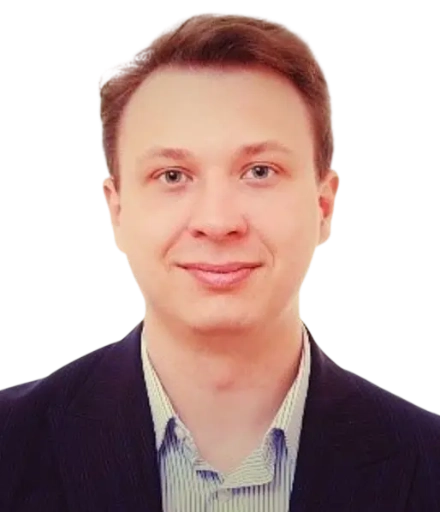
Last position:
Founder at Insightl.ai Lernplattform
- Attempted founding of a platform for career development and personal coaching
- Top 3 placement in the Berlin-Brandenburg business plan competition
- Conducted independent market analysis and user research
- Built a comprehensive knowledge graph for roles, skills, and experiences
- Data transformation and setting up data pipelines on Azure
Julien L.

Last position:
MLOps Engineer at SAMGEN
- Building and scaling cloud infrastructure on GCP to support a SaaS platform for industrial clients
- Designing and implementing a data-driven DevOps pipeline for streamlined deployment and CI/CD workflows
- Collaborating with Data Science team on MLOps workflow to automate integrated retraining
Tobias J.
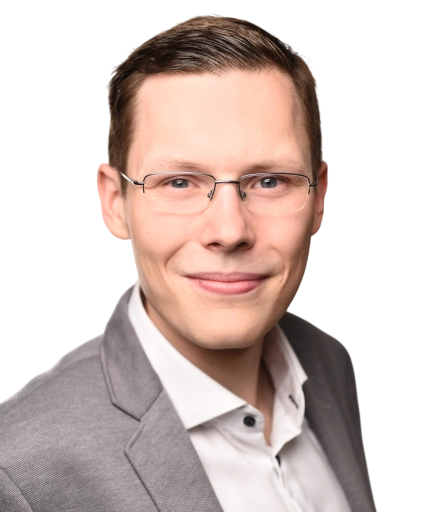
Last position:
Design of an AI-Agent-Based ERP System
- Design of an LLM-based agent system to control the ERP software
- Development of agent workflows with LangGraph and PydanticAI
- Planning interfaces between business logic and language models
- Planning agent orchestration
- Prototype development and demonstration
Tools: Python, Pydantic, React, LangChain, LangGraph, Linux
Maurizio F.
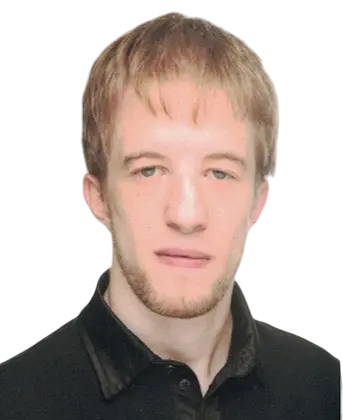
Last position:
Python Software Developer at Schönhofer Sales and Engineering GmbH
- Implemented a command line interface (CLI) for integration of REST APIs of various microservices for end users
- Centralized and simplified interaction with services through the CLI
- Implemented a REST microservice for custom data schemas based on an API-first approach
- Developed event-driven control with RabbitMQ to connect to other services
- Deployed services using Docker and Kubernetes and extended the CLI
- Managed complexity and data volume handling through the microservice
Daniel S.

Last position:
Frontend and Web Developer at Datalyze Solutions
- Frontend development and implementation of various designs (landing pages, overview pages)
- Responsible for the content and updates of the Datalyze Solutions company website
- Joint planning and development of an admin application for listing and locating real estate projects (CBRE)
- Joint planning and development of extensive solutions for automatic staff allocation in plants (Bosch)
- Backend development of various small projects with different stacks
- Tech stack: GitLab CI/CD, Elixir, Phoenix Framework, Ecto, PostgreSQL, Docker, Hetzner, Traefik, NGINX, Python, Flask, Next.js/React, Leaflet, GeoServer, TypeScript, MongoDB
Discover over 15,000 top freelancers


Statistics of experts using Flask
Aggregated from the professional profiles of matched freelancers.

Experience
12 years (Germany: 14 years)

Position duration
2.1 years (Germany: 2 years)

Positions per freelancer
7 (Germany: 10)

Top business areas
Information Technology, Product Development, Business Intelligence

Top industries
Information Technology, Education, Professional Services

Certification focus areas
Information Technology, Business Intelligence, Product Development

Bachelor's degree or higher
96%

Master's degree or higher
57% (Germany: 73%)

Certifications per freelancer
2

Most common languages
English, German, Hindi

Speak two or more languages
89% (Germany: 98%)
Based on our profile pool as of 9 Oct 2026.
Daily rate distribution
The chart shows how the daily rates of experts in this technology in Berlin are distributed, based on recent contracts on our platform. Each bar covers a rate range — its height shows the share of experts charging within that range.
Average rates of experts in Berlin using Flask
Rates are based on recent contracts and do not include FRATCH margin.

The average daily rate is the mean of all daily rates from recent contracts of comparable freelancers on our platform.
The median daily rate is the middle value of all daily rates — half of comparable freelancers charge less, half charge more. Unlike the average, it is barely affected by outliers.
Calculated based on our freelancers’ daily rates as of 9 Oct 2026. Actual rates may vary depending on seniority level, experience, skill specialization, project complexity, and engagement length.
Flask experts industry focus
See which industries our matched freelancers work in most often — every figure is calculated live from the freelancers on FRATCH.
- Information Technology (93%)
- Education (37%)
- Professional Services (33%)
- Automotive (22%)
- Energy (22%)
- Healthcare (22%)
- Media and Entertainment (22%)
- Government and Administration (22%)
Please note that freelancers can work across multiple industries, so percentages overlap.
About the technology
Flask foundations
Flask is a lightweight web framework for Python. It provides routing, request handling, templates and a clear application structure without forcing a large set of built-in components. Teams use it to create focused web applications, internal tools, APIs and backend services that can grow around their real requirements.
What Flask builds
Flask fits products where control, speed and a small runtime matter. Common deliverables include:
- REST and JSON APIs for web and mobile clients
- Internal dashboards and operational tools
- Data-driven web applications with server-rendered templates
- Microservices and integration layers
- Prototypes that can mature into production services
Ecosystem and tooling
Strong Flask work usually includes more than the core framework. Specialists work with Jinja for templates, Werkzeug for the web layer and SQLAlchemy for database access. They may also use Flask extensions for authentication, migrations, validation, caching and background jobs. Pytest, virtual environments, package management and automated delivery support maintainable results.
When companies need help
Freelance expertise is useful when a team is introducing a Python service, separating functionality from a larger application or stabilising an existing Flask codebase. Companies also bring in specialists for API design, database integration, authentication flows, test coverage and production deployment. In Berlin, remote collaboration is common, while on-site workshops can help with discovery and handover.
Delivery and operations
A production-ready Flask service needs clear configuration, structured logging, error handling and secure treatment of secrets. Professionals connect applications to relational or document databases, queues, object storage and external APIs. They prepare containerised deployments and monitoring for the target environment, whether it runs on a cloud service, a private infrastructure or a local platform.
Signs of strong expertise
A capable Flask professional keeps the application simple without leaving important engineering decisions implicit. Look for experience with:
- Clear blueprints, service boundaries and configuration management
- Secure authentication, input validation and error handling
- Database transactions, migrations and query performance
- Contract-focused API tests and maintainable documentation
- Practical deployment, observability and handover practices
The best specialists explain trade-offs between Flask and larger Python frameworks, choose extensions carefully and leave a codebase that another team can understand.

Frequently asked questions
Key details about Flask, drawn from the questions we get asked most.

Flask is used to build Python web applications, REST APIs, internal tools and focused backend services. Its small core gives teams control over routing, data access, authentication and integrations.
Flask is less prescriptive than Django and often offers a simpler starting point for focused services. FastAPI provides strong support for type hints and asynchronous API work, while Flask remains a flexible choice for synchronous applications and established Python systems.
A strong Flask specialist commonly works with Python, SQL, relational databases, Jinja, SQLAlchemy, REST design and automated testing. Knowledge of containers, cloud deployment, authentication and observability is also valuable for production work.
The right level of Flask experience depends on the scope, risk and condition of the existing codebase. A small API may need focused framework knowledge, while a regulated or high-traffic service calls for broader skills in security, testing, operations and system design.
Flask work is well suited to remote collaboration because requirements, API contracts, code reviews and deployments can be handled online. For Berlin-based teams, remote delivery can be combined with on-site workshops when domain knowledge, architecture decisions or handover benefit from direct discussion.
Look for Flask projects with clear API boundaries, useful tests, secure configuration and practical deployment documentation. Ask how the professional handled database changes, authentication, error monitoring and future maintenance rather than reviewing visual features alone.
Flask can support a large application when the team defines clear modules, service boundaries and operational practices. It does not impose a complete architecture, so experienced professionals must establish conventions for testing, configuration, database access and team ownership.
A maintainable Flask codebase has clear application factories or startup configuration, separated concerns, explicit dependencies and reliable tests. Consistent error handling, documented interfaces and careful extension choices make it easier for new specialists to contribute safely.
The average hourly rate of freelancers in Berlin, Germany who have used Flask in their recent projects is 84 €, which corresponds to a daily rate of about 675 € based on an 8-hour working day.
Of the freelancers in Berlin, Germany who have used Flask in their recent projects, 96% hold at least a Bachelor's degree and 57% hold at least a Master's degree.
On average, freelancers in Berlin, Germany who have used Flask in their recent projects have 12 years of professional experience, with a single engagement typically lasting around 2.1 years.
The most common languages among freelancers in Berlin, Germany who have used Flask in their recent projects are English (96%), German (85%), and Hindi (11%).
The most common industries among freelancers in Berlin, Germany who have used Flask in their recent projects are Information Technology (93%), Education (37%), and Professional Services (33%).
The most common business areas among freelancers in Berlin, Germany who have used Flask in their recent projects are Information Technology (96%), Product Development (93%), and Business Intelligence (63%).
Main locations of FRATCH Experts, who have recently used Flask
Our freelancers and interim experts are at home across the DACH region — available on-site in the major business hubs or fully remote. Choose a location to discover matched specialists, local market insights and up-to-date availability.


 Hamburg
  Munich
  Frankfurt
 Request a free demo
Get in touch with the FRATCH team and we will get back to you within 4 hours.
Would you rather directly get in touch?
We always have the time for a call or email!

Philipp Thomaschewski
FRATCH CEO

