


Embedded Systems Experts in Hamburg
matched in minutes from over 15,000 CVs with the power of AIHire experts who design firmware, develop real-time control software and bring microcontroller-based products into production. FRATCH connects you quickly with vetted, available freelancers whose skills match your technical requirements and project context.

Meet FRATCH Experts in Hamburg, who have recently used Embedded Systems
Abdelrahman H.

Last position:
Research Assistant (WHK), FPGA Development – BrassSense Project at HAW Hamburg / Prof. Peter Schulz
- Real-time tone detection on FPGA (~20 ms latency target) using a filter bank architecture with a fuzzy-logic decision stage, avoiding FFT due to its window-length/frequency-resolution tradeoff.
- Responsible for system integration and architecture.
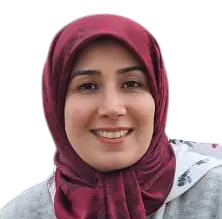
Maryam M.
Last position:
AI Red Team Engineer at Applause
- Performed security assessments and penetration testing on Microsoft AI models for text, image, and video generation.
- Conducted prompt injection attacks through diverse input vectors, including crafted text, steganographic images, and manipulated visual elements (e.g., varying opacity and embedded content).
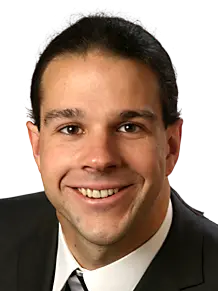
Holger D.
Last position:
Software Developer
- Gained familiarity with complex legacy software for controlling central ship systems (Ada, Java, C++).
- Implemented tests to identify memory leaks.
- Refactored existing project content and tests to object-oriented standards.
- Identified and fixed bugs in existing distributed Java and C++ applications on a DONAR/CORBA network.
- Products: Squish, NetBeans, MKS Integrity, DONAR, CORBA, DOORS, Windchill.
- Skills: Python, Java, Linux, C++, Ada.
Alexander W.

Last position:
Freelance Head of Development / Strategy Consultant at LabMaker GmbH
- Consulting on a wide range of open science hardware projects in the fields of electronics, mechatronics, and optoelectronics
- Comprehensive system analysis and DFM optimization of a novel open hardware miniaturized two-photon microscope
- Exchange with scientists from renowned academic institutions to align the customer’s work in the best possible way
- Production coordination with local and international partners for PCB assembly, CNC machining, and optics
- Process analysis for product design, production planning/execution, product lifecycle, and product data management
- Coaching employees from all departments on the requirements that complex technical products place on business processes
- Development of a comprehensive PLM & PDM concept tailored to the needs of development and manufacturing
- Initiating intensive and direct cross-departmental exchange to identify improvement potential
- Planning shopfloor layout improvements with the production team and supporting the implementation process
- Quick onboarding of two new English-speaking colleagues in technical product management and development
- Ad-hoc and in-depth training of employees in the use of software tools such as KiCad or Autodesk Inventor
- Consulting on long-term development into a scalable, even stronger partner for the open science hardware community
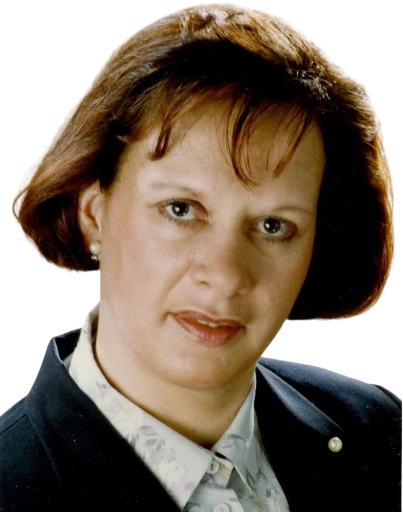
Silke W.
Last position:
Head of Project Management and Consultancy at Systemtechnik GmbH
- Planning of projects and consulting services: professional, technical and commercial, focusing on transformation for public transport
- Identification and assessment of project risks with development of measures and recommendations for risk minimization and avoidance
- Evaluation of projects and reporting
- Execution of projects and delivery of consulting services on time, with required quality and within budget
- Project, hardware and consulting services forecasting
- Disciplinary and professional staff management
- Team development and coaching
- Resource planning across various locations
- Stakeholder management
- Client management with service and support
- Development of contingency plans
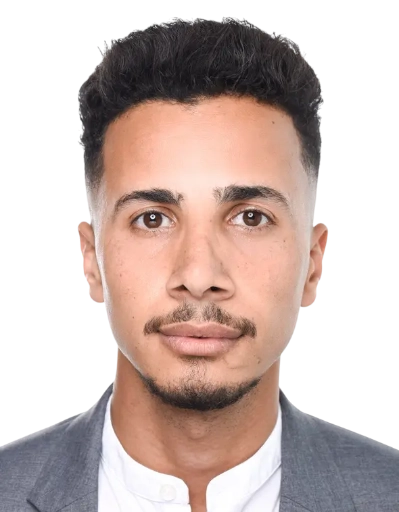
Mohammad A.
Last position:
Rollout System at Amadeus-Fire Informationstechnik
Michael K.

Last position:
Bytec Medizintechnik
- Developed a solution for filtering heavily noisy analog sensor data by combining high-speed sampling and digital firmware filtering
- Increased the battery life of a battery-powered medical device from approx. 10 days to approx. 18 months
- Supported the overall project through the first clinical tests and TÜV approval
Discover over 15,000 top freelancers


Statistics of experts using Embedded Systems
Aggregated from the professional profiles of matched freelancers.

Experience
18 years (Germany: 19 years)

Position duration
0.9 years (Germany: 3 years)

Positions per freelancer
13 (Germany: 12)

Top business areas
Information Technology, Product Development, Quality Assurance

Top industries
Information Technology, Education, Manufacturing

Certification focus areas
Information Technology, Product Development, Project Management

Bachelor's degree or higher
83% (Germany: 95%)

Master's degree or higher
50% (Germany: 67%)

Doctorate
33% (Germany: 12%)

Certifications per freelancer
1 (Germany: 2)

Most common languages
German, English, Arabic

Speak two or more languages
100% (Germany: 99%)
Based on our profile pool as of 29 Oct 2026.
Daily rate distribution
The chart shows how the daily rates of experts in this technology in Hamburg are distributed, based on recent contracts on our platform. Each bar covers a rate range — its height shows the share of experts charging within that range.
Average rates of experts in Hamburg using Embedded Systems
Rates are based on recent contracts and do not include FRATCH margin.

The average daily rate is the mean of all daily rates from recent contracts of comparable freelancers on our platform.
The median daily rate is the middle value of all daily rates — half of comparable freelancers charge less, half charge more. Unlike the average, it is barely affected by outliers.
Calculated based on our freelancers’ daily rates as of 29 Oct 2026. Actual rates may vary depending on seniority level, experience, skill specialization, project complexity, and engagement length.
Embedded Systems experts industry focus
See which industries our matched freelancers work in most often — every figure is calculated live from the freelancers on FRATCH.
- Information Technology (100%)
- Education (71%)
- Manufacturing (71%)
- Automotive (57%)
- Banking and Finance (43%)
- Aerospace and Defense (29%)
- Transportation (29%)
- Professional Services (29%)
Please note that freelancers can work across multiple industries, so percentages overlap.
About the technology
What Embedded Systems Cover
Embedded systems combine hardware and software for products that perform dedicated functions. They run inside vehicles, medical equipment, industrial machines, smart appliances and connected devices. Unlike general-purpose computers, they must often meet strict limits for power, memory, timing and physical space.
Core Technologies
Microcontrollers and processors execute firmware close to the hardware. Specialists work with C and C++, board support packages, device drivers, bootloaders and hardware interfaces such as SPI, I2C, UART, CAN and Ethernet. Real-time operating systems such as FreeRTOS, Zephyr and Embedded Linux support more complex products.
Typical Deliverables
- Firmware for sensors, controllers and connected devices
- Drivers for custom boards and peripheral components
- Real-time control loops and communication stacks
- Secure boot, over-the-air updates and diagnostics
- Test rigs, hardware-in-the-loop setups and production tools
A strong delivery covers the path from board bring-up to maintainable release software. It also documents interfaces, failure handling and update procedures so hardware and software teams can work together.
When Experts Help
Companies bring in freelance expertise when a prototype must become a reliable product, an existing codebase needs a safe redesign or a team lacks specialist capacity for a critical release. In Hamburg, embedded work connects naturally with maritime technology, industrial automation, mobility, logistics and medical technology. Remote collaboration is practical, while lab access, hardware testing or supplier coordination may require on-site work.
Quality Signals
- Clear separation between hardware abstraction, application logic and services
- Measured timing, memory use, power consumption and startup behaviour
- Automated unit, integration and hardware-in-the-loop tests
- Reproducible builds, traceable releases and disciplined code review
- Recovery plans for faults, interrupted updates and lost connectivity
Experienced professionals make trade-offs visible instead of hiding them in firmware. They understand schematics and datasheets, isolate faults with instruments, and communicate constraints before they become production risks.
Working With Specialists
Define the target hardware, toolchain, operating system, interfaces and compliance needs before the engagement starts. Share schematics, existing repositories, test hardware and acceptance criteria where possible. Specialists may also bring adjacent skills in PCB bring-up, electronics debugging, cloud connectivity, cybersecurity, functional safety or manufacturing test.
For Hamburg-based projects, agree early on which sessions need a lab or factory visit and which can happen remotely. English is common in international teams; German may matter when specialists work closely with local production, service or regulated environments.

Frequently asked questions
Curious about Embedded Systems? Here are the answers that come up again and again.

Embedded Systems control dedicated functions inside products rather than serving as general-purpose computers. They manage sensing, motion, communication, power, safety and user interaction in equipment such as vehicles, industrial machines, medical devices and smart appliances.
Embedded Systems are tailored to a product’s hardware, timing and resource limits. PLCs are built around industrial control workflows, while general-purpose software usually runs on more flexible hardware; the right choice depends on determinism, certification, maintainability and production constraints.
A strong Embedded Systems specialist may also understand electronics, schematics, board bring-up, debugging instruments and hardware interfaces. Useful adjacent skills include Embedded Linux, RTOS development, automated testing, cybersecurity, cloud connectivity and manufacturing test.
The required depth depends on the product risk and its development stage. A prototype may need focused firmware and hardware integration skills, while safety-critical or high-volume products require proven work with testing, traceability, release processes and long-term maintenance.
Embedded Systems work can often be handled remotely when repositories, logs, simulators and test hardware are accessible. On-site collaboration in Hamburg becomes more valuable for board bring-up, lab measurements, production-line testing or coordination with local hardware teams.
For Embedded Systems, provide the target board, processor, toolchain, operating system, interface documentation and current test setup. A clear statement of product behaviour, constraints, open defects and acceptance tests helps a specialist estimate the work and start without avoidable delays.
Review how an Embedded Systems specialist tests timing, failures, memory use, power behaviour and recovery paths. Ask for examples of readable architecture, automated tests, reproducible builds, documented assumptions and disciplined debugging rather than judging firmware only by whether a prototype runs.
Embedded Systems projects commonly use C or C++, cross-compilers, Git-based workflows, debuggers and hardware-in-the-loop testing. Depending on the device, the stack may include FreeRTOS, Zephyr, Embedded Linux, Yocto, vendor SDKs and interfaces such as CAN, SPI, I2C or UART.
The average hourly rate of freelancers in Hamburg, Germany who have used Embedded Systems in their recent projects is 73 €, which corresponds to a daily rate of about 586 € based on an 8-hour working day.
Of the freelancers in Hamburg, Germany who have used Embedded Systems in their recent projects, 83% hold at least a Bachelor's degree, 50% hold at least a Master's degree, and 33% hold a doctorate.
On average, freelancers in Hamburg, Germany who have used Embedded Systems in their recent projects have 18 years of professional experience, with a single engagement typically lasting around 0.9 years.
The most common languages among freelancers in Hamburg, Germany who have used Embedded Systems in their recent projects are German (100%), English (100%), and Arabic (29%).
The most common industries among freelancers in Hamburg, Germany who have used Embedded Systems in their recent projects are Information Technology (100%), Education (71%), and Manufacturing (71%).
The most common business areas among freelancers in Hamburg, Germany who have used Embedded Systems in their recent projects are Information Technology (100%), Product Development (100%), and Quality Assurance (86%).
Main locations of FRATCH Experts, who have recently used Embedded Systems
Our freelancers and interim experts are at home across the DACH region — available on-site in the major business hubs or fully remote. Choose a location to discover matched specialists, local market insights and up-to-date availability.


 Berlin
 Munich
 Cologne
 Stuttgart
 Dusseldorf
 Nuremberg
Countries:
Request a free demo
Get in touch with the FRATCH team and we will get back to you within 4 hours.
Would you rather directly get in touch?
We always have the time for a call or email!

Philipp Thomaschewski
FRATCH CEO

