


STM32 Experts in Germany
matched in minutes by AIHire experts who design STM32 firmware, integrate sensors and communication interfaces, and bring connected embedded products from prototype to production. FRATCH matches you quickly and precisely with vetted, available freelancers for your project.

Meet FRATCH Experts in Germany, who have recently used STM32
Andre K.
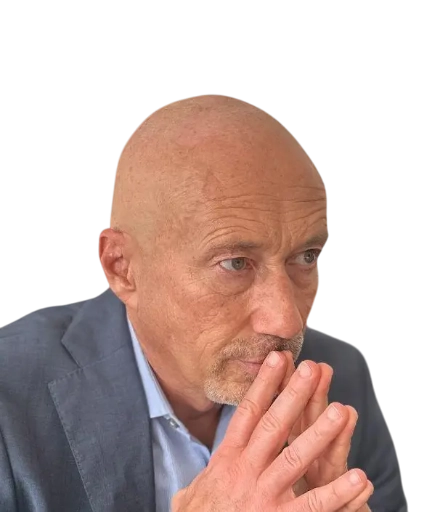
Last position:
Nearshore Engagement Manager at EnBW AG
- Building strong awareness within the company around nearshoring
- Engagement Manager in the Nearshore Competence Center
- Responsible for nearshore consulting, partner screening and technical onboarding, designing and implementing cooperation scenarios, change management, stakeholder management, participation in steering committees, and collaboration with IT and business units
- Tools used: Microsoft Office 365, Microsoft Teams, Azure Devops, Microsoft Sharepoint, Conceptboard
- Key results: Establishment of a nearshoring strategy, successful identification and implementation of outsourcing partnerships, delivery of change management and stakeholder management at the highest level
Stefan R.

Last position:
Senior Product Owner at Bosch & ETAS Automotive
- Product Owner for the Digital Delivery team
- Company-wide Bosch digitalization project for software deliveries
- Technologies: SAP EMS, JFrog, Revenera
- Conducting PI Plannings
Muhammad J.

Last position:
Embedded Linux Intern – IoT Sensor Prototype Development at DHL
- Built a modular C++ 20 embedded Linux acquisition system on a Raspberry Pi, synchronizing IMU and dual-camera data streams to sub-millisecond accuracy.
- Integrated retro-reflective and contrast sensors to trigger acquisition and detect gaps between sorter rails.
- Implemented SPI & I2C sensor communication, GPIO interrupt handling with libgpiod, and CSV & JSON output.
- Designed a multi-threaded acquisition pipeline and an SPSC queue between acquisition and writer threads.
- Built a Python/HTML/CSS based web-server and validated the prototype in a DHL warehouse for defect detection.
- Documented software behavior, configuration, and results for maintainable handover and further development.
Ayusee S.

Last position:
Intern at Schaeffler
- Built a Trend-Scouting AI system to automate technology intelligence in power electronics and semiconductors, combining Azure OpenAI with LangChain, Scrapy-based web crawling for structured, noise-free data acquisition, and automated PDF reporting for internal R&D use. Developed a FastAPI-based (Uvicorn) web application to validate LLM outputs, test prompt strategies, and enable interactive system evaluation.
- Developed a real-time STM32 binary telemetry debugger with a PyQt-based GUI, featuring header-based frame synchronization, anomaly detection, template-driven payload decoding, time-aligned buffering, and live signal visualization.
- Developed an AI-driven power inductor designer using surrogate regression models for accurate electromagnetic and thermal prediction. Integrated multi-objective NSGA-II optimization to generate efficient, manufacturable designs.
Kacper K.

Last position:
Author
Seqnaut and Sycosm (WIP) – Embedded Audio DSP & Synthesis Platform
- Embedded audio DSP framework — synthesizers, effects, drum machines; modular audio graph
- Sequencing: PianoRoll, StepGrid, MasterClock; 8-voice polyphonic synth; CLI + OSC
- Transient Detector — dual-envelope adaptive threshold, guitar attack detection
- Hardware: Teensy 4.1, custom AFE design tapping BOSS GX-100; MIDI FX integration
Label: C++23, C, Python, CMake, FreeRTOS, Teensy 4.1 (ARM Cortex-M7), Teensy Audio (Stoffregen), DaisySP, I2S/SAI, OSC, MIDI
Reginald L.

Last position:
ERP System Redesign (web-based)
PHP and React redesign of a web-based ERP system.
- Development of the header and parts of the navigation
- Development of various modules in React, e.g. calendar, chat, and various tables
Lino G.

Last position:
Senior Data Scientist at VinFast Germany GmbH
- Led strategic software development of fusion algorithms for precise object tracking, trajectory prediction, and environment modeling based on multimodal sensor data (e.g., camera, LiDAR, radar, GNSS, IMU)
- Developed and implemented navigation algorithms for autonomous vehicles, including path planning, obstacle avoidance, and sensor fusion of visual, inertial, and distance-based sensor sources
- Automated extraction and training processes with CI/CD
- Developed and optimized data pipelines and processes in Microsoft Azure using Apache Spark, Databricks, and PySpark
- Developed and optimized embedded software for automotive control units
- Designed latency-critical software for real-time control in robotic systems with RTOS (freeRTOS, SAFERTOS)
- Used the Vector toolchain (CANdela, DaVinci, CANoe) for configuration and diagnostics
- Optimized existing data pipelines and processes (ETL, data warehouse, SQL)
- Developed and trained machine learning models using PyTorch
- Created deep-learning-based object detection and visual SLAM algorithms, trained on combined data from camera, LiDAR, and IMU sensors
- Implemented computer vision algorithms for object detection and classification in robotic systems using OpenCV and YOLO, utilizing synchronized image and depth data
- Implemented behavior-based control systems for autonomous robots using ROS2 Behavior Trees
- Performed testing, release, and integration of sensor fusion algorithms into automotive production programs
- Ensured adherence to proper software development processes and safety standards to guarantee high data quality (MISRA, ISO 26262, ASPICE)
Mario J.

Last position:
Architect / Developer at handyhase
- Overhaul of the entire design and implementation of new UI/UX aspects using React
- Planning of the software architecture and structuring of the project for long-term scalability using Git for version control
Michael D.

Last position:
Sole Proprietor at Unternehmens- und Managementberatung Michael Dobmeier
- Advising and technical implementation of AI integration and workflow automation for small and mid-sized businesses
- Building a multi-tenant AI agent platform as a product base
- Combining strategic consulting, technical implementation, and team enablement
Project examples:
- Development and architecture of the SOLUMiDO Agent-UI platform for integrating digital colleagues into business processes (Next.js, TypeScript, PostgreSQL, Keycloak)
- Development of the ToolChange Assistant: a multilingual, voice-controlled AI agent for optimizing setup times and reducing errors
- Implementation of an AI email assistant for intelligent email classification and processing with Microsoft 365 integration
- AI video marketing integration (STORYNEXT) for mid-sized companies, including AI-assisted briefing and performance analysis
- Social media content automation with AI text creation, approval workflow, and automatic publishing
- Business process analysis and digital solutions implementation for facility management service providers
- Digital consulting and web presence development for associations in rural areas
Oleksii K.

Last position:
Software developer (freelance) at Sasse Elektronik GmbH
- Built custom Yocto Linux image with Docker support (NXP i.MX 6ULL)
- Developed distributed Python application (web interface, gas/temp control)
- Designed multiple docker containers for production and development
- Wrote documentation per IEC 62304
Hendrik W.
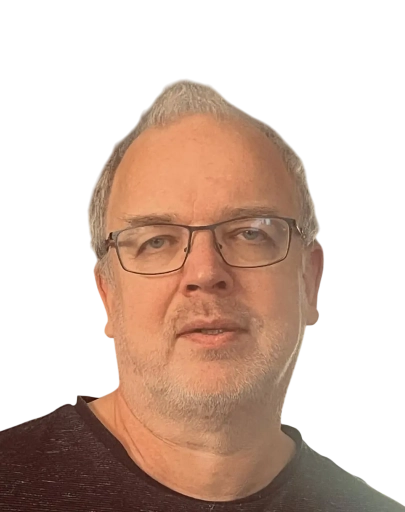
Last position:
Software Test and Maintenance Support at Anton Paar ProveTec GmbH
- Add/create test specifications
- Conduct regression tests
- Conduct release tests
- Analyze Jira tickets
- Identify software defects and fix them with C#
Tilmann S.
Last position:
Technical Expert, Software Architect at Rolls Royce Power Systems / MTU
- Created concepts and architecture for ECU diagnostics over CAN-Bus using UDS, PDX, ODX and safety paradigms
- Designed system deployment for EMS and documented using UML, Draw.io, MS Word, MS Visio and Confluence
- Developed process flows for development, planning, logistics, test & diagnostics in Scrum with Jira and MS Planner
- Communicated across multiple customer teams, conducted knowledge transfer
Viktor H.

Last position:
Freelance Software Developer at Thomas Magnete GmbH
- Development of embedded software for a valve prototype with LIN interface.
- Extension of the software architecture in Rhapsody.
- Implementation of the valve control as a state machine in Rhapsody.
- Implementation of a LIN stack for communication with the PLIN-LDF test environment.
- Integration & commissioning of the built-in bootstrap loader.
- MCU: Infineon TLE9867.
- IDE: Keil µVision5.
- Project management: GitLab.
- Architecture: Rhapsody Architect.
- CAN adapter: PEAK PLIN-USB.
Michael E.
Last position:
Software Developer at Continental
- Supported a telematics component in the automotive sector with SELinux and open-source license management.
- Products: SELinux, iMX8, ScanCode.
- Skills: Linux, firmware development, Python.
Sergej V.
Last position:
Software Developer Motor Control (Project "Multi DMR – Motor-Control") at Lorch Schweißtechnik GmbH
- Modification and redesign of the software for a series component
- Review of the software concept and extension of functionality
- Modification of software functions for DC motor control
- Hardware: ARM STM32G474, CAN bus, Lauterbach T32
- Software: Microsoft Visual Studio Code
Discover over 15,000 top freelancers


Statistics of experts using STM32
Aggregated from the professional profiles of matched freelancers.

Experience
20 years

Position duration
3.2 years

Positions per freelancer
13

Top business areas
Product Development, Information Technology, Quality Assurance

Top industries
Manufacturing, Information Technology, Automotive

Certification focus areas
Information Technology, Product Development, Logistics

Bachelor's degree or higher
95%

Master's degree or higher
73%

Doctorate
9%

Certifications per freelancer
1

Most common languages
German, English, Russian

Speak two or more languages
98%
Based on our profile pool as of 9 Oct 2026.
Daily rate distribution
The chart shows how the daily rates of experts in this technology in Germany are distributed, based on recent contracts on our platform. Each bar covers a rate range — its height shows the share of experts charging within that range.
Average rates of experts in Germany using STM32
Rates are based on recent contracts and do not include FRATCH margin.

The average daily rate is the mean of all daily rates from recent contracts of comparable freelancers on our platform.
The median daily rate is the middle value of all daily rates — half of comparable freelancers charge less, half charge more. Unlike the average, it is barely affected by outliers.
Calculated based on our freelancers’ daily rates as of 9 Oct 2026. Actual rates may vary depending on seniority level, experience, skill specialization, project complexity, and engagement length.
STM32 experts industry focus
See which industries our matched freelancers work in most often — every figure is calculated live from the freelancers on FRATCH.
- Manufacturing (88%)
- Information Technology (78%)
- Automotive (63%)
- Healthcare (43%)
- Education (37%)
- Telecommunication (29%)
- Professional Services (27%)
- Aerospace and Defense (25%)
Please note that freelancers can work across multiple industries, so percentages overlap.
About the technology
What STM32 is
STM32 is a family of 32-bit microcontrollers from STMicroelectronics, built around Arm Cortex-M cores. Companies use STM32 microcontrollers for real-time control, sensing, motor drives, connected devices and industrial electronics. The portfolio ranges from compact, low-power controllers to parts suited to demanding embedded systems.
Where it is used
STM32 powers products that must respond reliably within tight resource and energy limits. Typical applications include:
- Industrial control units, sensors and measurement equipment
- Medical devices and laboratory instruments
- Automotive accessories, chargers and motor controllers
- Smart appliances, wearables and connected hardware
Its broad peripheral selection supports products that combine precise timing, local processing and communication with other systems.
Ecosystem and tooling
Work with STM32 commonly involves STM32CubeMX for configuration, STM32CubeIDE for development and STM32Cube libraries for middleware and board support. Strong specialists also use GCC-based toolchains, JTAG or SWD debugging, oscilloscopes, logic analysers and hardware-in-the-loop tests. Depending on the product, the firmware may run on bare metal, FreeRTOS or another real-time operating system.
When to bring in expertise
Companies often need freelance support when a proof of concept must become a stable product, when an existing board needs new firmware, or when a team faces a difficult hardware and software boundary. Specialist help is useful for:
- Selecting an STM32 family and planning the memory, timing and power budget
- Creating drivers for sensors, displays, motors and communication buses
- Integrating USB, CAN, UART, SPI, I2C, Ethernet or wireless modules
- Preparing manufacturing tests, bootloaders and field updates
In Germany, remote collaboration can work well when documentation, lab access and test hardware are organised clearly. On-site work may help during bring-up, EMC investigations or production-line validation.
What strong specialists deliver
A capable STM32 professional reads schematics and datasheets as confidently as source code. They establish clear interfaces between hardware and firmware, handle interrupts and timing carefully, and design for brownouts, watchdog recovery, memory limits and safe updates. They also make decisions traceable through reviews, tests and useful documentation rather than relying on trial and error.
How quality is assessed
Review shipped embedded products, not only sample code. Ask how the specialist approaches board bring-up, fault diagnosis, power consumption, concurrency and firmware release management. Evidence of structured debugging, automated tests and versioned configuration is valuable. For regulated or safety-sensitive products, discuss requirements engineering, traceability and the standards relevant to the product before work begins.

Frequently asked questions
Questions about STM32? Start with the answers below.

STM32 microcontrollers are used in industrial equipment, motor controls, sensors, medical instruments, consumer electronics and connected devices. The right family depends on processing needs, peripherals, memory, power limits and environmental conditions.
STM32 usually offers a broad range of peripherals, strong real-time control options and fine control over power and memory. Arduino is often chosen for fast prototyping, while ESP32 is attractive when integrated wireless connectivity is central. The best choice depends on production requirements, tooling, connectivity and the team's existing skills.
A strong STM32 specialist often understands circuit schematics, board bring-up, embedded C or C++, debugging with SWD or JTAG, and interfaces such as CAN, USB, SPI and I2C. Experience with FreeRTOS, bootloaders, automated testing and hardware measurement is also valuable.
The complexity of STM32 work matters more than a fixed duration of experience. A simple sensor device may need solid firmware fundamentals, while a safety-sensitive controller or high-volume product calls for proven work with timing, fault handling, production tests and update strategies.
STM32 firmware work can often be completed remotely when the specialist has reliable access to schematics, repositories, documentation and test hardware. On-site collaboration in Germany is more useful for prototype bring-up, lab measurements, hardware changes and production validation.
Ask the STM32 freelancer to explain a comparable product, the debugging method used and how hardware assumptions were verified. Review code structure, test coverage, documentation and release practices, then confirm experience with the exact interfaces and operating conditions your product requires.
STM32CubeMX can generate configuration and startup code, but it does not replace architectural decisions, driver work, testing or hardware validation. An experienced STM32 professional knows where generated code helps and where it must be reviewed, extended and maintained carefully.
Maintainable STM32 firmware has clear module boundaries, documented hardware dependencies, controlled configuration and tests for important behaviour. Reproducible builds, versioned tool settings, diagnostic logs and a practical update process also make future changes safer.
The average hourly rate of freelancers in Germany who have used STM32 in their recent projects is 89 €, which corresponds to a daily rate of about 715 € based on an 8-hour working day.
Of the freelancers in Germany who have used STM32 in their recent projects, 95% hold at least a Bachelor's degree, 73% hold at least a Master's degree, and 9% hold a doctorate.
On average, freelancers in Germany who have used STM32 in their recent projects have 20 years of professional experience, with a single engagement typically lasting around 3.2 years.
The most common languages among freelancers in Germany who have used STM32 in their recent projects are German (98%), English (98%), and Russian (14%).
The most common industries among freelancers in Germany who have used STM32 in their recent projects are Manufacturing (88%), Information Technology (78%), and Automotive (63%).
The most common business areas among freelancers in Germany who have used STM32 in their recent projects are Product Development (100%), Information Technology (94%), and Quality Assurance (82%).
Main locations of FRATCH Experts, who have recently used STM32
Our freelancers and interim experts are at home across the DACH region — available on-site in the major business hubs or fully remote. Choose a location to discover matched specialists, local market insights and up-to-date availability.
 Berlin Hamburg Munich Cologne Frankfurt Stuttgart Dusseldorf Leipzig Dortmund Essen Bremen Dresden Hanover Nuremberg
  Berlin
 Request a free demo
Get in touch with the FRATCH team and we will get back to you within 4 hours.
Would you rather directly get in touch?
We always have the time for a call or email!

Philipp Thomaschewski
FRATCH CEO

