


Apache CXF Experts in Germany
matched in minutes by AIHire experts who design JAX-WS and JAX-RS services, secure WSDL-based integrations and connect enterprise systems through Spring, Maven or Apache Camel. FRATCH matches you quickly and precisely with vetted, available freelancers who fit your project.

Meet FRATCH Experts in Germany, who have recently used Apache CXF
Osman T.
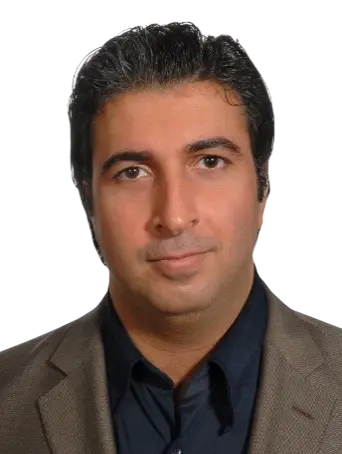
Last position:
Senior Architect, DevOps Engineer at genPsoft GmbH
IT consulting, analysis, architecture design, new and further development, code review, test automation, continuous integration, continuous delivery in backend and frontend areas for Automotive Project Instavalo.
Frontend:
- Implementation of UI components according to specifications, especially style guides and responsive design eith React and Typescript
- Component testing
- Code documentation
- CI/CD with Gitlab Pipeline
Backend / IoT:
- Analysis and architectural design with AWS Greengrass IoT on Edge Devices
- Setting up Microservices containers with Docker Compose on Edge device with AWS Greengrass and AWS IoT IAM, Token Exchange Service, Ansible
- CI/CD with Gitlab Pipeline, Terraform, AWS ECR
- Logging with Fluentbit Lua Language for AWS Cloudwatch
- Python Lambda for AWS Greengrass Recipe deployment on Edge Devices
- Implementation of test-driven development with JUnit, Mockito, and code Coverage
- Jacoco
- Definition of REST interfaces with OpenAPI / Swagger
- Development and enhancement of software based on Java Quarkus, Typescript NestJs NodeJs and Python
- Authentication and authorization in Aws IAM
- Development of REST and gRPC interfaces for the frontend and backend
- Implementation of Maven dependencies with DevSecOps OWASP
- Spring AI, Jetbrains AI Assistant, Junie, Github Copilot, Claude Code, Agents, Skills, Command, Hooks, Subagents
Thorsten M.

Last position:
Odoo Implementer at N.N.
As project manager for the Odoo implementation at a small company, I was responsible for designing, implementing, and training a fully integrated CRM and accounting system. Through structured requirements analysis, precise data migration, and targeted change management, I was able to complete the rollout in just eight weeks. The project led to a significant reduction in manual tasks, faster business processes, and increased real-time transparency.
Main Responsibilities
Requirements analysis and process mapping Configuration of Odoo modules: CRM, Sales, and Accounting Data migration (Excel/CSV → Odoo) and quality control Creation of workflows, automated email rules, and dashboards Conducting training sessions and providing support after go-live Project coordination (budget, schedule, stakeholder communication)
Key Achievements
Full implementation of the Odoo suite within the set timeframe (8 weeks) 30% reduction in accounting time and 25% acceleration of the lead-to-sale flow 100% customer satisfaction after go-live, based on survey results Successful migration of 100% of existing master data without data loss Establishment of a sustainable support infrastructure (3-month post go-live support)
Impact
Improved decision-making through real-time dashboards and automated reports Increased efficiency and cost savings (≈ €8,000/month) Scalability for future growth (additional modules can be integrated seamlessly) Strengthened sales and finance departments through seamless process integration
This summary highlights how I created concrete and measurable value for the company through structured project work, technical expertise, and targeted training.
Tamás E.

Last position:
Senior Software Developer / Tech Lead at NDA (defense / OSINT)
- Designing the audit logging framework
- Implementing APIs for developers to integrate in their codebase
- Implementing ingestion pipeline, database query layer and UI for browsing the audit events
- Improving stability and reliability of the backend system
Rüdiger S.

Last position:
Full-Stack Software Engineer / Consultant for Digitalization at ARTEVENT
Designed, built, and launched an internal event planning web application used by over 100 department leads for a large event, despite having no dedicated testing phase.
Ensured smooth, failure-free operation during first production use, leading to the tool being adopted for future events.
Automated catering calculations and related workflows, significantly reducing email communication and manual computation effort for meal planning.
Managed deployment and hosting on a Linux server using Coolify, including application setup and runtime operations.
Hired and guided a communication designer on UX while independently owning all technical decisions and implementation.
Jorge E.
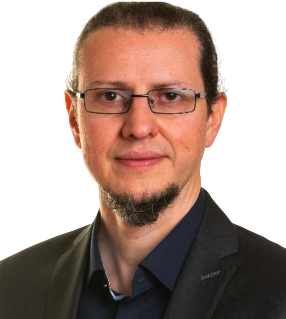
Last position:
Bittrich & Bittrich
- Extension and maintenance of the Doktree tax advisory document management tool
- Alfresco and Angular development
- Linux system maintenance
Ralf K.

Last position:
Senior Java Developer, Consultant at Dataport AÖR
- Maintenance and further development of the Java/Swing-based @rtus FormsEditor
- Design and development of a graphical formula editor based on Google Blockly for representing a project-specific DSL, including parsing and code generation
- Implementation of character-accurate synchronization between the editor and print preview to improve the user experience
- Technologies: Java 17/21, Swing, JavaFX, JBoss/Wildfly, JUnit, Mockito, Blockly, JPedal, ICEPDF, Eclipse
Igor K.

Last position:
Freelance Software Developer
Michal B.
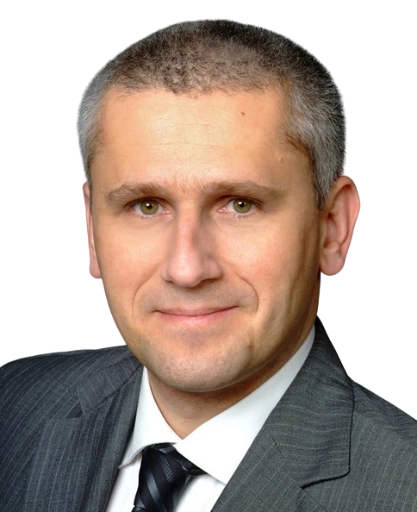
Last position:
Senior Golang Engineer at STACKIT / Schwarz Gruppe
- Responsible for software engineering and DevOps in the Data & AI Platform - Intake and PubSub projects at STACKIT, the cloud provider of the Schwarz Group.
- Technologies: Golang, Kubernetes, Kubernetes operators, OpenAPI v3, REST API, Azure DevOps, CI/CD, k6, Kafka, Strimzi, Apache Iceberg, RBAC, IAM, Terraform, Helm, Infrastructure automation, Load balancing, Traefik, ArgoCD, kuttl, Kyverno chainsaw, Kustomize, Velero, Prometheus, Grafana, Checkly / Playwright (TypeScript), NATS/Jetstream, WebSockets, gRPC, SSE
Vladimir M.

Last position:
Developer at Financial services provider
- Support and further development of a framework for developing applications in a banking association: DynS/OSPE
- Migration of the framework to Java 11 and Java 17
- Java8, Java11 and Java17, Spring, Spring-Batch, Spring WebServices, Spring-Security, Spring-Data, JPA, Hibernate, OpenSource libraries etc.
- XML, JAXB, JSON, REST and SOAP services, DB2, Oracle, WebSphere or Liberty AS, FreeMaker, Junit, mock libraries, JaCoCo, Maven, IntelliJ, Eclipse, GitHub, SVN, Jira
Jan G.

Last position:
Master Data Application at confidential
Visualization, search, and maintenance of various types of master data, providing them via a REST API, and implementing a variety of import and export formats.
Implementation, architecture, project management.
Technologies and tools: Angular (Signals, Signal Store, swagger-codegen, standalone components), Java, PostgreSQL, ActiveMQ, JavaScript, Spring Boot (Spring Core, Spring MVC, Spring Data/JPA via Hibernate, Spring Security, Spring Modulith), JUnit, Flyway, QueryDSL, GraphQL, REST API, Node, npm, Maven, SonarQube, GitLab CI/CD pipelines, Docker, Nexus, OpenAPI + Swagger UI, Keycloak, OAuth2, OpenID Connect, IntelliJ IDEA, Jira, Confluence.
Robert M.

Last position:
Backend Developer at Payment Backend
- Integration of partner systems in the payment and credit card environment.
- Development, deployment, and monitoring in a large system landscape.
- Use of a wide range of customer-specific frameworks and tools.
Jacqueline H.

Last position:
Kitchen Appliance Manufacturer
Setting up and enhancing an international subscription management system
Migrating and decommissioning a Hybris-SAP system and integrating Zuora
Implementing numerous interfaces to various systems (external and internal)
Setting up and improving monitoring with Grafana, Prometheus, and Databricks
Introducing logging with Loki
Implementing business requirements using jQuery, Thymeleaf, Spring Boot, Java, Go, and Python
Adjusting and extending the GitLab CI pipelines
Setting up and extending infrastructure as code with Terraform and ArgoCD on AWS
Setting up and running E2E and performance tests
Expanding the Databricks business intelligence solution to provide various KPIs
Responsibilities: Architecture, DevOps, development, unit tests, coaching employees and apprentices, E2E, smoke, and integration tests, agile methods consulting (Kanban, Scrum)
Technologies and methods: Java, Go, Kotlin, Node.js, Spring Boot, SOAP/REST, Quarkus, Thymeleaf, Vaadin, Slack, Jira, Confluence, IntelliJ, GitLab, SQS, Kafka, AWS, Kubernetes, Terraform, Maven, Gradle, GitLab CI, Databricks
Reinhard D.

Last position:
Continuing Education Data Analytics, Artificial Intelligence, Deep Learning, Machine Learning at Continuing Education
- Continuing education in Data Analytics, Artificial Intelligence, Deep Learning and Machine Learning
- Operating system: Windows
- Development environments: JetBrains PyCharm, Jupyter Notebook, Spyder
- Programming languages: Python 3.10
- Other technologies: Anaconda, Keras 2.10, NumPy, OpenCV, Pandas, Scikit-learn, Seaborn, TensorFlow 2.10, PyTorch
Christof N.

Last position:
Senior Developer at Otto GmbH
- Further development of personalized advertising spaces on the Otto web shop
- Full-stack development in a Kanban-driven team of about 15 people
- Technologies: Microservices, Kotlin, Spring, Spring Boot, Gradle, MongoDB, HTML, JS, Node, SCSS, AWS
- Development process: Kanban; continuous integration with AWS CodePipeline and GitHub Actions
Jacqueline K.

Last position:
OTTO
- Design, development, and monitoring of microservices
- Migrating functions from a monolithic system into separate microservices
- Designing and implementing new microservices (backend and frontend)
- Setting up and maintaining a CI/CD pipeline (GitHub Actions)
- Configuring cloud infrastructure with AWS CDK and Terraform
- Designing and implementing event-driven communication with AWS SNS/SQS and Apache Kafka
- Ensuring code quality through Test Driven Development (TDD), static code analysis, and Clean Code
Discover over 15,000 top freelancers


Statistics of experts using Apache CXF
Aggregated from the professional profiles of matched freelancers.

Experience
25 years

Position duration
2 years

Positions per freelancer
19

Top business areas
Information Technology, Product Development, Quality Assurance

Top industries
Information Technology, Retail, Banking and Finance

Certification focus areas
Information Technology, Product Development, Business Intelligence

Bachelor's degree or higher
86%

Master's degree or higher
71%

Doctorate
29%

Certifications per freelancer
2

Most common languages
German, English, Spanish

Speak two or more languages
93%
Based on our profile pool as of 9 Oct 2026.
Daily rate distribution
The chart shows how the daily rates of experts in this technology in Germany are distributed, based on recent contracts on our platform. Each bar covers a rate range — its height shows the share of experts charging within that range.
Average rates of experts in Germany using Apache CXF
Rates are based on recent contracts and do not include FRATCH margin.

The average daily rate is the mean of all daily rates from recent contracts of comparable freelancers on our platform.
The median daily rate is the middle value of all daily rates — half of comparable freelancers charge less, half charge more. Unlike the average, it is barely affected by outliers.
Calculated based on our freelancers’ daily rates as of 9 Oct 2026. Actual rates may vary depending on seniority level, experience, skill specialization, project complexity, and engagement length.
Apache CXF experts industry focus
See which industries our matched freelancers work in most often — every figure is calculated live from the freelancers on FRATCH.
- Information Technology (93%)
- Retail (67%)
- Banking and Finance (60%)
- Insurance (60%)
- Telecommunication (60%)
- Automotive (40%)
- Professional Services (40%)
- Transportation (33%)
Please note that freelancers can work across multiple industries, so percentages overlap.
About the technology
Service framework
Apache CXF is an open-source framework for building and consuming web services on the JVM. It supports SOAP through JAX-WS and RESTful APIs through JAX-RS, making it useful when new services must connect with established enterprise systems. Its architecture separates transports, bindings, data formats and service logic.
Enterprise integrations
Companies use Apache CXF for order processing, customer data exchange, payment orchestration and internal service layers. It handles contracts defined with WSDL as well as resource-oriented REST interfaces. In Germany, it commonly appears in long-running integration landscapes where reliability, traceability and compatibility matter more than adopting a new stack.
Ecosystem and tooling
Professionals work with Maven, Spring and Jakarta or Java EE APIs around CXF services. Apache Camel can route CXF messages across databases, queues and external systems, while JAXB or other data-binding tools map XML and Java objects. Interceptors provide a structured place for logging, validation, transformation and policy enforcement.
- Configure SOAP bindings, WSDL contracts and generated clients
- Expose REST resources with JAX-RS and JSON or XML representations
- Apply WS-Security, TLS, authentication and message policies
- Test service contracts, faults, headers and compatibility
When specialists help
Freelance expertise is valuable when a company inherits undocumented SOAP services, needs a secure interface for a new partner or must modernize an integration without breaking consumers. Specialists also help during migrations from older Java EE APIs to Jakarta namespaces, or when CXF services need clearer monitoring and deployment practices.
- Stabilize failing integrations and contract mismatches
- Create clients for external SOAP or REST services
- Improve security, observability and fault handling
- Move services between application servers or delivery environments
What strong professionals know
Strong Apache CXF professionals understand service contracts, XML namespaces, HTTP behavior and the operational impact of retries and timeouts. They can distinguish a transport problem from a schema, serialization or policy problem. They also document generated code, extension points and compatibility decisions so internal teams can maintain the result.
Delivery and collaboration
A good engagement starts with the existing WSDLs, API conventions, deployment model and integration risks. Remote collaboration works well when repositories, contract tests, logs and decision records are accessible; on-site workshops can help when several German business units or legacy systems must be aligned. The best specialists communicate clearly with both technical and integration stakeholders.

Frequently asked questions
Everything clients usually want to know about Apache CXF, in one place.

Apache CXF is used to create and consume SOAP and REST web services on the JVM. Companies use it for contract-based integrations, enterprise APIs, generated clients and communication between internal or partner systems.
Apache CXF is a broad service framework with strong support for JAX-WS, JAX-RS, WSDL, SOAP policies and multiple transports. Spring Web Services is often chosen for SOAP projects closely centered on Spring, while REST-only frameworks can be simpler when contract-driven SOAP interoperability is not required.
A strong Apache CXF specialist should understand Java, Maven, Spring or Jakarta APIs, XML Schema, WSDL and HTTP. Useful adjacent skills include WS-Security, OAuth, TLS, Apache Camel, application servers, message queues and automated contract testing.
The right Apache CXF experience depends on the service landscape, security requirements and number of external contracts involved. A smaller client integration may need focused CXF knowledge, while a legacy modernization requires proven work with WSDL compatibility, generated code, deployment constraints and production troubleshooting.
Apache CXF projects can be handled remotely when service contracts, repositories, test environments and logs are available to everyone. For teams in Germany, clarify whether workshops require on-site attendance and whether the specialist can communicate effectively in the languages used by technical and business stakeholders.
Choose Apache CXF when SOAP interoperability, WSDL contracts, WS-Security or existing Java service integrations are central requirements. A lighter REST framework may be a better fit for a new, internal HTTP API with no need for those enterprise service features.
Ask an Apache CXF professional to explain a real integration involving contracts, namespaces, faults, security and observability. Strong answers connect design choices to compatibility and operations, rather than focusing only on generated classes or framework configuration.
An Apache CXF engagement should produce working service implementations or clients, documented contracts, configuration, security settings and automated tests. It should also leave clear deployment notes, monitoring guidance and a plan for handling contract changes or partner failures.
The average hourly rate of freelancers in Germany who have used Apache CXF in their recent projects is 96 €, which corresponds to a daily rate of about 768 € based on an 8-hour working day.
Of the freelancers in Germany who have used Apache CXF in their recent projects, 86% hold at least a Bachelor's degree, 71% hold at least a Master's degree, and 29% hold a doctorate.
On average, freelancers in Germany who have used Apache CXF in their recent projects have 25 years of professional experience, with a single engagement typically lasting around 2 years.
The most common languages among freelancers in Germany who have used Apache CXF in their recent projects are German (100%), English (93%), and Spanish (13%).
The most common industries among freelancers in Germany who have used Apache CXF in their recent projects are Information Technology (93%), Retail (67%), and Banking and Finance (60%).
The most common business areas among freelancers in Germany who have used Apache CXF in their recent projects are Information Technology (100%), Product Development (93%), and Quality Assurance (67%).
Main locations of FRATCH Experts, who have recently used Apache CXF
Our freelancers and interim experts are at home across the DACH region — available on-site in the major business hubs or fully remote. Choose a location to discover matched specialists, local market insights and up-to-date availability.
 Berlin Hamburg Munich Cologne Frankfurt Stuttgart Dusseldorf Leipzig Dortmund Essen Bremen Dresden Hanover Nuremberg
 Request a free demo
Get in touch with the FRATCH team and we will get back to you within 4 hours.
Would you rather directly get in touch?
We always have the time for a call or email!

Philipp Thomaschewski
FRATCH CEO

