


Wi-Fi Experts in Munich
matched in minutes by AIHire experts who design secure wireless networks, tune enterprise WLAN performance, and deliver site surveys, roaming solutions, and monitoring setups. FRATCH connects you with vetted, available freelancers through fast, precise AI matching.

Meet FRATCH Experts in Munich, who have recently used Wi-Fi
Rallis T.
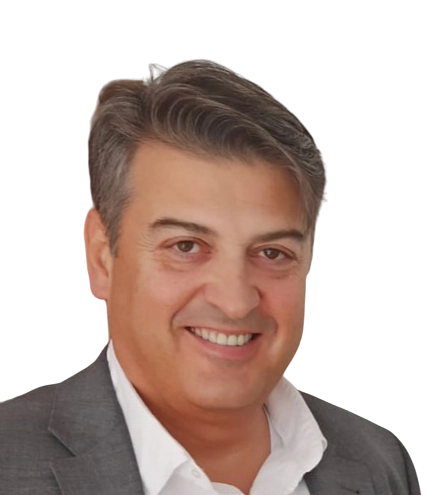
Last position:
Freelancer Senior Program Manager at LTM Mindtree-Germany
- Managed Microsoft Cloud Accelerator Factory (CAF) programs for global enterprise customers, ensuring Azure cloud implementations aligned with security, governance, and compliance best practices, including ISO 27001-aligned controls and cloud security frameworks.
- Managed complex global enterprise transformation programs with strong focus on project delivery, financial governance, budget control, planning, risk management, and executive reporting, ensuring delivery within scope, timeline, and budget.
- Led the implementation of e-invoicing solutions for Nestlé, coordinating finance, IT, business stakeholders, and external providers to ensure successful integration, testing, rollout, and delivery of electronic invoicing processes.
- Managed an Oracle-to-PostgreSQL database migration, coordinating technical teams, application owners, testing activities, dependencies, risks, and cutover planning to ensure a controlled and successful transition.
- Led cross-functional programs involving finance and payment-related processes, enterprise platforms, and system integrations, with strong stakeholder management across business, IT, vendors, and senior leadership.
- Delivered transformation programs in FMCG environments, including Nestlé, managing complex international stakeholder structures, third-party providers, governance, RAID management, and business-critical dependencies.
Andre K.
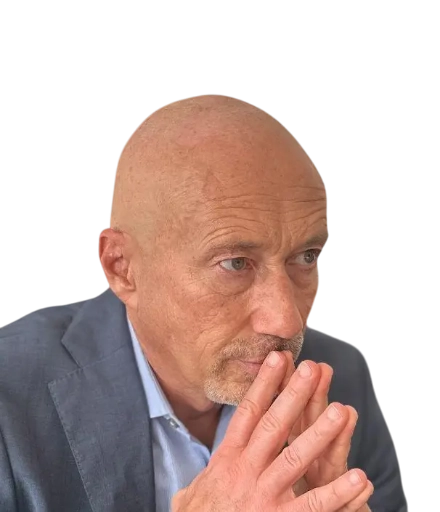
Last position:
Nearshore Engagement Manager at EnBW AG
- Building strong awareness within the company around nearshoring
- Engagement Manager in the Nearshore Competence Center
- Responsible for nearshore consulting, partner screening and technical onboarding, designing and implementing cooperation scenarios, change management, stakeholder management, participation in steering committees, and collaboration with IT and business units
- Tools used: Microsoft Office 365, Microsoft Teams, Azure Devops, Microsoft Sharepoint, Conceptboard
- Key results: Establishment of a nearshoring strategy, successful identification and implementation of outsourcing partnerships, delivery of change management and stakeholder management at the highest level
Vicenco K.

Last position:
ITSM Project Manager (self-employed)
Unified ITSM framework
- Definition of a company-wide ITSM target picture
- Introduction of a uniform service structure across all business units
SLA and OLA management
- Building a standardized SLA framework
- Definition of service classes (Business Critical, Standard, Low Priority)
- Introduction of OLAs between internal teams
- Building meaningful SLA reporting
- Definition of KPI and service dashboards for business units
Service portfolio management
- Definition of service descriptions
- If needed, preparing possible cost and service billing
Ticketing & processes
- Incident management
- Uniform ticket categories
- Standardized prioritization
- Escalation matrix
- Automations
- Self-service optimization
Request fulfillment
- Service catalog across all business units
- Approval workflows
Problem management
- Introduction of root cause analysis
- Known error database
- Problem review process
Complete asset management concept
- Hardware lifecycle management
- Software lifecycle management
- Leasing lifecycle
- Mobile device lifecycle
- Monitor lifecycle
- Phone lifecycle
Processes
- Procurement
- Goods receipt
- Inventory
- Assignment
- Return
- Disposal
- Leasing return Goal: single source of truth for all assets
CMDB design
- Definition of all configuration items:
- Workplace
- Notebooks
- Monitors
- Mobile phones
- Printers
Infrastructure
- Servers
- Firewalls
- Switches
- WLAN
- Storage
- Backup systems
Cloud
- Azure resources
- Microsoft 365
- SaaS services
Relationships
- User ↔ Asset
- Asset ↔ Service
- Service ↔ Infrastructure
- Location ↔ Asset
- Goal: make all service dependencies visible
Software asset & license management
- License management concept
- License balancing
- Compliance reporting
- Microsoft license management
- Adobe license management
- SaaS management
- Contract management
- Renewal management
Interfaces & automation Existing systems
- Workday
- Joiner
- Mover
- Leaver
TESMA
- Leasing data
- Contract data
Matrix42
- Asset synchronization
- User synchronization
Active Directory / Entra ID
- User management
Microsoft 365
- License assignment
- Group management
Dormakaba
Access processes
Lifecycle services
Monitoring platforms
- PRTG
- Palo Alto
- Cisco
Reporting & KPI framework
- Definition of a management dashboard
- KPIs
- Ticket volume
- SLA fulfillment
- MTTR
- First resolution rate
- Asset accuracy
- License compliance
- Change success rate
- Service availability
- Degree of automation
Network redesign support
- Governance
- Support of the network redesign from an ITSM point of view
- Definition of affected services
- Change management structure
- Communication concept
CMDB integration
- Recording of all network components
- Service mapping
- Dependency analysis
Validation of documentation and knowledge base articles
- Network documentation
- Operations documentation
- Standard changes
Monitoring & event management
- Target picture
- Central monitoring concept
- Event management process
- Alerting strategy
- Escalation model
Systems
Cisco
Palo Alto
Fortinet
Rubrik
Veeam
Matrix42
Azure
Microsoft 365 Automation
Ticket creation from monitoring
Escalations
Standard actions
Audit, compliance & information security
- ISO 27001 consulting
- TISAX consulting
- NIS2 preparation - consulting
- Audit-ready processes
- Documentation structure
- Evidence tracking in Matrix42
Roadmap
- 12-month roadmap
- Prioritization of all measures
- Quick wins
- Medium-term projects
- Long-term target picture
- Documentation
Peter S.

Last position:
Rollout Manager at Siemens Healthineers
- Cisco SDA LAN network
- Transition and Transformation
Volker R.

Last position:
Architect and Senior System Administrator at International trading company
- Analysis and optimization of the VMware environment for operation in a KRITIS environment
- Planning and implementation of updates to the VMware and hardware environment in a KRITIS environment
- Set up Skyline Health Diagnostics
- Review of the existing documentation
- Training and onboarding of new internal employees
- Support with migration and upgrade projects
- Preparations for moving scripts in the virtualization environment to GitLab
- Ticket processing with Service.Now
Eduard D.

Last position:
Guest Lecturer at Politehnica University Bucharest
"Reasoning Models: From LLM Foundations to NOC Automation."
Florian K.

Last position:
LAN Planner at Global Network AG
- As-is assessment of the current network infrastructure and its documentation, including on-site inspections
- Independent planning of new distribution and main distribution rooms in the individual district offices (components used, rack layout, connectivity), considering the BSI IT-Grundschutz and InfoSic requirements
- Planning of new copper and fiber optic cabling, including patch panels
- Coordination with building services engineering (TGA) to ensure compliance with relevant on-site requirements
- Development of detailed execution plans and high-level concepts for the rollout of the new infrastructure
- Additional support after the components go live (hypercare phase)
- Regular communication with project management and client stakeholders
Umut T.

Last position:
App Engineer at Tonies SE
Worked as an App Engineer as part of the IoT Control team in a React Native Stack.
- Implementing new Components based on the Tonies Design System.
- Improving, extending and maintaining Tonies Design System
- Adding new features like Volume and Playback Control of the Tonies
- Fixed connection issues via bluetooth and wifi
- Removing technical debt and polishing for an upcoming big software and hardware release
- Improving accessibility by optimizing screens and components for usage via screen readers.
- Wrote lots of automated tests to ensure app quality is always stellar.
- Weekly app releases in a high volume workload environment
Results & Impact:
- Improved app stability and connection reliability ahead of a major software and hardware release
- Raised overall app quality through a significantly broader automated test suite, catching regressions before they reached users
- Made the app usable with screen readers, improving accessibility for a wider audience
- Sustained a weekly release rhythm in a high-volume production environment without quality regressions
Technologies: react-native, expo, typescript, react-19, react-compiler, react-navigation, zustand, @tanstack/react-query, i18next, figma, app-store, play-store, sentry, bitrise, config-cat, poeditor
Armin I.
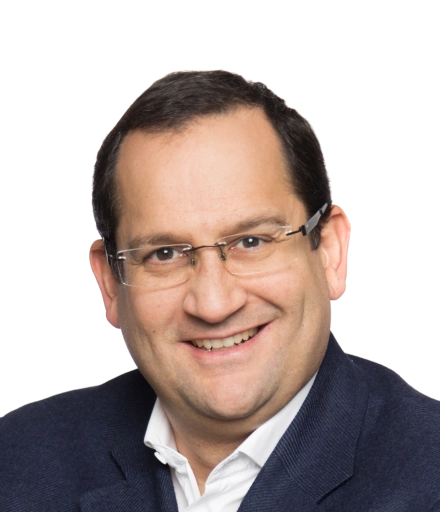
Last position:
Founder & Managing Partner at Iskander Business Partner GmbH
- Built a digital unit for a large corporation with 220,000 employees
- Interim manager for various CRM and Customer Service functions with up to 2,000 employees
- Digitalization for both cost savings and growth
- Numerous trainings on innovation development, product development, and presentation techniques
- Speaker on digitalization
- Market analysis for the home audio video market
- Responsible for building a product management department at a pay-TV company
- Partner responsible for the growth strategy in Sales and Marketing Germany during a market transformation at a leading consumer electronics manufacturer, including the launch of a partnership with a telecommunications company
- Overall responsibility for the subprojects “requirements gathering” and “business-side implementation” as part of a project for a “new overall IS infrastructure” (Billing, CRM, etc.) for a mobile telecommunications company. Total project size >300 Mio. €
- Sale of subsidiaries
- Partner responsible for projects in the areas of “churn reduction for private customers”, “sales management for business customers”, “ARPU Up for business customers”, “trade fair preparation”, “messaging strategy”, “optimization of a no-frills brand”, “regionalization”, “CRM”, “segmentation”, “device launch”, “Care 2 Sell”, etc. at telecommunications companies
Torsten W.
Last position:
Product Owner at Beyonnex
Initial technical analysis of the requirements for the two applications
Creating a system concept for the interim solution and for the final solution
Creating the product vision, customer journey, and story map for the interim solution in close cooperation with subject matter experts
Building a development team
Managing dependencies and interfaces with the other applications according to Domain Driven Design principles
Creating EPICs and user stories, and maintaining the product backlog in coordination with subject matter experts and developers
Running sprint reviews with relevant stakeholders such as subject matter experts and management
Analyzing the requirements for the final solution
The interim solution was built within 8 months and was successfully used for the 2022 heating cost billing
The interim solution has since been further developed to increase automation
A technical concept for the final solution was created
Handover to two internal Product Owners is currently in progress
Frederik L.

Last position:
Founder at Tech Lunch Club
- Founded and organized a curated networking event connecting startup founders, executives, and tech leaders over lunch.
- Facilitated discussions on emerging technologies, AI, and business innovation, fostering collaboration between the startup and corporate worlds.
- Built a thriving industry community, creating meaningful business opportunities.
Himanshu N.
Last position:
Principal (Data Scientist/Data Engineer/Gen AI Engineer) at Marktguru Deutschland GmbH
Architected an agentic, real-time offer orchestration engine where specialized agents (retrieval, pricing/optimization, and policy/guardrails) coordinate to personalise promotions across customer touchpoints using RAG with FAISS over Delta Lake and low-latency Databricks Model Serving. Collaborated with product managers and commercial stakeholders to shape the roadmap and evaluate emerging agent patterns for production.
Designed an agent-based data quality service that orchestrates schema detection, entity normalization, and validator/exception-handling agents to clean multi-retailer SKU feeds at scale. Wrapped model calls in PySpark UDFs for distributed inference, automated via Databricks Workflows and CI/CD.
Developed a multimodal, agentic extraction pipeline where vision, parsing, and compliance agents collaborate to derive brand, packaging, and volume from scanned images using Claude 3 Sonnet with Swin Transformer encoders. Orchestrated via Azure Event Hub with outputs persisted to Delta Lake.
Implemented a GS1 taxonomy classification service built around cooperating agents for inference, drift monitoring, and auto-retraining governance using Falcon 180B (LoRA-tuned) with a batch pipeline on Databricks.
Created a hybrid agent workflow where a retrieval agent surfaces candidate matches via embeddings and a reasoning/verification agent (Mixtral 8x7B) adjudicates receipt-to-SKU alignment, integrated into a streaming Databricks pipeline.
Built a multimodal attribute inference pipeline structured as cooperating vision-language, rules/consistency, and compliance agents to fill NutriScore, nutrition fields, and packaging types from names and images using LLaMA 3-8B with CLIP embeddings.
Developed a GenAI-powered orchestration system that ingests recipes from multiple websites, parses ingredients through structured extraction agents, and dynamically links them to real-time retailer offers via tagging, semantic reasoning, and business-rule agents.
Janybasha S.
Last position:
Diagnostic Software Developer at BMW Group
- Development of the vehicle communication stack in C using AUTOSAR tools for robust inter-module communication within the ECU
- Design, implementation and validation of functions for the electric powertrain, contributing to improved efficiency and reliability
- Definition and verification of system and software requirements, ensuring traceability and compliance with standards
- Collaboration with development partners in North Africa, coordinating architecture, interfaces and integration milestones
- Extension of the communication stack with enhanced security features, increasing resilience against unauthorized access and data manipulation
Amr T.
Last position:
System Architect at Valeo
- Technical responsibility for the ConMod2.0 (Connectivity Module) product, which will connect future vehicles in the network as nodes with the Internet of Things blockchain.
- Lead technical discussions to define the specifications of various components (antennas, modems, Bluetooth chips, Wi-Fi chips, and microprocessors) with ConMod2.0 component suppliers (Quectel, Qualcomm, Marvell, and STMicroelectronics) and to discuss and plan system design iterations.
- Coordinate with other stakeholders, e.g., electronics system architect, software architect, software PMs, and software developers at Valeo Egypt, to define architecture concepts.
Massood S.
Last position:
IT program and project manager, Cloud Transformation & Transition Manager, Rollout Manager, ITIL® Process Manager (ITIL® at City of Munich (LHM)
Discover over 15,000 top freelancers


Statistics of experts using Wi-Fi
Aggregated from the professional profiles of matched freelancers.

Experience
24 years

Position duration
2.5 years (Germany: 3.1 years)

Positions per freelancer
11 (Germany: 16)

Top business areas
Information Technology, Project Management, Product Development

Top industries
Information Technology, Manufacturing, Banking and Finance

Certification focus areas
Information Technology, Project Management, Audit

Bachelor's degree or higher
86% (Germany: 79%)

Master's degree or higher
57% (Germany: 46%)

Doctorate
29% (Germany: 8%)

Certifications per freelancer
6 (Germany: 4)

Most common languages
German, English, Spanish

Speak two or more languages
100% (Germany: 96%)
Based on our profile pool as of 29 Oct 2026.
Daily rate distribution
The chart shows how the daily rates of experts in this technology in Munich are distributed, based on recent contracts on our platform. Each bar covers a rate range — its height shows the share of experts charging within that range.
Average rates of experts in Munich using Wi-Fi
Rates are based on recent contracts and do not include FRATCH margin.

The average daily rate is the mean of all daily rates from recent contracts of comparable freelancers on our platform.
The median daily rate is the middle value of all daily rates — half of comparable freelancers charge less, half charge more. Unlike the average, it is barely affected by outliers.
Calculated based on our freelancers’ daily rates as of 29 Oct 2026. Actual rates may vary depending on seniority level, experience, skill specialization, project complexity, and engagement length.
Wi-Fi experts industry focus
See which industries our matched freelancers work in most often — every figure is calculated live from the freelancers on FRATCH.
- Information Technology (100%)
- Manufacturing (60%)
- Banking and Finance (53%)
- Professional Services (53%)
- Telecommunication (53%)
- Aerospace and Defense (47%)
- Automotive (47%)
- Healthcare (47%)
Please note that freelancers can work across multiple industries, so percentages overlap.
About the technology
Wireless Foundations
Wi-Fi is a family of wireless networking standards that connects devices to local networks and the internet through radio signals. It supports laptops, phones, scanners, sensors, cameras, voice systems, and industrial equipment without dedicated network cabling to every endpoint. Reliable results depend on radio planning, access-point placement, capacity, security, and wired network design.
Where Wi-Fi Runs
Companies use wireless networks in offices, warehouses, hospitals, hotels, schools, retail sites, production areas, and public spaces. The work may cover employee access, guest connectivity, voice over WLAN, location services, Internet of Things devices, or mobile industrial workflows. In Munich, specialists may support local office, manufacturing, logistics, and event environments while coordinating with remote infrastructure teams.
Standards And Tools
Strong specialists understand Wi-Fi 5, Wi-Fi 6, Wi-Fi 6E, and Wi-Fi 7 alongside Ethernet, TCP/IP, VLANs, DHCP, DNS, firewalls, and identity services. They work with enterprise WLAN ecosystems such as Cisco, Aruba, Juniper Mist, Extreme Networks, and Ubiquiti, selecting tools that fit the operating model rather than forcing a vendor choice.
- Perform predictive planning and on-site radio surveys
- Configure SSIDs, channels, power levels, VLANs, and access policies
- Diagnose interference, roaming failures, latency, and weak coverage
- Set up monitoring, documentation, and operational handover
When Expertise Helps
Companies bring in freelance expertise when a new site needs coverage, an existing network becomes unreliable, or a rollout must happen without disrupting daily work. Specialists can validate requirements, review an incumbent design, lead a migration, or provide focused troubleshooting. They are also useful when internal teams need neutral vendor comparisons or temporary capacity for a major deployment.
What Good Work Includes
A capable professional starts with user density, device types, building materials, application needs, and security requirements. Deliverables may include a heat map, channel plan, access-point configuration, test report, network diagrams, monitoring rules, and clear acceptance criteria. Quality shows in stable roaming, predictable capacity, measured performance, and documentation that another team can operate.
Collaboration In Munich
Wi-Fi work often benefits from on-site access because walls, machinery, neighboring networks, and changing occupancy affect radio behavior. Remote specialists can handle design reviews, configuration, monitoring, and analysis when a trusted person can perform surveys and tests locally. For Munich projects, agree early on site access, reporting language, change windows, and coordination with facilities and network teams.

Frequently asked questions
Before you brief your next project: the most common questions about Wi-Fi.

Companies use Wi-Fi for employee and guest access, voice communication, warehouse scanning, mobile point-of-sale systems, cameras, sensors, and location-aware applications. The design must match the devices, traffic patterns, security model, and physical environment.
Wi-Fi provides mobility and faster deployment across changing spaces, while Ethernet usually offers more predictable capacity, lower interference, and direct physical control. Most business networks use both: wireless for mobile endpoints and wired connections for access points, fixed systems, and critical infrastructure.
A strong Wi-Fi specialist should understand Ethernet switching, VLANs, DHCP, DNS, firewalls, identity services, network monitoring, and security controls. Knowledge of RF behavior, packet analysis, cloud-managed WLAN tools, and structured cabling is also valuable.
The required background depends on the scope. A small office refresh may need a professional who can survey, configure, and document the site, while a campus, warehouse, or production rollout calls for deeper RF planning, roaming validation, security design, and change management.
Much of Wi-Fi design, configuration, monitoring, and troubleshooting can be done remotely through controller access and diagnostic data. Physical surveys, cabling checks, and validation in difficult radio environments usually require an on-site contact or specialist.
Munich companies should define whether the assignment includes a physical survey, installation coordination, configuration, testing, and operational handover. They should also clarify site access, remote collaboration, reporting language, maintenance windows, and coordination with local facilities or network teams.
Ask for a clear method, measurable acceptance criteria, survey evidence, configuration records, and a test plan covering coverage, capacity, roaming, and application performance. Good Wi-Fi work explains trade-offs and leaves documentation that supports later diagnosis.
A capable professional should know Wi-Fi 6 and Wi-Fi 6E, with awareness of Wi-Fi 7 where the project requires it. Experience with platforms such as Cisco, Aruba, Juniper Mist, Extreme Networks, or Ubiquiti matters when it matches the company’s existing network and operating model.
The average hourly rate of freelancers in Munich, Germany who have used Wi-Fi in their recent projects is 111 €, which corresponds to a daily rate of about 886 € based on an 8-hour working day.
Of the freelancers in Munich, Germany who have used Wi-Fi in their recent projects, 86% hold at least a Bachelor's degree, 57% hold at least a Master's degree, and 29% hold a doctorate.
On average, freelancers in Munich, Germany who have used Wi-Fi in their recent projects have 24 years of professional experience, with a single engagement typically lasting around 2.5 years.
The most common languages among freelancers in Munich, Germany who have used Wi-Fi in their recent projects are German (100%), English (100%), and Spanish (27%).
The most common industries among freelancers in Munich, Germany who have used Wi-Fi in their recent projects are Information Technology (100%), Manufacturing (60%), and Banking and Finance (53%).
The most common business areas among freelancers in Munich, Germany who have used Wi-Fi in their recent projects are Information Technology (100%), Project Management (80%), and Product Development (67%).
Main locations of FRATCH Experts, who have recently used Wi-Fi
Our freelancers and interim experts are at home across the DACH region — available on-site in the major business hubs or fully remote. Choose a location to discover matched specialists, local market insights and up-to-date availability.


 Berlin
 Hamburg
 Cologne
 Frankfurt
 Stuttgart
 Dusseldorf
 Nuremberg
Request a free demo
Get in touch with the FRATCH team and we will get back to you within 4 hours.
Would you rather directly get in touch?
We always have the time for a call or email!

Philipp Thomaschewski
FRATCH CEO

