


Weka Experts in Germany
in minutes from over 15,000 CVs with the power of AIHire experts who use Weka for data prep, classification, clustering, and model evaluation, and who can turn raw datasets into clean, repeatable workflows. Get fast, precise matching with vetted, available freelancers.

Meet FRATCH Experts in Germany, who have recently used Weka
Narges D.
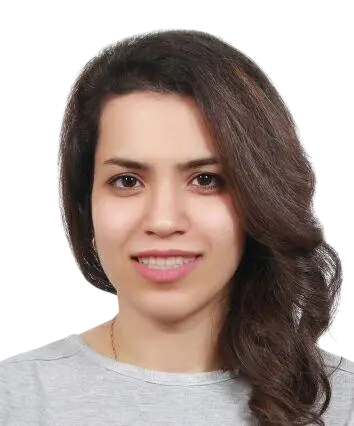
Last position:
Research Assistant at Hochschule München
Introduced an integrated approach for structural damage detection across concrete, steel, and glass using advanced technologies such as LiDAR and thermal imaging. Highlighted cross-material interactions to enhance diagnostics and enable predictive maintenance.
Developed an NLP-based medical note simplifier that transforms complex clinical instructions into plain, child-level English. Applied prompt engineering with Flan-T5 transformer models to extract patient-relevant actions and rephrase them into clear to-do items. Built dual Flask and Tornado backends with a printable web interface.
David R.

Last position:
Lead Developer/Technical Architect
- Design, extension, and implementation of interfaces (REST, GraphQL, Kafka)
- Architecture and implementation of cloud-native microservices on Azure Kubernetes Service
- Domain-Driven Design, Event-Driven Architecture with Kafka
- Development of an extensive query engine for REST endpoints based on business objects
- Design and implementation of master data classification using machine learning algorithms (Weka library, Spotify Voyager)
- Analysis and evaluation of complex load test scenarios and derivation of optimizations
- Increase in system resilience (Kafka error handling, circuit breaker, sidecar service mesh in Go)
- Integration with CIAM systems (asynchronous real-time synchronization and definition of data ownership, authorization, authentication)
- Connection to Azure ServiceBus (AMQP protocol)
- Design and implementation of complex authorization concepts (including delegated administration)
- Documentation of the results (Confluence, architecture descriptions, architecture decisions)
Christian S.
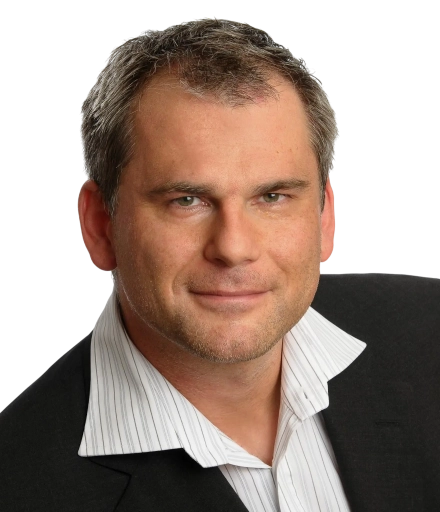
Last position:
Data-Scientist/AI Engineer at The Marcom Engine GmbH & Co. KG
- Concept creation and implementing AI Agents in AWS Cloud
- Continuously alignment with stakeholders
- Collaborate with DevOps
- Technologies: Git, CI/CD (GitHub Actions), Python/ML, Streamlit, Deno/typescript, AWS SAM, AWS Bedrock, AWS Lambda, AWS Dynamo DB, AWS S3, AWS Event Bridge etc.
Nooshin O.

Last position:
Senior Computational Biologist at Max-Planck-Institute for Molecular Genetics
- Conducting research at the interface of proteomics and artificial intelligence, focusing on the application of machine learning models (e.g., neural networks, clustering algorithms, and feature extraction) to analyze complex biological datasets.
- Developing and teaching AI-based analytical workflows for molecular and proteomic data, integrating tools such as Python (scikit-learn, TensorFlow, Pandas) for predictive modeling and data visualization.
- Collaborating with interdisciplinary teams to explore data-driven hypotheses in molecular genetics and enhance biological interpretation through AI-assisted pattern recognition.
- Implementing automated data processing pipelines to improve reproducibility and FAIR data management in high-throughput experiments.
Matti L.

Last position:
FullStack Developer at Ing DiBa GmbH
- Developed and extended Fiori UI5/WebApps for areas such as general ledger, asset accounting, and others.
- Implemented backend logic and OData services for a new S/4 HANA system
- Analyzed the current state of SAP GUI transactions and derived suitable standard and custom developments
- Designed technical concepts and implemented custom UI5 apps in the Fiori Launchpad
- Automated OPA tests, extended and adapted standard Fiori apps
- Documented and created developer manuals in the wiki
- Conducted code reviews, approved and delivered software units via GitLab and SAP transports
Discover over 15,000 top freelancers


Statistics of experts using Weka
Aggregated from the professional profiles of matched freelancers.

Experience
21 years

Position duration
1.5 years

Positions per freelancer
20

Top business areas
Information Technology, Product Development, Research and Development

Top industries
Healthcare, Information Technology, Automotive

Bachelor's degree or higher
75%

Master's degree or higher
50%

Doctorate
25%

Certifications per freelancer
0

Most common languages
German, English, Spanish

Speak two or more languages
100%
Based on our profile pool as of 9 Oct 2026.
Daily rate distribution
The chart shows how the daily rates of experts in this technology in Germany are distributed, based on recent contracts on our platform. Each bar covers a rate range — its height shows the share of experts charging within that range.
Average rates of experts in Germany using Weka
Rates are based on recent contracts and do not include FRATCH margin.

The average daily rate is the mean of all daily rates from recent contracts of comparable freelancers on our platform.
The median daily rate is the middle value of all daily rates — half of comparable freelancers charge less, half charge more. Unlike the average, it is barely affected by outliers.
Calculated based on our freelancers’ daily rates as of 9 Oct 2026. Actual rates may vary depending on seniority level, experience, skill specialization, project complexity, and engagement length.
Weka experts industry focus
See which industries our matched freelancers work in most often — every figure is calculated live from the freelancers on FRATCH.
- Healthcare (80%)
- Information Technology (80%)
- Automotive (60%)
- Education (60%)
- Banking and Finance (60%)
- Energy (40%)
- Insurance (40%)
- Manufacturing (40%)
Please note that freelancers can work across multiple industries, so percentages overlap.
About the technology
What Weka is
Weka is a well-known machine learning workbench for data mining, prediction, and analysis. It helps specialists load data, prepare features, train models, and compare results without building every step from scratch. Many teams use it for fast experimentation and for clear, repeatable analytic workflows.
Common use cases
- Classification for business or research datasets
- Clustering and exploratory data analysis
- Feature selection and data preprocessing
- Model comparison and validation
- Teaching, prototyping, and proofs of concept
Ecosystem and skills
Strong Weka professionals know the Explorer interface, the Experimenter for fair comparisons, and the KnowledgeFlow environment for visual pipelines. They also understand common data formats, filtering, evaluation methods, and how Weka fits beside Java-based data stacks. This matters when a project needs both speed and traceable results.
When companies bring in help
Teams often seek Weka expertise when internal staff need support with dataset cleanup, algorithm selection, or reproducible test runs. In Germany, this comes up in research groups, industrial analytics, and regulated environments where documentation matters. Freelancers are useful when a project needs focused delivery without a long hiring cycle.
What strong specialists deliver
A good Weka specialist does more than run a few models. They explain why a method fits the data, compare alternatives honestly, and leave behind workflows others can reuse. They also spot weak inputs, leakage risks, and evaluation mistakes before they become expensive.
Hiring for a Weka project
Look for clear communication, solid data handling, and practical experience with real datasets. Ask for examples of preprocessing, algorithm tuning, and validation work, especially if the project needs to run on site in Germany or collaborate smoothly with remote teams. The best experts make results understandable, not just accurate.

Frequently asked questions
Curious about Weka? Here are the answers that come up again and again.

Weka is used for data mining, machine learning, and practical model testing. Teams use it to clean data, compare algorithms, run classification or clustering tasks, and document results in a way that is easy to review.
Weka is often chosen for quick experimentation and a guided workflow, while Python stacks offer more flexibility for custom production systems. If a project needs transparent testing, classic algorithms, or a strong visual workbench, Weka can be a very good fit.
A strong Weka specialist usually understands data preprocessing, evaluation methods, and basic machine learning concepts such as overfitting and feature selection. Useful adjacent skills include Java, CSV and ARFF data handling, and the ability to explain results clearly to non-specialists.
A small proof of concept may only need someone who knows the interface and common filters. Larger or more sensitive projects need a specialist who can design sound experiments, avoid leakage, and choose metrics that match the real goal.
Weka works well with remote collaboration because datasets, workflows, and result files can be reviewed without being in the same room. On-site support can still help when the data is sensitive, the environment is hard to access, or business stakeholders want hands-on workshops.
Ask which parts of Weka they have used, how they handle missing values and feature selection, and how they validate models. Good answers mention the data, the evaluation plan, and the business goal, not just the algorithm name.
For most Weka work, the Explorer is used for interactive analysis, the Experimenter for comparing models, and KnowledgeFlow for building repeatable pipelines. A capable specialist knows when each one is the better tool for the job.
A strong Weka expert explains trade-offs, shows clean preprocessing steps, and can defend why a model was selected. They also produce outputs that others can reuse, which is important for teams that need more than a one-off result.
The average hourly rate of freelancers in Germany who have used Weka in their recent projects is 100 €, which corresponds to a daily rate of about 801 € based on an 8-hour working day.
Of the freelancers in Germany who have used Weka in their recent projects, 75% hold at least a Bachelor's degree, 50% hold at least a Master's degree, and 25% hold a doctorate.
On average, freelancers in Germany who have used Weka in their recent projects have 21 years of professional experience, with a single engagement typically lasting around 1.5 years.
The most common languages among freelancers in Germany who have used Weka in their recent projects are German (100%), English (100%), and Spanish (40%).
The most common industries among freelancers in Germany who have used Weka in their recent projects are Healthcare (80%), Information Technology (80%), and Automotive (60%).
The most common business areas among freelancers in Germany who have used Weka in their recent projects are Information Technology (100%), Product Development (100%), and Research and Development (80%).
Main locations of FRATCH Experts, who have recently used Weka
Our freelancers and interim experts are at home across the DACH region — available on-site in the major business hubs or fully remote. Choose a location to discover matched specialists, local market insights and up-to-date availability.
 Berlin Hamburg Munich Cologne Frankfurt Stuttgart Dusseldorf Leipzig Dortmund Essen Bremen Dresden Hanover Nuremberg
 Request a free demo
Get in touch with the FRATCH team and we will get back to you within 4 hours.
Would you rather directly get in touch?
We always have the time for a call or email!

Philipp Thomaschewski
FRATCH CEO

