


Web3 Experts in Munich
matched in minutes from over 15,000 CVsHire experts who design smart contracts, token-based products and decentralized applications across Ethereum and modern Web3 ecosystems. FRATCH connects you with vetted, available freelancers through fast, precise AI matching.

Meet FRATCH Experts in Munich, who have recently used Web3
Katharina H.
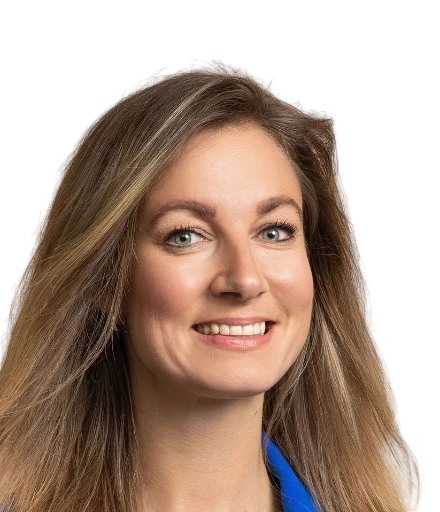
Last position:
Director, Strategic Insights & Analytics at NewtonX
- Responsible for development of a new business practice area, Strategic Insights, which focuses on providing consultancy and recommendations to clients beyond raw research data
- Lead team of around 20 external consultants on a per project basis, ensuring successful delivery of high-quality insights and solutions
- Spearhead new client acquisition, strategize and execute sales calls to drive business growth and establish long-term partnerships
- Act as a trusted sparring partner and thought leader for C-Level clients, leveraging insights and analytics expertise to provide guidance and enhance their decision-making processes
Isabelle K.

Last position:
Product & Brand Strategist at Freelance
- Discovery & strategy: problem framing, research synthesis, roadmap direction
- Positioning & messaging: value proposition, message architecture, narratives
- Go-to-market: ICP framing, launch planning, channel/campaign direction
- Delivery & project leadership: agency orchestration, stakeholder communication, cross-functional coordination
- Outputs: strategic briefs, positioning docs, narrative decks, GTM plans, research reports
Arnab C.

Last position:
Consulting Partner at RibbitNova/RibbitPay
- As part of the leadership team of the crypto startup Ribbit, I am responsible for fundraising, business development, and supporting product development for Ribbit Pay
- Ribbit is developing one of the first automated, programmable, and privacy-preserving networks for recurring payments in Web3.0
Vibhuti R.
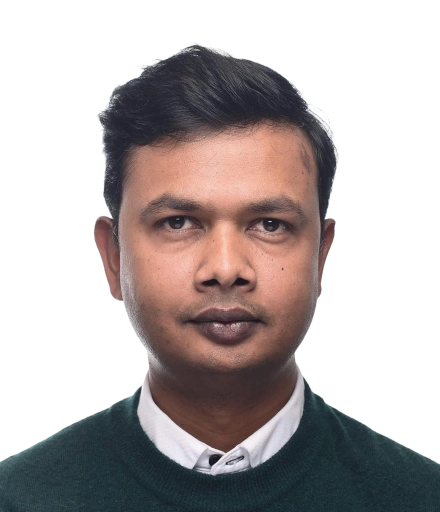
Last position:
Global Head of Product | Business Leader at NavVis
Established strategic business units, implemented Objectives and Key Results (ORKs), metrics and management systems, and defined career hierarchies. Led teams across product, program, design, and research domains to optimise organisational efficiency and innovation.
Drove successful market entry for sophisticated digital twin solutions, overseeing a portfolio of DeepTech and SaaS products while seamlessly transitioning to a SaaS business model. Spearheaded competitive market positioning, sales, and distribution strategy within a complex landscape. Held the company’s core business leadership, catalysing a comprehensive organisation-wide restructure to fortify growth.
Maryam N.

Last position:
Senior FullStack Developer at Camunda
- Role: Senior FullStack Developer
- Technologies: Google Cloud, Azure, Microsoft Entra, Keycloak, Spring Boot, Java
- Active in production
Jewgenij S.
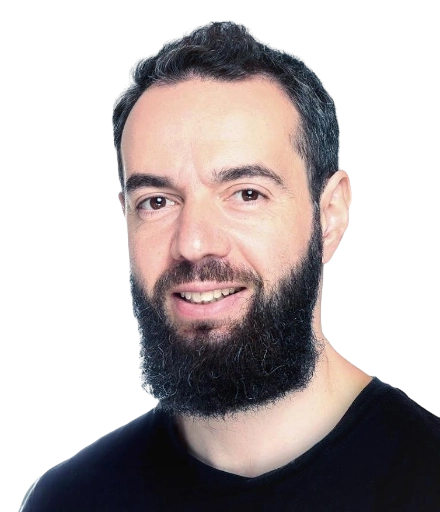
Last position:
Mobile Engineer at ginlo.net Gesellschaft für Datenkommunikation mbH
- Development of the ginlo Messenger client, emphasizing stringent data protection compliance as mandated by German legislation.
Florian S.
Last position:
Lead Consultant at E-Commerce Brands (FMCG and Fashion)
- Identifying patterns in the behavior of the most valuable customers using touchpoint and cohort analysis, and introducing customer tags and post-purchase surveys
- Data-driven customer journey analysis
- Defining goals and KPIs
- Preparing decision templates including time and cost
- Developing a loyalty strategy and roadmap
- Implementing and optimizing loyalty and referral programs
- Retention marketing and retail media
- Developing and executing measures to improve customer experience, repurchase rate and customer lifetime value
- Managing existing agencies
Discover over 15,000 top freelancers


Statistics of experts using Web3
Aggregated from the professional profiles of matched freelancers.

Experience
19 years (Germany: 15 years)

Position duration
2.5 years (Germany: 2 years)

Positions per freelancer
13 (Germany: 10)

Top business areas
Product Development, Marketing, Information Technology

Top industries
Information Technology, Professional Services, Retail

Bachelor's degree or higher
100% (Germany: 97%)

Master's degree or higher
83% (Germany: 50%)

Certifications per freelancer
1 (Germany: 2)

Most common languages
German, English, French

Speak two or more languages
100% (Germany: 95%)
Based on our profile pool as of 29 Oct 2026.
Daily rate distribution
The chart shows how the daily rates of experts in this technology in Munich are distributed, based on recent contracts on our platform. Each bar covers a rate range — its height shows the share of experts charging within that range.
Average rates of experts in Munich using Web3
Rates are based on recent contracts and do not include FRATCH margin.

The average daily rate is the mean of all daily rates from recent contracts of comparable freelancers on our platform.
The median daily rate is the middle value of all daily rates — half of comparable freelancers charge less, half charge more. Unlike the average, it is barely affected by outliers.
Calculated based on our freelancers’ daily rates as of 29 Oct 2026. Actual rates may vary depending on seniority level, experience, skill specialization, project complexity, and engagement length.
Web3 experts industry focus
See which industries our matched freelancers work in most often — every figure is calculated live from the freelancers on FRATCH.
- Information Technology (86%)
- Professional Services (71%)
- Retail (71%)
- Banking and Finance (57%)
- Advertising (43%)
- Automotive (43%)
- Energy (43%)
- Healthcare (43%)
Please note that freelancers can work across multiple industries, so percentages overlap.
About the technology
Decentralized foundations
Web3 describes internet applications built around blockchain networks, digital ownership and user-controlled identities. Instead of relying on one central service, these products use distributed ledgers, smart contracts and decentralized protocols. Common outputs include wallets, decentralized applications, token systems and on-chain financial services.
Core ecosystems
Ethereum remains a major environment for smart contracts and decentralized applications, while ecosystems such as Polygon, Solana and Polkadot support different performance and interoperability needs. Specialists work with Solidity, Rust or JavaScript-based tooling, plus frameworks such as Hardhat, Foundry and ethers.js. They also connect on-chain logic with conventional APIs, databases and cloud services.
Project applications
Web3 expertise appears in products that need verifiable ownership, programmable transactions or shared records across organizations.
- Design decentralized applications and wallet flows
- Build and test smart contracts for tokens, payments or governance
- Connect blockchain networks with web and mobile interfaces
- Create NFT marketplaces, digital asset tools and protocol integrations
When to bring specialists
Companies often bring in freelance Web3 specialists when a product has blockchain requirements but the internal team lacks protocol knowledge. They can validate whether decentralization adds real value, select a suitable network and define a secure delivery path. In Munich, on-site workshops can work alongside remote implementation, depending on the project and language needs.
Security and delivery
Strong professionals treat smart contracts as financial or operational infrastructure, not ordinary application code. They plan threat models, manage keys safely, test edge cases and arrange independent audits where appropriate. Good delivery also covers gas optimization, upgrade strategies, monitoring, incident response and clear documentation for users and internal teams.
Choosing the right expert
Look for practical evidence across the relevant chain, contract language and product type. A capable specialist can explain transaction costs, finality, custody, permissions and failure modes without hiding behind Web3 terminology. They should also understand frontend architecture, backend integration, testing and compliance constraints, so the result works beyond a demonstration.

Frequently asked questions
Everything clients usually want to know about Web3, in one place.

Web3 is used for decentralized applications, digital asset ownership, smart-contract automation, blockchain payments and shared records between organizations. It is most useful when verifiability, programmable ownership or reduced dependence on a central intermediary matters.
Web3 applications move selected rules and records onto blockchain networks, where transactions can be independently verified. Conventional applications usually keep state and permissions in a company-controlled database, which can be simpler, faster and less costly for many use cases.
A strong Web3 specialist often combines smart-contract development with frontend integration, backend APIs, wallet connectivity and blockchain testing. Security reviews, cryptography basics, token economics, cloud operations and user experience are also valuable depending on the product.
Web3 experience should match the risk and complexity of the work. A proof of concept may need protocol selection and basic contract skills, while products handling assets or governance require proven security practices, audit coordination, deployment controls and incident planning.
Web3 work is often well suited to remote collaboration because repositories, test networks and documentation can be shared online. Munich-based companies may still prefer on-site discovery sessions, especially when product, legal and security teams need close coordination; language expectations should be agreed early.
Ask a Web3 freelancer to explain relevant contracts, networks and production decisions in concrete terms. Review testing methods, security findings, deployment controls and documentation, and check whether previous work involved real operational constraints rather than only demonstrations.
No. Web3 adds value when shared verification, open participation or user-held assets is important, but a centralized architecture may offer better speed, privacy and operational simplicity. A thoughtful specialist should compare both designs before recommending blockchain.
Web3 projects commonly use Ethereum-compatible networks, Solidity, wallets, RPC providers and libraries such as ethers.js. Other ecosystems may use Rust or different virtual machines, so the right stack depends on transaction needs, interoperability, security and the users the product must serve.
The average hourly rate of freelancers in Munich, Germany who have used Web3 in their recent projects is 110 €, which corresponds to a daily rate of about 881 € based on an 8-hour working day.
Of the freelancers in Munich, Germany who have used Web3 in their recent projects, 100% hold at least a Bachelor's degree and 83% hold at least a Master's degree.
On average, freelancers in Munich, Germany who have used Web3 in their recent projects have 19 years of professional experience, with a single engagement typically lasting around 2.5 years.
The most common languages among freelancers in Munich, Germany who have used Web3 in their recent projects are German (100%), English (100%), and French (43%).
The most common industries among freelancers in Munich, Germany who have used Web3 in their recent projects are Information Technology (86%), Professional Services (71%), and Retail (71%).
The most common business areas among freelancers in Munich, Germany who have used Web3 in their recent projects are Product Development (100%), Marketing (86%), and Information Technology (71%).
Main locations of FRATCH Experts, who have recently used Web3
Our freelancers and interim experts are at home across the DACH region — available on-site in the major business hubs or fully remote. Choose a location to discover matched specialists, local market insights and up-to-date availability.
 Berlin Hamburg
 Munich Cologne Frankfurt Stuttgart Dusseldorf Leipzig Dortmund Essen Bremen Dresden Hanover Nuremberg
 Berlin
Request a free demo
Get in touch with the FRATCH team and we will get back to you within 4 hours.
Would you rather directly get in touch?
We always have the time for a call or email!

Philipp Thomaschewski
FRATCH CEO

