


vLLM Experts in Berlin
for high-performance model serving, matched in minutes with vetted professionalsHire experts who optimize large language model serving with vLLM, configure PagedAttention and OpenAI-compatible APIs, and connect inference workloads to production infrastructure. FRATCH helps you find precise matches with vetted, available freelancers quickly.

Meet FRATCH Experts in Berlin, who have recently used vLLM
Tommy S.

Last position:
Process Manager · Order-to-Cash & Automation at EWE Tel GmbH
- Root cause analysis of complex business, technical, and data-related errors in PowerCloud across process, booking, and system boundaries.
- Data-driven management of payments and receivables; contributed to reducing historical receivables from over 100 Mio. EUR to under 25 Mio. EUR.
- Identification of automation and straight-through processing potential at the interface between business departments, IT, and external service providers.
Caleb C.
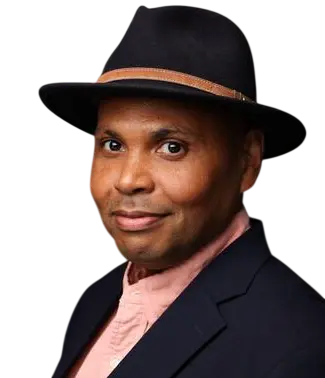
Last position:
Senior Python Backend Engineer at Simon-Kucher
Transmission system operator – network provisioning platform (team lead)
- Designed the saga orchestrator in Python that provisions network fabrics with rollback.
- Split IP, identity, and resource allocation into bounded contexts with their own databases and typed clients.
- Implemented data access using DDD repositories and units of work, with no SQL in the domain code.
- Required integration tests using real PostgreSQL and RabbitMQ containers, and API fuzzing for every service.
- Introduced an agent workflow where a spec starts each change and a human approves every merge.
- Rolled out OpenTelemetry auto-instrumentation through GitOps across eighteen Kubernetes clusters.
- Led incident response for stuck provisioning and recorded every outage as a post-mortem.
Languages and software used: Python, FastAPI, Pydantic v2, SQLAlchemy async, PostgreSQL, RabbitMQ, Celery, pytest, testcontainers, schemathesis, Helm, Flux CD, GitLab CI, OpenTelemetry, pi coding agent.
Software product company – datacenter simulation SaaS (backend development)
- Built the asynchronous simulation pipeline as the second-largest contributor among more than twenty team members.
- Tagged every image by commit SHA and semver in the GitHub Actions deployment workflows.
- Diagnosed the RabbitMQ memory alarm that froze every simulation and fixed the limits in the Helm chart.
- Converted the test suite to function-style pytest, with coverage reported in every pipeline.
Languages and software used: Python, FastAPI, SQLAlchemy, Alembic, Celery, RabbitMQ, Redis, PostgreSQL, S3, EKS, Helm, Keycloak, GitHub Actions, pytest, mypy, ruff, SonarQube.
Internal AI platform – model serving and telemetry
- Built the FastAPI service that deploys open-weight models on GPU tiers as OpenAI-compatible endpoints.
- Upgraded production EKS by two Kubernetes minor versions and fixed zone-bound storage faults.
- Traced every model call, including its token count, cost, and latency, through the OpenTelemetry operator.
Languages and software used: Python, FastAPI, vLLM, LangGraph, pydantic-ai, OpenAI and Anthropic APIs, EKS, Helm, Flux CD, Terraform, GitLab CI, OpenTelemetry, Grafana.
Nikolai G.

Last position:
Clinical Data Manager at Dr. Falk Pharma
- Used OpenCode and AI-assisted software engineering to design, implement, refactor, test, and document an end-to-end RAW/SDTM/ADaM pipeline in R for Dr. Falk Pharma (07/2026), including metadata-driven transformations, automated validation rules and QC, traceability, and reproducible clinical outputs.
Haseeb Z.

Last position:
Senior Data Scientist at WPP MEDIA
- Designed and deployed enterprise Retrieval-Augmented Generation (RAG) applications using LangChain, LangGraph, vector databases, embeddings, and open-source LLMs served through vLLM on GCP GPU infrastructure.
- Built agentic AI workflows using LangGraph with planning, reasoning, tool execution, persistent memory, session management, and Human-in-the-Loop approval mechanisms.
- Developed LLM-powered automation systems integrating BigQuery, SQL pipelines, and external advertising APIs including Meta, TikTok, Amazon, Snapchat, Google, and Pinterest, reducing manual operational workflows.
- Architected multi-agent AI systems for enterprise analytics and decision-support workflows, enabling autonomous task execution and intelligent data interactions.
- Implemented retrieval optimization strategies including multi-retriever architectures, semantic search, context optimization, and query improvement techniques, improving response relevance by approximately 40%.
- Engineered structured prompting strategies, function-calling schemas, and validation workflows to improve reliability of multi-step LLM applications.
- Designed scalable AI services using Python, FastAPI, Cloud Run, Pub/Sub, BigQuery, Docker, and cloud-native deployment architectures.
Sunish B.

Last position:
AtlasMind - Production AI assistant for Jira at Mercedes Benz Innovation Labs Gmbh
- Converts natural language into JQL using RAG and pgvector. Returns structured JSON with a query, chart spec, and plain-text answer. A two-stage router answers general questions without touching the JQL pipeline at all.
- Interchangeable LLM backends: Ollama, vLLM, Groq, Anthropic Claude, AWS Bedrock - switchable at runtime, no code changes. Self-healing JQL: on Jira validation failure, feeds error back to LLM, retries up to 4 times. OCI Vault for secrets. Deployed on Oracle Cloud A1 with GPU inference over Tailscale private network. Open source.
Shyam Sundar R.

Last position:
GenAI Engineer at Freelance
- Built a hybrid semantic and keyword search and LLM-based requirement extraction from conversational queries, boosting search accuracy by 85%, cutting zero-result searches by 70%, and reducing search time by 60%.
- Deployed a production-ready API with monitoring dashboards over 100K+ products, keeping response times under 2s and reducing customer search-to-purchase time by 40%.
- Technologies: Python, BGE-M3, Qwen2.5, FastAPI, Qdrant, Meilisearch, Docker, Prometheus, vLLM.
Discover over 15,000 top freelancers


Statistics of experts using vLLM
Aggregated from the professional profiles of matched freelancers.

Experience
14 years

Position duration
2.3 years

Positions per freelancer
7

Top business areas
Information Technology, Product Development, Business Intelligence

Top industries
Information Technology, Automotive, Energy

Certification focus areas
Information Technology, Project Management, Business Intelligence

Bachelor's degree or higher
100%

Master's degree or higher
80%

Doctorate
20%

Certifications per freelancer
2

Most common languages
English, German, Bulgarian

Speak two or more languages
83%
Based on our profile pool as of 29 Oct 2026.
Daily rate distribution
The chart shows how the daily rates of experts in this technology in Berlin are distributed, based on recent contracts on our platform. Each bar covers a rate range — its height shows the share of experts charging within that range.
Average rates of experts in Berlin using vLLM
Rates are based on recent contracts and do not include FRATCH margin.

The average daily rate is the mean of all daily rates from recent contracts of comparable freelancers on our platform.
The median daily rate is the middle value of all daily rates — half of comparable freelancers charge less, half charge more. Unlike the average, it is barely affected by outliers.
Calculated based on our freelancers’ daily rates as of 29 Oct 2026. Actual rates may vary depending on seniority level, experience, skill specialization, project complexity, and engagement length.
vLLM experts industry focus
See which industries our matched freelancers work in most often — every figure is calculated live from the freelancers on FRATCH.
- Information Technology (83%)
- Automotive (33%)
- Energy (33%)
- Banking and Finance (33%)
- Healthcare (33%)
- Professional Services (33%)
- Telecommunication (33%)
- Utilities (33%)
Please note that freelancers can work across multiple industries, so percentages overlap.
About the technology
What vLLM does
vLLM is an open-source inference and serving engine for large language models. It is built to improve throughput and responsiveness when many users or applications request generation at the same time. Its PagedAttention approach manages key-value cache memory efficiently, while its OpenAI-compatible server makes integration with existing applications straightforward.
Where it fits
Companies use vLLM to expose language models through reliable APIs and internal services. Typical applications include:
- Conversational assistants and retrieval-augmented generation
- Document analysis, summarization and content workflows
- Batch inference for evaluation, enrichment and classification
- Private model serving for product and enterprise use cases
It can run on cloud infrastructure, dedicated GPU systems or controlled on-premises environments.
Ecosystem and tooling
Strong vLLM work includes model formats, tokenizer behavior and compatibility across popular transformer models. Specialists often work with Hugging Face Transformers, PyTorch, CUDA, quantization methods and GPU scheduling. They may also connect vLLM to Kubernetes, Docker, observability stacks and gateways that manage authentication, routing and request limits.
When expertise matters
A company usually brings in freelance expertise when a prototype must become a dependable inference service, or when GPU capacity is expensive and unevenly used. The specialist can review model compatibility, select serving parameters, tune batching and diagnose latency or memory pressure. Berlin teams can also benefit from professionals who communicate clearly across local, distributed and international delivery groups.
What strong professionals deliver
Look for a specialist who can explain trade-offs rather than simply change configuration values. Useful deliverables include a reproducible deployment, load-test plan, monitoring dashboards, rollout guidance and clear operational documentation. Practical knowledge of prompt pipelines, model evaluation and API security helps keep the serving layer aligned with the product.
Choosing the right specialist
Ask how the professional would investigate slow requests, GPU saturation, failed model loading and inconsistent output. Good answers connect application behavior with scheduler settings, memory use and infrastructure limits. For remote or on-site work in Berlin, confirm availability for the required collaboration style, clear technical English and any German communication needed by stakeholders.

Frequently asked questions
What clients ask us most about vLLM — answered in short.

vLLM is used to serve large language models through efficient inference APIs. It supports interactive applications, retrieval-augmented generation, batch processing and internal AI services where throughput and predictable latency matter.
vLLM focuses strongly on efficient high-throughput serving, with PagedAttention and an OpenAI-compatible API as important advantages. Hugging Face Transformers is broader for model use and experimentation, while Text Generation Inference may be preferred when its deployment conventions or supported features fit the workload better.
A capable vLLM professional usually understands PyTorch, CUDA, GPU memory, Hugging Face model formats and quantization. Kubernetes, Docker, API design, observability and retrieval pipelines are also valuable when the serving layer must operate in production.
The required depth depends on the work. A simple API deployment needs solid model-serving knowledge, while multi-model routing, GPU optimization and production reliability call for a professional who has diagnosed real inference bottlenecks and can validate improvements with representative workloads.
vLLM work is often well suited to remote collaboration because deployments, tests and documentation can be shared through standard development workflows. On-site sessions in Berlin can still help with security reviews, GPU infrastructure access or workshops involving several stakeholders.
Ask the vLLM specialist to describe a method for separating model latency, queueing, GPU memory pressure and network overhead. Strong professionals propose measurable tests, safe rollout steps and monitoring, rather than promising improvement from a single setting.
vLLM provides an OpenAI-compatible serving interface for many common integration patterns. This can reduce application changes, but teams still need to verify supported parameters, streaming behavior, authentication and model-specific output before production use.
A vLLM engagement may involve more than starting a server: model loading, GPU selection, batching, quantization, traffic management and incident handling can all matter. Clarify the target model, workload pattern, infrastructure access, delivery expectations and whether the work includes ongoing operations.
The average hourly rate of freelancers in Berlin, Germany who have used vLLM in their recent projects is 87 €, which corresponds to a daily rate of about 694 € based on an 8-hour working day.
Of the freelancers in Berlin, Germany who have used vLLM in their recent projects, 100% hold at least a Bachelor's degree, 80% hold at least a Master's degree, and 20% hold a doctorate.
On average, freelancers in Berlin, Germany who have used vLLM in their recent projects have 14 years of professional experience, with a single engagement typically lasting around 2.3 years.
The most common languages among freelancers in Berlin, Germany who have used vLLM in their recent projects are English (100%), German (83%), and Bulgarian (17%).
The most common industries among freelancers in Berlin, Germany who have used vLLM in their recent projects are Information Technology (83%), Automotive (33%), and Energy (33%).
The most common business areas among freelancers in Berlin, Germany who have used vLLM in their recent projects are Information Technology (100%), Product Development (100%), and Business Intelligence (67%).
Main locations of FRATCH Experts, who have recently used vLLM
Our freelancers and interim experts are at home across the DACH region — available on-site in the major business hubs or fully remote. Choose a location to discover matched specialists, local market insights and up-to-date availability.
Countries:
 Berlin
 Hamburg Munich Cologne Frankfurt Stuttgart Dusseldorf Leipzig Dortmund Essen Bremen Dresden Hanover Nuremberg
Request a free demo
Get in touch with the FRATCH team and we will get back to you within 4 hours.
Would you rather directly get in touch?
We always have the time for a call or email!

Philipp Thomaschewski
FRATCH CEO

