


R Experts in Germany
for data products, statistical models and clear insights, matched with vetted freelancers in minutesHire experts who turn complex datasets into reliable analyses, predictive models and decision-ready visualizations with R, tidyverse and Shiny. FRATCH connects you quickly with precise matches among vetted, available freelancers.

Meet FRATCH Experts in Germany, who have recently used R
William N.

Last position:
Power BI Solutions Architect/Engineer & AI Consultant at AVERDUNG GmbH
- Redesign of the company's BI infrastructure: replacement of a fragmented landscape of manually maintained Excel solutions and CSV imports with a centralized Power BI environment featuring a unified data model as the company-wide single source of truth
- Consolidation of previously isolated reporting logic into a central semantic model – eliminating redundant files, manual data transfers, and inconsistent metrics between departments
- Forecasting & planning: Design and implementation of company-wide liquidity planning in Power BI – from business logic to a fully automated, data-source-driven planning model replacing the previous manual Excel process; enables rolling forecasts and continuously up-to-date cash flow transparency for management
- Optimization of existing Power BI dashboards in terms of performance, structure, and analytical value using an AI-native approach
- Analysis and improvement of the data model, including data quality analyses, data cleansing, and consistent modeling using star schema, DAX, and Power Query
- Incident & anomaly analysis: Identification, investigation, and explanation of data anomalies, including root-cause analysis and concrete recommendations for action
- AI solution architecture: Connecting Business Central and Power BI to LangDock via MCP (Model Context Protocol) for AI-supported data usage
- Creation of a historical data layer as a basis for trend and time-series analyses
- AI-supported automation: Design and development of AI skills, agents, loops, and processes for the automated analysis and interpretation of reports
- Automated reporting workflow: Setup of scheduled, automated email distribution of AI-generated analyses and recommendations to stakeholders
- Gathering and documentation of business requirements and coordination with business departments and IT as part of requirements engineering / product owner activities
- Breaking down overall requirements into clearly defined work packages and tasks
- Definition, prioritization, and management of milestones throughout the entire project lifecycle
Tools: POWER BI, M365, Copilot Studio, MIRO, Microsoft Business Central, Microsoft Fabric, Claude AI, ChatGPT, LangDock, MS VS Code
Stefan O.

Last position:
Founder at ProtocolEngine.io
Evidence-led health intelligence platform turning published research into personal health protocols. It scores 430 habits, foods, and supplements against the studies behind them, and moves the score when the evidence moves. Built solo.
- Built the daily ingestion pipeline across PubMed, bioRxiv, and medRxiv: 43,000+ papers from 3,400+ journals processed into 230,000+ typed evidence claims, each one traceable back to the study it came from.
- Designed the six-factor evidence scoring model and the public changelog behind it, so no recommendation ever appears without the papers underneath it. 23,000+ grade changes recorded and explained to date.
- Shipped an entity information model connecting every intervention to its mechanisms, biomarkers, and outcomes: 118 biomarkers with region-specific reference ranges, 77 mechanisms, 32 graded outcomes.
- Built the personalisation layer: blood panel ingestion that reads lab PDFs with a vision model and corrects results for draw time against the user's wake anchor, plus Oura, WHOOP, and Withings integration for daily readiness context.
- Operate eleven specialised review agents over the corpus and codebase, covering paper curation, retrieval quality, health-claim compliance across EU and US regimes, and security.
- Shipped the Evidence Assistant, a RAG assistant that answers from the claim database and cites the underlying papers, plus a B2B practitioner tier, an Expo React Native app, and localisation across 3 languages and 7 markets.
Stack: Next.js 16, TypeScript, Supabase, pgvector, Anthropic Claude, Vercel, DeepInfra.
Kiriakos K.

Last position:
Tech Lead / Architect : OTTO API Platform at OTTO
Maturing their API practices on both a business and technology level. My role covers strategy, architecture, developer advocacy as well as hands-on software engineering, enabling both technical teams and business leadership to adopt and act on API-centric principles effectively. Coincidentally, we also establish GitOps, DX and platform best practices with this project.
Highlights:
- Aligning executives with the initiative by clarifying strategy, replacing misconceptions and myths with facts, clarifying the value of existing assets and enabling informed decision-making
- Formulating a way forward for API Lifecycle Management at OTTO
- Driving platform progress and fostering developer engagement by hands-on engineering work towards strategic goals
API Lifecycle Management, Team Topologies, Organizational Evolution, Regulatory, Platform Advocate, Developer Platform, Communities of Practice, Terraform, Kotlin, Kafka, Kong, WSO2, Apigee, Gravitee, Backstage, AsyncAPI, OpenAPI, API Design, AWS, React, Node.js, TypeScript, Redocly, reactive programming, CDC, Golang, Gin, GitOps, DX (developer experience), stakeholder management, roadmaps, workshops, discovery.
Dmitry P.

Last position:
Freelance Digital Marketing Analyst at Freelance
- Marketing Strategy: Lead the end-to-end analysis and evaluation of cross-channel marketing campaigns across the entire Customer Journey. My focus is identifying optimization potential and deriving clear, actionable recommendations that drive measurable business impact.
- Data Science & AI: Advanced predictive modeling (Churn, LTV), market basket analysis, clustering, and real-time AI-powered audience discovery utilizing RAG/LLMs.
- Marketing Analytics & Measurement: End-to-end attribution analysis, Marketing Mix Modeling (MMM), audience segmentation, conversion path analysis, and A/B testing across all major platforms.
- Data Engineering & Reporting: Designing and managing robust, multi-platform data pipelines (BigQuery, GCP) for data consolidation, automated dashboard generation, and critical API integrations.
Michael N.

Last position:
Senior AI Engineer | Forward Deployed Engineer at Tiefbau
- Development of an AI-powered project organization tool for a civil engineering company that intelligently links project, task, tender, schedule, and document data through a knowledge graph.
- Implementation of AI features for document analysis, information extraction, context-based assistance, and voice-based data capture based on Microsoft Azure AI, reducing administrative effort, making information available faster, and supporting project teams in decision-making.
- Tech stack: Python, React, TypeScript, FastAPI, Claude Code, Codex, Graphify, PostgreSQL, Microsoft Azure AI Foundry, Azure OpenAI, Azure AI Speech, Azure AI Document Intelligence, Microsoft Graph, Microsoft Entra ID, Docker, Git, CI/CD.
Paul T.

Last position:
Senior Project Manager Networks Division at Samsung Electronics GmbH
- Managed the successful overall Trial and Commercial deployment of OpenRAN technology and swap-out of legacy SRAN for 2 mobile network operators in Germany.
- End-to-End Project life cycle governance and coordination of multiple Workstream leads i.e. Operations, Performance, Site Solution Management, Design, SW Delivery, Integration & Implementation, OSS Tools, 3rd-party Resource Support.
- Project planning to cover major milestones by delivering roadmap alignment in compliance with the German Network Regulatory Agency (BNetzA), as a vendor.
- Provided pre/post-Sales support to the Accounts Team for RfP/RfQ submissions.
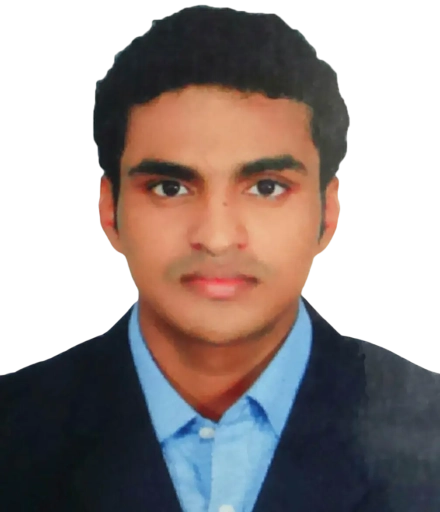
Ashwin P.
Last position:
Freelance Data Scientist at Mercor Intelligence
- Architected and deployed end-to-end machine learning pipelines across classification and prediction datasets, ensuring robustness and reproducibility through MLOps best practices.
- Contributed directly to LLM model output accuracy improvement by designing and engineering specialised prompts grounded in end-to-end ML and SciML pipeline logic.
- Developed training data for large language models by formulating coding problems that models could not resolve and subsequently documenting the correct solutions.
Florian B.

Last position:
Project Management / PMO Consultant
PMO & Project Organization Blueprint for Restructuring
Renewable Energy / Solar Equipment
Technologies / Methods: PMO setup, KPI tracking, project organization, Jira, Confluence
- Developed measures to improve management control during a restruct...
Gwen G.

Last position:
Senior Ruby on Rails & DevOps Developer at Sapiens
Further development of a software solution for managing audit applications and audit notifications according to §106d SGB V for the Association of Statutory Health Insurance Physicians in Hamburg.
- Developed numerous features, optimised performance, refactored code and analysed errors
- Refactored the development container setup
- Optimised the Gitlab-CI build pipeline
- Introduced improvements to the team workflow
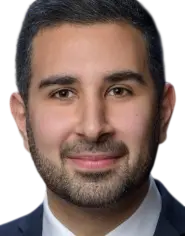
Bardiya B.
Last position:
Data Scientist at Rewe Digital GmbH
Statistical Forecasting Algorithm
- Improvement of an statistical probabilistic forecasting algorithm for sales + evaluation
- Migration from R/On-premise to Python/Snowflake
- Productionalization on Snowflake in cooperation with data engineers & DevOps
Monitoring Dashboard
- Data engineering for preparation & provisioning of necessary data/resources on Snowflake
- Development & deployment of a Streamlit dashboard in Snowflake
ML-based Probabilistic Forecasting on Vertex AI
- Development of a ML-based probabilistic forecasting algorithm from scratch
- Implementation of MLOps pipeline in Kubeflow on Google Cloud Vertex AI
Tech Stack: Python, Snowflake/Snowpark, R, Streamlit, Gitlab/Gitlab CICD, Terraform, Google Cloud, Vertex AI (aiplatform SDK, gcloud CLI, feature store, model registry, etc), kubeflow
Daryoosh D.

Last position:
FP&A Data & AI Architect at Epta Group
Scope: Embedded as FP&A Data & AI Architect within the Finance function of a major European refrigeration manufacturer, leading the transformation of manual, fragmented financial reporting into an automated, governance-driven intelligence platform. Driving the shift from Excel-based controlling to structured data architecture, Power BI analytics, and AI-assisted financial operations.
Financial Data Integrity & ERP Governance
- Initiated and led GL vs. subledger reconciliation investigations, identifying and resolving structural mismatches between General Ledger and subledger data that had gone undetected prior to engagement
- Conducted asset analysis to identify items missing from General Ledger postings, surfacing gaps in fixed asset tracking and period-end completeness
- Validated SAP reports, establishing baseline data quality standards for Finance team consumption
- Established systematic SAP data validation framework ensuring ongoing integrity between ERP postings and downstream reporting outputs
Finance Reporting Transformation
- Designed and implemented a structured Transformation Project approach for converting manual Finance reports into fully automated processes
- Created and owns the Data Reporting Audit Log; a centralized tracking system capturing report owners, stakeholders, data sources, manual effort estimates, and automation opportunity scores across the Finance function
- Mapped the full reporting landscape identifying quick-win automation targets and strategic Power BI migration candidates
- Actively reducing manual Excel and PowerPoint dependency across FP&A workflows; replacing point-in-time snapshots with live, governed data models
Power BI & Analytics Enablement
- Introduced and presented Power BI as the strategic reporting platform to Finance leadership, building internal buy-in for the BI transformation roadmap
- Designed initial Power BI architecture aligned with SAP, Salesforce and Oracle data structures and FP&A reporting requirements
- Established report ownership, governance documentation, and data lineage standards enabling sustainable self-service analytics across the Finance team
Transformation Infrastructure & Collaboration
- Configured and deployed Jira as the transformation project management hub, establishing structured sprint workflows, backlog management, and progress visibility for Finance IT initiatives
- Proposed and initiated a dedicated FP&A Communication & Transformation Hub, a structured cross-functional forum aligning Finance, IT, and business stakeholders around the reporting transformation roadmap
- Positioned the Finance function as an active driver of data governance and digital transformation within the broader organization
Outcomes
- GL/subledger reconciliation gaps identified and investigation framework established within first two weeks of engagement
- Data Reporting Audit Log deployed; first structured inventory of Finance reporting landscape in company history
- Power BI transformation roadmap presented and approved by Finance leadership
- Jira-based project governance live; Finance transformation now tracked with full sprint visibility
Technologies: SAP FI/CO · Power BI · DAX · SQL · Excel (advanced) · Power Query (M) · Power Automate · VBA · Jira · Microsoft 365 · SharePoint · Salesforce (Sales Data) · Oracle HCM · Python
Hervé T.

Last position:
Senior Data Engineer at Schweizerische Post AG
Tools: Fabric, AWS, dbt, Power BI, SQL, DWH, R, Python
- Supported customers in implementing an architecture design for extracting and preparing data
- Planned the design and implementation of the BI and DWH platform
- Ensured the scalability and performance of the data platform
Nikolai G.

Last position:
Clinical Data Manager at Dr. Falk Pharma
- Used OpenCode and AI-assisted software engineering to design, implement, refactor, test, and document an end-to-end RAW/SDTM/ADaM pipeline in R for Dr. Falk Pharma (07/2026), including metadata-driven transformations, automated validation rules and QC, traceability, and reproducible clinical outputs.
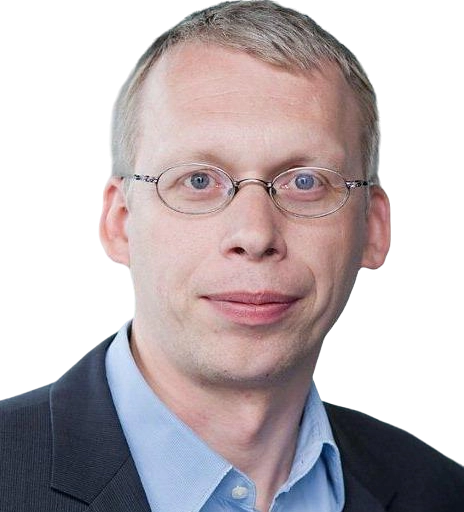
Philipp G.
Last position:
Data Scientist & ML Engineer at Data-Science Factory GmbH
- Building, implementing and selling automated Data Science solutions such as Scorecard Factory and Forecast Factory
- Implementation of automated end-to-end cloud processes
- Development of LLM and NLP models
- Creation of interactive reports
- Support for national and international large corporations as well as medium-sized companies in implementing ML projects
Justina K.

Last position:
Freelance Consultant for Change & Data Transformation at Freelance Fast Data Consulting
Project, Strategic Consulting – building the Data Strategy and Data Governance Policy for the German branch, client (private bank Julius Bär, headquarters Zurich), March 2026 – present
- Design and negotiation of the data strategy with key stakeholders, including obtaining board sign-off (strategic consulting) – in this context, regulatory advice on data regulations in the EU and specifically for Germany. The data strategy includes: Data Lifecycle Management: data capture, data storage, data usage, data retention policy, data quality incident management
- Definition of milestones and technical feasibility for implementing TOM for the data strategy, data quality checks, metrics, and a metadata inventory to ensure the bank’s compliance with DORA, BCBS239, and MaRisk requirements.
Core project data change, client: (ING Bank, Frankfurt am Main), March – December 2025
- Concept development and solution design for new end-to-end processes including technical interfaces
- Definition of synchronization logic and data flows between legacy and target systems (decommissioning of legacy systems)
- Analysis and validation of data models
- Stakeholder communication with product owners, feature engineers, UX designers, and operational teams for decision-making
- Analytics and impact assessments, e.g. to assess downstream effects and regulatory requirements
- Documentation and comments on technical and business requirements to support implementation in agile squads
Project digitalization of a user group, client: (ING Bank, Frankfurt am Main), as Interim Product Owner, Jan 2025 – present
- Co-shaping key decisions on data architecture and process logic in the context of historized data and user login functionality
- Development of business solution concepts for migration to the target system, including system integration and data flows
- Support with analytics and impact analyses, especially regarding the ability to provide information to law enforcement authorities
- Active coordination with stakeholders from different squads to support decision-making and ensure regulatory requirements are met
- Creation of test scenarios for operational teams and backend systems in the area of API management using Postman and Bruno.
Discover over 15,000 top freelancers


Statistics of experts using R
Aggregated from the professional profiles of matched freelancers.

Experience
13 years

Position duration
2.7 years

Positions per freelancer
9

Top business areas
Information Technology, Business Intelligence, Product Development

Top industries
Information Technology, Education, Professional Services

Certification focus areas
Information Technology, Business Intelligence, Research and Development

Bachelor's degree or higher
99%

Master's degree or higher
82%

Doctorate
25%

Certifications per freelancer
3

Most common languages
English, German, French

Speak two or more languages
100%
Based on our profile pool as of 9 Oct 2026.
Daily rate distribution
The chart shows how the daily rates of experts in this technology in Germany are distributed, based on recent contracts on our platform. Each bar covers a rate range — its height shows the share of experts charging within that range.
Discover detailed R rate benchmarks:
Explore rate insightsAverage rates of experts in Germany using R
Rates are based on recent contracts and do not include FRATCH margin.

The average daily rate is the mean of all daily rates from recent contracts of comparable freelancers on our platform.
The median daily rate is the middle value of all daily rates — half of comparable freelancers charge less, half charge more. Unlike the average, it is barely affected by outliers.
Calculated based on our freelancers’ daily rates as of 9 Oct 2026. Actual rates may vary depending on seniority level, experience, skill specialization, project complexity, and engagement length.
R experts industry focus
See which industries our matched freelancers work in most often — every figure is calculated live from the freelancers on FRATCH.
- Information Technology (65%)
- Education (46%)
- Professional Services (45%)
- Banking and Finance (40%)
- Automotive (31%)
- Healthcare (31%)
- Manufacturing (28%)
- Retail (26%)
Please note that freelancers can work across multiple industries, so percentages overlap.
About the technology
Statistical Computing with R
R is a programming language and environment for statistical computing, data analysis and visualization. Companies use it to explore large datasets, test hypotheses, produce forecasts and turn research findings into repeatable analytical workflows. The language is known as R programming language or GNU R.
Data Workflows
R supports the full path from raw data to published results. Professionals use tidyverse packages such as dplyr, tidyr and readr to clean and transform data, while ggplot2 creates clear charts and reports. They also connect R to SQL databases, cloud storage, APIs and business intelligence workflows.
Models and Applications
R is used across research, healthcare, finance, marketing, manufacturing and public-sector analysis. Typical deliverables include:
- Exploratory analysis and data quality checks
- Forecasting, regression and statistical testing
- Machine learning models with tidymodels or caret
- Interactive dashboards and internal tools with Shiny
- Reproducible reports with Quarto or R Markdown
Ecosystem and Integration
A strong R specialist works comfortably with packages, dependency management and reproducible project structures. Useful adjacent skills include Python, SQL, Git, Docker and cloud services, especially when R models must run inside wider data platforms. RStudio, now Posit, remains a common workspace for analysis, package development and reporting.
When to Hire a Specialist
Companies bring in freelance R expertise when an analytical backlog is slowing decisions or an existing model needs greater reliability. Typical signals include:
- Analysts spend too much time cleaning recurring data manually
- Statistical results cannot be reproduced or explained clearly
- A prototype must become a maintained Shiny application
- Forecasts or experiments need independent validation
- Teams need a bridge between research and production systems
In Germany, remote collaboration often works well for R projects, while workshops with research, analytics or business teams may benefit from on-site sessions.
What Quality Looks Like
Effective R professionals make assumptions visible, validate inputs and explain uncertainty instead of presenting opaque outputs. They write readable, tested code, document data sources and use version control so another specialist can review or extend the work. For production use, they also consider performance, access controls, monitoring and a clear handover.
A good brief should define the data sources, decision to support, expected deliverables and existing tools. Strong specialists can then recommend the right model or visualization rather than forcing every problem into a familiar package.

Frequently asked questions
Key details about R, drawn from the questions we get asked most.

R is mainly used for statistical analysis, data visualization, forecasting and research workflows. Companies also use it for machine learning, automated reporting and Shiny applications that let non-specialists explore results.
R has a particularly strong ecosystem for statistics, experimentation, visualization and academic analysis. Python is often preferred for broader application development and machine learning infrastructure, but the right choice depends on the team, existing systems and deployment needs.
An effective R programming language specialist may also work with SQL, Git, APIs, Docker and cloud services. Python, database design and data engineering knowledge are useful when an analysis must connect to production pipelines or business systems.
The required level depends on the risk and scope of the work, not on a fixed time threshold. A straightforward report may need strong tidyverse and visualization skills, while regulated analysis, forecasting or a production Shiny application calls for experience with testing, validation and deployment.
GNU R projects are often well suited to remote collaboration because code, data specifications and reports can be reviewed online. On-site workshops can still help when specialists need to align with German research, analytics or business teams on definitions and decisions.
R can support production applications, especially interactive dashboards and analytical tools built with Shiny. A production-ready solution also needs deployment, authentication, monitoring, dependency control and a clear plan for data refreshes.
Look for an R professional who can explain analytical choices, check data quality and make results reproducible. Ask how they test code, document assumptions, handle missing data and communicate uncertainty to people who do not work with statistics.
R supports classification, regression, clustering and time-series forecasting through packages such as tidymodels and forecast. Its suitability depends on data volume, latency, model governance and how easily the result can be integrated with the surrounding technology stack.
The average hourly rate of freelancers in Germany who have used R in their recent projects is 91 €, which corresponds to a daily rate of about 726 € based on an 8-hour working day.
Of the freelancers in Germany who have used R in their recent projects, 99% hold at least a Bachelor's degree, 82% hold at least a Master's degree, and 25% hold a doctorate.
On average, freelancers in Germany who have used R in their recent projects have 13 years of professional experience, with a single engagement typically lasting around 2.7 years.
The most common languages among freelancers in Germany who have used R in their recent projects are English (100%), German (99%), and French (24%).
The most common industries among freelancers in Germany who have used R in their recent projects are Information Technology (65%), Education (46%), and Professional Services (45%).
The most common business areas among freelancers in Germany who have used R in their recent projects are Information Technology (77%), Business Intelligence (72%), and Product Development (66%).
Main locations of FRATCH Experts, who have recently used R
Our freelancers and interim experts are at home across the DACH region — available on-site in the major business hubs or fully remote. Choose a location to discover matched specialists, local market insights and up-to-date availability.

 Berlin
  Hamburg
  Munich
  Cologne
  Frankfurt
  Dusseldorf
  Essen
Essen Countries:
- Germany
- Austria
- Switzerland
Request a free demo
Get in touch with the FRATCH team and we will get back to you within 4 hours.
Would you rather directly get in touch?
We always have the time for a call or email!

Philipp Thomaschewski
FRATCH CEO

