


Optuna Experts in Germany
for faster, stronger machine learning models with precise AI matchingHire experts who tune machine learning models with Optuna, design efficient search spaces, and connect optimization studies to Python and modern ML workflows. FRATCH matches you quickly with vetted, available freelancers suited to your project.

Meet FRATCH Experts in Germany, who have recently used Optuna
Benjamin M.
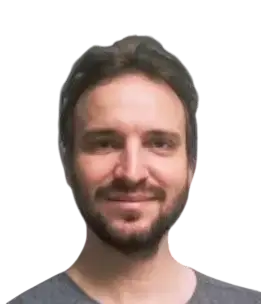
Last position:
Founder, system architect, and main developer at Institute for Artificial Study (IAS)
- Expert-supervised AI systems for scientific reasoning, model evaluation, and research workflows.
- Built the IAS Problem Solver, an orchestrated system for difficult mathematical reasoning; it achieved 84% in one submitted answer set on the Leipzig mathematics benchmark.
- Built a resumable state-machine pipeline for research-grade mathematics benchmark generation: source selection, LLM-agent-based phenomenon discovery, task synthesis, gold-answer and certificate generation and validation, probing, repair, human feedback, and quality gates, targeting tasks that are difficult, natural, verifiable, and cost-effective.
- Current work extends this into budget-aware AI research workflows for real scientific problems with expert review.
Tech stack: Python, OpenAI/OpenRouter-compatible APIs, embeddings, RAG, SQLite.
Dirk Markus M.

Last position:
Scientific Software Consulting Engineer
Technical audit for scientific software.
David O.
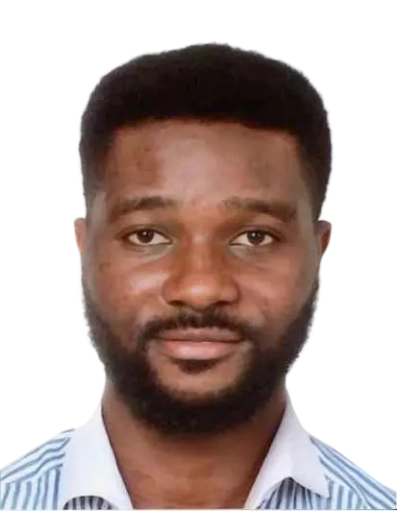
Last position:
Research Intern at Pattern Recognition Lab
- Spearheaded the integration of a custom Transformer-based encoder into the AFFGANwriting pipeline, replacing the legacy VGG19 architecture to capture richer, high-fidelity writer-style representations.
- Boosted user-study pick-rates by 40%, demonstrating a significant leap in the perceptual quality and realism of the generated handwriting compared to the baseline model.
- Enhanced OCR performance by 20% by implementing a teacher-student framework that leveraged a TrOCR benchmark model for auxiliary training alignment
Ashkan Z.
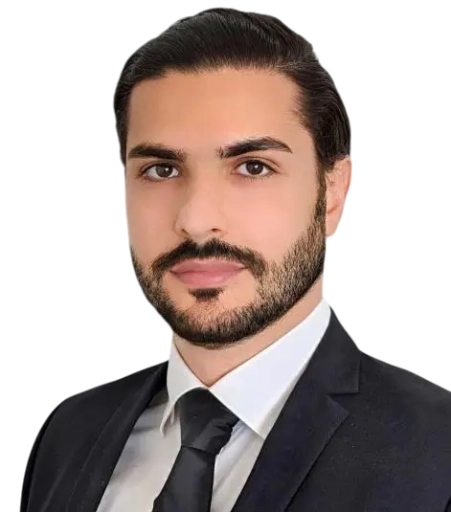
Last position:
Microsoft Azure Senior Data Engineer / Senior Data Scientist at Vattenfall Europe
- Advising on the use of analytics and BI tools and services in the Microsoft Azure stack (e.g. MS Fabric, Synapse Workspaces and dedicated SQL pools, SQL Database, PostgreSQL, Snowflake, Databricks, Data Factory, SSIS, Analysis Services, Function Apps, Power BI, ML)
- Independently designing analytics solutions with Python, SQL, etc.
- Designing and implementing ETLs and data pipelines
- Creating and maintaining APIs
- Independently applying CI/CD, testing, and version control
- Data modeling
- Model development and optimization
- Anomaly detection with AI
- Predictive analytics
Used technologies:
- Snowflake
- Fabric
- Azure Synapse Analytics
- Azure DataFactory
- Azure Data Lake
- Azure DevOps
- Databricks
- Spark
- CI/CD
- SQL Database
- Python
- Power Platform
Amr A.

Last position:
Machine Learning Engineer at German Research Center for Artificial Intelligence (DFKI)
- Developed end-to-end reproducible ML pipelines (PyTorch) with data versioning (DVC), experiment tracking (MLflow), automated testing (PyTest), and CI/CD across all training workflows.
- Scaled Vision Transformer and CNN training across NVIDIA A100 GPU clusters (CUDA, DDP, SLURM); applied hyperparameter optimization (W&B Sweeps) to reduce training overhead and identify optimal configurations.
- Developed a real-time 3D human motion generation system (ViT, VQ-VAE, SMPL-X/PIXIE) for personality-conditioned avatar synthesis; achieved state-of-the-art FID = 6.15 and P-FID = 10.31 on the UDIVA benchmark.
- Validated model expressiveness through structured user studies, achieving 86% accuracy in distinguishing extroverted vs. introverted avatar behaviors.
- Optimized inference pipelines by deploying PyTorch models via TensorRT and ONNX Runtime into native C++ code; benchmarked performance.
Mohammad L.
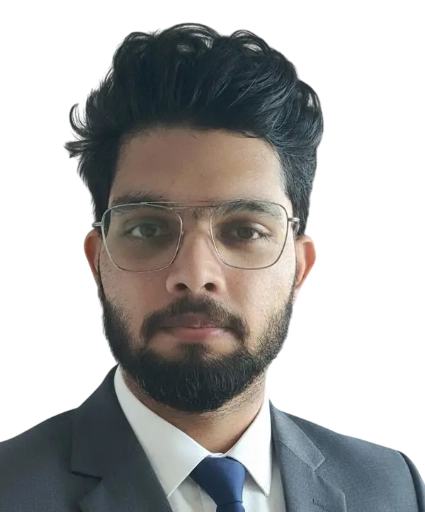
Last position:
Research Intern - ML / ADAS at IAV GmbH
- Developed and optimized LSTM-RNN and Decoder Transformer models to predict vehicle trajectory during target loss events in Adaptive Cruise Control systems, achieving 20% improved predictive accuracy over baseline models.
- Engineered novel data preprocessing pipeline from real road campaign data, processing multi-sensor time series data, generating 300+ training snippets.
- Implemented Bayesian hyperparameter optimization and applied physical constraints to prevent model run-away behavior, resulting in 30% smoother acceleration profiles.
- Extended existing patented technology for AI-assisted ACC function improvements, building upon foundational work to enhance network performance.
- Tools: Python, TensorFlow, Keras, Optuna, CarMaker
Bhavani S.
Last position:
Data Partner - Computer Science - Digital Media at Telus Digital
- Innovative prompt engineer with expertise in generating and refining prompts specifically for computer science-related images.
- Proficient in developing responses that enhance machine learning models' understanding of visual data in the computer science domain.
Uddipan B.

Last position:
Research Team Member at Munich Music Labs, TUM
- Focused on exploring the intersection of Music and AI.
Ekaansh K.
Last position:
Master thesis - LLM powered RAG System at Friedrich-Alexander-Universität Erlangen-Nürnberg
- Developed a RAG system to automate student queries with 96% accuracy, built using FastAPI and LangChain and deployed on the university server with Docker.
- Evaluated performance using RAGAS, comparing LLMs (Llama3.3, Llama3.1, GPT-4o-mini), vector embeddings, and various retrieval techniques within the RAG pipeline.
- Technical Skills: Python, FastAPI, Docker, AWS, LangChain, LangSmith, NLP, HTML, CSS
Discover over 15,000 top freelancers


Statistics of experts using Optuna
Aggregated from the professional profiles of matched freelancers.

Experience
12 years

Position duration
1.5 years

Positions per freelancer
8

Top business areas
Information Technology, Research and Development, Product Development

Top industries
Information Technology, Education, Manufacturing

Certification focus areas
Information Technology, Research and Development, Business Intelligence

Bachelor's degree or higher
100%

Master's degree or higher
100%

Doctorate
22%

Certifications per freelancer
1

Most common languages
German, English, Hindi

Speak two or more languages
100%
Based on our profile pool as of 9 Oct 2026.
Daily rate distribution
The chart shows how the daily rates of experts in this technology in Germany are distributed, based on recent contracts on our platform. Each bar covers a rate range — its height shows the share of experts charging within that range.
Average rates of experts in Germany using Optuna
Rates are based on recent contracts and do not include FRATCH margin.

The average daily rate is the mean of all daily rates from recent contracts of comparable freelancers on our platform.
The median daily rate is the middle value of all daily rates — half of comparable freelancers charge less, half charge more. Unlike the average, it is barely affected by outliers.
Calculated based on our freelancers’ daily rates as of 9 Oct 2026. Actual rates may vary depending on seniority level, experience, skill specialization, project complexity, and engagement length.
Optuna experts industry focus
See which industries our matched freelancers work in most often — every figure is calculated live from the freelancers on FRATCH.
- Information Technology (100%)
- Education (78%)
- Manufacturing (56%)
- Automotive (33%)
- Professional Services (33%)
- Aerospace and Defense (22%)
- Arts and Crafts (22%)
- Healthcare (22%)
Please note that freelancers can work across multiple industries, so percentages overlap.
About the technology
What Optuna does
Optuna is an open-source hyperparameter optimization framework for Python. It helps teams search for effective model settings through automated trials rather than manual guesswork. Its define-by-run approach lets an optimization study adapt as the search progresses, making it useful for complex machine learning workflows.
Optimization workflow
An Optuna project normally defines an objective function, suggests parameters, runs a training or evaluation step, and reports a result. The framework can prune weak trials early, persist studies, and compare results across experiments. Strong implementation keeps the objective reproducible and separates search logic from production training code.
Ecosystem and tooling
Optuna integrates with common Python and machine learning tools, including:
- scikit-learn pipelines and cross-validation
- PyTorch and TensorFlow training loops
- XGBoost, LightGBM, and other gradient-boosting libraries
- PostgreSQL or other storage back ends for shared studies
- Visualization tools for importance, history, and parallel coordinates
It can also run trials in parallel and fit into experiment tracking, containerized workloads, and cloud execution environments.
Where companies use it
Companies use Optuna to improve classification, forecasting, ranking, recommendation, computer vision, and natural language models. It is valuable when training is expensive, parameter interactions are difficult to predict, or a broad search must be narrowed to promising configurations. German teams often bring in specialists for product modeling, industrial analytics, logistics planning, and applied research.
When to bring in expertise
Freelance expertise helps when a team needs to replace manual tuning, migrate from grid or random search, or make experimentation reliable across a group. Typical signals include:
- Trials consume substantial compute without clear comparison criteria
- Search spaces contain conditional or dependent parameters
- Results cannot be reproduced or shared between environments
- Pruning and parallel execution are not used effectively
- The best study needs to become a repeatable deployment process
For remote work across Germany, clear documentation, shared storage, and agreed experiment protocols matter as much as code quality.
What strong experts deliver
Strong Optuna experts understand optimization theory, model evaluation, and the behavior of the underlying training library. They choose suitable samplers and pruners, prevent data leakage, define meaningful validation objectives, and monitor resource use. They also document search spaces, seeds, study storage, trial history, and the path from the selected configuration to production.

Frequently asked questions
Quick answers to the questions that come up most around Optuna.

Optuna is used to automate hyperparameter optimization for machine learning and other computational objectives. It can search model settings, stop unpromising trials early, compare experiments, and retain study results for later analysis.
Optuna uses adaptive sampling, so later trials can reflect what earlier trials have revealed. Grid search evaluates a fixed combination scheme, while random search samples without learning from previous results; Optuna can also prune weak runs before they finish.
A strong Optuna specialist should understand Python, validation design, experiment tracking, and the machine learning library used by the project. Experience with PyTorch, TensorFlow, scikit-learn, XGBoost, containers, databases, and cloud compute is useful when studies must run reliably at scale.
A small proof of concept may only require experience defining an objective and a search space. Larger work needs a professional who can design valid evaluation, manage distributed trials, control compute use, persist studies, and turn the selected configuration into a repeatable workflow.
Optuna is well suited to remote collaboration because studies, trial results, and configuration can be stored and reviewed centrally. Teams in Germany should agree on documentation, access to compute and storage, communication language, and whether any workshops require on-site attendance.
Ask the Optuna professional to explain the objective, validation method, search-space boundaries, sampler, and pruning strategy. Good work includes reproducible trials, clear comparison with a baseline, safeguards against leakage, and documentation showing why the chosen configuration is credible.
Optuna does not replace decisions about features, targets, data quality, or suitable model families. It searches within the choices and constraints provided by the team, so domain understanding and careful evaluation remain essential.
A capable Optuna freelancer should deliver the objective code, search-space definition, study storage setup, trial records, evaluation results, and a reproducible configuration. They should also explain how to rerun or extend the study and how the selected parameters move into training or deployment.
The average hourly rate of freelancers in Germany who have used Optuna in their recent projects is 62 €, which corresponds to a daily rate of about 498 € based on an 8-hour working day.
Of the freelancers in Germany who have used Optuna in their recent projects, 100% hold at least a Bachelor's degree, 100% hold at least a Master's degree, and 22% hold a doctorate.
On average, freelancers in Germany who have used Optuna in their recent projects have 12 years of professional experience, with a single engagement typically lasting around 1.5 years.
The most common languages among freelancers in Germany who have used Optuna in their recent projects are German (100%), English (100%), and Hindi (33%).
The most common industries among freelancers in Germany who have used Optuna in their recent projects are Information Technology (100%), Education (78%), and Manufacturing (56%).
The most common business areas among freelancers in Germany who have used Optuna in their recent projects are Information Technology (100%), Research and Development (100%), and Product Development (67%).
Main locations of FRATCH Experts, who have recently used Optuna
Our freelancers and interim experts are at home across the DACH region — available on-site in the major business hubs or fully remote. Choose a location to discover matched specialists, local market insights and up-to-date availability.
 Berlin Hamburg Munich Cologne Frankfurt Stuttgart Dusseldorf Leipzig Dortmund Essen Bremen Dresden Hanover Nuremberg
 Request a free demo
Get in touch with the FRATCH team and we will get back to you within 4 hours.
Would you rather directly get in touch?
We always have the time for a call or email!

Philipp Thomaschewski
FRATCH CEO

