


MLflow Experts in Berlin
, matched with vetted and available freelancers in minutesHire experts who manage MLflow Tracking, package models with MLflow Models and connect experiments to production workflows. Find precise support for model lifecycle management, registries and cloud deployments through fast matching with vetted, available freelancers.

Meet FRATCH Experts in Berlin, who have recently used MLflow
Stefan O.
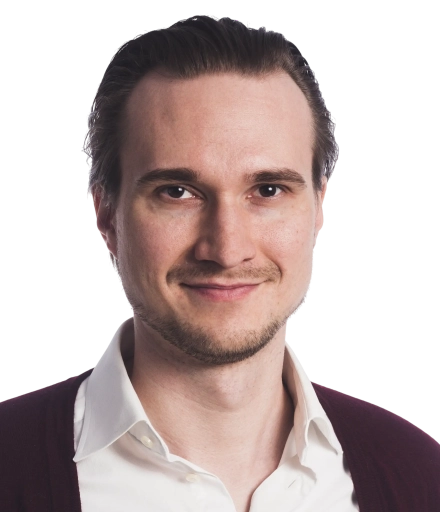
Last position:
Founder at ProtocolEngine.io
Evidence-led health intelligence platform turning published research into personal health protocols. It scores 430 habits, foods, and supplements against the studies behind them, and moves the score when the evidence moves. Built solo.
- Built the daily ingestion pipeline across PubMed, bioRxiv, and medRxiv: 43,000+ papers from 3,400+ journals processed into 230,000+ typed evidence claims, each one traceable back to the study it came from.
- Designed the six-factor evidence scoring model and the public changelog behind it, so no recommendation ever appears without the papers underneath it. 23,000+ grade changes recorded and explained to date.
- Shipped an entity information model connecting every intervention to its mechanisms, biomarkers, and outcomes: 118 biomarkers with region-specific reference ranges, 77 mechanisms, 32 graded outcomes.
- Built the personalisation layer: blood panel ingestion that reads lab PDFs with a vision model and corrects results for draw time against the user's wake anchor, plus Oura, WHOOP, and Withings integration for daily readiness context.
- Operate eleven specialised review agents over the corpus and codebase, covering paper curation, retrieval quality, health-claim compliance across EU and US regimes, and security.
- Shipped the Evidence Assistant, a RAG assistant that answers from the claim database and cites the underlying papers, plus a B2B practitioner tier, an Expo React Native app, and localisation across 3 languages and 7 markets.
Stack: Next.js 16, TypeScript, Supabase, pgvector, Anthropic Claude, Vercel, DeepInfra.
Haseeb Z.

Last position:
Senior Data Scientist at WPP MEDIA
- Designed and deployed enterprise Retrieval-Augmented Generation (RAG) applications using LangChain, LangGraph, vector databases, embeddings, and open-source LLMs served through vLLM on GCP GPU infrastructure.
- Built agentic AI workflows using LangGraph with planning, reasoning, tool execution, persistent memory, session management, and Human-in-the-Loop approval mechanisms.
- Developed LLM-powered automation systems integrating BigQuery, SQL pipelines, and external advertising APIs including Meta, TikTok, Amazon, Snapchat, Google, and Pinterest, reducing manual operational workflows.
- Architected multi-agent AI systems for enterprise analytics and decision-support workflows, enabling autonomous task execution and intelligent data interactions.
- Implemented retrieval optimization strategies including multi-retriever architectures, semantic search, context optimization, and query improvement techniques, improving response relevance by approximately 40%.
- Engineered structured prompting strategies, function-calling schemas, and validation workflows to improve reliability of multi-step LLM applications.
- Designed scalable AI services using Python, FastAPI, Cloud Run, Pub/Sub, BigQuery, Docker, and cloud-native deployment architectures.
Sejal V.
Last position:
Data & ML Engineering at Consulting
- Fractional leadership; consulting growth-stage startups and scale-ups on data strategy, ML products, and platform foundations
- Building decisioning systems for growth, personalization, & product experimentation, across e-Commerce, Digital Health, Energy, and Logistics
- Exploring Agentic AI & LLM-based tooling for production readiness patterns
Wolfram K.
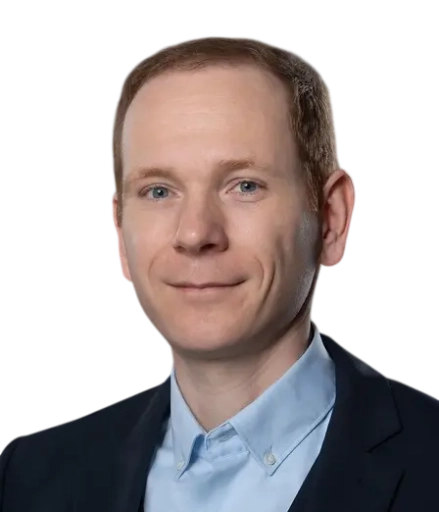
Last position:
AI / Machine Learning Engineer (Projects & Applied AI) at UNIVERSITÉ PARIS 1 PANTHEON-SORBONNE & LIORA
- Designed and implemented a hybrid recommendation system (content-based + collaborative filtering)
- Built end-to-end ML pipelines including data processing, feature engineering, model training, and evaluation
- Developed RAG-based LLM systems using LangChain and vector databases for semantic search and knowledge retrieval
- Established MLOps workflows with MLflow for experiment tracking, versioning, and deployment readiness
- Implemented deep learning models (computer vision & classification) using PyTorch and TensorFlow
Muzamal A.

Last position:
Data Scientist / AI Consultant at HelmX
- Delivered AI and data science solutions, including LLM-based chatbots and data pipelines, improving operational efficiency.
- Collaborated on product features, achieving measurable impact and maintaining strong client relationships.
Mathias W.
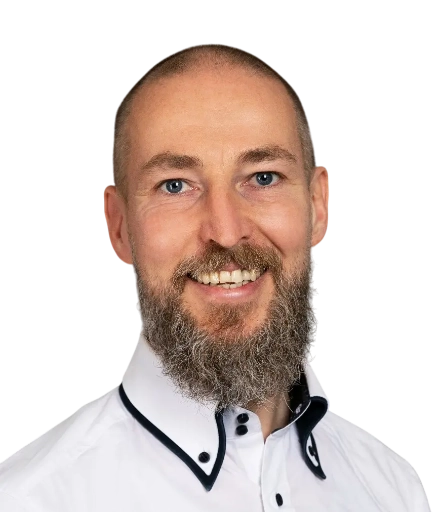
Last position:
Implementation of an on-premise OCR solution with information extraction at Mindhopper GmbH
- Insurance service provider*
Challenge: Business-critical documents were processed through external OCR providers, with ongoing costs, dependency, and data privacy risks for sensitive insurance data.
Implementation:
- Architecture and production implementation of an on-premise OCR solution with full data ownership
- Methods for recognizing document structures as the basis for automated further processing
- ML-, NLP-, and LLM/VLM-based information extraction, especially from invoices and quotations
Success: Replaced external providers: full data ownership, GDPR-compliant processing, and 75% lower recurring OCR costs per year
Used technologies: Python, Docker, Microservices, FastAPI, PyTorch, Torchvision, MongoDB, MySQL
Abhishek N.

Last position:
Fullstack Developer at DAMALO GmbH
- Own full-stack development of an AI-native enterprise platform built on TypeScript, React, Vite, tRPC, Hono, and PostgreSQL, delivering AI-powered consulting workflows to B2B clients.
- Designed and shipped a multi-agent AI system using ReAct framework and Claude skills-style workflow patterns, including an intelligent PM assistant with rich system prompts, slash commands, tool integrations, and streaming chat UI.
- Architected an LLM evaluation framework: rubric-based LLM-as-judge, golden datasets, regression testing, and automated quality gating — ensuring consistent AI output quality at scale.
- Integrated LangFuse for end-to-end LLM tracing, conversation replays, and evaluation pipelines, enabling data-driven prompt optimisation that reduced token costs and response variance.
- Built with Drizzle ORM, pgvector, and knowledge graphs for structured data access, semantic search, and relationship-aware AI reasoning across the platform.
- Led TanStack React Query migration across the application — replacing manual state management with centralised caching and automatic refetching, reducing data-fetching boilerplate significantly.
- Practiced AI-native development throughout: Claude Code, Codex, Perplexity SDK, and LLM-assisted testing across the full development lifecycle. Deployed on Vercel + Azure ACA with Biome for linting/formatting.
Louis G.

Last position:
Freelance Solutions Architect and Machine Learning Engineer at Self-employed
- Develop and demonstrate solutions using GenAI software like langchain, vercel ai sdk, copilotkit
- Work with customers to understand their challenges and provide the best solutions based on open-source data products
- Build RAG and GraphRAG solutions using Neo4j, lancedb, and Postgres
- Deploy a LLMOps platform using kubernetes, terraform, helmfile, Arize phoenix, mlflow
- Architect and build data pipelines using dbt, Trino, Spark, Iceberg, Airflow, ArgoCD, terraform, kubernetes
- Delivered user-centred technical strategy for Agriculture 4.0 and precision livestock farming, helping my client secure funding from Bpifrance
- Delivered a prospecting tool for a leading French solar carport installer, using geospatial computing (GIS), speeding up the sales process
- Built digital twin architecture for solar carports and EV chargers, making real-time monitoring and smart charging possible
Ashwin P.

Last position:
Data Scientist at Mercor Intelligence
- Elevated LLM output reliability by engineering domain-specific prompts and evaluation logic, improving reasoning consistency across production language model workflows.
- Designed advanced coding benchmarks and validated solutions to strengthen training and evaluation datasets, improving model performance on technical problem-solving tasks.
- Designed and implemented automated evaluation frameworks for technical reasoning tasks; optimized LLM output reliability by 15% through rigorous prompt engineering and rubric-based benchmarking.
Julien L.

Last position:
MLOps Engineer at SAMGEN
- Building and scaling cloud infrastructure on GCP to support a SaaS platform for industrial clients
- Designing and implementing a data-driven DevOps pipeline for streamlined deployment and CI/CD workflows
- Collaborating with Data Science team on MLOps workflow to automate integrated retraining
Tobias J.
Last position:
Design of an AI-Agent-Based ERP System
- Design of an LLM-based agent system to control the ERP software
- Development of agent workflows with LangGraph and PydanticAI
- Planning interfaces between business logic and language models
- Planning agent orchestration
- Prototype development and demonstration
Tools: Python, Pydantic, React, LangChain, LangGraph, Linux
Hamza K.

Last position:
Academic Research Contributor in Health Sector (Volunteer)
- Acted as technical consultant to optimize multi-layer ensemble models combining ResNet, CNN-BiGRU-Attention, and XGBoost.
- Guided implementation of a Logistic Regression meta-learner to solve class imbalance problems, achieving 92.86% accuracy and 0.9644 AUC on PTB-XL and Chapman-Shaoxing datasets.
Tushar R.
Last position:
Research Assistant/Master Thesis at Otto-von-Guericke Universität Magdeburg
- Performed qualitative and quantitative analysis of extracted findings, categorizing themes, evaluating methodologies, and assessing study quality and reliability.
- Produced research reports and evidence summaries communicating key trends, gaps, and opportunities to academic advisors or cross-functional teams.
- Presented findings through well-structured visualizations, tables, and narrative summaries to support decision-making and guide future research directions.
Fares K.
Last position:
Research Assistant – AI & Computer Vision at Iris-Sensing GmbH
- Designed and implemented a real-time perception pipeline using YOLOv7 on Time-of-Flight (ToF) sensor data, enabling live streaming, inference, and on-frame visualization for passenger detection.
- Fine-tuned and evaluated multiple state-of-the-art monocular depth estimation models for Automatic Passenger Counting (APC), and developed a custom hybrid depth model that improved depth accuracy in challenging scene regions.
- Demonstrated that model-generated depth maps outperform raw sensor depth for APC tasks across several datasets, contributing to measurable reductions in counting error.
Ivan K.

Last position:
Product Analyst at Sentryc GmbH
- Led data analytics projects, including data mining, exploratory research, A/B testing, KPI definition, and result interpretation
- Had a key role in scope and requirements definition of new features, creation of user flows, proof of concepts creation, and client personas establishment
- Initiated a data project related to clustering counterfeit listings based on language similarities, which was projected to reduce internal costs by 20%
- Led data migration project from Zoho Analytics to Power BI as well as from Google Analytics to Piwik
Discover over 15,000 top freelancers


Statistics of experts using MLflow
Aggregated from the professional profiles of matched freelancers.

Experience
12 years

Position duration
1.6 years (Germany: 1.7 years)

Positions per freelancer
8

Top business areas
Information Technology, Product Development, Research and Development

Top industries
Information Technology, Healthcare, Education

Certification focus areas
Business Intelligence, Information Technology, Product Development

Bachelor's degree or higher
100%

Master's degree or higher
63% (Germany: 78%)

Doctorate
11% (Germany: 21%)

Certifications per freelancer
2

Most common languages
English, German, French

Speak two or more languages
89% (Germany: 96%)
Based on our profile pool as of 9 Oct 2026.
Daily rate distribution
The chart shows how the daily rates of experts in this technology in Berlin are distributed, based on recent contracts on our platform. Each bar covers a rate range — its height shows the share of experts charging within that range.
Average rates of experts in Berlin using MLflow
Rates are based on recent contracts and do not include FRATCH margin.

The average daily rate is the mean of all daily rates from recent contracts of comparable freelancers on our platform.
The median daily rate is the middle value of all daily rates — half of comparable freelancers charge less, half charge more. Unlike the average, it is barely affected by outliers.
Calculated based on our freelancers’ daily rates as of 9 Oct 2026. Actual rates may vary depending on seniority level, experience, skill specialization, project complexity, and engagement length.
MLflow experts industry focus
See which industries our matched freelancers work in most often — every figure is calculated live from the freelancers on FRATCH.
- Information Technology (95%)
- Healthcare (58%)
- Education (47%)
- Automotive (37%)
- Media and Entertainment (37%)
- Professional Services (37%)
- Energy (32%)
- Manufacturing (32%)
Please note that freelancers can work across multiple industries, so percentages overlap.
About the technology
What MLflow does
MLflow is an open-source platform for managing the machine learning lifecycle. It records experiments, parameters, metrics and artifacts, then helps teams package, register and deploy models. Companies use it to make model work reproducible and easier to move from research into reliable services.
Core components
MLflow brings several connected capabilities into one workflow:
- MLflow Tracking for runs, metrics, parameters and artifacts
- Model Registry for versions, aliases and lifecycle stages
- MLflow Models for packaging and serving models consistently
- Projects for repeatable execution across environments
Its integrations support common machine learning libraries, notebook workflows, REST APIs and cloud storage. Strong specialists also understand experiment metadata, artifact stores, authentication and access controls.
Where it is used
Teams use MLflow for recommendation systems, forecasting, fraud detection, document processing and other data products. It can connect notebooks and training jobs with CI/CD pipelines, batch scoring services or real-time inference endpoints. In Berlin, companies across technology, logistics, finance and life sciences may use it to bring model experimentation into governed production processes.
When expertise helps
Freelance professionals are useful when a team needs to introduce MLflow, repair an inconsistent tracking setup or standardize model delivery. Typical signals include:
- Experiments are stored in notebooks without shared metadata
- Models cannot be compared or promoted consistently
- Training and deployment environments drift apart
- The registry lacks ownership, approval or rollback practices
They can also migrate existing runs, define conventions and document workflows for internal teams.
Skills around MLflow
Effective MLflow work combines Python, SQL and data engineering with practical machine learning knowledge. Specialists may work with scikit-learn, PyTorch, TensorFlow, XGBoost, Spark, Docker and Kubernetes. They should also understand cloud object storage, databases, orchestration, Git-based delivery and monitoring after deployment.
Remote collaboration works well when requirements, access and ownership are clear. For Berlin teams, on-site workshops can help with architecture decisions, while remote delivery remains suitable for implementation and documentation.
What strong professionals deliver
Look for specialists who can explain why a tracking design fits the team rather than simply installing the package. Strong professionals define useful metadata, reliable artifact storage, registry permissions and promotion rules. They test reproducibility across environments and show how a model moves from a tracked run to a controlled release.
A good engagement ends with maintainable configuration, clear run conventions, operational documentation and knowledge transfer. Practical experience with failure recovery, data lineage and model monitoring is especially valuable when MLflow becomes part of a production platform.

Frequently asked questions
The facts hiring teams ask for most often when it comes to MLflow.

MLflow is used to track machine learning experiments and manage models through their lifecycle. It helps teams record parameters and metrics, store artifacts, register model versions and connect training work with deployment workflows.
MLflow is an open-source platform that can be self-hosted and extended across tracking, model packaging and registry workflows. Weights & Biases often emphasizes hosted experiment collaboration and visualization, so the better choice depends on governance, infrastructure and integration needs.
A strong MLflow specialist usually combines Python with machine learning libraries, Git, Docker and cloud storage. Skills in Kubernetes, CI/CD, orchestration, data engineering and model monitoring are valuable when the work extends into production.
The needed depth depends on the scope. A tracking setup may need focused configuration, while a governed registry and deployment workflow calls for experience with infrastructure, permissions, reproducibility and operational support.
MLflow projects are often suitable for remote delivery because configuration, code and documentation can be reviewed online. Berlin teams should define access to data, repositories and infrastructure clearly, and use on-site sessions when architecture workshops or stakeholder alignment benefit from being together.
Bring in an MLflow professional when experiments are difficult to reproduce, model versions are unclear or deployment handoffs rely on manual steps. External expertise can establish conventions, connect existing systems and leave the team with a maintainable operating model.
Ask how the specialist handles metadata design, artifact storage, registry permissions and reproducibility. A quality MLflow implementation includes tested promotion paths, clear documentation, sensible failure handling and evidence that another professional can run the workflow.
MLflow supports models from many frameworks, including scikit-learn, PyTorch, TensorFlow and XGBoost. Its value comes from the shared lifecycle around those models, while framework-specific preprocessing, serving and performance concerns still need specialist attention.
The average hourly rate of freelancers in Berlin, Germany who have used MLflow in their recent projects is 84 €, which corresponds to a daily rate of about 671 € based on an 8-hour working day.
Of the freelancers in Berlin, Germany who have used MLflow in their recent projects, 100% hold at least a Bachelor's degree, 63% hold at least a Master's degree, and 11% hold a doctorate.
On average, freelancers in Berlin, Germany who have used MLflow in their recent projects have 12 years of professional experience, with a single engagement typically lasting around 1.6 years.
The most common languages among freelancers in Berlin, Germany who have used MLflow in their recent projects are English (100%), German (89%), and French (26%).
The most common industries among freelancers in Berlin, Germany who have used MLflow in their recent projects are Information Technology (95%), Healthcare (58%), and Education (47%).
The most common business areas among freelancers in Berlin, Germany who have used MLflow in their recent projects are Information Technology (100%), Product Development (100%), and Research and Development (95%).
Main locations of FRATCH Experts, who have recently used MLflow
Our freelancers and interim experts are at home across the DACH region — available on-site in the major business hubs or fully remote. Choose a location to discover matched specialists, local market insights and up-to-date availability.
 Berlin
  Hamburg Munich Cologne Frankfurt Stuttgart Dusseldorf Leipzig Dortmund Essen Bremen Dresden Hanover Nuremberg
  Munich
 Request a free demo
Get in touch with the FRATCH team and we will get back to you within 4 hours.
Would you rather directly get in touch?
We always have the time for a call or email!

Philipp Thomaschewski
FRATCH CEO

