


Matplotlib Experts in Nuremberg
matched in minutes from over 15,000 CVs with the power of AI.Hire experts who create clear charts, publication-ready figures, and notebook visuals with Matplotlib, Pyplot, and the wider Python data stack. Get fast, precise matching with vetted, available freelancers.

Meet FRATCH Experts in Nuremberg, who have recently used Matplotlib
David O.
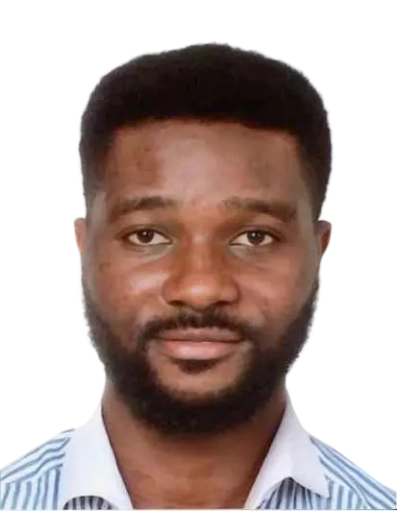
Last position:
Research Intern at Pattern Recognition Lab
- Spearheaded the integration of a custom Transformer-based encoder into the AFFGANwriting pipeline, replacing the legacy VGG19 architecture to capture richer, high-fidelity writer-style representations.
- Boosted user-study pick-rates by 40%, demonstrating a significant leap in the perceptual quality and realism of the generated handwriting compared to the baseline model.
- Enhanced OCR performance by 20% by implementing a teacher-student framework that leveraged a TrOCR benchmark model for auxiliary training alignment
Muntaha S.
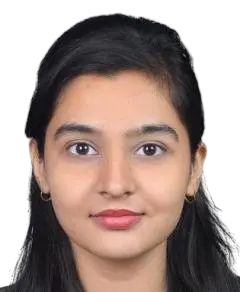
Last position:
AI Engineer (Freelance) at Upwork
- Delivered 40+ AI projects and 23 strategic consultations for international clients (US, Europe, Middle East), achieving a 98% job success rate and building long-term partnerships.
- Developed and deployed production-grade AI solutions in computer vision, NLP, deep learning, and generative AI (LLMs, RAG pipelines, Stable Diffusion, OCR, chatbots), enabling automation and improving client efficiency by up to 70%.
- Designed and fine-tuned large language models (LLMs), including prompt engineering and integration with enterprise knowledge bases, leading to smarter decision-making and reduced manual effort.
- Built real-time computer vision applications (detection, segmentation, OCR) and integrated them into business systems, significantly enhancing accuracy and scalability.
- Consulted startups and enterprises on AI strategy, architecture, and deployment (cloud & on-premise), accelerating product development and reducing time-to-market.
- Managed complete AI project lifecycles (requirements gathering, solution design, deployment, support) in agile, international, and cross-functional environments, ensuring high-quality delivery.
Aqsa Y.

Last position:
Multilingual Translation Tool - NLP Project
- Integrated MarianMT (Marian Machine Translation) models to ensure high-quality neural machine translation (NMT).
- Managed model loading and tokenization via Hugging Face Transformers, optimizing for offline caching and reproducibility.
- Planned extensions: language auto-detection, batch translations, and streamlined GPU inference with PyTorch.
Puranjan B.

Last position:
Internship - Generative AI at Continental
- Gathered tire images and their feature descriptions.
- Cleaned dataset of image metadata using pandas.
- Stored image feature embeddings in Chroma vector db.
- Used image augmentations to increase dataset size.
- Used sklearn to create shuffled datasets and imbalanced-learn to balance class sizes in dataset.
- Used PyTorch to train and test different neural networks.
- Validated model using custom accuracy metric based on similarity search in ChromaDB.
- Visualized accuracy predictions using matplotlib.
- Plugged trained model into DreamBooth to train stable diffusion model and generate new images of tires.
- Created custom Docker image in Amazon Elastic Container Registry for machine learning script.
Pawan S.

Last position:
CAPTCHA Recognition using CRNN
- Built a CRNN model with VGG16 and BiLSTM backbone for text-based CAPTCHA recognition
- Achieved 9.37% character error rate and 68.36% sequence accuracy on validation data
- Expanded data augmentation pipeline with distortions, noise injection, and clutter to improve robustness
- Conducted detailed error analysis on confusable characters (O, Q, D) and proposed error-specific augmentation
- Tech Stack: Python, TensorFlow/Keras, OpenCV, NumPy, Matplotlib
Ekaansh K.
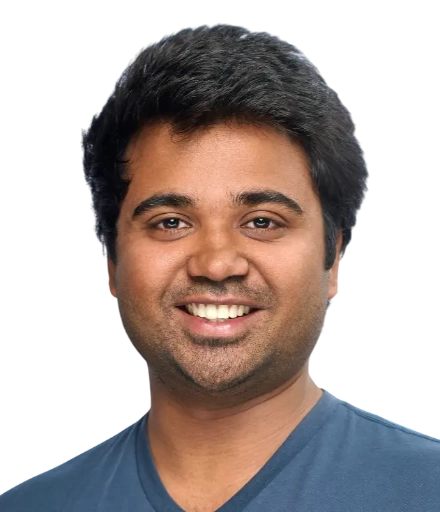
Last position:
Master thesis - LLM powered RAG System at Friedrich-Alexander-Universität Erlangen-Nürnberg
- Developed a RAG system to automate student queries with 96% accuracy, built using FastAPI and LangChain and deployed on the university server with Docker.
- Evaluated performance using RAGAS, comparing LLMs (Llama3.3, Llama3.1, GPT-4o-mini), vector embeddings, and various retrieval techniques within the RAG pipeline.
- Technical Skills: Python, FastAPI, Docker, AWS, LangChain, LangSmith, NLP, HTML, CSS
Discover over 15,000 top freelancers


Statistics of experts using Matplotlib
Aggregated from the professional profiles of matched freelancers.

Experience
7 years (Germany: 11 years)

Position duration
1.3 years (Germany: 2 years)

Positions per freelancer
5 (Germany: 7)

Top business areas
Information Technology, Research and Development, Product Development

Top industries
Information Technology, Education, Manufacturing

Certification focus areas
Business Intelligence, Information Technology, Research and Development

Bachelor's degree or higher
100%

Master's degree or higher
100% (Germany: 86%)

Certifications per freelancer
3 (Germany: 2)

Most common languages
English, German, Urdu

Speak two or more languages
100% (Germany: 99%)
Based on our profile pool as of 9 Oct 2026.
Daily rate distribution
The chart shows how the daily rates of experts in this technology in Nuremberg are distributed, based on recent contracts on our platform. Each bar covers a rate range — its height shows the share of experts charging within that range.
Average rates of experts in Nuremberg using Matplotlib
Rates are based on recent contracts and do not include FRATCH margin.

The average daily rate is the mean of all daily rates from recent contracts of comparable freelancers on our platform.
The median daily rate is the middle value of all daily rates — half of comparable freelancers charge less, half charge more. Unlike the average, it is barely affected by outliers.
Calculated based on our freelancers’ daily rates as of 9 Oct 2026. Actual rates may vary depending on seniority level, experience, skill specialization, project complexity, and engagement length.
Matplotlib experts industry focus
See which industries our matched freelancers work in most often — every figure is calculated live from the freelancers on FRATCH.
- Information Technology (100%)
- Education (67%)
- Manufacturing (50%)
- Healthcare (33%)
- Retail (33%)
- Aerospace and Defense (17%)
- Automotive (17%)
- Chemical (17%)
Please note that freelancers can work across multiple industries, so percentages overlap.
About the technology
What Matplotlib does
Matplotlib is a Python library for creating static, animated, and interactive plots. It is used for line charts, bar charts, scatter plots, histograms, and custom figures that need full control over layout, labels, and styling.
Common deliverables
- Dashboard-ready charts for reports and notebooks
- Publication figures for research and technical papers
- Exploratory plots for data cleaning and analysis
- Branded visuals that match company style guides
- Exported PNG, SVG, and PDF assets for product teams
Ecosystem around it
Strong Matplotlib work usually sits close to NumPy, Pandas, SciPy, Jupyter, and Seaborn. Many professionals use Pyplot for quick plotting, then switch to the object-oriented API when the figure needs more precision or repeatable styling.
When companies bring help
Teams often look for freelance support when charts look inconsistent, notebooks are hard to read, or a report needs polished visuals fast. In Nuremberg, that can matter for industrial analytics, manufacturing reporting, and research groups that need clear communication in English and German.
What good specialists do
- Keep axes, legends, and annotations readable
- Choose chart types that fit the data, not the habit
- Build reusable plotting code instead of one-off notebook cells
- Handle time series, categories, and multi-panel layouts cleanly
- Deliver figures that print well and export correctly
Skills that go with Matplotlib
The best specialists understand data shapes, color use, and how plots support a decision. They also know when Matplotlib is the right choice and when a higher-level layer like Seaborn or a different visualization approach is better for the task.

Frequently asked questions
Need clarity? These are the questions we hear most often about Matplotlib.

Matplotlib is used to turn data into clear charts and figures in Python. Companies use it for analysis notebooks, business reports, research papers, and product visuals that need exact control over labels, axes, and export format.
Matplotlib gives the most direct control over every part of a plot. Seaborn is faster for statistical charts, while Plotly is better when teams need built-in interactivity. Many projects use Matplotlib as the base layer and add other libraries where they fit better.
A strong Matplotlib specialist usually works comfortably with Python, Pandas, and NumPy. Jupyter, data cleaning, chart design, and export formats such as SVG or PDF also matter. In many projects, domain knowledge is just as useful as plotting syntax.
A simple chart cleanup may only need a specialist who can improve an existing notebook. More complex work, such as reusable plotting functions, multi-axis figures, or publication output, benefits from someone who knows the library deeply. The more custom the visuals, the more important that experience becomes.
Yes. Matplotlib work is usually easy to do remotely because the core tasks live in notebooks, scripts, and review files. On-site work can still help when teams want close collaboration with analysts, researchers, or product stakeholders in Nuremberg.
Matplotlib is the library, while Pyplot is the plotting interface most people use first. Pyplot is convenient for quick charts, but the object-oriented API gives better control for larger or repeated plots. A good specialist knows both and chooses the right one for the task.
Look for clean code, readable figures, and a clear reason behind each chart choice. A strong Matplotlib professional explains layout, colors, scales, and labels in plain words, and can adapt the same plot for notebooks, slides, and print without losing clarity.
Matplotlib is common in data-heavy teams that need precise visual output. That includes manufacturing, engineering, research, finance, and software products with analytics features. The best fit is a specialist who understands both the data and the audience for the chart.
The average hourly rate of freelancers in Nuremberg, Germany who have used Matplotlib in their recent projects is 36 €, which corresponds to a daily rate of about 292 € based on an 8-hour working day.
Of the freelancers in Nuremberg, Germany who have used Matplotlib in their recent projects, 100% hold at least a Bachelor's degree and 100% hold at least a Master's degree.
On average, freelancers in Nuremberg, Germany who have used Matplotlib in their recent projects have 7 years of professional experience, with a single engagement typically lasting around 1.3 years.
The most common languages among freelancers in Nuremberg, Germany who have used Matplotlib in their recent projects are English (100%), German (83%), and Urdu (33%).
The most common industries among freelancers in Nuremberg, Germany who have used Matplotlib in their recent projects are Information Technology (100%), Education (67%), and Manufacturing (50%).
The most common business areas among freelancers in Nuremberg, Germany who have used Matplotlib in their recent projects are Information Technology (100%), Research and Development (100%), and Product Development (83%).
Main locations of FRATCH Experts, who have recently used Matplotlib
Our freelancers and interim experts are at home across the DACH region — available on-site in the major business hubs or fully remote. Choose a location to discover matched specialists, local market insights and up-to-date availability.


 Berlin
  Hamburg
  Munich
  Frankfurt
 Request a free demo
Get in touch with the FRATCH team and we will get back to you within 4 hours.
Would you rather directly get in touch?
We always have the time for a call or email!

Philipp Thomaschewski
FRATCH CEO

