


NumPy Experts in Nuremberg
matched in minutes with vetted, available specialistsHire experts who build reliable numerical workflows, optimize array-based computation, and connect NumPy with pandas, SciPy, and machine learning pipelines. FRATCH matches you quickly and precisely with vetted, available freelancers suited to your project.

Meet FRATCH Experts in Nuremberg, who have recently used NumPy
David O.
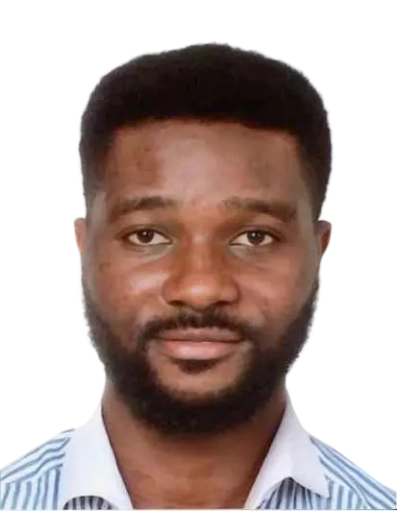
Last position:
Research Intern at Pattern Recognition Lab
- Spearheaded the integration of a custom Transformer-based encoder into the AFFGANwriting pipeline, replacing the legacy VGG19 architecture to capture richer, high-fidelity writer-style representations.
- Boosted user-study pick-rates by 40%, demonstrating a significant leap in the perceptual quality and realism of the generated handwriting compared to the baseline model.
- Enhanced OCR performance by 20% by implementing a teacher-student framework that leveraged a TrOCR benchmark model for auxiliary training alignment
Amir A.

Last position:
Master's Thesis at Friedrich-Alexander University
- Analysis of the role of marriage as an informal insurance in Germany using econometric methods (supervisor: Prof. Dr. Harald Tauchmann).
- Prepared and cleaned multiple panel datasets and extracted relevant variables to create a final panel dataset with over 36,000 observations (2006–2020, SOEP).
- Designed an IV model in Stata to examine the causal link between couple separation and health shocks (mental/physical).
- Conducted robustness checks to ensure stability and validity of the results.
Muntaha S.
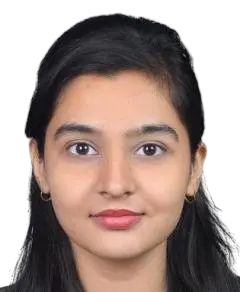
Last position:
AI Engineer (Freelance) at Upwork
- Delivered 40+ AI projects and 23 strategic consultations for international clients (US, Europe, Middle East), achieving a 98% job success rate and building long-term partnerships.
- Developed and deployed production-grade AI solutions in computer vision, NLP, deep learning, and generative AI (LLMs, RAG pipelines, Stable Diffusion, OCR, chatbots), enabling automation and improving client efficiency by up to 70%.
- Designed and fine-tuned large language models (LLMs), including prompt engineering and integration with enterprise knowledge bases, leading to smarter decision-making and reduced manual effort.
- Built real-time computer vision applications (detection, segmentation, OCR) and integrated them into business systems, significantly enhancing accuracy and scalability.
- Consulted startups and enterprises on AI strategy, architecture, and deployment (cloud & on-premise), accelerating product development and reducing time-to-market.
- Managed complete AI project lifecycles (requirements gathering, solution design, deployment, support) in agile, international, and cross-functional environments, ensuring high-quality delivery.
Puranjan B.

Last position:
Internship - Generative AI at Continental
- Gathered tire images and their feature descriptions.
- Cleaned dataset of image metadata using pandas.
- Stored image feature embeddings in Chroma vector db.
- Used image augmentations to increase dataset size.
- Used sklearn to create shuffled datasets and imbalanced-learn to balance class sizes in dataset.
- Used PyTorch to train and test different neural networks.
- Validated model using custom accuracy metric based on similarity search in ChromaDB.
- Visualized accuracy predictions using matplotlib.
- Plugged trained model into DreamBooth to train stable diffusion model and generate new images of tires.
- Created custom Docker image in Amazon Elastic Container Registry for machine learning script.
Pawan S.

Last position:
CAPTCHA Recognition using CRNN
- Built a CRNN model with VGG16 and BiLSTM backbone for text-based CAPTCHA recognition
- Achieved 9.37% character error rate and 68.36% sequence accuracy on validation data
- Expanded data augmentation pipeline with distortions, noise injection, and clutter to improve robustness
- Conducted detailed error analysis on confusable characters (O, Q, D) and proposed error-specific augmentation
- Tech Stack: Python, TensorFlow/Keras, OpenCV, NumPy, Matplotlib
Musaib P.

Last position:
Research Intern – Exploring Reasoning with Diffusion Models at Machine Learning and Perception group, FAU Erlangen-Nürnberg
- Investigating the equivalence between the Tiny Reasoning Model (TRM) and diffusion models for structured reasoning tasks such as Sudoku and maze solving.
- Exploring the reasoning and generative capabilities of diffusion models in symbolic problem-solving environments.
Vasuraj B.
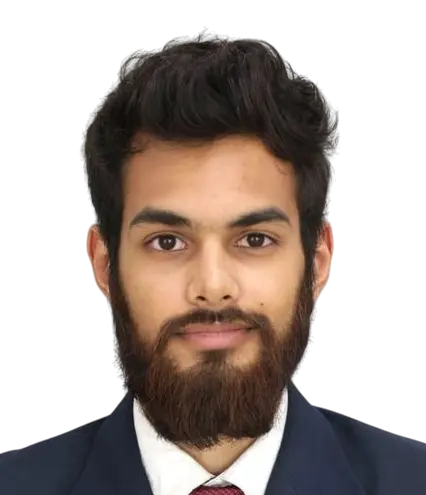
Last position:
Cloud Data Analyst at Bhatia Reply
- Analyzed 50K+ customer records using SQL and Python in a cloud services firm, identifying trends
- Designed interactive Tableau dashboards for sales and marketing stakeholders, reducing report
- Developed ARIMA and AutoARIMA time series models to forecast AWS resource utilization, cutting
- Automated ETL pipelines with Python, improving workflow efficiency by 20% for scalable data
- Collaborated with DevOps teams to deploy 3 machine learning models in production using Docker
Ekaansh K.
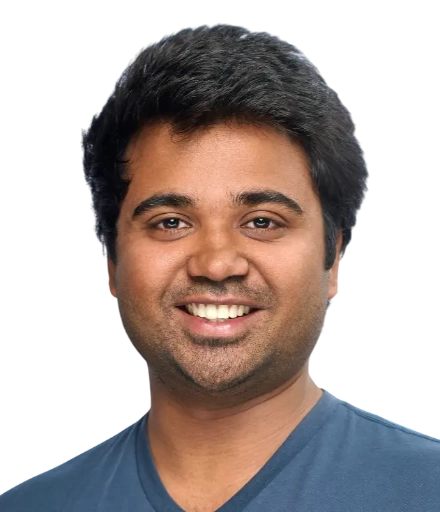
Last position:
Master thesis - LLM powered RAG System at Friedrich-Alexander-Universität Erlangen-Nürnberg
- Developed a RAG system to automate student queries with 96% accuracy, built using FastAPI and LangChain and deployed on the university server with Docker.
- Evaluated performance using RAGAS, comparing LLMs (Llama3.3, Llama3.1, GPT-4o-mini), vector embeddings, and various retrieval techniques within the RAG pipeline.
- Technical Skills: Python, FastAPI, Docker, AWS, LangChain, LangSmith, NLP, HTML, CSS
Anshul P.

Last position:
BSc Artificial Intelligence at Friedrich Alexander University Erlangen-Nuremberg
- Current Grade: 1.4.
- Applied Programming on Signal Processing: Fourier Transform, Filtering, VisPy, and NumPy.
- FAUST WebSecurity Workshop.
- Hands-on experience in LLMs, Applied Data Science, and data analysis.
- Proficient in Python, PyQt5, C++, MS Office, Git, Pandas, NumPy, VisPy, JavaScript, CSS, Machine Learning, and HTML.
Discover over 15,000 top freelancers


Statistics of experts using NumPy
Aggregated from the professional profiles of matched freelancers.

Experience
7 years (Germany: 11 years)

Position duration
1.4 years (Germany: 1.8 years)

Positions per freelancer
4 (Germany: 8)

Top business areas
Research and Development, Information Technology, Business Intelligence

Top industries
Information Technology, Education, Manufacturing

Certification focus areas
Information Technology, Research and Development, Business Intelligence

Bachelor's degree or higher
100% (Germany: 99%)

Master's degree or higher
78% (Germany: 82%)

Certifications per freelancer
2

Most common languages
English, German, Hindi

Speak two or more languages
100% (Germany: 99%)
Based on our profile pool as of 9 Oct 2026.
Daily rate distribution
The chart shows how the daily rates of experts in this technology in Nuremberg are distributed, based on recent contracts on our platform. Each bar covers a rate range — its height shows the share of experts charging within that range.
Average rates of experts in Nuremberg using NumPy
Rates are based on recent contracts and do not include FRATCH margin.

The average daily rate is the mean of all daily rates from recent contracts of comparable freelancers on our platform.
The median daily rate is the middle value of all daily rates — half of comparable freelancers charge less, half charge more. Unlike the average, it is barely affected by outliers.
Calculated based on our freelancers’ daily rates as of 9 Oct 2026. Actual rates may vary depending on seniority level, experience, skill specialization, project complexity, and engagement length.
NumPy experts industry focus
See which industries our matched freelancers work in most often — every figure is calculated live from the freelancers on FRATCH.
- Information Technology (89%)
- Education (78%)
- Manufacturing (44%)
- Automotive (33%)
- Healthcare (33%)
- Banking and Finance (22%)
- Professional Services (22%)
- Aerospace and Defense (11%)
Please note that freelancers can work across multiple industries, so percentages overlap.
About the technology
Numerical foundation
NumPy, short for Numerical Python, is the core array-computing library in the Python scientific ecosystem. It provides multidimensional arrays, vectorized operations, broadcasting, linear algebra, statistics, random sampling, and fast routines for numerical data. Companies use it to replace slow, repetitive Python loops with clear and efficient calculations.
Typical applications
NumPy supports analytical products, research tools, simulation software, optimization services, and machine learning workflows. It is often the computational layer behind data preparation, feature creation, image and signal processing, and quantitative models.
- Transform and validate multidimensional data
- Implement numerical and statistical calculations
- Prepare arrays for pandas, SciPy, or scikit-learn
- Prototype algorithms before production integration
Ecosystem and tooling
Strong NumPy work usually connects with pandas for tabular data, SciPy for scientific routines, Matplotlib for visualization, and scikit-learn for machine learning. Specialists may also use Jupyter, Python packaging tools, type checking, testing frameworks, and compiled extensions through C, C++, or Cython. Knowledge of array memory layout and interoperability with libraries such as PyTorch can matter in performance-sensitive systems.
When expertise matters
Companies bring in freelance expertise when numerical code is becoming slow, difficult to verify, or hard to extend. A specialist can refactor loop-heavy operations, define robust array interfaces, investigate unexpected broadcasting, and establish tests for edge cases. This is valuable when a prototype must become a dependable service or internal product.
- Profile array operations and memory use
- Review numerical correctness and precision
- Migrate legacy calculations into Python workflows
- Document reusable computational components
What strong professionals deliver
Effective professionals understand both Python and the mathematics behind the calculation. They choose suitable dtypes, handle missing and extreme values deliberately, and distinguish numerical instability from ordinary software defects. Their deliverables may include tested modules, reproducible notebooks, performance improvements, technical documentation, and integration guidance for a wider data or software team.
Collaboration in Nuremberg
NumPy specialists in Nuremberg can support local industrial, research, health, and technology projects, whether collaboration is on-site, hybrid, or remote. Clear interfaces, shared notebooks, version control, and written assumptions help distributed teams review numerical results. German or English communication can be agreed around the project and its stakeholders.

Frequently asked questions
What clients ask us most about NumPy — answered in short.

NumPy is used for fast array processing and numerical computation in Python. It supports tasks such as matrix operations, statistical calculations, simulations, signal processing, data transformation, and preparation for machine learning.
NumPy focuses on homogeneous multidimensional arrays and low-level numerical operations. pandas adds labeled rows and columns, making it better suited to tabular data, while many pandas operations rely on NumPy underneath.
A strong NumPy specialist often works with Python, pandas, SciPy, scikit-learn, Jupyter, and testing tools. Depending on the project, knowledge of linear algebra, statistics, data modeling, Cython, or GPU-oriented libraries is also useful.
Bring in a NumPy expert when numerical code is slow, difficult to validate, or producing inconsistent results. Specialists are also valuable when a research notebook must become tested software or when array-heavy calculations need to integrate with a larger Python system.
The right level depends on the assignment. A focused transformation task may need strong Python and array fundamentals, while simulation, optimization, or performance work calls for deeper numerical reasoning, profiling ability, and experience with production-quality testing.
NumPy work is well suited to remote collaboration when data assumptions, array shapes, dtypes, and expected results are documented. Version control, reproducible environments, notebooks used carefully, and automated tests make reviews easier across locations.
For NumPy projects in Nuremberg, companies should clarify whether the work is on-site, hybrid, or remote and which language is needed for technical and stakeholder communication. Local access can help with industrial or research workflows, while remote collaboration may provide broader specialist coverage.
Review whether NumPy code has clear array contracts, sensible dtypes, numerical tests, and measured performance rather than assumed performance. Good work explains precision and edge-case decisions, avoids accidental copies, and remains readable for professionals who will maintain it.
The average hourly rate of freelancers in Nuremberg, Germany who have used NumPy in their recent projects is 35 €, which corresponds to a daily rate of about 282 € based on an 8-hour working day.
Of the freelancers in Nuremberg, Germany who have used NumPy in their recent projects, 100% hold at least a Bachelor's degree and 78% hold at least a Master's degree.
On average, freelancers in Nuremberg, Germany who have used NumPy in their recent projects have 7 years of professional experience, with a single engagement typically lasting around 1.4 years.
The most common languages among freelancers in Nuremberg, Germany who have used NumPy in their recent projects are English (100%), German (89%), and Hindi (22%).
The most common industries among freelancers in Nuremberg, Germany who have used NumPy in their recent projects are Information Technology (89%), Education (78%), and Manufacturing (44%).
The most common business areas among freelancers in Nuremberg, Germany who have used NumPy in their recent projects are Research and Development (89%), Information Technology (78%), and Business Intelligence (56%).
Main locations of FRATCH Experts, who have recently used NumPy
Our freelancers and interim experts are at home across the DACH region — available on-site in the major business hubs or fully remote. Choose a location to discover matched specialists, local market insights and up-to-date availability.


 Berlin
  Hamburg
  Munich
  Cologne
  Frankfurt
  Stuttgart
  Dresden
 Request a free demo
Get in touch with the FRATCH team and we will get back to you within 4 hours.
Would you rather directly get in touch?
We always have the time for a call or email!

Philipp Thomaschewski
FRATCH CEO

