


Liquibase Experts in Munich
for reliable database releases, matched in minutes with vetted freelancersHire experts who manage Liquibase changelogs, database versioning and automated schema releases across Spring Boot, Kubernetes and CI/CD environments. FRATCH matches you quickly and precisely with vetted, available freelancers.

Meet FRATCH Experts in Munich, who have recently used Liquibase
Marcus B.

Last position:
Java and Quarkus Expert at Large German energy service provider
- Modernization of a large-scale Java enterprise application*
The project is modernizing a complex enterprise application that has grown over many years. The existing Spring-based legacy system runs on Java 8, OSGi, and Eclipse RCP and is being gradually migrated to a modern, maintainable architecture with Java 25 and Quarkus.
Marcus works on analysis, architecture, refactoring, and implementation. One focus is on untangling historically grown structures and dependencies and on building a clean, sustainable Java and Quarkus technology stack.
Tools & technologies: Java 8, Java 25, Quarkus, Hibernate ORM with Panache, EclipseLink, OSGi, Eclipse RCP, Maven, JUnit, Mockito, REST, JSON, Git, Eclipse IDE, IntelliJ IDEA Ultimate, Jira, Confluence
Frederik C.

Last position:
Freelance Full-Stack Software Developer at Bundesdruckerei GmbH
Development of the digital organ donation register, commissioned by the Federal Institute for Drugs and Medical Devices (BfArM)
Implementation of user stories in several microservices (frontend and backend)
Ensuring quality with unit, integration, and E2E tests
Conducting code reviews
Coordination with other development teams
Taking over the software license check and simplifying the process
Responsibility for implementing and documenting the business logging
Setting up a development environment with Docker Compose
Anton K.
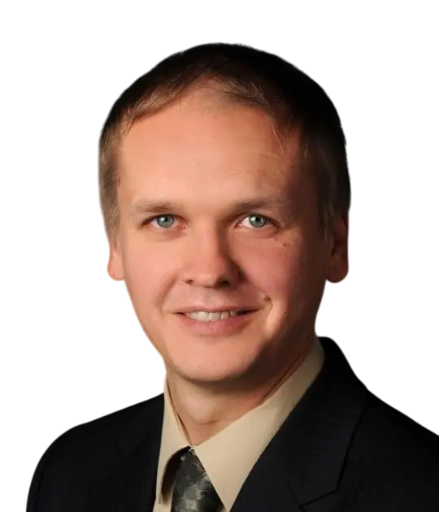
Last position:
Head of Overall Technical Integration NSC / Hadoop Cloud Development at IABG
Head of overall technical integration NSC (National Secure Cloud, project with approx. 60 employees).
Technical integration of all subprojects into one product, definition of interfaces and basic components of a cloud including hardware, technical architecture of the IABG platform.
Development of a Cloud Management Platform (CMP) capable of creating private/mixed clouds of any complexity based on a textual description with one click or interactively.
CMP also includes the complete hardware management lifecycle.
Kubernetes, OpenStack and Hadoop are used as the foundation.
The management layer includes Harbor, Gitea, Longhorn, Keycloak, Rancher and Jenkins, which are configured automatically.
Private cloud can run any customer workloads, including a full Hadoop layer with HDFS, Spark, MapReduce, Mesos, HBase and around 20 additional ML/DL technologies.
Hadoop worker clusters can also be installed automatically without Kubernetes on bare metal or commodity hardware.
OpenStack with Nova, Neutron, Ironic, Swift, Cinder, Ceph.
Development of a Java application Rudi: SOAP, REST, containers, DB.
Technologies: Kubernetes (K3s, Rke2, Minikube, Harbor, Gitea, Jenkins, Longhorn, Keycloak, Rancher), OpenStack (Nova, Neutron, Keystone, Swift, Ceph, Cinder, Sahara, Magnum, Kayobe, Kolla, Bigrost, Ironic), Hadoop (HDFS, Ambari, Solr, Livy, Ranger, YARN, Tez, HBase, Kafka, Hive, Zookeeper, MapReduce, Spark, Oozie, Flink), virtualization (Kubernetes (K3S), VMware, Oracle), scripting (Ansible, Puppet, Juju, Shell, Groovy, Gradle, Maven).
Christoph S.

Last position:
Staatsministerium für Ernährung, Landwirtschaft und Forsten
- Development of the Ibalis portal and payment procedures for applying for and paying out EU funding.
- Publicly accessible portal, e.g. for farmers.
- Projects over the last ten years were carried out according to Scrum.
- Technologies: Spring, Wicket, Hibernate, Postgres, JSON, XML, REST, Bitbucket, Podam, Buckets, JUnit, Gradle, Intellij, Bamboo, Swagger.
Stanislav B.
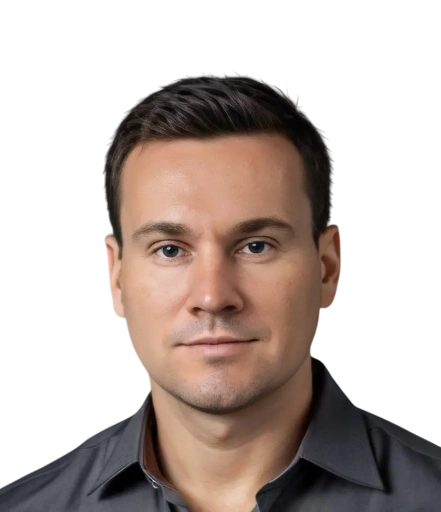
Last position:
Senior Solution Architect at HDI Versicherung AG
- Support in building a modern and secure microservice architecture
- Creation of architecture documentation
- Analysis and definition of interfaces with OpenAPI
- Knowledge transfer on architecture
- Support in frontend architecture
- Implementation of rule sets
- Hands-on work in backend and frontend
Alexander N.

Last position:
Security Expert at DAK-Gesundheit
- Pentesting of mobile applications
- Code review
- Gematik audit
- Development of secure software development methods
- Creation of security and test concepts
- Penetration testing of software and architecture
- Vulnerability analysis
- Automation and information security
- Use of Confluence and Jira
- Working with databases, J2EE, JavaServer Faces, Liquibase, Apache, Maven, Mercurial, Oracle Financials
- Documentation and creation of security policies
- Management of software systems, SharePoint, PrimeFaces, Git
- Compliance with security regulations and .NET, AWS, API
- Tools: MobSF, Frida, Android Studio, Drozer, Objection, Azure
Bela B.
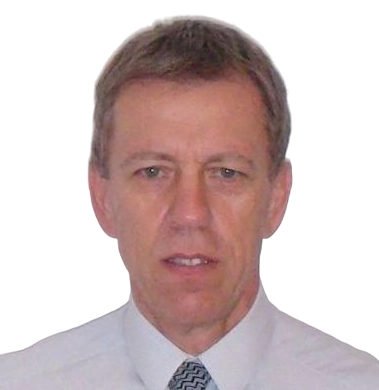
Last position:
Full Stack Lead Developer, Backend Architect at Telefonica (O2)
The software supports the complete planning and approval of antennas for mobile telephony.
The system was implemented using an event-driven microservice architecture for cloud-native deployment with Quarkus on the backend, Kafka for communication, and Angular for the frontend. Services run on Kubernetes in Google Cloud. A special challenge was synchronizing with the legacy system still used by some users.
Mahmoud R.

Last position:
Database Administrator at Deutsche Pfandbriefbank
- Provision and operation of Oracle databases within the agreed service levels.
- Storage administration using Oracle ASM feature.
- Oracle Grid Infrastructure and database patching.
- Ensure SLAs and operational KPIs are met, coordinating internal and external support during major incidents.
- Create and exercise reliable backup strategies and periodic restorations.
- Plan and execute migrations from non-multitenant to multitenant architectures and consolidate databases into multiple containers.
- Configure Oracle database authentication with Kerberos.
- Deploy and administer Azure Database for PostgreSQL (Flexible Server) including configuration, scaling, and high availability setup.
- Migrate on-premises PostgreSQL databases to Azure using pg_dump/pg_restore, pg_dumpall, and Azure Database Migration Service.
- Configure backup and point-in-time restore policies for compliance and recovery objectives.
- Implement monitoring and alerting with Azure Monitor, Log Analytics, and custom dashboards.
- Perform query performance tuning by analyzing execution plans, optimizing indexes, and adjusting parameters (work_mem, shared_buffers, autovacuum).
- Collaborate with developers to implement schema design improvements, partitioning, and connection pooling (PgBouncer) for scalability.
Discover over 15,000 top freelancers


Statistics of experts using Liquibase
Aggregated from the professional profiles of matched freelancers.

Experience
29 years (Germany: 20 years)

Position duration
1.9 years (Germany: 1.8 years)

Positions per freelancer
18 (Germany: 14)

Top business areas
Information Technology, Product Development, Quality Assurance

Top industries
Information Technology, Banking and Finance, Automotive

Certification focus areas
Information Technology, Product Development, Finance

Bachelor's degree or higher
100% (Germany: 89%)

Master's degree or higher
63%

Doctorate
13% (Germany: 9%)

Certifications per freelancer
3 (Germany: 4)

Most common languages
German, English, Spanish

Speak two or more languages
100% (Germany: 93%)
Based on our profile pool as of 9 Oct 2026.
Daily rate distribution
The chart shows how the daily rates of experts in this technology in Munich are distributed, based on recent contracts on our platform. Each bar covers a rate range — its height shows the share of experts charging within that range.
Average rates of experts in Munich using Liquibase
Rates are based on recent contracts and do not include FRATCH margin.

The average daily rate is the mean of all daily rates from recent contracts of comparable freelancers on our platform.
The median daily rate is the middle value of all daily rates — half of comparable freelancers charge less, half charge more. Unlike the average, it is barely affected by outliers.
Calculated based on our freelancers’ daily rates as of 9 Oct 2026. Actual rates may vary depending on seniority level, experience, skill specialization, project complexity, and engagement length.
Liquibase experts industry focus
See which industries our matched freelancers work in most often — every figure is calculated live from the freelancers on FRATCH.
- Information Technology (100%)
- Banking and Finance (88%)
- Automotive (75%)
- Insurance (75%)
- Government and Administration (75%)
- Healthcare (63%)
- Energy (50%)
- Education (38%)
Please note that freelancers can work across multiple industries, so percentages overlap.
About the technology
Database change control
Liquibase is an open-source database change management tool. It records schema changes in version-controlled changelogs and applies them consistently across development, testing and production environments. Teams use it to make database releases repeatable, reviewable and easier to roll back.
Changelogs and formats
Liquibase changelogs can be written in YAML, XML, JSON or formatted SQL. Changesets define operations such as creating tables, adding indexes, modifying columns and loading reference data. Strong specialists structure changelogs with clear identifiers, authorship, contexts, labels and preconditions.
Delivery ecosystem
Liquibase commonly works alongside application frameworks, build tools and deployment automation. Relevant expertise includes:
- Integrating Liquibase with Spring Boot, Maven or Gradle
- Running migrations through Jenkins, GitLab CI/CD or GitHub Actions
- Managing PostgreSQL, MySQL, Oracle, SQL Server and cloud databases
- Applying changes in Docker and Kubernetes deployments
When expertise matters
Companies bring in freelance Liquibase experts when a growing schema needs stronger release control or when migrations have become risky. Typical assignments include converting manual SQL into tracked changes, introducing Liquibase to an existing application, resolving failed deployments and standardising database delivery across teams. In Munich, specialists may support local product, finance, manufacturing and software organisations remotely or on site.
Quality signals
A capable professional understands both Liquibase commands and the database underneath them. They assess locking, transaction behaviour, rollback limits, branching strategy and the impact of changes on live data. They also test migrations against realistic database versions instead of treating a successful local run as proof of production readiness.
Collaboration and handover
Good Liquibase work leaves behind a maintainable changelog, documented release process and clear ownership rules. Specialists should explain how to handle contexts, labels, checksum changes, drift detection and rollback alternatives. Remote collaboration works well when repositories, deployment logs and review practices are accessible; German or English communication can support teams in Munich.

Frequently asked questions
Not sure where to start with Liquibase? These answers cover the essentials.

Liquibase is used to version, review and deploy database schema changes alongside application code. A Liquibase specialist can manage tables, indexes, constraints, reference data and controlled migrations across multiple environments.
Liquibase supports structured changelogs in YAML, XML, JSON and SQL, with features such as preconditions, contexts and rollback definitions. Flyway is often preferred for a simpler SQL-first workflow, while the better choice depends on governance, database variety and the team’s release process.
A strong Liquibase expert usually understands SQL, relational database design, Git workflows and CI/CD automation. Experience with Spring Boot, Maven or Gradle, containers, Kubernetes and cloud database services is also useful when migrations run as part of application delivery.
The required depth depends on the migration risk and database estate, not only on the size of the changelog. For a production rollout, choose a Liquibase professional who has handled preconditions, checksum issues, locking, rollback limits and existing schemas rather than only simple table creation.
Liquibase is well suited to remote collaboration because changelogs, reviews and deployment results can live in shared repositories and pipelines. On-site work in Munich can still help when a specialist must coordinate closely with database owners, release teams or regulated internal systems.
Liquibase supports many relational database systems, including PostgreSQL, MySQL, Oracle and Microsoft SQL Server. A qualified specialist should still verify type differences, unsupported operations and vendor-specific SQL before promising portability.
Review whether the Liquibase implementation is repeatable, tested and understandable by the internal team. Look for disciplined changeset naming, meaningful preconditions, safe handling of existing data, automated validation and a documented response to failed or partially applied migrations.
Before using Liquibase, clarify the target databases, current schema state, branching model, deployment pipeline and ownership of production approvals. Freelancers should also ask whether rollback is realistic for each change, how database drift is detected and which communication language the Munich team expects.
The average hourly rate of freelancers in Munich, Germany who have used Liquibase in their recent projects is 95 €, which corresponds to a daily rate of about 761 € based on an 8-hour working day.
Of the freelancers in Munich, Germany who have used Liquibase in their recent projects, 100% hold at least a Bachelor's degree, 63% hold at least a Master's degree, and 13% hold a doctorate.
On average, freelancers in Munich, Germany who have used Liquibase in their recent projects have 29 years of professional experience, with a single engagement typically lasting around 1.9 years.
The most common languages among freelancers in Munich, Germany who have used Liquibase in their recent projects are German (100%), English (88%), and Spanish (25%).
The most common industries among freelancers in Munich, Germany who have used Liquibase in their recent projects are Information Technology (100%), Banking and Finance (88%), and Automotive (75%).
The most common business areas among freelancers in Munich, Germany who have used Liquibase in their recent projects are Information Technology (100%), Product Development (75%), and Quality Assurance (75%).
Main locations of FRATCH Experts, who have recently used Liquibase
Our freelancers and interim experts are at home across the DACH region — available on-site in the major business hubs or fully remote. Choose a location to discover matched specialists, local market insights and up-to-date availability.


 Berlin
  Hamburg
  Frankfurt
 Request a free demo
Get in touch with the FRATCH team and we will get back to you within 4 hours.
Would you rather directly get in touch?
We always have the time for a call or email!

Philipp Thomaschewski
FRATCH CEO

