


K3s Experts in Germany
for lightweight Kubernetes with fast, precise AI matchingHire experts who run lightweight Kubernetes clusters, automate edge deployments and connect K3s with Rancher, Helm and CI/CD workflows. FRATCH matches you quickly with vetted, available freelancers whose experience fits your technical requirements.

Meet FRATCH Experts in Germany, who have recently used K3s
Kiriakos K.

Last position:
Tech Lead / Architect : OTTO API Platform at OTTO
Maturing their API practices on both a business and technology level. My role covers strategy, architecture, developer advocacy as well as hands-on software engineering, enabling both technical teams and business leadership to adopt and act on API-centric principles effectively. Coincidentally, we also establish GitOps, DX and platform best practices with this project.
Highlights:
- Aligning executives with the initiative by clarifying strategy, replacing misconceptions and myths with facts, clarifying the value of existing assets and enabling informed decision-making
- Formulating a way forward for API Lifecycle Management at OTTO
- Driving platform progress and fostering developer engagement by hands-on engineering work towards strategic goals
API Lifecycle Management, Team Topologies, Organizational Evolution, Regulatory, Platform Advocate, Developer Platform, Communities of Practice, Terraform, Kotlin, Kafka, Kong, WSO2, Apigee, Gravitee, Backstage, AsyncAPI, OpenAPI, API Design, AWS, React, Node.js, TypeScript, Redocly, reactive programming, CDC, Golang, Gin, GitOps, DX (developer experience), stakeholder management, roadmaps, workshops, discovery.
Wadim L.
Last position:
Fullstack Developer at dripwear.app
Development of an iOS app for virtual try-on and outfit suggestions
The goal of the project is to develop a mobile application for personalized, photorealistic outfit suggestions. Users should be able to upload their own photos, try on clothes virtually, and find products that can be bought directly in the generated suggestions.
- Planning and implementation of the onboarding and photo upload in the iOS app
- Development of the mobile application with Expo and React Native
- Implementation of a Hono/Node.js backend for user, product, and generation processes
- Building an asynchronous processing pipeline with BullMQ and Redis
- Connection of PostgreSQL/pgvector and S3 for product, image, and generation data
- Integration of Gemini and OpenAI for outfit generation and image processing
- Implementation of a credit system and integration of RevenueCat
- Integration of Stripe Connect and affiliate product feeds for products that can be bought directly
Label: TypeScript, React Native, Expo, Hono, Node.js, PostgreSQL/pgvector, BullMQ, Redis, S3, Gemini, OpenAI, RevenueCat, Stripe Connect, Docker
Kersten L.
Last position:
Lead Architect / Lead Developer at Bettles: Sports Betting Platform
- Complete greenfield rebuild across the whole stack — built AI-native: backend in Go and NestJS, PostgreSQL (CNPG) on K3s with GitOps/Terraform; frontend on Angular 22, zoneless.
- Orchestrated coding agents (e.g. Claude Code, Cursor) across the entire lifecycle — architecture, implementation, testing, reviews, documentation — driven by Specification-Driven Development (SDD).
- “Bruno” — LLM commentator persona backed by RAG and MCP for a personality that stays consistent across all generations (match previews, post-match reports, his own virtual bets).
Angular 22 (zoneless, without Zone.js), Claude Code, Claude Code Skills, CNPG, Cursor, Design Tokens (Spec for Code), Docker, Gherkin, Git, GitLab, GitOps, Go, Google Gemini, Grafana, Hetzner Cloud, K3s, Keycloak, Kubernetes, Lighthouse, LLM Integration, Model Context Protocol (MCP), NestJS, Node.js, NPM, Playwright, PostgreSQL, Prometheus, RAG, REST, Specification-Driven Development (SDD), Structured Outputs, Terraform, TypeScript, Vitest
Olaf R.

Last position:
DevOps Architect / Consultant at Authority with increased security requirements
- Identification of requirements (legal, organizational, and technical)
- Design of solution architectures
- Evaluation of concepts and technologies
- Preparation of decision templates
- Architectural Decision Records (ADR)
- Coordination of implementation
- Review of implementations
- Documentation
Patrick W.

Last position:
AI Software Engineer at IppenMedia
- Analysis
- Consulting
- Software design
- Development
- Automation
- Testing
- Deployment
- Architecture, development and deployment of various proof-of-concept applications around the integration of current AI interfaces including conversational, realtime voice, images and videos
- Developed best practices for working with agentic systems and AI in practice
- Created code templates
Patrick E.
Last position:
Honorary Lecturer at SRH University Berlin
- Cloud Computing Fundamentals & Architecture: Expertise in core cloud concepts, including the three main Service Models (IaaS, PaaS, SaaS) and diverse Deployment Models (Public, Private, Hybrid, Multi-cloud).
- Modern Application Deployment Strategies (GCP Focus): Instruction on the GCP Application Hosting Spectrum, covering Virtual Machines, Containers (Kubernetes and Cloud Run), Platform as a Service (App Engine), and Serverless Computing (Functions as a Service - FaaS).
- Data Management & Big Data Analytics: Comprehensive coverage of Cloud Storage options (Object, Block, File) and Database solutions, including Relational (Cloud SQL), NoSQL (Firestore, BigTable, Memorystore), and serverless enterprise data warehousing (BigQuery).
- DevOps and Infrastructure Automation: Skills in DevOps principles, including Continuous Integration (CI), Continuous Delivery (CD), Infrastructure as Code (IaC) using tools like Terraform, and implementing effective Monitoring and Logging for system observability.
- Emerging Technologies & Responsible Cloud Use: Focus on crucial topics like Cloud and IoT Security, Identity and Access Management (IAM), data privacy, and the ethical considerations of cloud and massive data collection.
Ivan V.

Last position:
Senior DevOps Engineer at 58agents
- Provision Kubernetes infrastructure on Azure, GCP, or bare-metal at the hosting provider
- Design and implementation of REST and GraphQL APIs
- Cloud governance (cost, compliance, security)
- Infrastructure-as-Code and CI/CD as code (Terraform, Ansible)
- Container technologies (Docker, Helm)
- Maintain and improve CI/CD pipelines (GitLab CI, GitHub Actions), Argo CD
- Deployment, scaling, and monitoring of microservices
- Distributed event streaming (Kafka)
- Message brokers RabbitMQ, MQTT
- Software development from scratch or further development of existing projects using PHP, Python, Go, C#, and Bash
Andreas K.

Last position:
Senior Developer at ioki GmbH, a Deutsche Bahn AG company
- Fullstack development based on Next.js and TypeScript
- Development and optimization of geospatial database queries for PostgreSQL/PostGIS
- Visualization of geospatial data using Mapbox
- Design and execution of load tests and performance optimizations
- Code reviews and documentation tasks
- Technologies: JavaScript, TypeScript, Next.js, React, Zod, tRPC, Storybooks, PostgreSQL/PostGIS, MicroORM, Knex, Material UI, Mapbox, BullMQ, Jest, Playwright, Artillery.io, K6, Sentry, Figma, GitLab, Grafana, GTFS
Anton K.
Last position:
Head of Overall Technical Integration NSC / Hadoop Cloud Development at IABG
Head of overall technical integration NSC (National Secure Cloud, project with approx. 60 employees).
Technical integration of all subprojects into one product, definition of interfaces and basic components of a cloud including hardware, technical architecture of the IABG platform.
Development of a Cloud Management Platform (CMP) capable of creating private/mixed clouds of any complexity based on a textual description with one click or interactively.
CMP also includes the complete hardware management lifecycle.
Kubernetes, OpenStack and Hadoop are used as the foundation.
The management layer includes Harbor, Gitea, Longhorn, Keycloak, Rancher and Jenkins, which are configured automatically.
Private cloud can run any customer workloads, including a full Hadoop layer with HDFS, Spark, MapReduce, Mesos, HBase and around 20 additional ML/DL technologies.
Hadoop worker clusters can also be installed automatically without Kubernetes on bare metal or commodity hardware.
OpenStack with Nova, Neutron, Ironic, Swift, Cinder, Ceph.
Development of a Java application Rudi: SOAP, REST, containers, DB.
Technologies: Kubernetes (K3s, Rke2, Minikube, Harbor, Gitea, Jenkins, Longhorn, Keycloak, Rancher), OpenStack (Nova, Neutron, Keystone, Swift, Ceph, Cinder, Sahara, Magnum, Kayobe, Kolla, Bigrost, Ironic), Hadoop (HDFS, Ambari, Solr, Livy, Ranger, YARN, Tez, HBase, Kafka, Hive, Zookeeper, MapReduce, Spark, Oozie, Flink), virtualization (Kubernetes (K3S), VMware, Oracle), scripting (Ansible, Puppet, Juju, Shell, Groovy, Gradle, Maven).
Hendrik L.
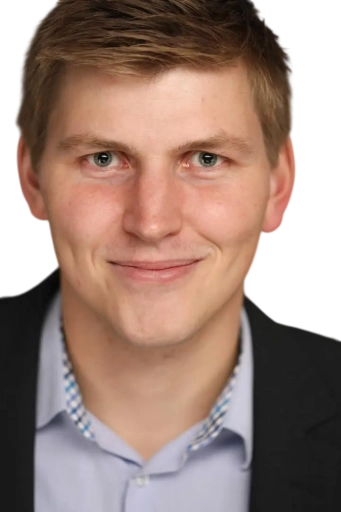
Last position:
Senior Modernization Engineer – Legacy Web App Performance & Refactoring (Energy Sector) at Levering IT GmbH
Re-architected a web application that had grown over years, modularizing tightly coupled components
Reduced response times from several seconds to <50 ms
Removed performance bottlenecks
Simplified architecture so internal teams can implement features on their own again
Michal B.
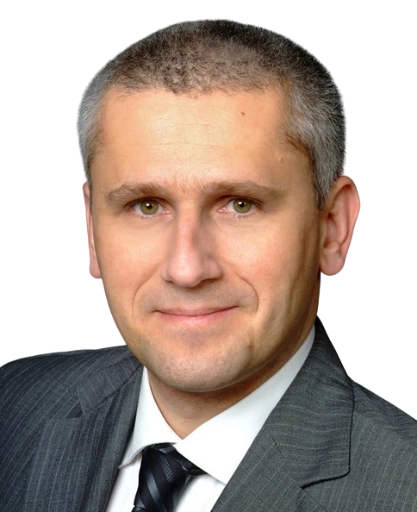
Last position:
Senior Golang Engineer at STACKIT / Schwarz Gruppe
- Responsible for software engineering and DevOps in the Data & AI Platform - Intake and PubSub projects at STACKIT, the cloud provider of the Schwarz Group.
- Technologies: Golang, Kubernetes, Kubernetes operators, OpenAPI v3, REST API, Azure DevOps, CI/CD, k6, Kafka, Strimzi, Apache Iceberg, RBAC, IAM, Terraform, Helm, Infrastructure automation, Load balancing, Traefik, ArgoCD, kuttl, Kyverno chainsaw, Kustomize, Velero, Prometheus, Grafana, Checkly / Playwright (TypeScript), NATS/Jetstream, WebSockets, gRPC, SSE
Stephan S.

Last position:
Senior Data/ML Consultant & Technical Lead at Jolin.io
Role: Software Engineer & Applied Mathematician (Mathematical optimization for scheduling; duration: 1 months; team setting: Team of 2, remote; technologies: JuMP, Julia, Pluto, Svelte, JavaScript, TypeScript, JetBrains Space, Terraform, Nomad)
Role: Software & Cloud & Web Engineer (Building scalable data science compute cluster from scratch; duration: 11 months; team setting: Team of 1, on-site; technologies: Terraform, Kubernetes, k8s ingress, k8s services, k8s RBAC, k8s networking, k3s, etcd, S3, DNS, certificates, Julia, Pluto, JavaScript, Tailwind, Astro, npm, Parcel, Preact, MUI, JWT, AWS SQS, AWS RDS, Python, GitLab, GitHub)
Role: AI & Web Engineer (Custom ChatGPT service; duration: 1 months; team setting: Team of 2, remote; technologies: Python, Poetry, LangChain, Tailwind, ChatGPT API, Flask, FastAPI)
Role: Architect & Data Engineer (Central datalake setup and ingestion; duration: 9 months; team setting: Team of 5, remote; technologies: Infrastructure-as-code, AWS CDK, Python, Boto3, PySpark, AWS Glue, IAM, S3, ECS, Fargate, Lambda, Apache Hudi, DeltaLake, Databricks, GitHub, Jira, Miro)
Role: Software Engineer (PoC Julia migration of scikit-decide; duration: 1 months; team setting: Team of 2, remote; technologies: Python, Julia, GitHub)
Taher S.

Last position:
DevOps Engineer at Confidential
- Working with developers, security, and operations teams to align requirements
- Supporting product owners and development teams in using logging and monitoring solutions based on the Elastic Stack
- Developing and standardizing log schemas as well as defining practical standards for observability
- Designing and further developing logging architectures for complex, distributed multi-tenant environments
- Connecting application and infrastructure logs as well as security tools and metrics
- Optimizing data flows and modeling for analysis and reporting purposes
- Building automated infrastructures using Terraform/Terragrunt and Ansible
- Maintaining and further developing CI/CD pipelines in GitLab as well as automated development environments in Hetzner Robot
- Operating and automating Proxmox clusters including Ceph storage
- Setting up and operating Kubernetes (k3s) clusters on Fedora CoreOS including base services such as Vault, OpenLDAP, and HA Proxy
- Implementing security-critical infrastructures according to BSI baseline protection and securing existing systems
- Supporting the operation of solutions in cloud environments (including AWS)
- Working in agile teams using Scrum and Kanban
- Technologies/ applications: Elastic Stack (Elasticsearch, Logstash, Beats/Elastic Agent, Kibana), Terraform, Terragrunt, Ansible, GitLab CI/CD, GitOps, Proxmox, Proxmox Ceph, Kubernetes (k3s), OpenShift, Helm, Kustomize, Vault, OpenLDAP, HA Proxy, Hetzner Robot systems, AWS, Prometheus, Grafana, Syslog Linux/Windows, Docker, NGINX, Apache Security & Compliance (BSI baseline protection, SIEM/SOC)
Torsten G.

Last position:
Data Vault with Informatica on Oracle at SEFE
- Data Vault modeling and performance improvements in Oracle.
- Requirements process with model-driven Data Vault automation.
- Preparation of business requirements for the price database in the gas and electricity market.
- Sales performance based on Salesforce CRM.
- Tasks: Concept and development.
- Tools used: Informatica, Oracle, DBT, Docker, DataOps, Airflow Workflow, Python Ingestion, Gitlab CI.
Daniel S.

Last position:
DevOps Engineer / Cloud Infrastructure Engineer at ComputerStack GmbH
- Provisioned a Kubernetes platform on Open Telekom Cloud CCE with comprehensive network isolation
- Built a VPC architecture with public, private, and data subnets
- Integrated managed services: RDS PostgreSQL, DCS Redis, DMS Apache Kafka
- Implemented monitoring with Cloud Eye and Log Tank Service
IMPACT: Cloud Infrastructure Engineer delivered a production-ready platform in 5 days with full network security isolation
Discover over 15,000 top freelancers


Statistics of experts using K3s
Aggregated from the professional profiles of matched freelancers.

Experience
20 years

Position duration
1.4 years

Positions per freelancer
18

Top business areas
Information Technology, Product Development, Project Management

Top industries
Information Technology, Banking and Finance, Healthcare

Certification focus areas
Information Technology, Operations, Business Intelligence

Bachelor's degree or higher
91%

Master's degree or higher
64%

Doctorate
9%

Certifications per freelancer
3

Most common languages
German, English, Spanish

Speak two or more languages
94%
Based on our profile pool as of 9 Oct 2026.
Daily rate distribution
The chart shows how the daily rates of experts in this technology in Germany are distributed, based on recent contracts on our platform. Each bar covers a rate range — its height shows the share of experts charging within that range.
Average rates of experts in Germany using K3s
Rates are based on recent contracts and do not include FRATCH margin.

The average daily rate is the mean of all daily rates from recent contracts of comparable freelancers on our platform.
The median daily rate is the middle value of all daily rates — half of comparable freelancers charge less, half charge more. Unlike the average, it is barely affected by outliers.
Calculated based on our freelancers’ daily rates as of 9 Oct 2026. Actual rates may vary depending on seniority level, experience, skill specialization, project complexity, and engagement length.
K3s experts industry focus
See which industries our matched freelancers work in most often — every figure is calculated live from the freelancers on FRATCH.
- Information Technology (100%)
- Banking and Finance (50%)
- Healthcare (50%)
- Government and Administration (50%)
- Automotive (44%)
- Energy (44%)
- Manufacturing (44%)
- Retail (44%)
Please note that freelancers can work across multiple industries, so percentages overlap.
About the technology
Lightweight Kubernetes
K3s is a lightweight, certified Kubernetes distribution packaged for simpler installation and lower resource use. It keeps the core Kubernetes experience while reducing operational overhead, which makes it suitable for edge locations, remote sites, development environments and compact production clusters. K3s is maintained by Rancher and is often searched for as Lightweight Kubernetes.
Where K3s runs
K3s supports workloads that need container orchestration outside large central data centers. Typical applications include:
- Edge computing for factories, stores and field locations
- IoT platforms that process data close to devices
- Small cloud and private infrastructure environments
- Development, testing and demonstration clusters
- Highly distributed services with limited hardware
Ecosystem and tooling
Strong K3s work includes more than installing a cluster. Specialists use containerd, kubectl, Helm and Ingress controllers to deploy and expose workloads, while Rancher can provide centralized cluster management. They also connect K3s with private registries, GitOps tools, Prometheus, Grafana, persistent storage and automated delivery pipelines.
When companies need specialists
Companies bring in freelance expertise when Kubernetes capabilities are needed at the edge or when a standard cluster feels too heavy for the available infrastructure. In Germany, K3s is relevant to industrial operations, logistics, energy systems and distributed services that need reliable local processing. Specialists can design the setup, migrate workloads and document operations for internal teams.
Delivery and operations
A K3s engagement may cover architecture, node provisioning, networking, security hardening, upgrades and observability. Professionals define how servers join the cluster, how workloads recover after failures and how access is controlled. They also create repeatable deployment workflows, backup procedures and runbooks that make remote operations practical.
What strong professionals bring
The best specialists understand both Kubernetes concepts and the constraints of small or disconnected environments. Look for experience with Linux, container images, networking, TLS, storage and infrastructure automation, along with a clear approach to testing and recovery. Remote collaboration works well when requirements, access paths and operational ownership are documented; on-site work may help when K3s connects to physical equipment or restricted facilities.

Frequently asked questions
Quick answers to the questions that come up most around K3s.

K3s is used to run Kubernetes workloads on edge devices, remote sites, small servers and resource-constrained environments. It can host APIs, data-processing services, IoT applications and internal platforms while keeping standard Kubernetes concepts and tooling.
K3s offers a more compact installation and simpler operations than a conventional Kubernetes setup. It is a strong choice when infrastructure is limited or distributed, while larger Kubernetes distributions may be preferable when a company needs extensive built-in integrations, complex governance or a broad platform team.
Lightweight Kubernetes is a common description of K3s, not a separate product in this context. K3s is a certified Kubernetes distribution maintained by Rancher, with packaging and defaults designed to reduce operational complexity.
A strong K3s specialist usually works confidently with Linux, containerd, kubectl, Helm, networking, TLS and infrastructure automation. Experience with Rancher, GitOps, observability, storage and private registries is useful when the cluster supports production services.
K3s projects need enough practical experience to match the cluster design and operating conditions, not simply familiarity with installation commands. A small test environment may need focused deployment support, while edge production systems require proven skills in security, upgrades, resilience, monitoring and recovery.
K3s work is often suitable for remote collaboration when infrastructure access, network boundaries and ownership are clearly defined. On-site cooperation in Germany can be valuable when clusters connect to factory equipment, local networks or facilities that cannot be accessed remotely.
Ask how the K3s professional would handle node failure, disconnected locations, secrets, upgrades, storage and observability. Strong answers explain trade-offs and include tested recovery procedures, clear documentation and a plan for secure day-to-day operations.
Rancher K3s projects can range from a compact proof of concept to a distributed production platform. Freelancers should clarify hardware, connectivity, workload state, storage needs, access restrictions and whether the client expects remote delivery, on-site support in Germany or a combination of both.
The average hourly rate of freelancers in Germany who have used K3s in their recent projects is 110 €, which corresponds to a daily rate of about 877 € based on an 8-hour working day.
Of the freelancers in Germany who have used K3s in their recent projects, 91% hold at least a Bachelor's degree, 64% hold at least a Master's degree, and 9% hold a doctorate.
On average, freelancers in Germany who have used K3s in their recent projects have 20 years of professional experience, with a single engagement typically lasting around 1.4 years.
The most common languages among freelancers in Germany who have used K3s in their recent projects are German (100%), English (94%), and Spanish (25%).
The most common industries among freelancers in Germany who have used K3s in their recent projects are Information Technology (100%), Banking and Finance (50%), and Healthcare (50%).
The most common business areas among freelancers in Germany who have used K3s in their recent projects are Information Technology (100%), Product Development (88%), and Project Management (63%).
Main locations of FRATCH Experts, who have recently used K3s
Our freelancers and interim experts are at home across the DACH region — available on-site in the major business hubs or fully remote. Choose a location to discover matched specialists, local market insights and up-to-date availability.
 Berlin Hamburg Munich Cologne Frankfurt Stuttgart Dusseldorf Leipzig Dortmund Essen Bremen Dresden Hanover Nuremberg
 Request a free demo
Get in touch with the FRATCH team and we will get back to you within 4 hours.
Would you rather directly get in touch?
We always have the time for a call or email!

Philipp Thomaschewski
FRATCH CEO

