


Event-Driven Architecture Experts in Frankfurt
matched in minutes from over 15,000 CVs with the power of AI.Work with specialists who design real-time data pipelines, integrate message brokers like Apache Kafka, and build resilient distributed systems. Get matched with vetted, available freelancers in Frankfurt through our precise AI system.

Meet FRATCH Experts in Frankfurt, who have recently used Event-Driven Architecture
Waseem S.

Last position:
Solution Architect / Subject Matter Expert at FRMCS Device Manufacturer
Participation in the EU-funded MORANE-2 project to validate the Future Railway Mobile Communication System (FRMCS) in real-world use cases: preparation of the requirements specifications for TOBA and the associated test specifications.
Technologies: 5GS (Radio & Core), FRMCS, MCx (MCPTT, MCData, MCVideo), MC Gateway UE, MCx Priority/Security/QoS Management, ETCS, SIP, IMS
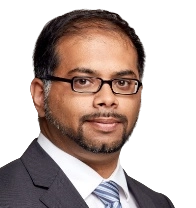
Saqib J.
Last position:
AI Developer / AI Engineer (Lead) at KOM4TEC GmbH
- Conceptual design and implementation of modular AI assistants for sales and business processes in the Microsoft ecosystem (Agentic AI, Copilot extensions)
- Frontend architecture and development with React + TypeScript for embedded chat and assistant surfaces (streaming UI, hooks, React Query, OpenAPI clients)
- Enterprise-level agent development: reusable skill/agent library, MCP server, review and compliance gates
- LLM integration into the user experience: Anthropic (Claude), OpenAI, tool use, RAG pipelines, prompt engineering, guardrails
- Architecture and code review consulting as well as mentoring in the AI development team
- Integration with Microsoft Graph, Power Platform, and Azure services
- Technologies: React, TypeScript, Anthropic Claude, OpenAI, MCP, RAG, Microsoft Graph, Power Platform, Azure
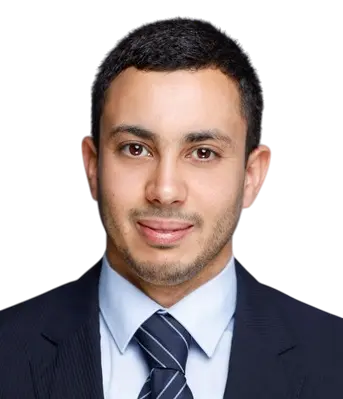
Khaled T.
Last position:
Consultant / DevOps Engineer at Dr. Ing. h.c. F. Porsche Aktiengesellschaft
- Porsche ID is a unified digital identity platform providing secure authentication and seamless access across Porsche’s online services, mobile apps, and connected vehicle features
- Designed and implemented new authentication and authorization functionalities for both users and systems
- Ensured high availability, security, and performance to deliver a flawless digital experience for Porsche customers
- Technologies: Auth0, Angular, Tailwind, AWS, Terraform, Github
- Methodologies: Scrum and SAFe
Ingo D.

Last position:
Analytics at BaFin - Federal Financial Supervisory Authority Frankfurt
- Introduction of methods for developing and automated deployment of cloud-native software and machine learning applications in OpenShift clusters
- Development of various programs in Python
- Technologies: Kubernetes, OpenShift, Kustomize, ArgoCD, Tekton, Docker, PodMan, Airflow, IntelliJ, PyCharm, Git, Bitbucket, Jira, Confluence, Python
Noel L.

Last position:
Founder & Lead Engineer at ausbildung-in-der-it.de
- Platform established and running stably; deliberately reducing my involvement to refocus on an engineering mandate in the financial sector.
- Built an own SaaS learning platform from the ground up and scaled it to over 20,000 users (over 6,000 courses sold, B2C and B2B); end-to-end ownership from development through infrastructure to operations.
- Built a lab environment that provisions an isolated Linux container per user (Docker, Traefik, Go), including automatic provisioning and a dedicated subdomain per user.
- Integrated LLM features into the product and accelerated development end-to-end with AI-assisted workflows (Claude Code, Codex); CI/CD with automated tests.
David R.

Last position:
Lead Developer/Technical Architect
- Design, extension, and implementation of interfaces (REST, GraphQL, Kafka)
- Architecture and implementation of cloud-native microservices on Azure Kubernetes Service
- Domain-Driven Design, Event-Driven Architecture with Kafka
- Development of an extensive query engine for REST endpoints based on business objects
- Design and implementation of master data classification using machine learning algorithms (Weka library, Spotify Voyager)
- Analysis and evaluation of complex load test scenarios and derivation of optimizations
- Increase in system resilience (Kafka error handling, circuit breaker, sidecar service mesh in Go)
- Integration with CIAM systems (asynchronous real-time synchronization and definition of data ownership, authorization, authentication)
- Connection to Azure ServiceBus (AMQP protocol)
- Design and implementation of complex authorization concepts (including delegated administration)
- Documentation of the results (Confluence, architecture descriptions, architecture decisions)
Discover over 15,000 top freelancers


Statistics of experts using Event-Driven Architecture
Aggregated from the professional profiles of matched freelancers.

Experience
19 years (Germany: 16 years)

Position duration
2.2 years (Germany: 2.7 years)

Positions per freelancer
15 (Germany: 11)

Top business areas
Information Technology, Product Development, Quality Assurance

Top industries
Information Technology, Banking and Finance, Transportation

Certification focus areas
Information Technology, Project Management

Bachelor's degree or higher
100% (Germany: 89%)

Master's degree or higher
40% (Germany: 51%)

Doctorate
20% (Germany: 4%)

Certifications per freelancer
1 (Germany: 2)

Most common languages
German, English, Arabic

Speak two or more languages
100% (Germany: 99%)
Based on our profile pool as of 9 Oct 2026.
Daily rate distribution
The chart shows how the daily rates of experts in this technology in Frankfurt are distributed, based on recent contracts on our platform. Each bar covers a rate range — its height shows the share of experts charging within that range.
Average rates of experts in Frankfurt using Event-Driven Architecture
Rates are based on recent contracts and do not include FRATCH margin.

The average daily rate is the mean of all daily rates from recent contracts of comparable freelancers on our platform.
The median daily rate is the middle value of all daily rates — half of comparable freelancers charge less, half charge more. Unlike the average, it is barely affected by outliers.
Calculated based on our freelancers’ daily rates as of 9 Oct 2026. Actual rates may vary depending on seniority level, experience, skill specialization, project complexity, and engagement length.
Event-Driven Architecture experts industry focus
See which industries our matched freelancers work in most often — every figure is calculated live from the freelancers on FRATCH.
- Information Technology (100%)
- Banking and Finance (67%)
- Transportation (67%)
- Automotive (50%)
- Education (50%)
- Telecommunication (50%)
- Energy (33%)
- Biotechnology (17%)
Please note that freelancers can work across multiple industries, so percentages overlap.
About the technology
Understanding Event-Driven Systems
Event-driven system design is essential for modern, highly scalable software. By communicating via events rather than synchronous API calls, systems achieve high availability and fault tolerance. Specialists in this field design systems that react to state changes in real time.
Message Brokers and the Core Ecosystem
Implementing these patterns requires specialized tooling to route and store events reliably. Experts configure and manage robust messaging infrastructure to prevent data loss and ensure system responsiveness.
- Apache Kafka and Confluent Platform for high-throughput streaming
- RabbitMQ and ActiveMQ for traditional message queuing
- AWS EventBridge and Azure Event Grid for cloud-native routing
- Apache Pulsar for multi-tenant event streaming
Frankfurt Financial and Logistical Use Cases
In major business hubs like Frankfurt, Germany, real-time processing is crucial for competitive advantage. Local enterprises leverage event-driven patterns to handle massive concurrent transaction volumes.
- Real-time fraud detection and transaction monitoring in banking
- Supply chain tracking and logistics at regional transit hubs
- Microservices orchestration for complex digital platforms
- Instant customer notification engines and telemetry processing
Key Deliverables of EDA Specialists
External professionals bring targeted expertise to accelerate system design and deployment. They deliver production-ready infrastructure setups and architecture blueprints.
They define event schemas using Avro or Protobuf to ensure data compatibility. They establish dead-letter queues, partitioning strategies, and consumer group configurations. Finally, they implement observability tools to trace events across distributed networks.
When to Bring in Freelance Experts
Transitioning to asynchronous communication introduces complexities like eventual consistency and out-of-order messages. Organizations hire specialized freelancers to avoid common architectural pitfalls.
These experts are valuable during legacy modernization projects where monolithic systems are split into microservices. They also assist local teams in Frankfurt when internal knowledge of complex stream processing frameworks is limited.
What Distinguishes Strong Professionals
Top-tier specialists possess a deep theoretical and practical understanding of distributed systems. They do not just write code; they design resilient systems prepared for network partitions and hardware failures.
They demonstrate mastery of idempotency, message deduplication, and backpressure management. Their experience allows them to choose the right message delivery guarantees—such as at-least-once or exactly-once processing—tailored to specific business constraints.

Frequently asked questions
Not sure where to start with Event-Driven Architecture? These answers cover the essentials.

Adopting an Event-Driven Architecture allows systems to scale independently and remain highly resilient. By decoupling services, a failure in one component does not cascade through the entire system. This asynchronous approach ensures high performance and continuous availability.
Professionals working with Event-Driven Architecture primarily rely on distributed messaging systems like Apache Kafka, RabbitMQ, and cloud-native event brokers. They also utilize serialization tools like Apache Avro and Protobuf to manage event schemas. Additionally, they work with stream processing frameworks such as Apache Flink.
While many Event-Driven Systems projects can be executed entirely remote, some financial institutions in Frankfurt prefer hybrid arrangements. On-site presence is sometimes requested during the initial system discovery phase or during critical deployment windows. However, most architecture design and implementation work is successfully managed through remote collaboration.
While service-oriented systems often rely on synchronous request-response communication, Event-Driven Architecture is inherently asynchronous. Instead of waiting for a direct response, services publish events to a broker, allowing other components to react when they are ready. This results in looser coupling and greater scalability.
In the financial capital of Frankfurt, Event-Driven Architecture is essential for high-frequency trading, real-time risk assessment, and immediate fraud detection. Processing transactions as continuous streams of events allows banks to react to market changes and security threats instantly. This latency reduction is a key competitive differentiator for modern financial institutions.
A qualified Event-Driven Architecture expert must understand distributed systems concepts like partition tolerance, message sequencing, and eventual consistency. Look for specialists who have hands-on experience setting up brokers, managing schemas, and writing idempotent consumers. They should also possess strong debugging skills to trace asynchronous execution paths.
For many international teams and modern tech companies in Frankfurt, English is the primary language used for designing an Event-Driven Architecture. However, some traditional German enterprises and public sector organizations require German language proficiency for documentation and stakeholder meetings. It is best to clarify these requirements early in the hiring process.
Maintaining data consistency in an Event-Driven Architecture requires moving away from traditional two-phase commits toward eventual consistency. Specialists implement patterns like Saga or Outbox to manage distributed transactions reliably. They also design consumers to be idempotent, ensuring that duplicate events do not cause inconsistent system states.
The average hourly rate of freelancers in Frankfurt, Germany who have used Event-Driven Architecture in their recent projects is 105 €, which corresponds to a daily rate of about 841 € based on an 8-hour working day.
Of the freelancers in Frankfurt, Germany who have used Event-Driven Architecture in their recent projects, 100% hold at least a Bachelor's degree, 40% hold at least a Master's degree, and 20% hold a doctorate.
On average, freelancers in Frankfurt, Germany who have used Event-Driven Architecture in their recent projects have 19 years of professional experience, with a single engagement typically lasting around 2.2 years.
The most common languages among freelancers in Frankfurt, Germany who have used Event-Driven Architecture in their recent projects are German (100%), English (100%), and Arabic (17%).
The most common industries among freelancers in Frankfurt, Germany who have used Event-Driven Architecture in their recent projects are Information Technology (100%), Banking and Finance (67%), and Transportation (67%).
The most common business areas among freelancers in Frankfurt, Germany who have used Event-Driven Architecture in their recent projects are Information Technology (100%), Product Development (100%), and Quality Assurance (67%).
Main locations of FRATCH Experts, who have recently used Event-Driven Architecture
Our freelancers and interim experts are at home across the DACH region — available on-site in the major business hubs or fully remote. Choose a location to discover matched specialists, local market insights and up-to-date availability.


 Berlin
  Munich
 Request a free demo
Get in touch with the FRATCH team and we will get back to you within 4 hours.
Would you rather directly get in touch?
We always have the time for a call or email!

Philipp Thomaschewski
FRATCH CEO

