


Automatic Speech Recognition Experts in Berlin
from over 15,000 CVs with the power of AIWork with specialists who fine-tune acoustic models, build low-latency audio pipelines, and deploy custom speech-to-text systems. Matched quickly with vetted, available freelance professionals.

Meet FRATCH Experts in Berlin, who have recently used Automatic Speech Recognition
Mukund B.

Last position:
Voice AI Chatbot - Real-Time Audio Assistant
- ▶ Built real-time voice assistant (STT → LLM → TTS pipeline) benchmarking and evaluating multiple STT providers including faster-whisper and Azure Speech. achieved sub-3s latency, Groq API (Llama 3) with multi-turn memory - directly handling edge cases in dictation, names and passcode recognition.
Dimitra F.
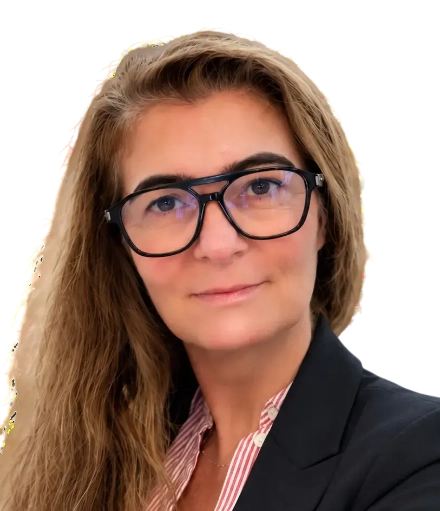
Last position:
AI training for employees of an engineering firm at TGA Raum+ Planungsgesellschaft für Technische Gebäudeausrüstung mbH
Independently designed and conducted on-site training for four employees without specific technical knowledge. Taught generative AI using concrete tasks from their professional everyday work.
- Topics: possible applications, practical use, review of AI results, data protection, and handling confidential information.
- Training materials prepared independently and content delivered in a way suited to the target group; written reference dated 14.05.2025 is available.
Josphat G.

Last position:
Data Annotation Lead at Sigma AI
- Lead a team of 15 annotators on large-scale computer vision projects for autonomous vehicle systems
- Developed comprehensive annotation guidelines that improved inter-annotator agreement by 35 percent
- Implemented quality control processes that reduced error rates by 42% across all projects
- Collaborated with ML engineers to identify edge cases and improve dataset quality
- Managed annotation projects for Fortune 500 clients, delivering 100% on time
Marija J.

Last position:
Professional Coach for IT Professionals
- Coach international tech professionals through career transitions, helping high achievers move from reactive decision-making to clarity-driven career and life choices.
- Combined software engineering and consulting background with coaching expertise to address challenges specific to the tech industry, including career stagnation, imposter syndrome, and uncertainty around AI's impact on the field.
- Some of my client's measurable outcomes include landing multiple concurrent interview processes after a multi-year career gap, launching independent product ventures, securing technical roles that improved both financial stability and job performance, transitioning into non-tech careers.
- ~200 hours of coaching sessions. Guided clients through 1:1 and group coaching engagements, ranging from single sessions to year-long partnerships, focused on sustainable, values-aligned career growth.
Olaf T.
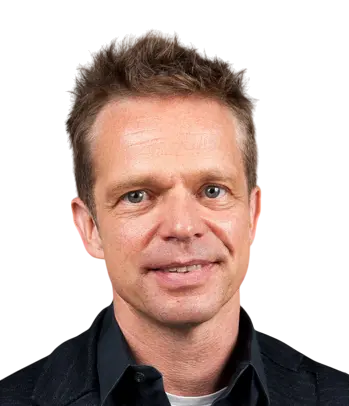
Last position:
CTO, Shareholder, Agile Coach, Product Owner at fluidx digital GmbH
- Development and rollout of a browser-based platform for camera streaming, augmented reality (AR), and visual computing
- Device-independent camera streaming for smartphones, tablets, desktop PCs, as well as VR and AR headsets
- Ensuring GDPR-compliant hosting in Open Telekom Cloud and other sovereign cloud providers
- Intuitive visual and collaborative features to increase efficiency and integrate smoothly into existing business software
Vili D.
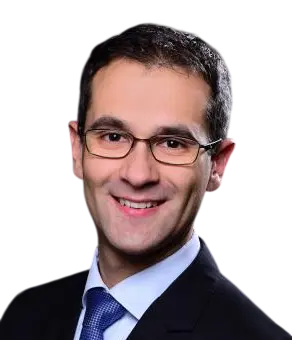
Last position:
Technical Lead, Data Engineer at Mercedes-Benz Consulting
- Optimized the data architecture (medallion) to better decouple processing stages and improve transparency and reproducibility
- Ensured technical quality of data processing in Databricks by introducing schema enforcement, data quality checks and a structured data architecture
- Orchestrated pipelines with Azure Data Factory
- Professionalized and automated the development and deployment process by integrating Git and GitHub Actions
- Led the Data Engineering team (3 members) in a functional role
- Conducted workshops to optimize and stabilize the data platform and the development process
- Collected and prioritized new requests, maintained the product backlog
- Technologies: Microsoft Azure (Data Lake, Data Factory), Databricks, Apache Spark (PySpark), Python, SQL, Git, Confluence, Power BI, Power Apps, Dataverse, MS SharePoint, Mural
Sara A.

Last position:
Research Associate and Data Scientist at National Center of Robotics and Automation - Condition Monitoring Lab
- Developed ASR and TSR-based speech processing pipelines on AWS, enabling efficient feature extraction and scalable deployment for speech and text analytics.
- Built a Multimodal Speech Emotion Recognition system combining NLP and deep learning (audio + text), achieving 98% accuracy and supporting real-time, cloud-based inference.
- Designed and optimized end-to-end model training and evaluation workflows using AWS services (S3, EC2, Lambda) to ensure performance, reliability, and reproducibility.
- Created and deployed interactive, user-friendly dashboards for data visualization and insight generation, supporting research teams and management in data-driven decision-making.
Shivansh D.

Last position:
Product Manager at Es Magico
- Launched an AI marketplace aggregator leveraging deep knowledge of e-commerce and marketplaces that reduced product listing time by 65% and improved compliance rates by 70% for a US based client
- Implemented AI-based content generation and image validation features based on marketplace-specific SEO principles and selling policies, eliminating up to 8 hours of manual work per week
- Created an intelligent inventory system with demand forecasting algorithms that decreased stockouts by 30% while optimizing cross-platform inventory allocation across multiple sales channels
- Engineered a conversational AI sales agent to achieve <600ms response latency and >92% intent classification accuracy, ensuring natural, human-like interactions across 10+ Indian languages
- Integrated persona-based conversation flows that improved engagement and upsell conversions by 28% using LLMs, SLMs, RAG and the latest STT and TTS technologies
- Delivered an enterprise-grade real estate CRM and lead management system that reduced lead management effort by 60% through automated workflows
- Architected role-based access controls after conducting 50+ stakeholder interviews to identify critical security needs
- Managed sprint execution with 90% on-time feature delivery while maintaining technical quality standards
- Developed a global VOIP application from concept to launch by defining product strategy based on competitive analysis for an Australian client
- Reduced onboarding friction by 60% through UX optimization, resulting in 25% higher user conversion rates
- Executed data-driven prioritization that accelerated time-to-market while balancing technical constraints
João M.
Last position:
Founder & Builder at Franzie
- Led the "0 to 1" development and launch on App Store and Google Play, utilizing Mixpanel analytics to validate and refine features during a 100-user beta.
- Built the full-stack architecture using React Native and Supabase, integrating Gemini and ElevenLabs APIs to power personalized AI stories and speech-to-text.
- Engineered a custom spaced repetition algorithm to optimize vocabulary retention and personalize the learning path for users.
Ebrahim W.

Last position:
Certified Trainer for Mach Software for the State of Berlin at HKR Senfin Berlin
- Fund management
- Budget
- Mach BI
Discover over 15,000 top freelancers


Statistics of experts using Automatic Speech Recognition
Aggregated from the professional profiles of matched freelancers.

Experience
18 years (Germany: 19 years)

Position duration
2.6 years (Germany: 2.3 years)

Positions per freelancer
7 (Germany: 13)

Top business areas
Information Technology, Product Development, Project Management

Top industries
Information Technology, Education, Media and Entertainment

Certification focus areas
Information Technology, Project Management, Business Intelligence

Bachelor's degree or higher
100% (Germany: 95%)

Master's degree or higher
50% (Germany: 63%)

Doctorate
13% (Germany: 11%)

Certifications per freelancer
2

Most common languages
German, English, Spanish

Speak two or more languages
90% (Germany: 93%)
Based on our profile pool as of 9 Oct 2026.
Daily rate distribution
The chart shows how the daily rates of experts in this technology in Berlin are distributed, based on recent contracts on our platform. Each bar covers a rate range — its height shows the share of experts charging within that range.
Average rates of experts in Berlin using Automatic Speech Recognition
Rates are based on recent contracts and do not include FRATCH margin.

The average daily rate is the mean of all daily rates from recent contracts of comparable freelancers on our platform.
The median daily rate is the middle value of all daily rates — half of comparable freelancers charge less, half charge more. Unlike the average, it is barely affected by outliers.
Calculated based on our freelancers’ daily rates as of 9 Oct 2026. Actual rates may vary depending on seniority level, experience, skill specialization, project complexity, and engagement length.
Automatic Speech Recognition experts industry focus
See which industries our matched freelancers work in most often — every figure is calculated live from the freelancers on FRATCH.
- Information Technology (90%)
- Education (60%)
- Media and Entertainment (40%)
- Professional Services (40%)
- Automotive (30%)
- Healthcare (30%)
- Manufacturing (30%)
- Retail (30%)
Please note that freelancers can work across multiple industries, so percentages overlap.
About the technology
Acoustic modeling and speech-to-text foundations
Automatic speech recognition transforms raw audio into written text through multi-stage computational pipelines. Specialists in this field design feature extraction workflows, manage tokenizers, and configure acoustic models using modern architectures like Conformer and recurrent neural network transducers. These systems decode human voice signals into accurate transcripts across diverse acoustic environments.
Open-source frameworks and production speech toolkits
- Training and fine-tuning models in PyTorch with Hugging Face Transformers
- Implementing Kaldi and ESPnet for modular speech processing workflows
- Deploying OpenAI Whisper models for offline transcription and translation
- Integrating Riva and ONNX Runtime for hardware-accelerated speech decoding
- Building real-time streaming pipelines with WebSockets and gRPC endpoints
Core use cases for voice transcription systems
Organizations build automated speech transcription into customer support intelligence platforms, voice user interfaces, clinical documentation tools, and media captioning workflows. These systems process continuous microphone streams or batch audio recordings, handling noisy backgrounds and domain-specific terminology.
Speech recognition ecosystems in Berlin
Berlin hosts an active tech ecosystem with significant demand for voice technology across health tech, mobility, and multilingual customer service. Companies in the capital frequently require specialists to adapt speech models to accented speech and code-switching between German and English. Freelance professionals often deliver work remotely while joining product sprints on site when needed.
Critical indicators for hiring freelance speech specialists
- Base models produce excessive word error rates on proprietary domain vocabulary
- Latency in live audio streaming breaches interactive conversation budgets
- Cloud speech APIs generate prohibitive running costs at scaled volume
- Privacy requirements mandate fully self-hosted, on-premises inference
Distinguishing qualities of senior speech practitioners
A seasoned speech specialist looks beyond raw word error rate benchmarks to optimize inference throughput, memory footprints, and beam search decoding strategies. They master audio signal conditioning, synthetic data generation, and language model rescoring to ensure robust transcription under challenging real-world acoustic conditions.

Frequently asked questions
Before you brief your next project: the most common questions about Automatic Speech Recognition.

An automatic speech recognition specialist designs, trains, and optimizes speech-to-text pipelines for production environments. They clean audio datasets, train acoustic and language models, and configure inference runtimes to ensure rapid, highly accurate transcriptions.
While NLP processes structured text to extract intent, entities, and meaning, ASR focuses on the foundational step of converting raw acoustic signals into accurate text. Many production voice architectures pair speech recognition front ends with downstream natural language processing pipelines.
Modern speech-to-text projects rely heavily on frameworks like PyTorch, Hugging Face Transformers, ESPnet, and Kaldi. For high-throughput production serving, specialists frequently use NVIDIA Riva, TensorRT-LLM, and ONNX Runtime to minimize inference latency.
Yes, specialists in automatic speech recognition adapt general-purpose acoustic models using domain-specific audio and text corpora. Techniques include custom vocabulary injection, vocabulary-tailored language model rescoring, and fine-tuning transformer weights on industry datasets.
Quality in speech recognition is primarily measured by word error rate (WER) and character error rate across diverse evaluation test sets. In streaming scenarios, specialists also measure real-time factor, time-to-first-token, and memory usage under concurrent traffic.
Commercial speech APIs often become expensive at scale and fail to capture niche terminology accurately. Hiring an ASR freelancer allows companies to build self-hosted, privacy-compliant models tailored directly to proprietary workflows without external data leakage.
Berlin companies routinely engage speech-to-text specialists on a hybrid or remote basis, with clear sprint goals centered on model accuracy and latency milestones. Teams often prefer professionals who can coordinate in local European time zones and understand German linguistic nuances.
A capable automatic speech recognition professional demonstrates deep knowledge of digital signal processing, acoustic feature extraction, and deep learning architectures like CTC and transducers. Look for hands-on experience deploying low-latency streaming models in production container environments.
The average hourly rate of freelancers in Berlin, Germany who have used Automatic Speech Recognition in their recent projects is 89 €, which corresponds to a daily rate of about 713 € based on an 8-hour working day.
Of the freelancers in Berlin, Germany who have used Automatic Speech Recognition in their recent projects, 100% hold at least a Bachelor's degree, 50% hold at least a Master's degree, and 13% hold a doctorate.
On average, freelancers in Berlin, Germany who have used Automatic Speech Recognition in their recent projects have 18 years of professional experience, with a single engagement typically lasting around 2.6 years.
The most common languages among freelancers in Berlin, Germany who have used Automatic Speech Recognition in their recent projects are German (100%), English (90%), and Spanish (10%).
The most common industries among freelancers in Berlin, Germany who have used Automatic Speech Recognition in their recent projects are Information Technology (90%), Education (60%), and Media and Entertainment (40%).
The most common business areas among freelancers in Berlin, Germany who have used Automatic Speech Recognition in their recent projects are Information Technology (100%), Product Development (70%), and Project Management (70%).
Main locations of FRATCH Experts, who have recently used Automatic Speech Recognition
Our freelancers and interim experts are at home across the DACH region — available on-site in the major business hubs or fully remote. Choose a location to discover matched specialists, local market insights and up-to-date availability.
 Berlin
  Hamburg Munich Cologne Frankfurt Stuttgart Dusseldorf Leipzig Dortmund Essen Bremen Dresden Hanover Nuremberg
  Frankfurt
 Request a free demo
Get in touch with the FRATCH team and we will get back to you within 4 hours.
Would you rather directly get in touch?
We always have the time for a call or email!

Philipp Thomaschewski
FRATCH CEO

