


Electron Experts in Germany
, matched in minutes from over 15,000 CVsHire experts who create cross-platform desktop applications, integrate native operating-system features and optimize Chromium-based interfaces. FRATCH matches you quickly and precisely with vetted, available freelancers who fit your Electron project.

Meet FRATCH Experts in Germany, who have recently used Electron
Ramazan C.

Last position:
Fullstack-/DevOps Engineer at BKA (Federal Criminal Police Office)
Development and further development of an internal platform for managing and providing technical resources, virtual machines, and infrastructure services. The platform supports self-service processes and covers functions that are conceptually comparable to cloud management solutions like Azure or AWS.
- Responsible involvement in the design, development, and implementation of new backend and frontend features
- Hands-on development with Java, Spring Boot, Python, and Angular
- Implementation of REST interfaces, business logic, validations, and integrations into existing system landscapes
- Further development of modern web interfaces with Angular, including connection to backend services
- Participation in architecture and design decisions within the team, especially with regard to scalability, maintainability, and clean interfaces
- Containerization and deployment of applications with Docker, Kubernetes, and Helm
- Support with CI/CD processes and deployment to Kubernetes-based environments
- Work in the environment of vSphere, Broadcom, GitLab CI/CD, ArgoCD, Maven, npm, and NuGet
- Close collaboration with developers, business teams, DevOps, and other technical stakeholders
- Analysis of technical requirements, deriving suitable solutions, and independent implementation in an agile team
- Use of GitHub Copilot to support code generation, refactoring, test case creation, and technical documentation
Methods/ tools/ technologies: Languages & frameworks: Java (21), Spring Boot (4.x), Python, Angular, Robot Framework, Kubernetes, Helm Persistence: PostgreSQL, MongoDB, Hibernate, Liquibase Architecture & communication: REST, gRPC, GraphQL, Apache Kafka, OpenAPI, Microservices, Event Driven, Domain Driven Design Cloud & infrastructure: Terraform, Docker, Rancher, Helm, Ansible Security: OAuth2, MS (Entra ID), web security, Keycloak (extensions for detailed group rights) DevOps: GitLab CI/CD, Ansible, Maven, Gradle, Grafana, Prometheus, Git, GitHub Copilot Testing & QM: JUnit, Robot Framework, automated component and integration tests, E2E tests with Playwright, Testcontainers, EasyMock Methodology & approach: Kanban, JIRA, Confluence, Clean Code
Robin W.

Last position:
Developer at agentic-engineer.online
agentic-engineer.online is my publicly testable live demo and at the same time the platform where I show my work. Originally created as a recruitment trial task, I have since continued to run it as my own demo, learning, and product project — on a Hetzner VPS behind a Cloudflare tunnel, through a multi-stage AI-orchestrated deploy pipeline with snapshot rollback. If a deploy step breaks, the system falls back to the last clean snapshot, the script is adjusted, the test repeated — empirical, test-driven, without hand tuning.
- Technically behind it: Python and FastAPI, an OpenRouter model cascade, SQLite persistence, and Cloudflare edge tuning.
- I am the developer and the strictest customer of my own AI work in one person — what started as a prototype has become a tool I use every day and against which I test my own products.
Aruldass A.

Last position:
Web Module Lead at Mphasis Limited
- Led the end-to-end delivery of enterprise full-stack web applications by driving requirement analysis, solution design, frontend and backend development, database design, API integration, code reviews, team coordination, Agile execution, CI/CD deployments, production support, performance optimization, security implementation, and stakeholder collaboration to deliver scalable, high-quality software solutions.
Lucas J.

Last position:
Full-Stack Developer (WordPress, React.js) at Rabot Energy
Maciej R.

Last position:
Full Stack Developer (Freelancer) at Runbuggy
- Led development of RunBot AI assistant autonomously using LLM-powered workflow automation (React, TypeScript, Java, MongoDB, NATS)
- Architected TMS platform providing unified transportation management and real-time logistics visibility with AI processing pipelines
- Designed event-driven microservices architecture supporting marketplace
- Drove architectural decisions and technical leadership across full-stack platform development
Oleksii K.

Last position:
Software developer (freelance) at Sasse Elektronik GmbH
- Built custom Yocto Linux image with Docker support (NXP i.MX 6ULL)
- Developed distributed Python application (web interface, gas/temp control)
- Designed multiple docker containers for production and development
- Wrote documentation per IEC 62304
Sebastian W.
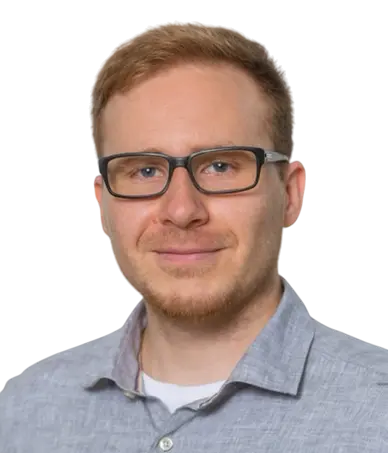
Last position:
Software Engineer at Edekabank AG
Design, develop, and maintain scalable backend services and cloud-integrated systems using Kotlin (Spring Boot) and TypeScript (Node.js). Implement robust APIs, caching, and messaging with technologies such as Firebase, Redis, Pub/Sub, and PostgreSQL. Ensure reliability and performance through comprehensive integration and unit testing (JUnit, Jest, Mockito). Automate deployment and infrastructure with Terraform and Docker.
Kabir K.

Last position:
AI Engineer / Banking IT Specialist at Hamburg Commercial Bank (HCOB) & Real Estate Firm
- Developed a retrieval-augmented generation (RAG) application using LangChain and LangGraph for corporate document parsing, delivered as an installable Electron desktop application with local AI models via Ollama.
- Currently providing ongoing AI feature support for the Loan Pricing Tool at Hamburg Commercial Bank, with a commitment of three days per month.
- Architected Kubernetes-native solutions, including Helm chart configuration and Azure DevOps pipeline integration.
David V.

Last position:
Senior Full-Stack Developer at AL-KO Geräte GmbH
- Architected and executed complete enterprise migration of legacy hosting infrastructure to AWS Cloud platform for an international e-commerce network with 22 dedicated online shops.
- Optimized and improved existing OXID eShop platform across 22 country-specific domains, significantly improving load speeds and user experience through advanced performance optimization techniques.
- Implemented comprehensive AWS infrastructure with CloudFormation for automated deployments, RDS Aurora database clusters, OpenSearch analytics, Docker containerization, and auto-scaling mechanisms for traffic handling.
- Developed full-stack solutions with backend PIM/CRM integration for multilingual product management and frontend internationalization with country-specific routing, currency handling, and localized user experiences.
- Collaborated in a 6-developer team for an enterprise e-commerce platform serving 22 international markets.
- Technologies: AWS CloudFormation, OXID eShop, Docker, RDS Aurora, OpenSearch, Auto-Scaling, PIM/CRM Integration, Internationalization, Performance Optimization, E-Commerce.
- Achieved successful architecture and execution of complete enterprise migration and dramatic improvements in load speeds and user experience across all domains.
Nikita N.
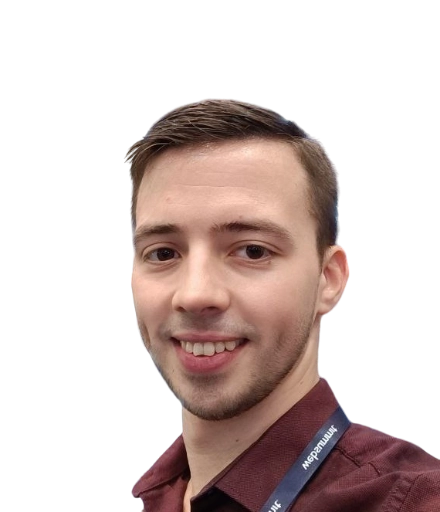
Last position:
Senior Front-End Engineer at Hantverkshjälpen Sverige AB
- Code & project cleanup to accommodate multiple developers
- Implemented project linting (ESLint, Prettier, Husky Hooks)
- Refactored application routing and authentication logic (ReactJS, Next.JS, Recoil)
- Implementing vital UI ideas as standalone features into an administration dashboard (ReactJS, Tailwind CSS, Next.JS, TypeScript)
Jens F.
Last position:
Senior PHP Developer at Own Project
- Developing an app that reflects the stock portfolio
- Environment: Laravel 12, PHP 8.4, MySQL, Git, IntelliJ, GitHub, AlpineJs, TailwindCss
Kamal T.
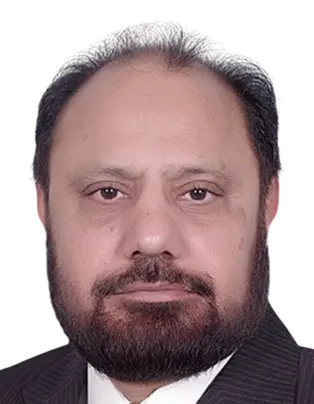
Last position:
Design and development of a requirements verification tool based on the INVEST principle at Ranasoft Internet Technologies
- Design of requirement verification based on the INVEST principle
- Implementation of the prediction model with scikit-learn and BERT
- Implementation of the web client with ReactJS and FastAPI
- Adaptation of the T5 model to improve user story generation according to the INVEST framework
- Certification of NLP and scikit-learn
- Technologies: Python, NLP, Scikit-Learn, BERT, T5, ReactJS, FastAPI, Cursor Visual Paradigm, Visual Studio, Draw.io, NSIS, vite, Electron
Jan S.

Last position:
Fullstack Developer at Summify.News
- Developing an AI-enabled platform that summarizes YouTube channels into daily digests with article and podcast formats.
- Built scalable backend in Node.js integrating OpenAI Whisper for transcription and GPT for summarization.
- Implemented frontend in React with TypeScript, ensuring responsive design and accessibility.
- Set up automated deployment pipelines and CI/CD with Docker & GitHub Actions.
Daniel W.

Last position:
Senior Developer / Deputy Project Lead at Finanz Informatik GmbH & Co. KG
Worked as a Senior Developer
Worked as a Deputy Project Lead
Technologies: Java (Spring), React
Environment: OSPlus, MKP
Developed various standalone tools
Developed unit and Selenium tests
Integrated REST APIs
Full-stack development
Managed and planned a project to migrate an existing application to a new software stack
Agile project approach
Aisha M.
Last position:
Technical Advisor at GIZ
- Drafted interoperability standards and mock API documentation for social protection systems under the Digital Convergence Initiative (USP2030).
- Developed test suites to validate compliance of country implementations with new standards.
- Collaborated with international stakeholders and guided technical experts to ensure timely delivery of project outputs.
Discover over 15,000 top freelancers


Statistics of experts using Electron
Aggregated from the professional profiles of matched freelancers.

Experience
18 years

Position duration
2.1 years

Positions per freelancer
11

Top business areas
Information Technology, Product Development, Quality Assurance

Top industries
Information Technology, Banking and Finance, Healthcare

Certification focus areas
Information Technology, Product Development, Project Management

Bachelor's degree or higher
83%

Master's degree or higher
39%

Certifications per freelancer
2

Most common languages
English, German, Spanish

Speak two or more languages
100%
Based on our profile pool as of 9 Oct 2026.
Daily rate distribution
The chart shows how the daily rates of experts in this technology in Germany are distributed, based on recent contracts on our platform. Each bar covers a rate range — its height shows the share of experts charging within that range.
Average rates of experts in Germany using Electron
Rates are based on recent contracts and do not include FRATCH margin.

The average daily rate is the mean of all daily rates from recent contracts of comparable freelancers on our platform.
The median daily rate is the middle value of all daily rates — half of comparable freelancers charge less, half charge more. Unlike the average, it is barely affected by outliers.
Calculated based on our freelancers’ daily rates as of 9 Oct 2026. Actual rates may vary depending on seniority level, experience, skill specialization, project complexity, and engagement length.
Electron experts industry focus
See which industries our matched freelancers work in most often — every figure is calculated live from the freelancers on FRATCH.
- Information Technology (91%)
- Banking and Finance (65%)
- Healthcare (48%)
- Retail (48%)
- Education (43%)
- Professional Services (43%)
- Automotive (35%)
- Manufacturing (35%)
Please note that freelancers can work across multiple industries, so percentages overlap.
About the technology
Desktop applications
Electron is an open-source framework for building desktop applications with JavaScript, HTML and CSS. It combines Chromium for the user interface with Node.js for system access, allowing one codebase to run on Windows, macOS and Linux. Companies use it for collaboration tools, editors, internal software and customer-facing products.
Core architecture
An Electron application typically separates a main process from renderer processes. The main process manages application windows, lifecycle events and privileged operations, while renderers display the interface. Strong specialists design secure communication between these layers, handle preload scripts correctly and avoid exposing Node.js APIs directly to untrusted content.
Ecosystem and tooling
Electron projects often use TypeScript, React, Vue or another web interface library alongside npm-based tooling. Professionals may work with Electron Forge or Electron Builder for packaging, signing and release automation, and with Webpack, Vite or related bundlers for development. Testing can cover both browser interfaces and native desktop behavior.
- Configure multi-platform builds and release pipelines
- Integrate file systems, notifications, menus and deep links
- Apply context isolation, sandboxing and secure IPC patterns
- Diagnose memory use, startup time and renderer performance
When expertise matters
Companies bring in freelance Electron expertise when a web product must become a dependable desktop application, or when an existing app has release, security or performance problems. Specialists are also useful during a migration from an older desktop stack, a major Electron version update or the preparation of signed installers for several operating systems.
- Turn an existing web interface into a desktop product
- Stabilize auto-updates and platform-specific behavior
- Connect desktop features to cloud services and local data
- Review an application before public distribution
Delivery and collaboration
Electron work spans interface code, application architecture, operating-system integration and continuous delivery. A capable professional can agree clear boundaries between frontend and native concerns, document build requirements and reproduce platform-specific issues. Remote collaboration works well when repositories, test devices, release credentials and acceptance criteria are organized; German or English communication can support teams in Germany.
Choosing a specialist
Look for evidence of shipped Electron applications rather than web work alone. Ask how the specialist handled IPC, permissions, updates, code signing, crash reporting and differences between Windows, macOS and Linux. Good delivery includes maintainable source code, repeatable builds, security-conscious defaults and tests for the desktop workflows users actually depend on.

Frequently asked questions
Key details about Electron, drawn from the questions we get asked most.

Electron is used to build desktop applications with web technologies such as JavaScript, HTML and CSS. It is a practical choice for products that need a shared codebase across Windows, macOS and Linux while still accessing files, notifications, menus and other desktop features.
Electron can shorten delivery by reusing web skills and interface code across operating systems. Native frameworks may offer lower resource use or deeper platform integration, so the right choice depends on performance targets, device access, team skills and the importance of a shared user experience.
Electron packages a Chromium-based interface and Node.js runtime as a desktop application. This enables local files, system menus, notifications and offline workflows, but it also creates responsibilities for packaging, updates, security and memory management that a browser-only product may not have.
Electron work benefits from TypeScript, React or Vue, Node.js, automated testing and CI/CD knowledge. A strong specialist should also understand IPC, preload scripts, context isolation, code signing, auto-updates and platform differences across Windows, macOS and Linux.
Electron projects need different levels of experience depending on their risk and scope. A small internal tool may need focused implementation skills, while a public application with sensitive data, native integrations and multiple release channels calls for proven architecture, security and distribution experience.
Electron projects are often well suited to remote collaboration because source code, builds and issue tracking can be shared online. Teams in Germany should agree on communication language, access to test devices, release responsibilities and a process for reproducing operating-system-specific defects; on-site work is useful when hardware or restricted systems are involved.
Electron quality is visible in secure process boundaries, reliable installers, predictable updates and consistent behavior across supported operating systems. Review shipped examples, testing practices, crash handling, dependency management and whether the specialist can explain trade-offs instead of only presenting interface features.
Electron can be a good wrapper for an existing web application when users need offline access, desktop notifications, local file handling or a dedicated application window. A specialist should first assess authentication, storage, permissions, routing and the separation between remote content and privileged desktop capabilities.
The average hourly rate of freelancers in Germany who have used Electron in their recent projects is 88 €, which corresponds to a daily rate of about 706 € based on an 8-hour working day.
Of the freelancers in Germany who have used Electron in their recent projects, 83% hold at least a Bachelor's degree and 39% hold at least a Master's degree.
On average, freelancers in Germany who have used Electron in their recent projects have 18 years of professional experience, with a single engagement typically lasting around 2.1 years.
The most common languages among freelancers in Germany who have used Electron in their recent projects are English (100%), German (96%), and Spanish (22%).
The most common industries among freelancers in Germany who have used Electron in their recent projects are Information Technology (91%), Banking and Finance (65%), and Healthcare (48%).
The most common business areas among freelancers in Germany who have used Electron in their recent projects are Information Technology (100%), Product Development (100%), and Quality Assurance (61%).
Main locations of FRATCH Experts, who have recently used Electron
Our freelancers and interim experts are at home across the DACH region — available on-site in the major business hubs or fully remote. Choose a location to discover matched specialists, local market insights and up-to-date availability.
 Berlin Hamburg Munich Cologne Frankfurt Stuttgart Dusseldorf Leipzig Dortmund Essen Bremen Dresden Hanover Nuremberg
 Request a free demo
Get in touch with the FRATCH team and we will get back to you within 4 hours.
Would you rather directly get in touch?
We always have the time for a call or email!

Philipp Thomaschewski
FRATCH CEO

