


Containerization Experts in Frankfurt
matched in minutes from over 15,000 CVsHire experts who package applications, design Docker and Kubernetes environments, automate deployments and improve cloud portability. FRATCH matches you quickly and precisely with vetted, available freelancers who fit your technical needs.

Meet FRATCH Experts in Frankfurt, who have recently used Containerization
Patrick L.

Last position:
Senior GenAI Fullstack Developer at SBH (Schulbau Hamburg)
Remote freelance role focused on Agentic AI strategy, secure application patterns, and reusable agentic workflows for a government agency.
- Development and implementation of an open-source Agentic AI strategy for a government agency, with a focus on GDPR, security, and self-hosted solutions
- Development of reusable agentic workflows and business applications that enable non-technical employees to solve business problems independently
- Implementation of nine business applications with Single Sign-On (SSO) and Azure PostgreSQL integration on Hetzner Linux servers
Techstack: Python, Streamlit, Anthropic SDK (Claude), Azure, Linux, PostgreSQL, MS SQL, Angular
Waseem S.

Last position:
Solution Architect / Subject Matter Expert at FRMCS Device Manufacturer
Participation in the EU-funded MORANE-2 project to validate the Future Railway Mobile Communication System (FRMCS) in real-world use cases: preparation of the requirements specifications for TOBA and the associated test specifications.
Technologies: 5GS (Radio & Core), FRMCS, MCx (MCPTT, MCData, MCVideo), MC Gateway UE, MCx Priority/Security/QoS Management, ETCS, SIP, IMS
Alfons G.

Last position:
Senior Migration Consultant / Technical Project Lead
Europe-wide re-platforming & centralization
- Independently created the migration concept and implementation plan for the Europe-wide centralization and consolidation of IT services for around 20 European companies as part of a re-platforming program.
- Migration assessment: analysis of the existing IT, infrastructure, application, and service landscapes of the companies as the basis for the migration strategy.
- Development of the centralized target vision and target architecture based on a modern technology stack, taking platform and containerization approaches into account.
- Design of a highly available central infrastructure in an active-active model across two data centers; consideration of cloud, infrastructure, application, CMDB, and IAM services.
- Development of the migration and transformation roadmap, including defining migration waves, dependencies, requirements, and priorities for the move from decentralized services to the central platform.
- Analysis of technical and organizational dependencies, identification of migration risks, and development of a structured approach for step-by-step migration and centralization.
- Creation of target, solution, and implementation views for each service domain; design of the end-to-end join-move-leave process as a blueprint for the European rollout (Jira/Jira Asset Management).
- Alignment of migration strategy and roadmap with European companies, management, IT, providers, and other stakeholders; presentation of the 12-month roadmap to the Managing Director Europe.
Uday V.

Last position:
Senior Full Stack Java Developer & DevOps Engineer at Deutsche Börse (DBAG)
Project: SCS (Settlement / Clearing Services)
Settlement platform serving multiple trading and clearing venues — counterparty risk safeguarding, settlement volume reduction, central risk management, and post-trade anonymity.
Technologies: Java 17, Spring Boot 3, Microservices, Spring Data JPA, SonarQube, Fortify (SCST), Mockito, Jenkins, OpenShift, Maven, Podman, GitHub, JIRA, Liquibase, Swagger, AMQP, Apache Camel, Terraform, PostgreSQL, Instana, Graylog.
- Identified and remediated CVEs in third-party libraries using SCA tooling, strengthening the security posture of production components.
- Maintained 90% code coverage with SonarQube, improving code quality and reducing production defects.
- Enabled mTLS for database authentication and message broker connections, enforcing encrypted, certificate-validated communication.
- Designed and deployed microservices with asynchronous, REST-based communication between components.
- Optimized a high-volume REST API (~200K requests) by reducing response time from 3s to 2s (33% improvement), boosting throughput and reliability under production load.
- Automated build and continuous integration pipelines using Maven and Jenkins.
- Orchestrated containerized workloads on Podman/OpenShift and governed schema evolution with Liquibase, ensuring reliable, repeatable deployments across all environments.
- Optimized Java code and implemented EHCache-based caching, improving application performance.
- Streamlined release management by governing application images, JAR versions, and dependencies through DBAG Artifactory, ensuring version consistency and audit traceability across environments
Eugen B.
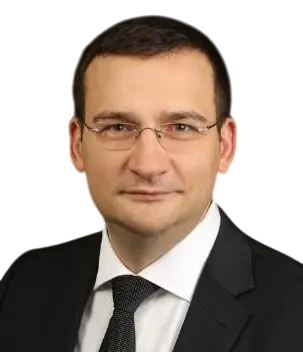
Last position:
Test Manager at Research Industrial Systems Engineering (RISE) Forschungs-, Entwicklungs- und Großprojektberatung GmbH
- Creation of test concepts
- Requirements management
- Release planning and support
- DDS management
- Reporting (test report, AFO TestMatrix)
- UAT/BAT coordination
- Onboarding of new team members
- Team planning / capacity planning
- Support with documentation
- Methods/tools/technologies: black box, white box, exploratory testing, E2E testing, regression testing, L&P testing, acceptance testing and interface testing, integration and system testing, networking, JIRA with Zephyrscale plug-in, Confluence, RISE Portal, Ethernet, IPv4, IPv6, Linux, VM, Postman, SQL, SQL-Developer, Bruno, Wireshark, cloud, Burp Suite, Notepad++
Basil S.
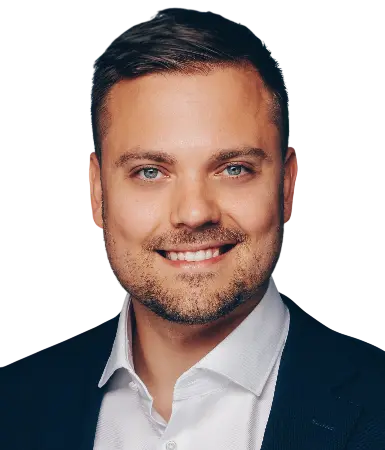
Last position:
Senior Developer / Data Engineer at Large energy-sector company
- Co-founded the Real-Time Data team, which grew to 10 members over time.
- Developed and delivered core data products.
- Optimized real-time application performance and implemented monitoring, alerting and logging solutions to ensure system stability.
- Created and maintained deployment pipelines.
- Collaborated with teammates, architects and experts in an agile Scrum environment.
- Operated applications, analyzed, tested and troubleshot software solutions.
Khaled T.

Last position:
Consultant / DevOps Engineer at Dr. Ing. h.c. F. Porsche Aktiengesellschaft
- Porsche ID is a unified digital identity platform providing secure authentication and seamless access across Porsche’s online services, mobile apps, and connected vehicle features
- Designed and implemented new authentication and authorization functionalities for both users and systems
- Ensured high availability, security, and performance to deliver a flawless digital experience for Porsche customers
- Technologies: Auth0, Angular, Tailwind, AWS, Terraform, Github
- Methodologies: Scrum and SAFe
Johannes E.

Last position:
Freelance Software Consultant at S|R Software GmbH & Co. KG
- Provided consulting for modernizing legacy applications
- Delivered critical features under tight deadlines for backend and frontend
- Technologies: C#, .NET, WPF, WCF, REST, Angular, MS SQL Server
Florian F.

Last position:
Senior Backend Developer at ING Deutschland AG
- Database design with Oracle DB, JPA and Flyway considering high performance requirements
- Analysis of multiple architecture drafts and identification of technical risks
- Design and implementation of various interfaces and integrations, especially REST APIs and Kafka topics
- Setup of Elasticsearch for monitoring and analyzing log data
- Establishment of an iterative work approach in the project team facing complex business requirements
Fabrizio D.

Last position:
Managing Director at ContrailRisks Germany
- Founded and lead a cybersecurity advisory firm focused on virtual CISO services for financial, SaaS, and critical infrastructure clients.
- Advise executive teams on cyber risk, regulatory compliance (DORA, NIS2, ISO 27001), and incident preparedness.
- Built and executed security programs from scratch, driving measurable maturity improvements.
- Delivered tailored risk assessments, policies, and cloud security guidance (AWS, Azure).
- Scaled the business through client acquisition, partnerships (Vanta, AWS, etc), and a network of senior consultants.
Alona L.

Last position:
AI Architect
AI-powered platform for automated UX validation and designer support
- Designed and led technical implementation of an enterprise-wide AI solution for automated UX review that improved design quality and significantly reduced manual review processes in teams
- Developed an automated UX validation tool as a Figma plugin and web application that generates test cases based on internal guidelines and reliably checks current designs for consistency and standard compliance
- Implemented an interactive designer chat based on RAG that answers questions about the current design and the company's UX guidelines, and designed the deployment architecture using containerized services
- Python, Azure OpenAI, PostgreSQL, REST API, Docker, OpenShift, Helm, CI/CD, Figma MCP, LLM, RAG, Prompt Engineering, GenAI, XAI, AI Architecture, AI Strategy
Kevin M.

Last position:
Backend & Infrastructure Engineer at Mileo Systems GmbH
- Engineered production-ready Azure environments using Terraform, ensuring consistent infrastructure parity across VNets and Resource Groups
- Implemented Microsoft Fabric tenant and workspace architecture for multi-stage Medallion data processing pipelines
- Designed secure data pathways using Managed Private Endpoints for isolated Azure Storage access
- Managed Service Principals and authentication tokens for secure REST API integrations
Suneel D.
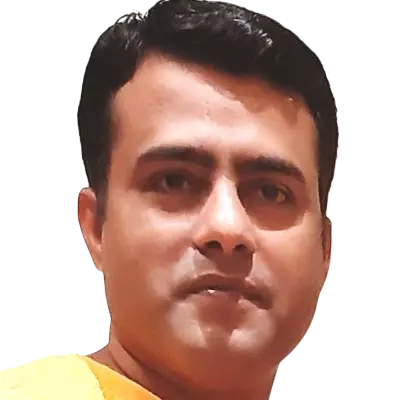
Last position:
SAP Consultant & Developer at KS KeySolutions GmbH
- ABAP developments for rku.it GmbH, Agena GmbH, Koenig & Bauer AG, Salzgitter AG, duagon AG
- Redesigned material configuration data mass maintenance Fiori app for Siemens AG Engineering to resolve system resource issues
- Conducted S4Hana ABAP code remediation, ATC checks, and implemented ABAP parallel processing for Voestalpine AG
Mathew D.

Last position:
Data Science Expert and AI Strategist at Freelancer
- Built an API to ingest, clean, translate, and index EU tenders documents in Neo4j, enabling hybrid search with RAG and Cypher queries via a Streamlit dashboard
- Deployed the API on AWS Lightsail container services with CI/CD automation via GitHub Actions, ensuring stability through pytest unit and integration tests
- Designed and developed a comprehensive online course on data analysis using ChatGPT for professionals and learners, creating instructional videos and interactive Jupyter notebooks
- Utilized OBS and professional audio equipment to ensure high-quality video and audio content
- Led a CRM data normalization and cleaning project visualized via a Sankey diagram to aid customer understanding and pipeline development
- Implemented and validated a genAI-driven web crawling strategy on AWS, ensuring data quality, scalability, and CRM data augmentation
Neha K.
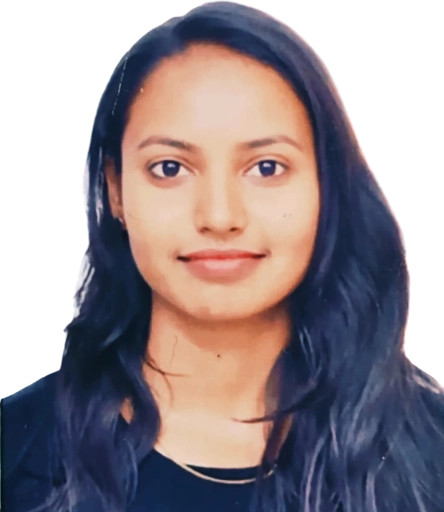
Last position:
Team Lead | Senior Java Developer at Capgemini
- Tech Stack: Java 17, Spring Boot, Microservices, REST, GraphQL, Spring AI, Jenkins, Docker, Git/Bitbucket, JUnit, Splunk
- Led a team of 6 to deliver policy, claims, and onboarding modules serving 50k+ users, maintaining 99.9% uptime
- Cut release cycle time by 35–40% by automating CI/CD with Jenkins and Docker
- Implemented trunk-based branching in Git/Bitbucket
- Integrated 10+ REST APIs and streamlined customer workflows, boosting process automation by 40%
- Increased system stability with proactive Splunk alerting and runbooks, reducing outages by ~25%
- Driven quality with JUnit tests (92% coverage) and code reviews; enforced standards with static checks such as SonarQube
Discover over 15,000 top freelancers


Statistics of experts using Containerization
Aggregated from the professional profiles of matched freelancers.

Experience
16 years

Position duration
2 years (Germany: 1.8 years)

Positions per freelancer
12 (Germany: 11)

Top business areas
Information Technology, Product Development, Quality Assurance

Top industries
Information Technology, Banking and Finance, Transportation

Certification focus areas
Information Technology, Project Management, Quality Assurance

Bachelor's degree or higher
100% (Germany: 92%)

Master's degree or higher
67% (Germany: 55%)

Doctorate
11%

Certifications per freelancer
3

Most common languages
German, English, French

Speak two or more languages
95% (Germany: 97%)
Based on our profile pool as of 9 Oct 2026.
Daily rate distribution
The chart shows how the daily rates of experts in this technology in Frankfurt are distributed, based on recent contracts on our platform. Each bar covers a rate range — its height shows the share of experts charging within that range.
Average rates of experts in Frankfurt using Containerization
Rates are based on recent contracts and do not include FRATCH margin.

The average daily rate is the mean of all daily rates from recent contracts of comparable freelancers on our platform.
The median daily rate is the middle value of all daily rates — half of comparable freelancers charge less, half charge more. Unlike the average, it is barely affected by outliers.
Calculated based on our freelancers’ daily rates as of 9 Oct 2026. Actual rates may vary depending on seniority level, experience, skill specialization, project complexity, and engagement length.
Containerization experts industry focus
See which industries our matched freelancers work in most often — every figure is calculated live from the freelancers on FRATCH.
- Information Technology (100%)
- Banking and Finance (59%)
- Transportation (50%)
- Healthcare (41%)
- Professional Services (36%)
- Manufacturing (32%)
- Media and Entertainment (32%)
- Retail (32%)
Please note that freelancers can work across multiple industries, so percentages overlap.
About the technology
What Containerization Does
Containerization packages an application with its runtime, libraries and configuration so it runs consistently across development, testing and production. Containers isolate workloads without the overhead of a full virtual machine, making releases easier to repeat and infrastructure simpler to manage.
Where It Fits
Companies use containers for web applications, APIs, background workers, data-processing services and event-driven systems. They support microservices as well as well-structured monoliths, from private data centres to public cloud environments.
- Package services with Docker images
- Run workloads through Kubernetes or OpenShift
- Create repeatable development environments
- Move applications between cloud and on-premises infrastructure
Ecosystem And Tooling
Strong specialists work across Docker, container registries, Kubernetes, Helm and service meshes. They also understand Linux, networking, storage, secrets, observability and cloud services from providers such as AWS, Microsoft Azure and Google Cloud. Infrastructure as code with Terraform or Pulumi often completes the delivery workflow.
When Companies Need Help
Freelance expertise is useful when a team is modernising a legacy application, moving workloads to the cloud or introducing a platform for many product teams. Specialists can establish image standards, deployment patterns and operational controls without slowing active delivery.
- Define container build and release workflows
- Secure images, registries and runtime access
- Configure scaling, health checks and rollbacks
- Diagnose networking, storage and cluster issues
What Good Delivery Includes
A capable professional designs for reliability rather than simply writing container files. They keep images small, manage dependencies carefully and make configuration explicit. They set up meaningful logs, metrics and traces, document recovery steps and test deployments under realistic conditions.
Working With Specialists
Before work begins, clarify the target runtime, compliance needs, deployment model and ownership after handover. Remote collaboration works well when repositories, infrastructure access and runbooks are organised; Frankfurt teams may also value occasional on-site sessions for platform planning or incident reviews. Look for clear trade-offs, secure defaults and evidence of production operations.

Frequently asked questions
What clients ask us most about Containerization — answered in short.

Containerization packages software and its dependencies into portable units that can run consistently across environments. Companies use it for application delivery, microservices, continuous integration, batch processing and cloud migration.
Containerization shares the host operating system kernel, while virtual machines include a separate guest operating system. Containers usually start faster and use fewer resources, but virtual machines can provide stronger isolation for some workloads and support different operating systems on one host.
Containerization work commonly involves Docker, Kubernetes, Helm and container registries. Useful adjacent skills include Linux, networking, cloud services, Terraform, CI/CD, security and observability.
Containerization experience should match the operational risk and scope of the work. A simple image and deployment workflow may need focused delivery skills, while a multi-service Kubernetes platform calls for production experience with upgrades, failure recovery, security and monitoring.
Containerization projects are often suitable for remote collaboration because configuration, manifests and infrastructure code can be reviewed online. Frankfurt-based teams may still prefer on-site workshops for architecture decisions, access setup or handover, especially when the work touches private infrastructure.
Containerization quality shows in reproducible builds, controlled image contents, secure secrets handling and predictable deployments. Ask for evidence of rollback design, resource limits, health checks, monitoring and clear operational documentation.
Containerization is the broader practice of running applications in containers, while Docker is a popular toolset for building and running them. Kubernetes, containerd, Podman and other technologies can support container workflows without making Docker the entire platform.
Containerization specialists should confirm the target platform, image registry, deployment process, security requirements and responsibilities after launch. They should also ask about existing cloud accounts, observability, incident response and whether the goal is a local development setup or a production platform.
The average hourly rate of freelancers in Frankfurt, Germany who have used Containerization in their recent projects is 91 €, which corresponds to a daily rate of about 732 € based on an 8-hour working day.
Of the freelancers in Frankfurt, Germany who have used Containerization in their recent projects, 100% hold at least a Bachelor's degree, 67% hold at least a Master's degree, and 11% hold a doctorate.
On average, freelancers in Frankfurt, Germany who have used Containerization in their recent projects have 16 years of professional experience, with a single engagement typically lasting around 2 years.
The most common languages among freelancers in Frankfurt, Germany who have used Containerization in their recent projects are German (95%), English (95%), and French (9%).
The most common industries among freelancers in Frankfurt, Germany who have used Containerization in their recent projects are Information Technology (100%), Banking and Finance (59%), and Transportation (50%).
The most common business areas among freelancers in Frankfurt, Germany who have used Containerization in their recent projects are Information Technology (100%), Product Development (100%), and Quality Assurance (59%).
Main locations of FRATCH Experts, who have recently used Containerization
Our freelancers and interim experts are at home across the DACH region — available on-site in the major business hubs or fully remote. Choose a location to discover matched specialists, local market insights and up-to-date availability.


 Berlin
  Hamburg
  Munich
  Cologne
  Stuttgart
  Dusseldorf
  Dortmund
 Countries:
Request a free demo
Get in touch with the FRATCH team and we will get back to you within 4 hours.
Would you rather directly get in touch?
We always have the time for a call or email!

Philipp Thomaschewski
FRATCH CEO

