


Generative Adversarial Network Experts in Munich
, matched in minutes with vetted, available freelancersHire experts who design GAN training pipelines, develop image and video generation systems, and improve synthetic data quality. FRATCH matches you quickly and precisely with vetted, available freelancers for your project.

Meet FRATCH Experts in Munich, who have recently used Generative Adversarial Network
Caner K.

Last position:
Synthetic Medical Dataset (MedGym) at MedTank
- Generated synthetic datasets for CXR, mammography, and distal radius fracture detection using GANs and diffusion, creating >50k synthetic images for benchmarking.
- Ensured GDPR-compliant workflows and reproducibility, enabling dataset adoption for internal validation and academic collaboration.
- Project highlighted in MedTank’s internal R&D showcase as a flagship synthetic data initiative.
René W.

Last position:
Conference Operator at Brähler Systems GmbH
- Developed the iOS/Android Delegate App and the Conference Operator
- Updated and developed a user-friendly conference environment and real-time video streaming
- Optimized the overall conference experience by implementing customizable features for flexible setup
- Enhanced the efficiency and usability of conference technology, enabling a seamless workflow and improved participant interaction experience
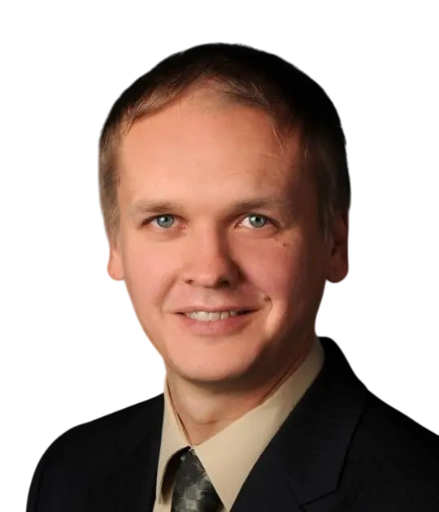
Anton K.
Last position:
Head of Overall Technical Integration NSC / Hadoop Cloud Development at IABG
Head of overall technical integration NSC (National Secure Cloud, project with approx. 60 employees).
Technical integration of all subprojects into one product, definition of interfaces and basic components of a cloud including hardware, technical architecture of the IABG platform.
Development of a Cloud Management Platform (CMP) capable of creating private/mixed clouds of any complexity based on a textual description with one click or interactively.
CMP also includes the complete hardware management lifecycle.
Kubernetes, OpenStack and Hadoop are used as the foundation.
The management layer includes Harbor, Gitea, Longhorn, Keycloak, Rancher and Jenkins, which are configured automatically.
Private cloud can run any customer workloads, including a full Hadoop layer with HDFS, Spark, MapReduce, Mesos, HBase and around 20 additional ML/DL technologies.
Hadoop worker clusters can also be installed automatically without Kubernetes on bare metal or commodity hardware.
OpenStack with Nova, Neutron, Ironic, Swift, Cinder, Ceph.
Development of a Java application Rudi: SOAP, REST, containers, DB.
Technologies: Kubernetes (K3s, Rke2, Minikube, Harbor, Gitea, Jenkins, Longhorn, Keycloak, Rancher), OpenStack (Nova, Neutron, Keystone, Swift, Ceph, Cinder, Sahara, Magnum, Kayobe, Kolla, Bigrost, Ironic), Hadoop (HDFS, Ambari, Solr, Livy, Ranger, YARN, Tez, HBase, Kafka, Hive, Zookeeper, MapReduce, Spark, Oozie, Flink), virtualization (Kubernetes (K3S), VMware, Oracle), scripting (Ansible, Puppet, Juju, Shell, Groovy, Gradle, Maven).
Daniel C.

Last position:
Founder & Managing Director at BotCraft GmbH
- Building the company with a focus on connectivity for IIoT and Industry 4.0, iRPA/process automation, advanced robotics and smart systems, sensors and services
- Project management and software architecture for IoT gateway development (since 2020) with protocol translation, IT/OT convergence and GRC
- Developing RPA bots for automating and monitoring industrial processes with an agent-based AI approach (since 2020)
- Implementing unsupervised clustering and anomaly detection for time series data in big data streaming pipelines (since 2021)
- Introducing a Docker-based release train for OTA updates with DevSecOps and CI/CD (since 2018)
Marwa H.

Last position:
Computer Vision Project
- Developed a convolutional neural network (ConvNet)-based model that achieved 95% accuracy in traffic sign recognition and classification.
- Programming language: Python 3.7.
- Libraries: Numpy, matplotlib, scikit-learn, scikit-image.
- Deep learning framework: Tensorflow.
Janusz M.

Last position:
IoT Edge Computing / Self-Driving-Cars at Automotive consulting company
- Platform: Python ecosystem, RHEL 8, K10, AWS IoT Core, AWS Lambda, MLOps
- Software: Java JEE/cloud, IntelliJ IDEA, AWS IoT Core, AWS Edge and Lambda, AWS SageMaker SDK, Docker Compose, Kubernetes, OpenShift 4, Tekton, Flux, Helm charts, JSON/XML technology, Nginx, Apache Spark, OpenAI (GPT Plus, DALL-E 3, Whisper), GAN, GitHub Copilot, AI/machine and deep learning, Jupyter notebooks, TensorFlow 2, Colab, Keras API, Prometheus, Grafana, Conda, Python 3.9, PySci stack (NumPy, pandas, Scikit-learn, matplotlib)
- Responsible for webinar:
- IoT edge computing: architecture, components, resources, management
- IoT edge computing with MicroK8s, designing and creating flows/diagrams for AWS, three-step model for IoT ecosystem
- IoT processes, connectivity, data transfer and deployment, security
- Optimization of edge computing for IoT networks and services (AWS SQS queue, SNS notifications, events, analytics, buttons, device management/defender, Things Graph)
- Machine/deep learning frameworks (models, training, pipeline optimization, deployment in the cloud/at the edge (OpenShift), monitoring workloads with Prometheus and Grafana)
- Performance optimization for low latency/resilience using adaptive ML/DL/RL models for customer IoT data
- Analysis of large sensor data sets with Apache Spark, Kafka clusters
- Kasten K10 data management platform on Kubernetes multi-cluster with Helm chart, deployment, backup/disaster recovery (RTO/RPO), data lifecycle and security management
- Implementation of multilayer artificial neural network (ANN) with TensorFlow 2 and Colab for regression and classification; data analysis and provisioning for applications; development of models for testing and training, deployment of models
- Automation of business streamline processes with AI (Azure OpenAI, Discord bots/Zapier apps AI assistants (IntelliJ, GitHub Copilot))
Discover over 15,000 top freelancers


Statistics of experts using Generative Adversarial Network
Aggregated from the professional profiles of matched freelancers.

Experience
18 years

Position duration
2.5 years

Positions per freelancer
13

Top business areas
Information Technology, Product Development, Research and Development

Top industries
Information Technology, Automotive, Education

Bachelor's degree or higher
100%

Master's degree or higher
100%

Doctorate
20%

Certifications per freelancer
0

Most common languages
German, English, Spanish

Speak two or more languages
100%
Based on our profile pool as of 29 Oct 2026.
Daily rate distribution
The chart shows how the daily rates of experts in this technology in Munich are distributed, based on recent contracts on our platform. Each bar covers a rate range — its height shows the share of experts charging within that range.
Average rates of experts in Munich using Generative Adversarial Network
Rates are based on recent contracts and do not include FRATCH margin.

The average daily rate is the mean of all daily rates from recent contracts of comparable freelancers on our platform.
The median daily rate is the middle value of all daily rates — half of comparable freelancers charge less, half charge more. Unlike the average, it is barely affected by outliers.
Calculated based on our freelancers’ daily rates as of 29 Oct 2026. Actual rates may vary depending on seniority level, experience, skill specialization, project complexity, and engagement length.
Generative Adversarial Network experts industry focus
See which industries our matched freelancers work in most often — every figure is calculated live from the freelancers on FRATCH.
- Information Technology (83%)
- Automotive (67%)
- Education (67%)
- Healthcare (50%)
- Manufacturing (50%)
- Energy (33%)
- Banking and Finance (33%)
- Government and Administration (33%)
Please note that freelancers can work across multiple industries, so percentages overlap.
About the technology
Core concept
A Generative Adversarial Network, commonly called a GAN, uses two neural networks in competition. A generator creates synthetic samples while a discriminator learns to distinguish them from real data. Through this adversarial training, the generator improves its ability to produce realistic images, video frames, audio or structured data.
What GANs build
GANs are used where realistic synthetic content or data is valuable. Typical project outputs include:
- Image generation, restoration and super-resolution
- Style transfer and visual domain adaptation
- Synthetic datasets for computer vision
- Face, product and scene generation
- Video prediction and frame synthesis
The right design depends on data quality, output constraints and how realism will be evaluated.
Ecosystem and tooling
GAN work often combines Python with PyTorch or TensorFlow, GPU acceleration and experiment tracking. Specialists may use convolutional networks, conditional GANs, StyleGAN, CycleGAN or Wasserstein GAN variants. They also work with image preprocessing, data versioning, distributed training, model checkpoints and deployment through APIs or inference services.
When expertise matters
Companies bring in freelance GAN specialists when internal teams need advanced generative modelling without slowing a product roadmap. This can arise during a proof of concept, a synthetic-data initiative, a media production workflow or a model improvement effort. In Munich, projects may connect automotive, manufacturing, media and research teams across on-site and remote settings.
- Training is unstable or produces repetitive outputs
- Available data is limited, sensitive or poorly balanced
- Generated content fails visual or business checks
- A research model must become a reliable service
Strong professional profile
Strong professionals understand both the mathematics and the production constraints behind GANs. They can select a suitable architecture, prepare and audit datasets, control mode collapse, tune adversarial objectives and define meaningful evaluation methods. They explain trade-offs clearly and connect model behaviour to the product requirement.
Experience with computer vision, deep learning, MLOps, cloud GPUs and responsible data handling is often valuable. For Munich-based teams, clear English communication and, where needed, German collaboration skills can support effective work with research, product and operations groups.
Delivery and quality
A sound engagement starts with a precise target: the content or data to generate, the acceptable variation, the intended users and the risks to control. Professionals should establish reproducible experiments, document datasets and compare outputs against a relevant baseline rather than relying on visual impressions alone.
Quality also means maintainable training code, traceable model versions and an inference path that fits the operating environment. Ask for evidence of completed GAN work, the reasoning behind architecture choices and how the specialist handled unstable training, biased data or weak results.

Frequently asked questions
Questions about Generative Adversarial Network? Start with the answers below.

A Generative Adversarial Network is used to create or transform realistic synthetic data. Common applications include image generation, super-resolution, style transfer, data augmentation, anomaly detection and video synthesis.
A GAN generates content through adversarial competition and can produce sharp results with fast inference. Diffusion models often provide stronger control and image quality, while variational autoencoders usually offer a more structured latent space and simpler training. The right choice depends on quality, control, speed, data and infrastructure requirements.
A strong Generative Adversarial Network specialist usually combines deep learning with computer vision, Python, PyTorch or TensorFlow and GPU-based training. Experience with data pipelines, MLOps, model serving and experiment tracking is useful when the work must move beyond a research prototype.
A GAN project needs more than familiarity with a training library. The professional should understand adversarial objectives, dataset design, mode collapse, evaluation and deployment, with depth matched to the project’s research uncertainty and production risk.
Yes. Generative Adversarial Network work can usually be performed remotely when data access, GPU environments and experiment tracking are well organised. On-site sessions in Munich can still help when specialists need close collaboration with local product, research or manufacturing teams.
A GAN project needs representative, legally usable training data and a clear way to measure generated output quality. GPU capacity, preprocessing pipelines, storage, reproducible environments and secure access are important, especially when the data comes from industrial, medical or customer-facing systems.
Ask a Generative Adversarial Network professional to explain a past system, the architecture chosen, the failure modes encountered and the evaluation process used. Good answers cover dataset limitations, training stability, reproducibility and how the model was connected to a real use case rather than showing generated samples alone.
With a GAN, the generator and discriminator can fall out of balance, causing unstable learning, mode collapse or unrealistic results. A capable specialist diagnoses these issues through loss behaviour, sample diversity and targeted tests, then adjusts the data, objective, architecture or training process.
The average hourly rate of freelancers in Munich, Germany who have used Generative Adversarial Network in their recent projects is 100 €, which corresponds to a daily rate of about 800 € based on an 8-hour working day.
Of the freelancers in Munich, Germany who have used Generative Adversarial Network in their recent projects, 100% hold at least a Bachelor's degree, 100% hold at least a Master's degree, and 20% hold a doctorate.
On average, freelancers in Munich, Germany who have used Generative Adversarial Network in their recent projects have 18 years of professional experience, with a single engagement typically lasting around 2.5 years.
The most common languages among freelancers in Munich, Germany who have used Generative Adversarial Network in their recent projects are German (100%), English (100%), and Spanish (33%).
The most common industries among freelancers in Munich, Germany who have used Generative Adversarial Network in their recent projects are Information Technology (83%), Automotive (67%), and Education (67%).
The most common business areas among freelancers in Munich, Germany who have used Generative Adversarial Network in their recent projects are Information Technology (100%), Product Development (100%), and Research and Development (100%).
Main locations of FRATCH Experts, who have recently used Generative Adversarial Network
Our freelancers and interim experts are at home across the DACH region — available on-site in the major business hubs or fully remote. Choose a location to discover matched specialists, local market insights and up-to-date availability.
Countries:
 Berlin Hamburg
 Munich Cologne Frankfurt Stuttgart Dusseldorf Leipzig Dortmund Essen Bremen Dresden Hanover Nuremberg
Request a free demo
Get in touch with the FRATCH team and we will get back to you within 4 hours.
Would you rather directly get in touch?
We always have the time for a call or email!

Philipp Thomaschewski
FRATCH CEO

