


Azure Data Factory Experts in Germany
for reliable data pipelines, matched in minutes with vetted professionalsHire experts who design Azure Data Factory pipelines, connect cloud and on-premises sources, and orchestrate analytics workloads across Microsoft Fabric and Azure Synapse. Get precise matches with vetted, available freelancers who can join your project quickly.

Meet FRATCH Experts in Germany, who have recently used Azure Data Factory
Vasco F.

Last position:
Senior AI Engineer (Freelance) at RWE
Databricks Architecture & AI Data Products [Databricks Apps · Unity Catalog · Delta Lake · Lakebase · Asset Bundles · Azure DevOps · MCP]
- Designed a layered Databricks financial data architecture: Apps/FastAPI for serving, modular Python calculation engines, SQL/Delta for governed analytics, and Unity Catalog Volumes for versioned workbook outputs.
- Integrated Lakebase PostgreSQL operational data with SQL warehouse analytics, keeping transactional and analytical access separate through App service-principal identity, short-lived credentials and controlled, read-only data interfaces.
- Defined DEV/TST/PRD deployment architecture using Databricks Asset Bundles and automatic Azure DevOps CI/CD, with reusable environment configurations, OAuth M2M identities and automated application/resource lifecycle management.
- Designed access boundaries across Apps, SQL warehouses, Unity Catalog tables/functions/Volumes and secret scopes; separated deployment, application and SQL identities through declarative resource permissions and environment-specific authentication.
- Built serverless Spark pipelines for geospatial reference data and a traceable storage architecture combining immutable Volume artifacts, revision lineage and append-only Delta history with durable audit-event delivery.
- Connected AI Hub agents to governed Databricks financial workflows through typed REST/MCP interfaces; implemented CAPEX/OPEX, commercial, lease and IRR/NPV engines with scenario validation and workbook consistency checks.
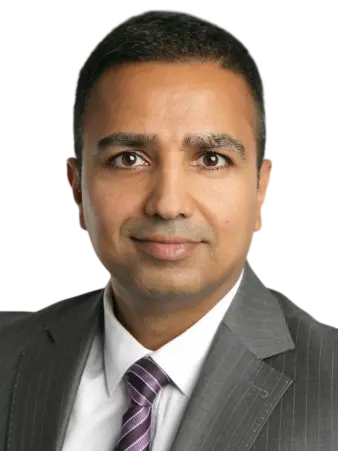
Ali B.
Last position:
Domain Architect Data & IT/OT at Tata-steel
Projects: Assessment, Migration, Modernisation, Strategy, Principles
- Leading the assessment of the current database landscape across different Tata-steel IT/OT factories
- Aligning with the strategy and developing data principles for use across the enterprise by all factories to improve quality
- Simplifying the data landscape by reducing the number of tools used for extraction, transformation and analysis
- Leading the review of current data governance tools and the selection of data governance tools
- Proposing the right solution for the Drones use case to store and integrate data on-premises for OT, as well as AI in the cloud
- Brainstorming with OT departments on how to position historians as fit for purpose within OT and IT
- Examining Oracle UELA with Procurement and guiding executive stakeholders in decision-making
- Leading the sizing and cost assessment with Procurement for Oracle ExaCC for the coming years
- Creating a roadmap for Domain Data & IT for the next two to five years to present company-wide
- Setting up the migration strategy and identifying Oracle candidate databases to migrate to Oracle Exacc
- Guiding Solution Architects towards a solution using the principles created for the TATA DNA Platform
- Providing the strategy for on-premises and cloud backup and archiving using IBM Prospect, Azure and OCI
- Creating a standard reference architecture for data environments and tools for ETL and reporting for advanced analytics
Key Technologies: Oracle, Sequel Server, IBM DB2, Github, SAP, Databricks, Azure, Beaver, Oracle ExaCC, Spotfire, Azure Purview, ETL Tools, PowerBI, Tibco DataVirtualization, TIBCO spotfire, DataBricks, Azure Edge Apache Airflow, Sql server, Azure Data factory, Azure Blob Storage, logic apps, power-apps, Azure File Synch
Ravindra K.

Last position:
Data Engineer (Team Lead) at OPTUM – UnitedHealth Group
- Lakehouse build: Designed and built the member & eligibility domain of an Azure Databricks healthcare lakehouse, ingesting SQL Server, file and REST/SFTP sources (JSON, CSV, XML, Parquet) via Azure Data Factory into ADLS Gen2.
- Medallion pipelines: Transformed data through bronze, silver and gold Delta Lake layers with PySpark and Spark SQL; used Delta Live Tables / Lakeflow with built-in expectations for declarative, quality-checked pipelines.
- Platform modernisation: Delivered a SQL Server-to-cloud platform: ADF → ADLS Gen2 → Databricks → dbt Core models → Snowflake → Power BI, replacing legacy reporting with governed analytics.
- Robust ETL: Built metadata-driven, idempotent full, incremental and watermark-driven loads with schema evolution and failure-state handling, improving reliability and re-runnability.
- Data modelling: Designed Kimball star schemas with SCD Type 1 & 2 dimensions; tuned slow queries and pipelines using execution plans.
- Governance & security: Applied Unity Catalog RBAC, lineage and audit logging, with Azure Key Vault secrets and managed identities, to meet HIPAA and GDPR requirements.
- Leadership & mentoring: Led a 6-person team (2 data engineers, 2 analysts, BI developer, QA); mentored engineers, set delivery standards and coordinated with international stakeholders.
- Delivery & AI-assisted work: Ran CI/CD and work tracking in Azure DevOps; built Power BI semantic models with DAX and RLS; used Genie Code, Claude and Copilot to accelerate PySpark/SQL development, DAX and documentation.
Murad K.

Last position:
Senior AI/ML Engineer at Quantistry GmbH
- Led end-to-end delivery of ML/AI applications for the QuantistryLab simulation platform, from requirements definition and solution design to development, testing, deployment, and production support, coordinating efforts across back-end, DevOps, and ML teams
- Designed and implemented a compound search system with an open-weights LLM, the Pydantic AI agent framework, and the Model Context Protocol (MCP), exposing it through FastAPI endpoints
- Deployed and configured vLLM-based LLM serving on Kubernetes
- Built CI/CD pipelines and Helm charts to automate deployments across staging and production environments
- Instrumented the search system with OpenTelemetry spans and traces, integrating with the Honeycomb observability platform to monitor component-level latency and functional errors
- Developed a custom evaluation dataset and implemented evaluations for retrieval relevance, answer correctness, tool-call accuracy, and end-to-end task success
- Reduced infrared spectrum prediction time by 83% (from 60 to 10 minutes) by replacing a quantum-mechanical model with a pretrained graph neural network; fine-tuned the model using PyTorch, built and containerized the inference pipeline with Docker, and integrated it into the platform
- Implemented an MLflow model registry with MinIO-backed artifact storage
- Advised sales and science teams on ML/AI applications for prospective client projects, providing technical expertise to shape proposed solutions and prototypes
Technologies: AWS, Hetzner, Kubernetes, Helm, Docker, vLLM, Pydantic AI, MCP, Qwen, Llama 3, MLflow, MinIO, GitHub Actions, Python, FastAPI, OpenTelemetry, Honeycomb, PyTorch, Polars, pytest
Abdulhasib M.

Last position:
Power BI Developer / BI Consultant at Telair International GmbH
- Development of Power BI reports, measures, and KPIs for sales, purchasing, materials management, warehousing, and production
- Analysis of the proALPHA database (Progress OpenEdge) and high-performance SQL queries for extraction and transformation
- Data models, ETL processes, and pipelines including automated refresh via Power BI Service and Data Gateway
- Gathering requirements and implementation in close coordination with the specialist departments
Selected projects:
- Sales report: revenue, incoming orders, and order status
- Purchasing report with automated purchase suggestions (Power Automate)
- Monitoring of missing parts for production and materials management
- Production bills of materials on Microsoft Fabric including deployment pipeline (Dev → Prod)
- Forecast comparison report
- Central Power BI apps that bundle all reports by department
Technologies: Power BI, DAX, Power Query (M), SQL, proALPHA, Progress OpenEdge, Microsoft Fabric, Power Automate, Python
Mahboobeh S.

Last position:
Senior Analytics Engineer at Jadoosoft
Engaged as an independent BI consultant for a FinTech SaaS platform, building and maintaining the end-to-end Microsoft Azure and Fabric analytics stack behind a multi-tenant accounting product used by business owners to track their own financial performance.
- Partnered with finance stakeholders to translate complex accounting workflows into real-time BI dashboards (P&L, Cash Flow, Balance Sheet), helping 2000+ business owners track cash flow and overall financial health effortlessly.
- Developed 10+ interactive dashboards, giving each business owner personalized, real-time visibility into their own sales performance, accounts receivable aging, and operational costs.
- Enforced strict enterprise data governance by implementing dynamic Row-Level Security (RLS) via DAX to isolate each business owner's data within the shared multi-tenant model.
- Maintained and extended an Azure ELT pipeline (Azure Data Factory, Azure SQL Database, Azure Synapse) that automated data ingestion and transformation.
- Contributed to a team-wide platform migration from Azure to Microsoft Fabric to optimize capacity licensing costs.
- Designed and implemented a Microsoft Fabric ELT pipeline (Lakehouse, Pipelines, PySpark) that automated data ingestion and transformation, replacing the prior Azure pipeline.
- Modeled cleansed data into a Star Schema within the data warehouse using T-SQL, powering the Power BI Semantic Model.
- Leveraged AI tools, including Copilot and Claude, as development partners across the entire ELT pipeline, from data ingestion to KPI reporting and visualization.
- Supported agile delivery processes, using Jira to track development tasks and Confluence to maintain technical and project documentation.
Hachem S.

Last position:
Machine Learning & BI Lecturer at EU Business School
- Taught ML, BI, and Big Data to Master's students.
Tech: Python, Power BI, SQL, ML, SnowflakeDB, databricks, MS Fabric, MongoDB, LLM
Robert L.

Last position:
Senior Project Manager AI & Data at Large German energy provider
AI Assistance and Target Vision for Partially Autonomous Energy Portfolio Management
Building an AI control layer directly on the up-to-date daily live portfolio of a large energy provider — not as an isolated pilot, but as an operational extension of the existing DB1 and portfolio management. The goal is the gradual development from assistance through monitoring/alerting to analysis agents with Human-in-the-Loop approvals, supplemented by a role-specific System of Engagement alongside the BI System of Record. At the same time, the business case, target vision and management pitch compared with static monthly reporting are being developed.
- AI control layer: Design and build on the existing live portfolio data product (several million contracts) — development stages assistance → monitoring/alerting → agents with Human-in-the-Loop approvals.
- LLM-supported data analysis: Semantic queries, SQL/tool integration and additional RAG components based on portfolio, plan-versus-actual and data quality data (Azure OpenAI, Snowflake), with drill-downs to individual contract level.
- Analysis agents: Multi-stage agents for variance and driver analyses of churn, price adjustments, volumes and procurement costs.
- Views concept: Role-specific interfaces for business units, management and C-level as a System of Engagement alongside the BI System of Record.
- Business case & pitch: Target vision and cost-benefit argumentation compared with static monthly reporting.
- LLM setup (privacy & security): Coordination with IT Security and Data Protection — EU region, data separation and approval processes.
- Agent architecture: Multi-stage agent pipelines (analysis → validation → summary) with documented data sources, tool calls, review steps and source references for each statement.
- Data foundation: Built on the up-to-date daily DB1 data product (Snowflake, dbt) — portfolio, plan-versus-actual and data quality metrics as the common basis for all AI analyses.
- Guardrails & evaluation: Evaluation and approval processes for LLM responses relating to management-relevant statements — test sets, metrics and human review.
- Prototyping & validation: Iterative validation of agent responses with the business unit — test question catalogue, feedback loops and response quality for each release.
- Roadmap & development stages: Detailed stages from assistance → monitoring/alerting → partially autonomous management, including transition criteria and governance for each stage.
- Integration: Integration into the existing BI and data landscape — BI remains the System of Record, while the AI layer provides interactive drill-down paths as the System of Engagement.
- Enablement: Enablement of business users — prompting guides, training and an operating model for ongoing use.
- Management: Coordination of business units, Data Engineering, IT Security and Data Protection.
- Change Management: Communication and expectation management with business units and management throughout the development stages.
Results:
- Built on an existing up-to-date daily data product with several million contracts
- Established an LLM setup coordinated with Data Protection and IT Security in the EU region, including data separation and approvals
- Defined three development stages through to partially autonomous management
- Designed role-specific views for business units, management and C-level
- Developed the business case and management pitch for the development stages
- Established an iterative response-quality validation process with the business unit
- Designed the operating model for assistance operations and initiated validation
Stack: Azure OpenAI, Azure AI Foundry, Snowflake, dbt, React, TypeScript, Entra ID, RAG, Agentic AI, analysis agents, Human-in-the-Loop, Prompt Engineering, LLM Evaluation, LLMOps, GDPR / EU region, Azure DevOps, Python, SQL, Change Management
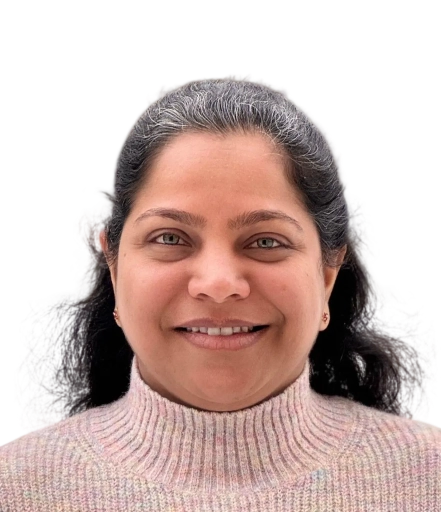
Varsha P.
Last position:
Senior Data Analyst at Infosys
Enterprise Analytics Modernization – Germany-based enterprise reporting platform for operations and management analytics, used by 1,000+ internal users across multiple departments.
- Lead end-to-end Power BI and Microsoft Fabric reporting initiatives, delivering scalable dashboards and semantic models supporting daily operational and strategic decisions, achieving 30% faster decision turnaround and 25% reporting efficiency gains.
- Designed unified enterprise datasets using Microsoft Fabric Lakehouse and OneLake, automating historical data processing and reducing manual reporting effort by 40%.
- Built and maintained automated ingestion pipelines using Fabric Dataflows Gen2 and Data Pipelines, improving data refresh reliability to 99.8% uptime and ensuring consistent data quality.
- Implemented enterprise reporting governance, including Row-Level Security (RLS), workspace strategy, deployment pipelines, and documentation, increasing dashboard adoption by 35%.
Technologies used: Power BI, Microsoft Fabric, DAX, Power Query, SQL, Azure Data Fundamentals, Semantic Modeling, RLS, Agile
Carlbandro E.

Last position:
IT Lecturer / Coach at Freelance
As a freelance IT lecturer and IT coach, I specialize in teaching individuals concepts like Cloud Computing, Business Intelligence, Python Programming and Agile Frameworks. My goal is to simplify complex technical concepts into practical, actionable knowledge. Through my extensive experience as an IT consultant in various sectors and roles I know about the importance of IT training - for companies and employees alike.
Hardeep B.
Last position:
Sr. Data Engineer at Charles Schwab Bank
- Designed and implemented end-to-end data pipelines (batch & streaming) using Python, SQL, and Apache Spark, Databricks on AWS reducing ETL latency by 40%.
- Developed serverless event-driven ingestion pipelines using AWS Lambda and SQS, ensuring real-time data availability for downstream analytics.
- Leveraged Google Cloud Platform (GCP) services including BigQuery and Dataflow to manage cross-cloud data warehousing and analytics integration.
- Expertise in DMS (CDC, Full Load) and Airflow for scalable data pipeline automation and orchestration.
- Managed and customized data pipelines using Databricks, Airflow. Automation using Docker, Kubernetes, Terraform.
- Automated data quality checks using dbt to modularize transformations and ensure production-grade data lineage, improving reliability by 30%.
- Collaborated with compliance teams to ensure GDPR and SOC2 alignment. Mentored junior engineers and contributed to architecture refactoring for scalability.
- Created and maintained dashboards in Power BI to provide actionable insights.
Maziyar K.

Last position:
Data Engineer at MSD Germany
- Lead Architect to design and implement the data lake and ETL Pipeline using AWS Stack
- Performance Optimization of Data Ingestion of ETL Pipeline
- Development of Data Validation using Great Expectations
- Leading of the data migration for two sources exchanges
- Data Modeling in AWS Redshift
MLOps
- Model inference implementation by mlflow and AWS SageMaker
- Feature Engineering for the running ML Models ( Recommender Engineer, Clustering )
- Implementatino of Model Registry and artifactory using mlflow
- Historization an Profiling of the Input Data Using AWS Glue Crawler and AWS Data Catalog
- Feature importance using mlflow
Tech. Stack: Python 3, AWS Glue, AWS Step Fucntion, AWS Lambda, AWS EventBridge, AWS IAM Role, AWS SageMaker, AWS EC2, AWS Glue Crawler, AWS CloudWatch, MLFlow, ETL, Data lake, GitHub Action, Terraform, Jenkins, Ansible playbooks (Infrastructure as Code), CI/CD, GitLab, SQL, PySparkSCRUM, Agile, Jira, BigData, VSCode, DBeaver, MSSQL, MySQL, grafana, Docker, Linux, Bash, MapReduce, Data Modeling (ORM), Pandas, YAML, SQL-Alchemy
Jorge M.

Last position:
Technical Lead / Fractional CTO at Würth GmbH
I designed and developed an AI-powered multi-tenant platform on Azure that transforms SAP process recordings into technical documentation, presentations and automated tests, processing over 15,000 process recordings for enterprise customers like Würth. I owned the architecture, the production releases and the DevOps setup. I also designed a multi-tenant system with SSO and role-based access on Azure. Implemented an MCP Server with Dynamic OAuth Authentication.
Main Tasks:
- Sprint planning and feature preparation
- Design the multi-tenant platform architecture (FastAPI, SQLAlchemy, PostgreSQL row-level security for tenant isolation)
- Develop AI pipelines with Prefect for transcription (Azure Speech API), document generation and SAP screen-recording analysis (Claude, gpt-4-mini)
- Design and implement an MCP server to expose tenant knowledge to LLM clients (Claude), with async retrieval and reranking
- Implement LLM cost tracking, rate limiting and client pooling for Anthropic/OpenAI/Azure OpenAI endpoints
- Set up CI/CD: Docker images to Azure Container Registry, GitHub Actions, Azure Static Web Apps, Alembic migrations in containers
- Manage production releases and execute live data migrations for enterprise customers
- Define engineering standards and architecture patterns for the team
Environment: Azure / Azure Foundry / Python / FastAPI / Prefect / React / PostgreSQL
Suyash S.

Last position:
Data Analyst - Reporting & Analytics at SIXT SE
- Developed & maintained customer analytical reporting solutions to identify revenue trends, performance drivers, risks & optimization opportunities to ensure data driven decision making across Sales, Finance, Product, Data Engineering & Controlling.
- Defined & analyzed customer trends & performance metrics to identify root causes behind variances, anomalies & emerging risks across business domains to deliver actionable recommendations.
- Developed & owned analytical data models & reporting layers to ensure scalability, performance & analytical robustness to support executive & operational reporting across business domains.
- Planned, tracked & executed projects by ensuring adherence to timelines, data accuracy, consistency, deliverables, reliability & data quality standards through rigorous validation & reconciliation processes.
- Raised the analytical maturity by formalizing analytical workflows, documenting data processes & standard operating procedures (SOPs) & conducting training sessions to drive adoption of self-service analytics & embed a data driven culture across operational and business teams.
- Took ownership of the end-to-end lifecycle roadmap from requirement gathering, collection, transformation, developing robust business logics to data storytelling & stakeholder delivery.
- Converted complexity into structured clarity by translating requirements & business processes into analytical recommendations to ensure alignment between non-technical & technical stakeholders.
- Conducted advanced SQL based analysis of complex business datasets to uncover trends, correlations & performance improvement opportunities.
- Drove process automation & efficiency improvements by leveraging Python, SQL optimization & AI assisted tools to reduce processing time & increase reliability across analytical & operational workflows.
- Standardized KPI definitions & reporting logic to ensure consistency & trust across reporting solutions.
- Developed process monitoring dashboards & analyses to identify inefficiencies, bottlenecks & compliance deviations across end-to-end business processes to derive actionable recommendations for process improvement & automation.
Tobias L.

Last position:
Data Engineer at unitb consulting GmbH
Responsibilities: Design and operation of end-to-end cloud data platforms for enterprise clients in publishing and finance, including infrastructure automation, pipeline development, monitoring, and data quality.
Activities:
- Built multi-layer data architectures on Databricks (Apache Spark, Delta Lake), BigQuery, and GCP
- Fully automated cloud infrastructure with Terraform across 3 environments (DEV/STG/PRD)
- Developed automated data pipelines with Python, dbt, and GCP services for various data sources
- Built monitoring and alerting systems for real-time platform monitoring
- Implemented data versioning and quality checks at every layer
- Designed automated testing and deployment pipelines in GitLab and Bitbucket
Achievements:
- Doubled production data processing capacity, reduced spike response time from minutes to ≤15 s, server errors ≈ 0
- Replaced 3,000 lines of manual configuration with a reusable automation module for 7 customer domains, reducing configuration errors to 0
- Delivered a complete end-to-end data platform at ~10 €/month in infrastructure costs
- Migrated 7 database tables with 0 downstream issues
- Removed 100 % of exposed credentials, eliminating dependency on external vendors
- Delivered 3-team integration in 1 sprint
Discover over 15,000 top freelancers


Statistics of experts using Azure Data Factory
Aggregated from the professional profiles of matched freelancers.

Experience
16 years

Position duration
2.1 years

Positions per freelancer
11

Top business areas
Information Technology, Business Intelligence, Product Development

Top industries
Information Technology, Professional Services, Banking and Finance

Certification focus areas
Information Technology, Business Intelligence, Project Management

Bachelor's degree or higher
96%

Master's degree or higher
62%

Doctorate
8%

Certifications per freelancer
4

Most common languages
German, English, French

Speak two or more languages
97%
Based on our profile pool as of 18 Nov 2026.
Daily rate distribution
The chart shows how the daily rates of experts in this technology in Germany are distributed, based on recent contracts on our platform. Each bar covers a rate range — its height shows the share of experts charging within that range.
Discover detailed Azure Data Factory rate benchmarks:
Explore rate insightsAverage rates of experts in Germany using Azure Data Factory
Rates are based on recent contracts and do not include FRATCH margin.

The average daily rate is the mean of all daily rates from recent contracts of comparable freelancers on our platform.
The median daily rate is the middle value of all daily rates — half of comparable freelancers charge less, half charge more. Unlike the average, it is barely affected by outliers.
Calculated based on our freelancers’ daily rates as of 18 Nov 2026. Actual rates may vary depending on seniority level, experience, skill specialization, project complexity, and engagement length.
Azure Data Factory experts industry focus
See which industries our matched freelancers work in most often — every figure is calculated live from the freelancers on FRATCH.
- Information Technology (90%)
- Professional Services (58%)
- Banking and Finance (54%)
- Automotive (42%)
- Energy (41%)
- Healthcare (36%)
- Manufacturing (34%)
- Retail (34%)
Please note that freelancers can work across multiple industries, so percentages overlap.
About the technology
What it does
Azure Data Factory is Microsoft’s managed cloud service for integrating and transforming data. Teams use it to move information between databases, SaaS applications, file stores and data lakes, then prepare it for reporting, analytics or machine learning. Its visual authoring tools and pipeline orchestration support repeatable, monitored data workflows.
Core building blocks
ADF pipelines coordinate activities such as copy, lookup, filtering, mapping and execution of notebooks or stored procedures. Datasets describe source structures, linked services manage connections, and integration runtimes provide the execution layer. Mapping Data Flows enable visual transformations without requiring a separate cluster for every workload.
Connected ecosystem
Strong specialists work across the Microsoft data stack and the systems that feed it:
- Azure Data Lake Storage, Azure Synapse Analytics and Microsoft Fabric
- Azure SQL, SQL Server, PostgreSQL and other relational sources
- REST APIs, SAP, Salesforce, SharePoint and file-based systems
- Azure Key Vault, Azure Monitor, Git and CI/CD workflows
They also understand authentication, private endpoints, self-hosted integration runtimes and infrastructure configuration.
Common project work
Companies bring in Azure Data Factory professionals to create new ingestion frameworks, modernize SSIS workloads and connect fragmented source systems. Typical deliverables include parameterized pipelines, incremental loads, change-data capture flows, transformation logic, deployment templates and operational dashboards. In Germany, collaboration may combine remote delivery with on-site workshops for teams handling regulated or business-critical data.
When expertise matters
Freelance support is useful when internal teams need a data platform delivered quickly or when existing pipelines are slow, fragile or difficult to operate. Signs include repeated manual exports, unclear data ownership, failed scheduled runs and growing demand for trusted reporting:
- Establishing a governed lakehouse or warehouse ingestion layer
- Replacing brittle scripts or legacy SSIS packages
- Scaling pipelines across environments and business units
- Improving monitoring, alerting and recovery procedures
What strong professionals bring
The best specialists combine Azure Data Factory knowledge with SQL, data modeling, Python or Scala, DevOps and security practices. They clarify source behavior, define data quality checks and design for retries, idempotency and cost control. When assessing a professional, review comparable pipeline designs, deployment methods, incident handling and their ability to explain trade-offs clearly to technical and business stakeholders.

Frequently asked questions
Before you brief your next project: the most common questions about Azure Data Factory.

Azure Data Factory is used to build and schedule data integration pipelines. It can copy data between cloud and on-premises systems, transform datasets, trigger other Azure services and monitor recurring workflows. Companies commonly use it to feed data lakes, warehouses and analytics environments.
Azure Data Factory provides a managed, cloud-oriented alternative to SQL Server Integration Services. SSIS may remain suitable for established Microsoft environments, while ADF is better suited to hybrid connectivity, elastic orchestration and integration with Azure services. The right choice depends on existing packages, hosting requirements and migration goals.
A strong Azure Data Factory specialist usually brings SQL, data warehousing and data modeling skills. Experience with Azure Data Lake Storage, Azure Synapse Analytics, Microsoft Fabric, Azure DevOps, Python, APIs and identity management is also valuable. Knowledge of monitoring and data quality helps turn pipelines into dependable operations.
The right level depends on the scope rather than a fixed number of years. A simple set of copy pipelines may need a professional who can configure connections, parameters and monitoring, while a platform migration requires someone experienced with architecture, security, CI/CD and failure recovery. Ask for examples that match your sources, data volumes and operating model.
Azure Data Factory can connect to on-premises databases and file systems through a self-hosted integration runtime. The specialist must plan network access, credentials, firewall rules, throughput and maintenance responsibilities. This is especially important when remote teams collaborate with German organizations that keep sensitive systems on site.
Azure Data Factory work is often well suited to remote collaboration because pipelines, repositories and monitoring are cloud accessible. Workshops may still be useful for mapping source ownership, security controls and business rules. For German projects, clarify working hours, documentation standards and whether German-language communication is needed.
Ask how the Azure Data Factory professional handles incremental loading, retries, parameterization, secrets and deployment across environments. Request a walkthrough of a comparable design and discuss monitoring, data validation and recovery after partial failure. Clear explanations of trade-offs are as important as tool knowledge.
A typical Azure Data Factory engagement can include pipeline definitions, linked services, datasets, transformation logic, parameter files and deployment configuration. It should also cover documentation, access requirements, monitoring alerts, data quality checks and handover guidance. Agree early on ownership of repositories, environments and ongoing support.
The average hourly rate of freelancers in Germany who have used Azure Data Factory in their recent projects is 94 €, which corresponds to a daily rate of about 750 € based on an 8-hour working day.
Of the freelancers in Germany who have used Azure Data Factory in their recent projects, 96% hold at least a Bachelor's degree, 62% hold at least a Master's degree, and 8% hold a doctorate.
On average, freelancers in Germany who have used Azure Data Factory in their recent projects have 16 years of professional experience, with a single engagement typically lasting around 2.1 years.
The most common languages among freelancers in Germany who have used Azure Data Factory in their recent projects are German (98%), English (98%), and French (17%).
The most common industries among freelancers in Germany who have used Azure Data Factory in their recent projects are Information Technology (90%), Professional Services (58%), and Banking and Finance (54%).
The most common business areas among freelancers in Germany who have used Azure Data Factory in their recent projects are Information Technology (97%), Business Intelligence (90%), and Product Development (68%).
Main locations of FRATCH Experts, who have recently used Azure Data Factory
Our freelancers and interim experts are at home across the DACH region — available on-site in the major business hubs or fully remote. Choose a location to discover matched specialists, local market insights and up-to-date availability.

 Munich
 Cologne
 Frankfurt
Request a free demo
Get in touch with the FRATCH team and we will get back to you within 4 hours.
Would you rather directly get in touch?
We always have the time for a call or email!

Philipp Thomaschewski
FRATCH CEO

